ClinicalTrials.gov
 clinicaltrials.gov
Brief Summary
The primary objective of this clinical trial is to determine if treatment with ubiquinol, a form of coenzyme Q10, improves the physical function of men and women Veterans suffering from Gulf War Illness (GWI). The primary outcome measure is a change from baseline on the Short Form Health Survey 36-item (SF-36), with respect to physical functioning and symptoms. Secondary outcome measures include changes from baseline levels on GWI-associated biomarkers in peripheral blood and GWI-associated symptoms of chronic pain, fatigue, insomnia, activity level, and cognitive and mental functioning.
This is a randomized, two group, double blind, placebo controlled, Phase III clinical trial. The treatment group will receive a (2x200 mg for 2 months and 1x200 mg for 4 months) once a day of ubiquinol for 6 months. The placebo group will receive matching placebo (2x200 mg for 2 months and 1x200 mg for 4 months) once a day of ubiquinol for 6 months. The primary outcome measure for this clinical trial is a change from baseline of SF-36, with respect to physical functioning and symptoms. The secondary outcome measures include changes from baseline of peripheral blood levels of biomarkers, and of GWI-associated symptoms of chronic pain, fatigue, sleep issues, and cognitive impairment.
The trial started in 2017.
51 Gulf War Veterans were allocated to the CoQ10 treatment; 49 Gulf War Veterans were allocated to the placebo
Measurements were made for 6 months.
Recruitment halted due to the Covid-19 pandemic
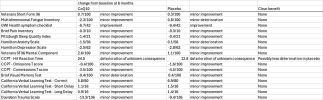
Results for the many measures are presented on the Clinical Trials entry, as means with SD, no p values.
There is no record of this study being published yet.
Last edited: