Dolphin
Senior Member (Voting Rights)
Development and validation of the Tiredness Identification Index (TIDI): a combined scale for the assessment of fatigue and sleepiness
Sarah Reeve1,2, Bryony Sheaves3,4, Bao Sheng Loe5, Daniel Freeman3,4
1Norwich Medical School, University of East Anglia, Norwich, UK, 2Cambridgeshire and Peterborough NHS Foundation Trust, Cambridge, UK 3Department of Experimental Psychology, University of Oxford, UK
Abstract
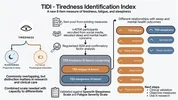
Study ObjectivesTiredness is a common presentation composed of sleepiness (propensity towards sleeping) and fatigue (feelings of physiological exhaustion). Differentiating between these presentations is important for diagnosis and management. The current study reports on the development and validation of an integrated measure of tiredness (Tiredness Identification Index - TIDI) incorporating assessment of sleepiness and fatigue, and the relationship of the measure with sleep and mental health outcomes.
Method
A sample of 6706 adult participants responded to a pool of sleepiness and fatigue items. Regularised structural equation modelling and confirmatory factor analysis were used to refine the items and factor structure based on convergence against validation measures of fatigue and sleepiness. Regression analyses were then applied to test relationships of the sleepiness and fatigue factors with sleep, mental health, and wellbeing variables.
Results
An 8-item scale was developed, composed of a sleepiness (TIDI-sleepiness) and fatigue (TIDI-fatigue) factor with divergent and convergent validity, alongside a general tiredness factor. Higher TIDI-sleepiness was associated with increased apnoea risk and shorter sleep duration, whereas TIDI-fatigue was associated with increased insomnia and reduced sleep efficiency. Controlling for TIDI-sleepiness, TIDI-fatigue was associated with increased depression, anxiety, reduced well-being, and lower physical activity. Increased TIDI-sleepiness and TIDI-fatigue were both associated with paranoia and hallucinations.
Conclusions
The results indicate that the TIDI can be used as a brief scale to measure and differentiate fatigue and sleepiness, particularly in non-clinical populations and for research purposes. Assessment of its validity in discriminating fatigue and sleepiness in relevant clinical sleep, mental, and physical health populations should be a focus of future research.