Purpose Postural orthostatic tachycardia syndrome is defined by a sustained heart rate increment upon upright posture without orthostatic hypotension. Despite established criteria, the condition remains frequently underdiagnosed. This narrative review evaluates diagnostic strategies, test...

link.springer.com
Diagnostic strategies, test accuracy, and misdiagnosis of POTS: a narrative review of diagnostic criteria, tests, and diagnostic delay
- Review Article
- Published: 10 August 2026
- (2026)
Abstract
Purpose
Postural orthostatic tachycardia syndrome is defined by a sustained heart rate increment upon upright posture without orthostatic hypotension. Despite established criteria, the condition remains frequently underdiagnosed. This narrative review evaluates diagnostic strategies, test accuracy, diagnostic delay, and misdiagnosis patterns.
Methods
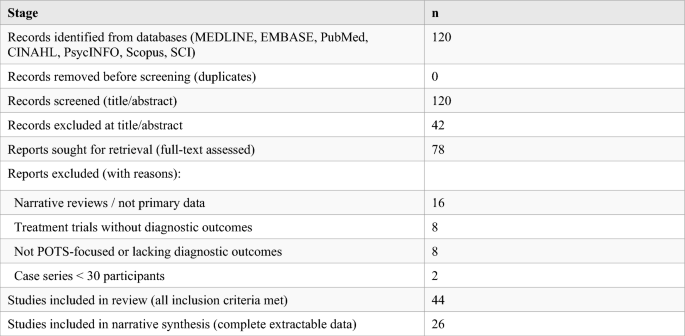
Following prospective registration in PROSPERO (CRD 1248964), 7 databases were searched without date restriction. Eligible studies enrolled individuals aged 12 years or older undergoing evaluation for postural orthostatic tachycardia syndrome and reported diagnostic accuracy, criteria performance, or delay and misdiagnosis data. Dual-reviewer screening and standardized data extraction were performed. Risk of bias was assessed using QUADAS-2 and ROBINS-I. Narrative synthesis followed PRISMA 2020 guidelines.
Results
In total, 26 studies met inclusion criteria, enrolling more than 30,000 participants across multiple countries. Diagnostic criteria varied in heart rate thresholds, tilt angle, and test duration. Abbreviated 2-min tilt testing missed 55% of confirmed cases (95% confidence interval 48–63%). Active standing tests achieved areas under the curve of 0.855–0.925 with time-of-day-standardized thresholds. Tachycardia mimicking the syndrome occurred in 26–44% of vasovagal syncope patients during tilt. Two large surveys (
n = 13,754) documented a median diagnostic delay of 24 months; approximately 75–76% reported prior misdiagnosis, most frequently attributed to psychological or psychiatric conditions.
Conclusions
Postural orthostatic tachycardia syndrome diagnosis is compromised by protocol heterogeneity, abbreviated testing, physiological mimicry, and a pattern of psychiatric misattribution. Standardization of tilt and standing test protocols, clinician education, and structured diagnostic pathways are warranted.
Trial registration
PROSPERO Registration: CRD1248964.