Effect of subcutaneous lidocaine–hydroxypropyl-β-cyclodextrin (HP-β-CD) on quality of life in patients with post-COVID condition…, 2025, Oostwouder+

Chandelier

Senior Member (Voting Rights)
Effect of subcutaneous lidocaine–hydroxypropyl-β-cyclodextrin (HP-β-CD) on quality of life in patients with post-COVID condition: a 36-week observational interrupted time series study

Oostwouder, Cees-Jan; Vos, Karin; Lutke Schipholt, Ivo J.; Merkus, Mathijs R.; Telders, Thomas; van Deursen, David F.A.; de Smit, Max B.; van Eijk, Marina D.; Bontkes, Hetty J.; Bouwman, Femke H.; Wüst, Rob C.I.; de Jong, Lara; van Hulst, Marinus; Twisk, Jos W.R.; van Kalken, Coenraad K.; Scholten-Peeters, Gwendolyne G.M.

Summary​

Background​

Post-COVID involves persistent, multisystem symptoms which are associated with inflammation, immune dysregulation, and autonomic dysfunction.
The effects of currently applied treatments for post-COVID are limited.
This study assessed the effectiveness of subcutaneous lidocaine–hydroxypropyl-β-cyclodextrin (HP-β-CD) for the treatment of post-COVID.

Methods​

This interrupted time series study was conducted at a Dutch outpatient clinic between August 2024 and April 2025.
Adults with physician-diagnosed post–COVID (n = 103) underwent a 4-week pre-treatment observation followed by 24–36 weeks of home-based subcutaneous lidocaine 5% with HP-β-CD, administered using a 3-phase protocol: 500 mg every other day (weeks 1–7), 500 mg daily (weeks 7–14), and up to 1000 mg/day (after week 14, in non-responders).
The primary outcome was health-related quality of life (Short Form-12 (SF-12), physical and mental component summary scores).
Secondary outcomes included symptom burden (daily app-based questionnaire) and adverse events.

Findings​

Among 103 participants (mean [SD] age 48·1 [13·0] years; 67% women; median [IQR] symptom duration 31·5 [24·3–43·3] months), 76% completed 24 weeks and 71% completed 36 weeks of treatment.
At week 24, the physical and mental component scores increased by 2·20 and 5·16 points, respectively; at week 36, by 4·13 and 7·00 points (all p < 0·0001).
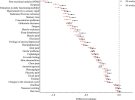
Twenty-seven of 30 symptoms improved significantly at week 24 of treatment compared to pre-treatment.
Mild adverse events occurred in 89% of participants, mostly injection–site reactions; no serious adverse events were reported.

Interpretation​

Subcutaneous lidocaine–HP-β-CD was associated with significantly improved quality of life and symptom burden in patients with post–COVID.
This home-administered intervention offers a scalable and potentially disease-modifying approach for a disabling condition with no approved treatment to date.

Funding​

Excellent Care Clinics funded the treatment provided in this study.

Web | DOI | eClinicalMedicine
 
Subjective outcomes and no placebo.

76% completed 24 weeks and 71% completed 36 weeks of treatment.

Speculation on why it would work:
Preclinical studies have demonstrated that lidocaine inhibits P2X7 receptor–mediated immune activity, leading to reduced NLRP3 inflammasome activation and subsequent cytokine release (e.g., IL-1β and IL-18).18,19 This pathway is hypothesised to play a role in post-COVID immune dysregulation.
subcutaneous administration may enhance lymphatic targeting and drug concentrations at immune effector sites, as suggested by preclinical studies showing selective lymph node accumulation after subcutaneous delivery.22

On why they think these don't resemble placebo effects:
However, several observations suggest that the improvements seen in this study reflect a true treatment effect rather than a placebo response or the natural course of the condition.
First, the delayed onset of symptom improvement-emerging around day five and increasing progressively over 24 and 36 weeks-differs markedly from typical placebo responses, which often occur rapidly within hours or days.31,32 Seventy-eight percent of participants demonstrated sustained improvements, exceeding the typical 25–35% placebo response rate.31,32
Additionally, the study design incorporated an extended pre-treatment observation period, allowing for the establishment of stable baseline symptom trajectories. This approach aligns with the absence of spontaneous improvement or recovery typically seen in post-COVID patients beyond 12 months, further reinforcing the internal validity of the findings.33 Natural recovery seems unlikely given the highly chronic and functionally impaired nature of our participants (median symptom duration 31·5 [24·3–43·3] months), and recent studies showing minimal natural recovery beyond 12 months in severely affected post-COVID patients.32

Primary outcomes:
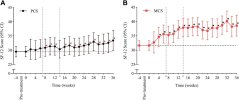
Health-related quality of life (HRQoL) was assessed biweekly over 24 and 36 weeks using the Dutch version of the Short Form-12 (SF-12) survey via the mobile app, providing physical (PCS) and mental (MCS) component summary scores.25
IMG_20251204_051039_(1100_x_462_pixel).jpg

Secondary outcomes were individual symptoms. The ones furthest to the left had the largest improvements:
IMG_20251204_051125_(1000_x_743_pixel).jpg

Edit: Removed misinterpretation about dropouts.
 
Last edited:
Single-digit improvements in subjective symptom scores over 36 weeks, from low 30s to mid or high 30s, still well below the score of 50 which suggests poor health on the SF12. That's not making me want to queue up for daily subcutaneous injections.

The integration of intensive baseline monitoring before treatment, allowing each participant to serve as their own control, reduces potential confounding factors

Nope.
at the 36-week mark, 7 (7%) of 103 patients had discontinued treatment, and 9 (9%) of 103 patients were in the process of tapering off due to improvement, enabling them to resume regular work or daily activities. These outcomes, observed in a population with no recovery for at least one year prior to treatment, provide clinical evidence that post-COVID is a treatable condition.

Also nope.
 

Muscle injections with lidocaine improve resting fatigue and pain in patients with chronic fatigue syndrome (2017)​


Pity they didn't do a crossover trial with injected saline as the placebo. Then we would know if it helped, right?

You'd expect the placebo response from an injected pharmacological treatment to be high. Cho, Hotopf & Wessely 2005 is relevant here - they found up to 50% of people in placebo arms of trials with pharma treatments self-reported improvement. This study might have boosted that higher by patients being of short duration (around 2 years), not having to leave home for treatment, self-administering up to four times a day.

Edited to add short duration.
 
Those primary outcome graphs should never have been published, they are misleading due to the break in the Y axis. Maybe it’s to be expected when you’re dealing with the Lancet..

Substantial dropout:
Thirty (29%) of 103 patients withdrew from treatment, due to adverse events (n = 7: nausea [n = 2], rash [n = 2], injection site-adverse events [n = 2], and genital herpes flare up [n = 1]), perceived lack of effectiveness (n = 14), treatment burden (n = 4), and external factors such as psychological issues and life stressors (n = 5). In total, 78 (76%) of 103 patients completed the 24-week study and 73 (71%) of 103 patients completed the extended 36-week study period. At 36 weeks, treatment was discontinued in 7 (7%) of 103 patients due to recovery, enabling return to work and regular social functioning. In addition, at the 36-week mark, 9 (9%) of 103 patients were in the process of tapering off treatment due to improvement.

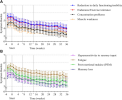
Even more seriously misleading graphs:
IMG_0500.png
Fig. 4 Time course of the 8 most burdensome symptoms. Graphic representation of estimated difference of symptom burden scores over the course of the study period. The chart is depicting the initial 8 most burdensome symptoms in the pre-treatment period. Reduction in daily functioning/mobility, endurance/excercise tolerance, concentration problems, and muscle weakness (A) as well as hypersensitivity to sensory input, fatigue, post-exertional malaise (PEM), and memory loss (B) are shown. Symptoms were rated on a 7-point Likert scale (1 = no burden, 7 = highest burden) and measured daily. Lower scores indicate improvement. Linear mixed models were used. Pre-treatment phase of 4 weeks (−4 to 0) and a treatment phase of 36 weeks (0–36). Treatment was started at week 0. The vertical lines at week 7 and 14 represent a change in treatment dose. Error bars represent 95% confidence intervals. n = 103. Statistically significant improvements (p < 0·05) compared to the pre-treatment period were observed from week 1 for memory loss, endurance/exercise tolerance, post-exertional malaise, and reduction in daily functioning/mobility. From week 2, improvements in muscle weakness, fatigue, and hypersensitivity to sensory input became significant. Concentration problems reached statistical significance from week 3.

And of course they are claiming causality, while also saying that proper trials might be needed:
The findings demonstrate substantial clinical benefits in addressing a global unmet medical need. Although a randomised controlled trial may be necessary to confirm these findings and refine dosing strategies, the clinical effectiveness observed in this study seems to support broader access to this treatment for patients with post-COVID.

Substantial conflicts of interests:

Declaration of interests​

CJO, KV, and CvK provided the treatment described in this study and are listed as inventors on three patent families related to the therapeutic use of lidocaine. These include WO2021201680 and WO2022254363, which are publicly available, as well as a pending, unpublished application (PCT/IB2025/053076) concerning the use of lidocaine for the treatment of Post-Acute Sequelae of SARS-CoV-2 infection (post-COVID). All patents are held by Remicine IP BV. CJO, KV, CvK, DFAvD, TT, and MBdS declare financial interests associated with these intellectual property rights. The remaining authors declare no competing interests. LdJ and MvH were involved in compounding Lidocaine-HP-β-CD for subcutaneous injection at the Department of Clinical Pharmacy and Toxicology, Martini Hospital (Groningen; The Netherlands).
 
No placebo and subjective outcome measures. The changes on these scales are modest and patients score post intervention is nothing like healthy folks.

Shame no placebo (saline would have been sufficient?) as a subset of patients with chronic pain/fibromyalgia benefit a lot from lidocaine patches. It's an understudied treatment.
 
Shame no placebo (saline would have been sufficient?) as a subset of patients with chronic pain/fibromyalgia benefit a lot from lidocaine patches. It's an understudied treatment.
Yeah, I'm in so much pain all the time that I'd love to be lidocained up - if it were effective for pain relief, and if those ubiquitous mild adverse effects they mention are indeed mild.

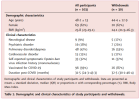
But this sample is a real mixum-gatherum
1765449374917.png

The need for a placebo group is so clear - I'd say you could report something similar for the Lightning Process/CBT/etc:
The eight most burdensome symptoms, defined as those with the highest estimated mean scores during the pre-treatment period, demonstrated a consistent downward trend in symptom burden over the 24 and 36-week treatment period. This trend was statistically significant from week 1 for the following symptoms: memory loss, endurance/exercise tolerance, post-exertional malaise, and reduction in daily functioning/mobility. From week 2, improvements became significant for muscle weakness, fatigue, and hypersensitivity to sensory input. Concentration problems reached statistical significance from week 3 (Fig. 4). Overall, the patients experienced lasting symptom relief of the eight most burdensome symptoms after a median (IQR) of 5 (5–9) days (Figure S2).
 
The treatment costs almost 4000 euros a month, and it sounds like (rumors) that the participants of the study might have paid this themselves.
 
The treatment costs almost 4000 euros a month, and it sounds like (rumors) that the participants of the study might have paid this themselves.
Wow that's quite something.

The lidocaine patches that help a subgroup of chronic pain patients are quite expensive so GPs can understandably be reluctant to prescribe as there is limited evidence base (lack of rct's). But GPs tend to continue if they are a significant help to their patients.
 
Back
Top Bottom