Effectiveness of Cognitive Behavioural Therapy on Sleep Outcome for Patients With CFS in a Routine Clinical Service, 2026, Chinvararak/Sterry/Chalder

Dolphin

Senior Member (Voting Rights)

Effectiveness of Cognitive Behavioural Therapy on Sleep Outcome for Patients With Chronic Fatigue Syndrome in a Routine Clinical Service​

Authors​

  • Chotiman Chinvararak
    Department of Psychological Medicine, Division of Academic Psychiatry, King's College, London, United Kingdom; Department of Psychiatry, Faculty of Medicine Vajira Hospital, Navamindradhiraj University, Bangkok, Thailand
  • Olivia Sterry
    Persistent Physical Symptoms Research and Treatment Unit, London, United Kingdom
  • Trudie Chalder
    Department of Psychological Medicine, Division of Academic Psychiatry, King's College, London, United Kingdom; Persistent Physical Symptoms Research and Treatment Unit, London, United Kingdom

Abstract​

Objective:

We aimed to study the effectiveness of CBT for sleep difficulties in patients with chronic fatigue syndrome/myalgic encephalitis (CFS/ME).

Method:

We conducted a retrospective cohort study at the Persistent Physical Symptoms Research and Treatment Unit, Maudsley Hospital, between 2014 and 2019. The primary outcome was sleep quality and other sleep parameters assessed by the Pittsburgh Sleep Quality Index (PSQI). The secondary assessments comprised the Chalder Fatigue Questionnaire (CFS), the Work and Social Adjustment Scale (WSAS), and the Short-Form Health Survey (SF-36). The data were gathered at baseline, discharge, and follow-up periods (3, 6, and 12 months). A paired samples t-test, repeated measures ANOVAs, and the Friedman Test were used to determine the effectiveness of CBT. A linear mixed model was employed to evaluate the effect size of CBT.

Results:

From all 217 participants (71.4% female; mean age = 39.42 ± 12.32 years), 85.7% experienced poor sleep quality. The associated factors of poor sleep quality at baseline included primary education/secondary education/vocational qualification (ORadj = 3.74, 95% CI [1.03, 13.64], p = .046), CFS score (ORadj = 1.08, 95% CI [1.02, 1.15], p = .015), SF-36 score (ORadj = 0.98, 95% CI [0.96, 0.99], p = .015), WSAS score (ORadj = 1.06, 95% CI [1.02, 1.11], p = .004) and HADS-A score (ORadj = 0.80, 95% CI [0.69, 0.93], p = .004). CBT had a substantial positive effect on sleep parameters, fatigue, and physical functioning over a 12-month follow-up period (p < .05).

Conclusion:

CBT had a significant positive effect on the sleep parameters. This effect persisted during a 12-month follow-up period. The results suggest CBT is an effective treatment for CFS/ME patients with sleep problems.
 
So this was not an experimental design rather an audit of input to patients seen by the service as part of their regular provision between 7 and 12 years ago. There was no control and patients were diagnosed under the now obsolete previous NICE guidelines that were subsequently replaced by the 2021 rewrite. The article though published this year, so well after the publication of the new guidelines, makes no mention of PEM which if I remember correctly was not essential for diagnosis under the old guidelines.

The CBT used was described as:

Cognitive Behavioural Therapy (CBT; Adamson et al., 2020; Beck, 1997) is a structured, brief, and time-limited therapy. The number of individual sessions varied due to the individual's symptoms, treatment progression, and goals, but usually, patients were offered up to 16 sessions. The average duration was around 60 minutes. The objective of CBT in this context was to address the cognitive and behavioural factors interacting with the patient's physical symptoms, emotional distress, and disabilities. The first session consisted of an assessment in which therapists and participants collaboratively developed a case formulation, including identification and agreeing individual goals.

Therapeutic approaches included
1) Guiding patients to make links between symptoms, distress and cognitive behavioural coping responses,
2) Establishing a consistent pattern of rest and activity before collaboratively building up activity if required,
3) Addressing sleep difficulties via sleep hygiene, education, bed restriction and stimulus control
4) Problem-solving to help patients address emotional and social stress and increase a sense of bodily control.

CBT was provided by clinical psychologists or cognitive behaviour therapists who were specifically trained in CBT for CFS/ME.
 
Assessed = 349
Included = 217
Completed = 105
3 months = 87
6 months = 71
12 months = 46

They had >50 % dropout during the intervention and almost 80 % dropout at the end of the follow up.

It was the usual CBT, including gradually increasing activity levels:
Therapeutic approaches included
1) Guiding patients to make links between symptoms, distress and cognitive behavioural coping responses,

2) Establishing a consistent pattern of rest and activity before collaboratively building up activity if required,

3) Addressing sleep difficulties via sleep hygiene, education, bed restriction and stimulus control

4) Problem-solving to help patients address emotional and social stress and increase a sense of bodily control.
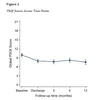
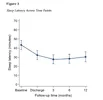
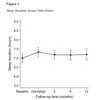
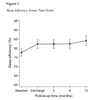
The changes in the scores are rather unimpressive:
IMG_0080.webpIMG_0081.webpIMG_0082.webpIMG_0083.webp

Surprisingly, they acknowledge that the changes are probably not clinically signficiant:
Nevertheless, the effect size of the sleep outcome in this study needs to be interpreted cautiously since some studies that target sleep difficulties specifically have suggested that the clinical efficacy of CBT should reduce the global PSQI score by at least 25% (Wei et al., 2024; Ye et al., 2015).
The limitations also acknowledge that the lack of control group means they can’t determine causality.

Unsurprisingly, that does not stop them from claiming there were significant causal effects:
Conclusion

This is the first study to explore the effectiveness of CBT on sleep parameters in a cohort of CFS/ME patients seen in a routine clinic. We found a high prevalence of poor sleep quality in our cohort. In addition, CBT significantly and positively affected sleep parameters, including sleep quality, sleep latency, and sleep efficiency, as well as most secondary outcomes.
 
So you start with 217 participants and end up with 46 at 12 month follow up. How can this be claimed to be a study of 217 patients?

Does it say whether the compared those 46 at 12 months with the same 46 at the start to see whether their sleep had improved, or did the compare them with the whole cohort scores at the start? Either way, the dropout rate makes nonsense of the conclusions.
 
So you start with 217 participants and end up with 46 at 12 month follow up. How can this be claimed to be a study of 217 patients?

Does it say whether the compared those 46 at 12 months with the same 46 at the start to see whether their sleep had improved, or did the compare them with the whole cohort scores at the start? Either way, the dropout rate makes nonsense of the conclusions.

This design tells us nothing conclusive about the effectiveness of the intervention, rather at best it tells us that the service is maintaining consistent outcomes. Ideally you need an experimental design that establishes the value of an intervention then a design like this is used to identify how well specific services are implementing it.

However losing people at this rate from an ongoing clinical caseload does not look very reassuring.
 

Effectiveness of Cognitive Behavioural Therapy on Sleep Outcome for Patients With Chronic Fatigue Syndrome in a Routine Clinical Service​

Authors​

  • Chotiman Chinvararak
    Department of Psychological Medicine, Division of Academic Psychiatry, King's College, London, United Kingdom; Department of Psychiatry, Faculty of Medicine Vajira Hospital, Navamindradhiraj University, Bangkok, Thailand
  • Olivia Sterry
    Persistent Physical Symptoms Research and Treatment Unit, London, United Kingdom
  • Trudie Chalder
    Department of Psychological Medicine, Division of Academic Psychiatry, King's College, London, United Kingdom; Persistent Physical Symptoms Research and Treatment Unit, London, United Kingdom

Abstract​

Objective:

We aimed to study the effectiveness of CBT for sleep difficulties in patients with chronic fatigue syndrome/myalgic encephalitis (CFS/ME).

Method:

We conducted a retrospective cohort study at the Persistent Physical Symptoms Research and Treatment Unit, Maudsley Hospital, between 2014 and 2019. The primary outcome was sleep quality and other sleep parameters assessed by the Pittsburgh Sleep Quality Index (PSQI). The secondary assessments comprised the Chalder Fatigue Questionnaire (CFS), the Work and Social Adjustment Scale (WSAS), and the Short-Form Health Survey (SF-36). The data were gathered at baseline, discharge, and follow-up periods (3, 6, and 12 months). A paired samples t-test, repeated measures ANOVAs, and the Friedman Test were used to determine the effectiveness of CBT. A linear mixed model was employed to evaluate the effect size of CBT.

Results:

From all 217 participants (71.4% female; mean age = 39.42 ± 12.32 years), 85.7% experienced poor sleep quality. The associated factors of poor sleep quality at baseline included primary education/secondary education/vocational qualification (ORadj = 3.74, 95% CI [1.03, 13.64], p = .046), CFS score (ORadj = 1.08, 95% CI [1.02, 1.15], p = .015), SF-36 score (ORadj = 0.98, 95% CI [0.96, 0.99], p = .015), WSAS score (ORadj = 1.06, 95% CI [1.02, 1.11], p = .004) and HADS-A score (ORadj = 0.80, 95% CI [0.69, 0.93], p = .004). CBT had a substantial positive effect on sleep parameters, fatigue, and physical functioning over a 12-month follow-up period (p < .05).

Conclusion:

CBT had a significant positive effect on the sleep parameters. This effect persisted during a 12-month follow-up period. The results suggest CBT is an effective treatment for CFS/ME patients with sleep problems.
Only here to see if Chalder has learned to count properly yet?
 
Back
Top Bottom