Evidence for impaired activation of the hypothalamic-pituitary-adrenal axis in patients with chronic fatigue syndrome, 1991, Demitrack et al

ScoutB

Senior Member (Voting Rights)
Evidence for Impaired Activation of the Hypothalamic-Pituitary-Adrenal Axis in Patients with Chronic Fatigue Syndrome

DEMITRACK, MARK A.; DALE, JANET K.; STRAUS, STEPHEN E.; LAUE, LOUISA; LISTWAK, SAM J.; KRUESI, MARKUS J. P.; CHROUSOS, GEORGE P.; GOLD, PHILIP W.

Abstract
Chronic fatigue syndrome is characterized by persistent or relapsing debilitating fatigue for at least 6 months in the absence of a medical diagnosis that would explain the clinical presentation. Because primary glucocorticoid deficiency states and affective disorders putatively associated with a deficiency of the arousal-producing neuropeptide CRH can be associated with similar symptoms, we report here a study of the functional integrity of the various components of the hypothalamic-pituitary-adrenal axis in patients meeting research case criteria for chronic fatigue syndrome.

Thirty patients and 72 normal volunteers were studied. Basal activity of the hypothalamic-pituitary-adrenal axis was estimated by determinations of 24-h urinary free cortisol-excretion, evening basal plasma total and free cortisol concentrations, and the cortisol binding globulin-binding capacity. The adrenal cortex was evaluated indirectly by cortisol responses during ovine CRH (oCRH) stimulation testing and directly by cortisol responses to graded submaximal doses of ACTH. Plasma ACTH and cortisol responses to oCRH were employed as a direct measure of the functional integrity of the pituitary corticotroph cell. Central CRH secretion was assessed by measuring its level in cerebrospinal fluid.

Compared to normal subjects, patients demonstrated significantly reduced basal evening glucocorticoid levels (89.0 +/- 8.7 vs. 148.4 +/- 20.3 nmol/L; P less than 0.01) and low 24-h urinary free cortisol excretion (122.7 +/- 8.9 vs. 203.1 +/- 10.7 nmol/24 h; P less than 0.0002), but elevated basal evening ACTH concentrations. There was increased adrenocortical sensitivity to ACTH, but a reduced maximal response [F(3.26, 65.16) = 5.50; P = 0.0015). Patients showed attenuated net integrated ACTH responses to oCRH (128.0 +/- 26.4 vs. 225.4 +/- 34.5 pmol/L.min, P less than 0.04). Cerebrospinal fluid CRH levels in patients were no different from control values (8.4 +/- 0.6 vs. 7.7 +/- 0.5 pmol/L; P = NS).

Although we cannot definitively account for the etiology of the mild glucocorticoid deficiency seen in chronic fatigue syndrome patients, the enhanced adrenocortical sensitivity to exogenous ACTH and blunted ACTH responses to oCRH are incompatible with a primary adrenal insufficiency. A pituitary source is also unlikely, since basal evening plasma ACTH concentrations were elevated. Hence, the data are most compatible with a mild central adrenal insufficiency secondary to either a deficiency of CRH or some other central stimulus to the pituitary-adrenal axis. Whether a mild glucocorticoid deficiency or a putative deficiency of an arousal-producing neuropeptide such as CRH is related to the clinical symptomatology of the chronic fatigue syndrome remains to be determined.


Web | DOI | The Journal of Clinical Endocrinology & Metabolism | Paywalled | Sci-Hub
 
That's an interesting old paper to have a good look at, thanks @scout. Thanks to the member who sent me a copy.

I think it's good to start by looking who the authors are.

Mark Demitrack, Janet Dale, Stephen Straus, Louisa Laue, Sam Listwak, Markus Kruesi, George Chrousos, Philip Gold

Clinical Neuroendocrinology Branch (M.A.D., S.J.L., P. W.G.) and Child Psychiatry Branch (M.J.P.K.), National Institute of Mental Health;
the Medical Virology Section, Laboratory of Clinical Investigation, National Institute of Allergy and Infectious Diseases (J.K.D., S.E.S.),
Developmental Endocrinology Branch, National Institute of Child Health and Human Development (G.P.C., L.L.),
National Institutes of Health, Bethesda, Maryland 20892


So, it's very much an NIH project. It's interesting to see Stephen Straus' name there. He seems to have been very much into complementary medicine, very much 'shades of Walitt'.
Stephen E. Straus, M.D., served as the first Director of the National Center for Complementary and Alternative Medicine (NCCAM)* at the National Institutes of Health (NIH).

As Director of the Center from 1999 to 2006, Dr. Straus built a comprehensive research enterprise, championing the efforts to establish the efficacy and safety of complementary health practices while upholding the rigorous standards of science for which the NIH is known.

He articulated a compelling agenda for scientific research and research training that, through his leadership, engendered broad interest and collaboration. Under his leadership, research on complementary and integrative health at NIH grew threefold, facilitating his vision of an evidence-based integrative approach to health care for the benefit of the public.

This time in the history of 'chronic fatigue syndrome' is not something I know much about. I know Straus was a co-author of the Fukuda criteria and seemed to promote a BPS view of the illness; I think he suggested that chronic fatigue syndrome was an invention of the 1980s. I wonder if he was someone like Lloyd, who initially appeared to be open to an immunological cause, but veered off down the BPS track when nothing much was found?

So, I guess there is a question there about whether the results of studies like this resulted in the strengthening of BPS and central sensitisation theories, or whether the results reported in the abstract are actually the result of the beliefs. Perhaps those who know more about the history can fill in some of the gaps.
 
Introduction

Numerous hypotheses have been advanced to account for this syndrome, with recent attention on the presence of subtle abnormalities in cell-mediated and humoral immunity, along with atypical profiles of antibody re-sponses to Epstein-Barr and other viral antigens (2-4). These findings and the observation that the syndrome occasionally follows an episode of infectious mononucle-osis led to speculation that the illness reflected a form of chronic Epstein-Barr virus infection. Subsequent con-trolled studies of seroepidemiology (5-7) and antiviral therapy (8) proved that Epstein-Barr virus infection cannot be a tenable explanation for most cases of the syndrome, although a role for persistent viral infection in its pathogenesis has not been definitively excluded.

Several lines of evidence suggest that the various com-ponents of the hypothalamic-pituitary-adrenal axis merit further study in these patients. For instance, debilitating fatigue, an abrupt onset precipitated by a stressor, fever-ishness, arthralgias, myalgias, adenopathy, postexer-tional fatigue, exacerbation of allergic responses, and disturbances in mood and sleep are all characteristic of glucocorticoid insufficiency (9). Moreover, patients with Cushing's disease (10, 11), hypothyroidism (12), and seasonal affective disorder (13), who present with similar behavioral syndromes characterized by profound lethargy, fatigue, and depressed mood (often referred to as atypical depressive syndromes), show evidence of hypo-functioning of hypothalamic CRH neurons.
These latter findings are of interest because CRH not only serves as the principal stimulus to the pituitary-adrenal axis, and hence could be involved in cases of subtle adrenal insufficiency, but also is a behaviorally active neurohormone whose central administration to animals and nonhuman primates induces signs of physiological and behavioral arousal, including sympathetic nervous system activation (14), hyperresponsiveness to sensory stimuli (15), and increased locomotion (16).
I'm not sure that that is all hanging together. They are suggesting that CFS looks like atypical depressive syndromes including Cushings disease, hypothyroidism and seasonal affective disorder for which there is evidence of 'hypo-functioning of hypothalamic CRH neurons'. And then they say that administering CRH to non-human primates activates the sympathetic nervous system and results in hyper-responsiveness to sensory stimuli.

A prevailing idea has been that the sympathetic nervous system is up-regulated in (ME)/CFS - resulting in too much 'fight or flight' and not enough 'rest and digest', and to much hyper-responsiveness to sensory stimuli. The idea has been that we just need to calm down with a spot of mindful colouring in or meditation. So, it's unclear whether a suitable explanation for ME/CFS is too much or too little CRH. Perhaps that is why these authors wanted to do the study.
 
Yea @Hutan had the same questions about what these guys believed back in the day. I am starting to feel like they think about the ‘HPA-axis’ like the greeks thought about humors in the body. Like they'd really like it if every illness could be explained as some slight imbalance in the amount of CRH, ACTH or cortisol.

I started going through the paper but got bogged down with brain fog and trying to decide which results were relevant to my search so I'm interested to hear your take on things.
 
Like they'd really like it if every illness could be explained as some slight imbalance in the amount of CRH, ACTH or cortisol.
Well the senior author and first author appear to be from the 'Clinical Neuroendocrinology Branch', so I guess it's a case of 'have hammer, will at the very least look hard to see if it can be used.

Methods
Twelve men and 18 women were selected from among a larger cohort of 127 patients recruited between 1979 and 1988 at the NIH. All met CDC criteria for chronic fatigue syndrome. Selection was also based on availability for the duration, ability to comply with the strict dietary and medication-free requirements of the study, and willingness to participate, rather than upon disease illness or severity. Not all patients agreed to participate in each of the components of the study. All patients were fully ambulatory.
In 27 patients, the syndrome was precipitated by an acute febrile illness.
All patients underwent serial physical examinations and laboratory evaluations for at least 2 yr before the study, during which time no alternative medical diagnoses could be established.

So, the 30 participants with CFS were highly selected. They accounted for less than a quarter of the patients that sound to have been extensively studied over 2 years, with all sorts of tests having been done. It is possible that there was some selectivity after tests of HPA hormones were done. With 'not all patients agreeing to all of the components of the study', there is further scope for some results that didn't quite fit with expectations to be excluded. I guess we have to proceed on the basis that the reported results are genuine, but there is certainly quite a lot of scope for the application of bias.

Seventy-two normal volunteers were recruited for study. They were matched for age within 1 decade and were not significantly different from the patients in their sex distribu-tions (see Table 1).
I don't think the statement that sex distribution was not significantly different is ikely to be true. 18/30 patients were female, that's 60% female. 29/72 "normals" (as Table 1 describes them) were female, that's 40.3%. An online calculator tells me that is a statistically significant difference. In any case, just looking at those percentages, it's quite clear that there could be bias if a hormone varies by sex. That's particularly true if not all of the participants were included in each test.

The methods section says that 'Females were studied during the follicular phase', so, it's great that there was attention to that. But I would have thought that endocrinologists would have paid more attention to properly matching the controls. They had a lot more controls than they needed, so, they could have not included some of the male controls. It seems to me very odd that they didn't.

The age matching isn't perfect either - matching to within one decade is a bit loose. The patients' mean age was 36.9 +- 1.6 (it's not clear what the +- value is, SD?)*. The controls' mean age was 32.5 +-0.9.

So, I think, lots of scope for bias, and a very odd selection of controls.

* Later in the Data analysis section it is noted that the +- figures are one standard error of the mean
All data are expressed as the mean ±1 SEM.
 
Last edited:
In any case, just looking at those percentages, it's quite clear that there could be bias if a hormone varies by sex. That's particularly true if not all of the participants were included in each test.
More on the sex bias, it is enormously worse in some of the studies. Fair play to the authors, Table 1 gives us some information, but it really is not ok.

For the oCRH infusion studies for example,
CFS group 10/19 were females, that's 52.6% female. The mean age was 36.4 years
Control group 5/18 were females, that's 26.8% female. The mean age was 26.8 years

For the ACTH infusion
CFS group had 10/12 females - note, only 12 participants
Control group had 5/10 females - only 10 participants

The sample size is not great, there's enormous scope for bias in the selection of the participants, and the two groups are very different. They are different on age and sex, and probably on quite a lot of other things that tend to flow from age and sex too.

I haven't got to the results yet, but I don't think we can assume that this study tells us anything reliable about ME/CFS.
 
Results:
Psychiatric history, behavioral ratings, and their correlation with hormonal variables

I just want to jump ahead to this section for a moment.

Since identification of psychiatric illnesses by standard diagnostic criteria includes many symptoms that are an inherent part of the definition of chronic fatigue syndrome (e.g. fatigue, lethargy, sleep disturbance), we first evaluated the structured interview results using restrictive criteria that excluded symptoms attributable to chronic fatigue syndrome. By this method, 6 patients reported a lifetime history of major depression, 7 a life-time history of anxiety disorder, and only 1 met criteria for somatization disorder (see Tables 3, 4 and 5).

However, using criteria that included all symptoms as behaviorally relevant, 12 of 30 patients reported a lifetime history of major depressive illness, 7 reported a lifetime history of anxiety disorder, and 3 met criteria for somatization disorder. Given the occurence of more than 1 diagnosis in 7 patients, 16 of 30 met criteria for a lifetime history of psychiatric illness. In 10 of the subjects, psychiatric illness preceded the onset of chronic fatigue syndrome. These findings are similar to those reported previously by ourselves and others (30-35). There were no statistically significant associations between a history of psychiatric illness or its onset relative to the onset of the chronic fatigue and any of the hormonal parameters studied (unpaired t test comparisons).
I thought it was really remarkable that these authors are acknowledging that the test for psychiatric illnesses won't differentiate between chronic fatigue syndrome and psychiatric illness because of the overlap in symptoms such as 'fatigue, lethargy and sleep distrubance'. It's not that BPS authors are incapable of seeing the problem, it's that they carry on regardless.

Notably, they found no association between psychiatric illness and hormone levels.
 
Results:
Evaluation of the basal function of the hypothalamic-pituitary-adrenal axis

tldr: yes, some statistically different mean values between the small highly selected but poorly matched groups, the mean values appear to be within normal ranges and there is likely to be a lot of variation within the groups and a lot of overlap in the ranges of the two groups.
The CBG-binding capacity result has been majorly confounded by the poorly matched control group. CBG-binding capacity is affected by oestrogen levels. So, having very different percentages of females in the groups means the means can't be meaningfully compared.

Basal cortisol
In 19 patients and 18 controls, 3 sequential plasma samples were drawn for ACTH and cortisol 15, 8, and 0 min (2000 h) before the injection of ovine CRH (oCRH). Basal cortisol-binding globulin (CBG)-binding capacity and free cortisol index were also evaluated at 0 min.
These samples were taken at around 8 pm - three samples in the 15 minutes before another test was done.

Compared to controls, patients with chronic fatigue syndrome showed a significant reduction in basal total plasma cortisol, as assessed by the mean of the three baseline samples taken immediately before injection of oCRH (89.0 ± 8.7 us. 148.4 ± 20.3 nmol/L; P < 0.01).
So, it does look as though the plasma cortisol measured at 8 pm is lower in the CFS patients than in the controls. But, these results don't suggest abnormal levels of evening cortisol. Here is a reference range I found:
  • Adults:
    • 8 AM to noon: 5-25 mcg/dL (138-690 nmol/L)
    • 8 PM to 8 AM: 0-10 mcg/dL (0-276 nmol/L)
That suggests that the results for both groups fall within the bounds of normality.

Basal ACTH
In contrast, basal levels of ACTH were significantly elevated in the patients (2.7 ± 0.4 vs. 1.6 ± 0.2 pmol/L; P < 0.02; see Table 2 and Fig. 2).
As far as I can work out, these values are both within normal ranges i.e. less than 4.5 pmol/L for an evening measurement. Literature about adrenal insufficiency talks about 100 pmol/L as being diagnostic - so there are wildly higher values in a pathological state. It's hard to know, it depends on the test, but as far as I can see neither of the means are remarkable.

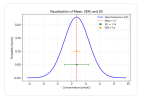
Remember, the use of SEM minimises the variation. SEM is concerned about the mean value, not the spread of the individual values. To get standard deviation, I think you multiply the SEM by the SQRT of the sample size. With 19 patients, that means the standard deviation of that measure for the patients is 1.7. Don't rely on my maths, but I think the conclusion should be that there was a lot of variation that has been camouflaged by the use of the SEM. There was probably a lot of variation in results within a group and there will have been enormous overlap between the two groups. There's probably a reason why they don't give a scatterplot of the results.

AI made me a chart to illustrate the issue with SEM and SD, assuming a normal distribution. See how small the SEM is compared to the standard deviation? See how anything between 1 and 5 pmol/L is a likely individual result.
Screenshot 2026-05-05 at 3.27.03 PM.png

Basal CBG-binding capacity
Basal CBG-binding capacity was higher in patients (490.5 ± 14.1 us. 418.5 ± 30.0 nmol/L; P < 0.03), so that the calculated free cortisol index was also significantly reduced (2.9 ± 0.3 vs. 8.9 ± 2.9 nmol/L; P < 0.04).
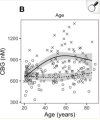
This is where the poorly matched controls become important. Oestrogen increases CBG (so things like pregnancy and being on the contraceptive pill have a big impact on the CBG, but so does being a woman or a man). CBG is a protein that binds 80 to 90% of plasma cortisol - storing it, making it inactive. It matters enormously whether you are looking at women or men, and what age they are.

One molecule of CBG binds one molecule of cortisol. The binding capacity test strips out the cortisol from a plasma sample and then puts a certain amount of cortisol with the sample, and measures how much of the added cortisol is bound.

There's a study here:
Sex Differences in Basal Cortisol Levels Across Body Fluid Compartments in a Cross-sectional Study of Healthy Adults, 2024
that has this nice chart of age and sex differences in levels of CBG. The crosses are the women, the noughts are the men.

Screenshot 2026-05-05 at 4.08.51 PM.png

When you consider the higher percentage of women in the patient group than the control group, it makes sense that the plasma CBG and the binding capacity of it will be higher in the patient group. (Of the 19 patients, 10 were women and the mean age was 36; of the 18 controls, 5 were women and the mean age was 27.)

The authors of the 1991 study have no excuse. They worked in an endocrinology department, endocrinologists in the1990s certainly knew that CBG levels were influenced by oestrogen. It is hard to draw any conclusion other than either these researchers were incompetent, or they deliberately loaded the dice when they selected the patient and control groups.

The more I learn about this stuff, the more I am astounded by the poor quality of these studies that have been used to prop up BPS and central sensitisation theories and therapies.
 
Last edited:
It’s interesting to see how far back this research goes. The study clearly shows that CFS patients have significantly lower basal cortisol levels and 24-hour urinary excretion compared to healthy controls. While it suggests the problem isn't primary adrenal insufficiency, it points toward a central HPA axis dysfunction that still hasn't been fully resolved today.
 
My ME/CFS started on 01 april (no joke) 1991.

As @Hutan pointed out, probably manipulating testing in favor of BPS.

How many researchers, willingly, did the same?

My gut feeling is "quite a lot".

My onset was 1995, so I have had ME for nearly half my life.

Thirty five years of inconclusive research, such that we have no treatments but also failure to dismiss so many theories that still influence unevidenced interventions. It may be that the hypothalamic-pituitary-adrenal axis is in some way implicated in ME/CFS, but we are no where nearer demonstrating this one way or the other, which does not stop people citing the idea in relation for so many potential interventions.
 
It’s interesting to see how far back this research goes. The study clearly shows that CFS patients have significantly lower basal cortisol levels and 24-hour urinary excretion compared to healthy controls. While it suggests the problem isn't primary adrenal insufficiency, it points toward a central HPA axis dysfunction that still hasn't been fully resolved today.
I'm not sure how closely you have been following the cortisol issue @FicaR94?

Specifically regarding this paper, the sample is of Fukuda CFS and the small sample was very highly selected. There is no consistent sample size for the different tests - that's a problem because it makes it easy for the researchers to drop out the data of a few participants for whatever reason, and to stop testing more participants when they have got an answer they like. Their bias does not even need to be conscious, but there is evidence that it exists.

Crucially, the basal cortisol mean was normal and individual results overlapped with those of the controls. I haven't read as far as the 24-hour urinary excretion result, but the problems I've seen in the first few tests makes me think that this whole paper is full of problems. It's just not good enough to be evidence of anything but the low quality of research that has slowed progress in understanding ME/CFS for decades.
 
Just adding the remainder of the results here for completeness. Note (as Hutan mentioned) how tiny and gender skewed the groups of patients and controls were for each test. A few other caveats:
  • All the subjects were studied as in-patients. In some cases, they were in the facility for 10 days. The effect of this lifestyle change (which perhaps involves an increase in activity for patients vs a decrease for controls) is a confounder these old HPA papers occasionally mention. I have yet to see one try and do something about it or even figure out how large a bias it could be introducing.
  • The patients were sufficiently sick that half of them were unable to work at all (the remainder are described as working "full or part-time"). They had been sick for over 7 years on average. Do the results below differ from those we would expect to see in any non-working, sedentary population? The HPA papers occasionally mention this sort of problem but, again, I have yet to see anyone seriously look into it.

24-hour Urinary Free Cortisol - patients were lower
Patients: 9M, 10F, 36.4 ± 1.9 years old
Controls: 13M, 5F, 26.8 ± 1.2 years old
24-h UFC excretion was significantly reduced in patients with chronic fatigue syndrome (n = 19) compared to controls (n = 20; 122.7 ± 8.9 vs. 203.1 ± 10.7 nmol/24 h; P < 0.0002; see Fig. 1).
The big HPA-ME/CFS review (Cleare, 2003) had this to say about Urinary Free Cortisol btw:
It has been argued that 24-h UFC is an unreliable indicator of HPA activity. Assays for cortisol have a large variability at the lower end of the spectrum, making its use for detecting low levels less precise. Furthermore, free cortisol only represents 2–3% of the circulating cortisol metabolites. thus, any shift in cortisol metabolic pathways could potentially affect the measured UFC even if there were no change in cortisol production. It has also been proposed that commercially available kits for assessing UFC may systematically overestimate UFC in urine.

Basal ACTH (8pm) - patients were higher
Patients: 9M, 10F, 36.4 ± 1.9 years old
Controls: 13M, 5F, 26.8 ± 1.2 years old
In contrast, basal levels of ACTH were significantly elevated in the patients (2.7 ± 0.4 vs. 1.6 ± 0.2 pmol/L; P < 0.02; see Table 2 and Fig. 2).

Dose-response study of ACTH administration - patients had a 'non-zero' cortisol response starting at a lower dose of ACTH than controls, but went on to release less cortisol than controls at larger ACTH doses.
Patients: 2M, 10F, 37.8 ± 1.7 years old
Controls: 5M, 5F, 34.2 ± 1.2 years old

All subjects demonstrated significant dose-related adrenocortical responses to ACTH. However, there were significant differences in the overall dose-response curves between patients and controls, as indicated by a significant subject by dose interaction effect [Greenhouse-Geisser conservative F(3.26, 65.16) = 5.50; P = 0.0015)]. These differences were evident at both low and high dose ACTH administration.

At the lower doses of ACTH, only patients showed net integrated cortisol responses that were significantly different from placebo effects. On the other hand, normal control subjects failed to show a significant response to either 0.003 or 0.01 μg/kg ACTH. As further evidence of adrenocortical hyperresponsiveness to low dose ACTH, the computer-fitted estimate of the half-maximal cortisol rise (ED50) occurred at a lower dose of ACTH in the patients than in the normal controls (0.007 ± 0.002 vs. 0.011 ± 0.003 μg/kg).

In contrast to the exaggerated cortisol response to lower doses of ACTH, patients with chronic fatigue syndrome showed an attenuated response to the higher doses of ACTH. Post-hoc comparisons between groups at each separate dose showed a reduction in maximal adrenocortical responsiveness in the patient group at the two highest doses of ACTH, 0.1 μg/kg (P < 0.05) and 1.0 μg/kg (P < 0.08). Furthermore, the computer-fitted estimate of the maximal net integrated cortisol response was also reduced (16,951 ± 1,071 vs. 22,155 ± 1,043 nmol/ L-min; see Table 3 and Fig. 3).

ovine CRH (oCRH) stimulation test - patients released less ACTH in response to CRH, but that lower ACTH resulted in the same final level of cortisol as controls.
Patients: 9M, 10F, 36.4 ± 1.9 years old
Controls: 13M, 5F, 26.8 ± 1.2 years old

Compared to normal controls, the basal hypocortisolism in patients with chronic fatigue syndrome was associated with a significant attenuation of the net integrated ACTH response to the evening administration of oCRH (128.0 ± 26.4 vs. 225.4 ± 34.5 pmol/L-min; P < 0.04; see Tables 2 and 4 and Fig. 2). Despite this reduction in pituitary corticotroph responsiveness, the net integrated cortisol response was virtually identical in both groups (36,962.8 ± 1,951.2 vs. 38,026.1 ± 2,633.0 nmol/L-min; P = NS). Therefore, compared to controls, patients with chronic fatigue syndrome had a proportionately higher cortisol response to the amount of ACTH released during stimulation with oCRH.

This was reflected by a significantly lower ratio of ACTH/cortisol responses in the patients (0.003 ± 0.001 us. 0.006 ± 0.001; P < 0.02), compatible with the data from the ACTH dose-response study above, suggesting an increase in the sensitivity of adrenocortical responsiveness to low circulating levels of ACTH.

CBG is responsive to the negative feedback effect of circulating glucocorticoids (29). Therefore, in addition to determining this measure just before the administration of oCRH, it was assessed 60 min after injection.

Consistent with an increased glucocorticoid effect, there was a significant fall in the CBG-binding capacity during the first 60 min of the oCRH stimulation test in all subjects along with dramatic increases in the calculated free cortisol index. However, at 60 min, the CBG-binding capacity remained significantly elevated in the patients compared to the normal controls, while the free cortisol index remained reduced (see Tables 2 and 4).

Cerebrospinal fluid CRH and ACTH - no difference from controls
Patients: 6M, 13F, 36.4 ± 1.9
Controls: 15M, 11F, 30.6 ± 1.5

Both patients and controls showed similar levels of CSF CRH (8.4 ± 0.6 vs. 7.7 ± 0.5 pmol/L; P = NS) and CSF ACTH (6.9 ± 0.3 vs. 7.3 ± 0.3 pmol/L; P = NS; see Table 5). Protein, glucose, and IgG concentrations and total cell counts were similar in patients and controls and were within normal ranges in all subjects.
 
Back
Top Bottom