Exploratory analyses of Immunologic Features in a Randomized, Placebo-Controlled Trial of Nirmatrelvir/Ritonavir for Long COVID
This exploratory analysis of PAX LC, a Phase 2, 1:1 randomized, double-blind, superiority, placebo-controlled trial examined whether treatment with nirmatrelvir/ritonavir (NMV/r) versus placebo/ritonavir (PBO/r) in individuals with Long COVID could reveal immune features associated with symptom improvement.
Eighty-two participants (n=45 PBO/r; n=37 NMV/r) provided blood samples at baseline (Day 0) and post-treatment (Day 28). Baseline demographic and immunological phenotypes were similar in the two groups.
No significant differences were observed in major immune cell populations or organ function markers between NMV/r vs. PBO/r groups, or before vs. after the treatment. Modest hematologic changes were noted in the NMV/r arm. SARS-CoV-2-specific IgG levels remained constant, with changes in total immunoglobulin subtypes and isotypes in both arms.
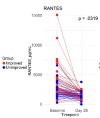
Both arms showed similar shifts in cytokine levels. Notably, the levels of S1 and Spike proteins in circulation remained unchanged post-treatment. Regardless of the treatment arm, participants with self-reported symptom improvement showed reductions in the level of the inflammatory chemokine RANTES.
Taken together, the findings of this study demonstrate limited virological and immunological changes in response to nirmatrelvir, contributing insights into the reason for the lack of benefit of the 15-day NMV/r treatment in Long COVID.
Web | DOI | PDF | Preprint: MedRxiv | Open Access
Bornali Bhattacharjee; Mitsuaki Sawano; William B Hooper; Kexin Wang; Alexandra Tabachnikova; Valter Silva Monteiro; Peiwen Lu; Pavlina Baevova; Gisele C Rodrigues; Victoria L Fisher; Cesar Caraballo; Rohan Khera; Shu-Xia Li; Jeph Herrin; Dany Christian; Andreas Coppi; Frederick Warner; Julie Holub; Yashira Henriquez; Maria A Johnson; Theresa B Goddard; Erica Rocco; Amy C Hummel; Mohammad Al Mouslmani; Kevin D Carr; Lawrence Charnas; Magdia De Jesus; Dale Nepert; Paula Abreu; Frank W Ziegler; John Spertus; Leying Guan; Harlan Krumholz; Akiko Iwasaki
This exploratory analysis of PAX LC, a Phase 2, 1:1 randomized, double-blind, superiority, placebo-controlled trial examined whether treatment with nirmatrelvir/ritonavir (NMV/r) versus placebo/ritonavir (PBO/r) in individuals with Long COVID could reveal immune features associated with symptom improvement.
Eighty-two participants (n=45 PBO/r; n=37 NMV/r) provided blood samples at baseline (Day 0) and post-treatment (Day 28). Baseline demographic and immunological phenotypes were similar in the two groups.
No significant differences were observed in major immune cell populations or organ function markers between NMV/r vs. PBO/r groups, or before vs. after the treatment. Modest hematologic changes were noted in the NMV/r arm. SARS-CoV-2-specific IgG levels remained constant, with changes in total immunoglobulin subtypes and isotypes in both arms.
Both arms showed similar shifts in cytokine levels. Notably, the levels of S1 and Spike proteins in circulation remained unchanged post-treatment. Regardless of the treatment arm, participants with self-reported symptom improvement showed reductions in the level of the inflammatory chemokine RANTES.
Taken together, the findings of this study demonstrate limited virological and immunological changes in response to nirmatrelvir, contributing insights into the reason for the lack of benefit of the 15-day NMV/r treatment in Long COVID.
Web | DOI | PDF | Preprint: MedRxiv | Open Access