Factors Associated with Fibromyalgia Diagnosis amongst People Meeting Criteria: Results from UK Biobank 2026 Kim et al

Andy

Senior Member (Voting rights)

Abstract​


Objective​

The diagnosis of fibromyalgia (FM) is challenging due to the absence of definitive biomarkers, numerous overlapping comorbidities and its reliance on patient-reported symptoms. Discrepancies between diagnostic criteria and clinical practice imply the possibility of diagnostic biases, complicating timely and accurate identification. This study aimed to identify factors associated with receiving a FM diagnosis, among individuals who met 2016 criteria, and explore potential barriers to diagnosis.

Methods​

Using data from UK Biobank, we analysed a total of 27 potential factors across four biopsychosocial domains for differences between individuals who had received a clinician's diagnosis and those who had not. Multivariable log-binomial regression was used within and across domains to evaluate prevalence ratios regarding the independent association of factors with FM diagnosis.

Results​

Among the 4,197 individuals meeting FM criteria, 72.6% reported not having received a clinician's diagnosis. The identified eight factors significantly associated with not having a diagnosis were: being male, older age, self-reported concomitant diagnosis (presence of neuropathy, absence of chronic fatigue syndrome or complex regional pain syndrome), shorter pain duration, lower polysymptomatic distress scores, and less frequent fatigue.

Conclusion​

In conclusion, the majority of individuals meeting FM criteria did not have a diagnosis. Several factors associated with not receiving clinician's diagnosis are aligned with stereotypical perceptions of FM. These findings highlight areas of future research to facilitate an early diagnosis and improve access to effective treatment for individuals for whom a diagnosis of FM is appropriate.

Paywall
 
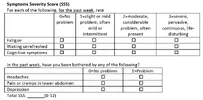
Looking at the 2016 fibromyalgia criteria, I think perfectly healthy humans would often score ≥5 on this:

1786097347936.webp

and ≥7 on this in 4/5 regions:

1786097425889.webp


Think of people who do or did manual labour, people who are overweight or obese, people who are very inactive or very active...but really just humans with bodies. The pain doesn't have to be of any particular severity, just widespread.

The other way to meet the criteria is WPI = 4-6 in 4/5 areas and SSS ≥ 9, so less pain and more fatigue, basically.

And, wait for it:
Fibromyalgia is diagnosed if you meet all 3 criteria 1-3, independent of whether other diagnoses contribute to these symptoms. This is new: FMS diagnosis used to require that there be no other diagnosis to explain the findings.

Walitt was involved in the 2016 criteria. See here.
 
being male, older age, self-reported concomitant diagnosis (presence of neuropathy, absence of chronic fatigue syndrome or complex regional pain syndrome), shorter pain duration, lower polysymptomatic distress scores, and less frequent fatigue
What is "biopsychosocial" about this? This is just basic demographic or clinical data.
Several factors associated with not receiving clinician's diagnosis are aligned with stereotypical perceptions of FM
Cheap passive voice cop-out, power without responsibility.
 
Yes, as the article states, the data picked up symptoms of FM in persons not diagnosed with FM. These were cases where the purported FM-like symptoms were lighter in intensity.

Also, more males and males are known to visit doctors less frequently (fewer diagnoses?) much less for a female predominant diagnosis (the horror!).

Not a revelation here.

FM is easily diagnosed and recognizable by rheumatologists. They rule out other known diseases that could account for the symptoms. Obviously this wasn't done in the undiagnosed people in the report.

Ho-hum.
 
Last edited:
Back
Top Bottom