From Symptoms to Systems: Interpretable AI for Myalgic Encephalomyelitis and Depression Diagnosis, 2026, Khan

Dolphin

Senior Member (Voting Rights)

M. -I. Khan and F. Ahmed, "From Symptoms to Systems: Interpretable AI for Myalgic Encephalomyelitis and Depression Diagnosis," 2026 IEEE 2nd International Conference on Quantum Photonics, Artificial Intelligence & Networking (QPAIN), Chittagong, Bangladesh, 2026, pp. 1-6, doi: 10.1109/QPAIN69676.2026.11545830.
keywords: {Modeling;Machine learning;Depression;Accuracy;Fatigue;Machining;Printing;Random forests;Explainable AI;Training;Myalgic Encephalomyelitis;Chronic Fatigue Syndrome;Depression;Stress;Fatigue;Random Forest},

Abstract:​

Diagnosis of mental health conditions such as ME/CFS and Depression is complicated due to their similarity in symptoms, while AI technologies have shown remarkable success in the diagnosis of both mental health conditions.

Machine learning techniques have shown notable potential in diagnosing mental health conditions.

However, an effective system with the capability of differentiating ME/CFS from Depression is still not developed, specifically focusing on larger datasets and explainable AI (XAI) approaches.

This research aims to address this limitation by proposing an ML framework to enhance classification performance between ME/CFS and depression and incorporating XAI methods, including SHAP and LIME.

This will ensure interpretability and transparency of the model decisions.

The expected outcome is an improved diagnostic model achieving higher accuracy and reliability while providing trustworthy and interpretable insights into the distinguishing features of ME/CFS and depression.

Published in: 2026 IEEE 2nd International Conference on Quantum Photonics, Artificial Intelligence & Networking (QPAIN)
 
Diagnosis of mental health conditions such as ME/CFS and Depression is complicated due to their similarity in symptoms
I guess that part sentence tells us quite a lot about what it is like to have ME/CFS in Bangladesh.

'Mental health condition' is a label that leaves things very unclear as to what is meant, which I guess is part of the appeal.


This research aims to address this limitation by proposing an ML framework to enhance classification performance between ME/CFS and depression and incorporating XAI methods, including SHAP and LIME.
There's a paywall. I probably don't want to know how the machine learning framework is distinguishing between ME/CFS and depression, but I guess it is not doing worse than many clinicians. And, perhaps it does it without eye rolls and sexist comments.

I'm sure we will see more of this.
 
There's a paywall. I probably don't want to know how the machine learning framework is distinguishing between ME/CFS and depression, but I guess it is not doing worse than many clinicians. And, perhaps it does it without eye rolls and sexist comments.
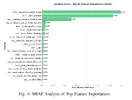
I can't explain in detail, but from this figure, it looks like the most important/highly weighted features were PHQ-9 scores, FSS scores, and whether PEM is present.

1000107080.webp
 
Worth noting that they use a synthetic dataset, not real patient data.
This dataset is designed to help machine learning practitioners and researchers explore the challenging task of differential diagnosis between Myalgic Encephalomyelitis / Chronic Fatigue Syndrome (ME/CFS) and Depression.
The data is synthetic but modeled after real-world clinical features such as fatigue severity, depression scores, sleep quality, cognitive symptoms, and lifestyle factors. It includes realistic noise and missing values to simulate conditions found in actual medical datasets.
All features are generated with clinically inspired logic to ensure meaningful patterns for model training and analysis.

It looks like quite a few people have already done something similar to this paper – achieved ~99% accuracy in distinguishing ME/CFS and depression using various ML methods.
 
I can't explain in detail, but from this figure, it looks like the most important/highly weighted features were PHQ-9 scores, FSS scores, and whether PEM is present.
Ha, so the answers from asking people how depressed they are (e.g. over the last two weeks, how often have you felt down, depressed or hopeless?'), asking people if they have PEM, and, to a lesser extent, asking people if they are fatigued can together distinguish depressed people from people with a condition that requires PEM?

It's sort of taking the obvious and wrapping it up with a technological bow on top.
 
I don't get the point of this. Just read the diagnostic criteria and see how different they are. Listen to the patient describing their symptoms and function.

And don't start with the false assumption that ME/CFS is a mental health condition.

Is this a case of taking a bunch of questionnaires which we already know are unsatisfactory, and using ML / AI to try to disentangle the mess created by the questionnaires?
 
Back
Top Bottom