General Neuroscience Discussion

Jonathan Edwards

Senior Member (Voting Rights)
Moderation note: This post was copied, and the following 8 posts moved, from the thread: Evidence that mecfs is a neurological, physical or sensory illness?


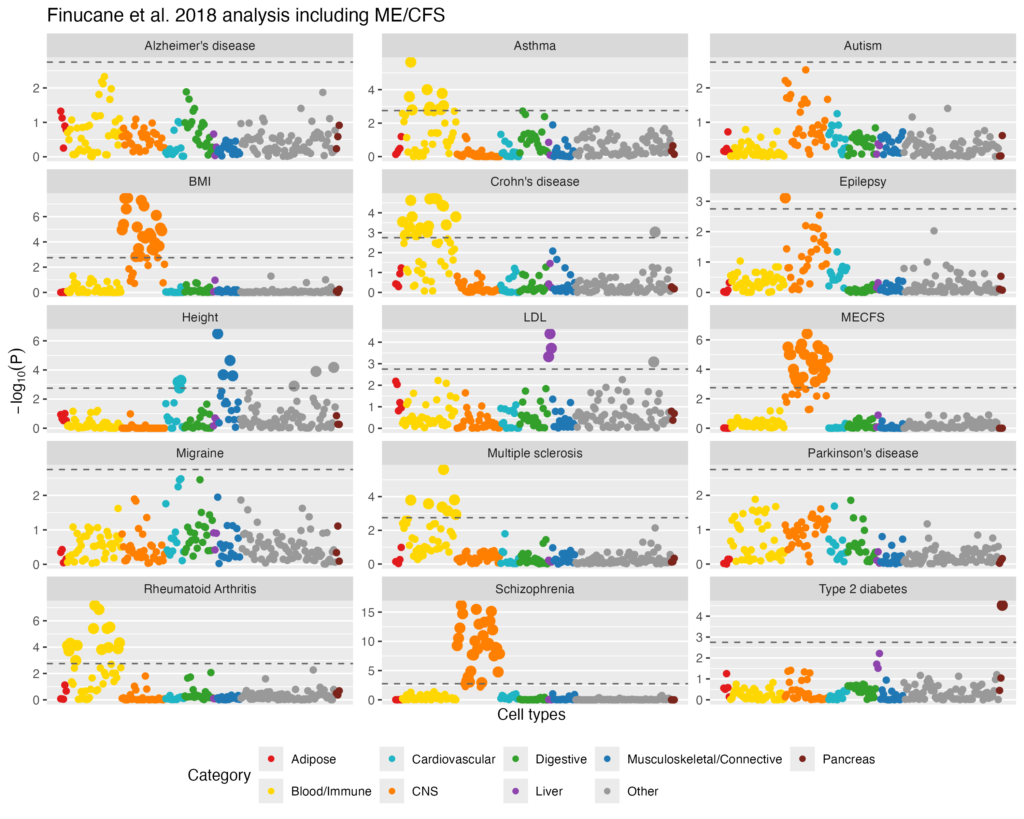
Finucane_with_MECFS-1024x819.png
 
Last edited by a moderator:
Is BMI a neurological disorder? It's body mass index, right?
Yeah that's weird if so! Maybe some CNS signalling with lipids makes it hard to shed wait or easy to put it on?

[Edit: Thinking of it, I began to gain weight much more easily around the time of my prodromal phase fwiw, and I was 19 so it was kind of weird. Could easily be unrelated though]

The ME tissue expression is stark. The lack of immune cell expression is a concern to me (great for fans of brain only theories though!). I think we talked a while back about BTNs being expressed on so many things that they wouldn't show up as immune cell expression or something similar?
 
Is BMI a neurological disorder? It's body mass index, right?
It’s about hunger. People that are more predisposed to feel hunger will eat more on average. It was very useful to survive when food was scarce and prioritising food could help you, but when food is available all the time in large quantities it leads to eating more than your body needs to maintain weight.

There are probably other aspects to high BMI as well, but that’s a different topic.
 
Maybe the BMI question deserves its own thread but to tack on one more comment...

The neuroscience of hunger/satiety/loss of appetite seems to be one brain thing we actually understand relatively well, because it's possible to observe it in lab animals. From loosely reading that literature over time, my sense is 'lower'/probably subconscious areas of the brain (such as the hypothalamus) are constantly analyzing signals from the rest of the body and turning that into the conscious hunger/impulses to eat etc. that we experience. I remember one paper where they found some neurons (I believe in the hypothalamus again) where, when activated, the mouse/rat would immediately take a bite out of whatever was in front of it. So it seems easy to imagine how this could be wired slightly differently from one person to the next and completely change their experience of eating/weight management etc.

My personal experience has been being borderline underweight all my life because I just forget to eat. Then I read experiences of people describing food noise (intrusive thoughts about food that people just can't turn off) and it seems obvious that we're just not being dealt the same cards here.

 
Back
Top Bottom