Participants had " self reported" QFS
" Participation was voluntary, and informed consent was obtained electronically prior to survey completion."
Given the survey was over 3 years, when was informed consent obtained ( per survey /at the beginning / at the end ?) , and what happened to any data already gathered if informed consent was not obtained
" During each annual measurement, participants were able to provide additional information and feedback on the questionnaire through open-ended questions. This feedback was systematically reviewed and used to refine and update subsequent versions. Each revised questionnaire was again reviewed by people with lived experience and lived-experience experts prior to use in the next questionnaire wave. Preliminary results were discussed with patients to support interpretation and to identify meaningful ways to present the findings. Healthcare professionals and other experts contributed to the development of the study design and instruments as well to ensure clinical and methodological relevance."
I am not big on stats or methodology , so this may not be anything out of the ordinary but whilst its great to have had those with lived experience input into questionnaires, and make them more meaningful, how do multiple revisions to questionnaires make the data comparable over time ? How do changes affect floor and ceiling effects ?..
50% patients lost to follow up after baseline ( initial 448 completed baseline questionnaires, 240 completed all 4 questionnaires then 41 were excluded ( unknown year of infection ; < 10years post infection at baseline)
The median age of patients was 57 years, and some ( 73%) had pre existing chronic conditions - there may be a natural decline over the 3 years of the study for some which may not be due to QFS, and some changes in medications may impact QFS symptom impact too.
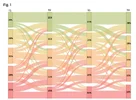
A good depiction of a fluctuating illness is in figure 1
Figure
1 illustrates the transitions in EQ-5D-5L utility score quintiles across all timepoints (T1 to T4)
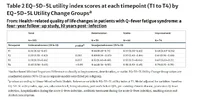
Health related quality of life changes - table 2 - of note "Within the total sample, no differences in EQ-5D-5L utility index were observed between T1–T2 and T1–T3, while significant differences were observed between T1–T4 (
p < 0.05). An intraclass correlation coefficient (ICC) of the random effects of 0.24, indicates that 24% of the total variance was attributable to between-person differences, and 76% due to within-person fluctuations over time (results not shown).
The EQ-VAS had a different distribution of change -more than half were stable, 20% improved and 20% deteriorated-perhaps as its a single item measure of current health
Interesting excerpts ( for me anyway)
Our finding that more than 75% of the total variance in HRQoL was attributable to within-person variation, highlights the heterogeneity across patients and within individuals. This emphasizes the value of frequent and longitudinal follow-up in capturing HRQoL changes, that would be missed by cross-sectional measurements [37]. Similar to a previous study in post-COVID patients, the within-person variability also supports the need to examine individual trajectories rather than just group-level changes [38].
Interpretation of HRQoL change is dependent on the analytical approach used [48, 49]. In this study, we applied two complementary methods: a distribution-based approach (LMM), and an anchor-based approach (using MID thresholds). Distribution-based methods are statistically robust and useful for detecting overall trends in the data, but they lack patient-centered context [29]. QFS patients often experience fluctuating symptoms and multiple health complaints. As a result, distribution-based methods may overlook clinically meaningful individual changes that are not reflected in group level statistics. Anchor-based methods, on the other hand, are more patient-centered, as they link changes in HRQoL to thresholds that are considered meaningful from the patient’s perspective [50]. This is particularly valuable in QFS, where symptoms like fatigue, pain, and cognitive dysfunction may not be fully captured by group level statistics [50]. Despite their widespread use, no consensus exists regarding the optimal method for measuring HRQoL change, with approaches varying depending on study design, outcome characteristics, and clinical context [51].
The use of " bolt on" parameters might be worth exploring for ME/CFS - the ones used here were Cognition, Sleep, Tiredness and Social relationships


