Simon M
Senior Member (Voting Rights)
Intro and summary
If all we know is that someone has a medical ME/CFS diagnosis, what is the chance they do have this, or at least do not have an undetected alternative diagnosis that would explain the illness?
This is particularly valuable information for biobanks, the main source of large samples of biological data, such as UK Biobank and All of Us. I looked into this question for the recent ME/CFS biobank GWAS replication paper to inform the discussion of the possible influence of different cohorts on the findings.
I was surprised that the evidence is as good as it appears to be, with four converging sources of evidence, including the three papers cited in that study. This thread is a revised version of that analysis.
The evidence indicates that if someone has a GP diagnosis only, they have roughly a 50-50 chance of an ME/CFS diagnosis, as opposed to an alternative explanation for the illness. For those who also have a diagnosis confirmed at an NHS clinic, the chance goes up to about two thirds:

I'm posting material in three phases:
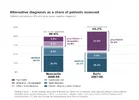
Phase 1 is the bedrock of the analysis: 2 detailed published studies showing diagnoses given to referrals at both the Newcastle and Barts CFS clinics. Both look good – including the Barts Peter White one. The studies cover a thousand referrals and the data converges on an estimate of about 50% not having ME/CFS.
Phase 2 looks at evidence of diagnostic rates in standard NHS ME/CFS clinics, which indicates a 77% diagnostic rate (~9,000 referrals, 4,100 with full data).
Phase 3 estimates the chances of having ME/CFS vs another medical cause for those with a medical diagnosis, and a more detailed look at the differences between UK Biobank, which recruited broadly, and DecodeME, which recruited mainly from the ME/CFS community. Those in the community are better informed and so it is more likely their diagnosis will be accurate.
I developed the analysis and conclusions in these posts using Claude as an analytical and editorial aid, including for checking the reasoning, copy-editing and presentation.
.
If all we know is that someone has a medical ME/CFS diagnosis, what is the chance they do have this, or at least do not have an undetected alternative diagnosis that would explain the illness?
This is particularly valuable information for biobanks, the main source of large samples of biological data, such as UK Biobank and All of Us. I looked into this question for the recent ME/CFS biobank GWAS replication paper to inform the discussion of the possible influence of different cohorts on the findings.
I was surprised that the evidence is as good as it appears to be, with four converging sources of evidence, including the three papers cited in that study. This thread is a revised version of that analysis.
The evidence indicates that if someone has a GP diagnosis only, they have roughly a 50-50 chance of an ME/CFS diagnosis, as opposed to an alternative explanation for the illness. For those who also have a diagnosis confirmed at an NHS clinic, the chance goes up to about two thirds:
I'm posting material in three phases:
Phase 1 is the bedrock of the analysis: 2 detailed published studies showing diagnoses given to referrals at both the Newcastle and Barts CFS clinics. Both look good – including the Barts Peter White one. The studies cover a thousand referrals and the data converges on an estimate of about 50% not having ME/CFS.
Phase 2 looks at evidence of diagnostic rates in standard NHS ME/CFS clinics, which indicates a 77% diagnostic rate (~9,000 referrals, 4,100 with full data).
Phase 3 estimates the chances of having ME/CFS vs another medical cause for those with a medical diagnosis, and a more detailed look at the differences between UK Biobank, which recruited broadly, and DecodeME, which recruited mainly from the ME/CFS community. Those in the community are better informed and so it is more likely their diagnosis will be accurate.
I developed the analysis and conclusions in these posts using Claude as an analytical and editorial aid, including for checking the reasoning, copy-editing and presentation.
.
Last edited: