Immune Dysregulation and Persistent Symptoms: Insights into T Cell Dynamics in Post-COVID among Athletes from the CoSmo-S Study, 2026, Ringleb+

SNT Gatchaman

Senior Member (Voting Rights)
Staff member
Immune Dysregulation and Persistent Symptoms: Insights into T Cell Dynamics in Post-COVID among Athletes from the CoSmo-S Study
Ringleb, Miriam; Bizjak, Daniel Alexander; Nieß, Andreas Michael; Notbohm, Hannah; Predel, Hans-Georg; Puta, Christian; Steinacker, Jürgen Michael; Widmann, Manuel; Zacher, Jonas; Bloch, Wilhelm; Javelle, Florian

BACKGROUND
Over 10% of all SARS-CoV-2 infections lead to persistent symptoms, a condition called post-COVID condition (PCC). For elite athletes, whose performance is central, PCC poses significant challenges. It is suggested that immune cells, particularly regulatory and effector T cells, play a key role in symptom persistence nonetheless it has not yet been investigated.

OBJECTIVE
This study investigates immune dynamics after SARS-CoV-2 infection and assesses whether symptom persistence is accompanied by T cell dysregulation in highly trained athletes.

METHODS
Thirty-six highly trained athletes were included in this study after experiencing SARS-CoV-2 infection. Athletes’ data were analyzed 2–4 weeks after infection (T0) and 3–4 months later (T1). They were categorized into two groups: those with persistent symptoms (PS) and those without (SF). Their immune cell distribution was assessed via flow cytometry.

RESULTS
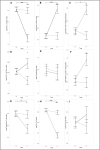
In the PS group, there was an increase in T helper (Th) cell 17 and Th2 cells from T0 to T1, whereas in the SF group, these cell types either decreased or remained unchanged, respectively. Furthermore, Th1 cells decreased and natural (NK) cells increased from T0 to T1 in the PS group, while no changes were observed in the SF group. No changes were observed in Tregs nor in other cell types.

CONCLUSION
This dysregulation of the immune system toward humoral immunity indexed by a rise in Th2 and Th17 cells and a decrease in Th1 cells over time could be indicative of a possible virus persistence contributing to persistent symptoms.

CLINICAL TRIAL REGISTRATION
The study has been registered in the German Clinical Trials Register (DRKS00023717).

Web | DOI | PDF | Journal of Clinical Immunology | Open Access
 
Caption for the above figure:
Participants’ levels of (A) Th1, (B) Th2, (C) NK cells, (D) Th17, (E) Treg, (F) Naïve T cells, (G) Treg/Naïve T cell ratio, (H) Th1/Th2 ratio, (I) Th17/Treg ratio from T0 to T1.

Data are presented as adjusted means for baseline levels ± standard error.

At T0, 16 athletes were in the PS group and 14 were in the SF. At T1, eight were included in the PS group and ten in the SF group.

Only post hoc results from the time-by-group interaction are presented.

Solid line: PS [persistent symptoms]; dashed line: SF [symptom free].

Time differences are presented using the following symbols; *: p < .050, **: p < .010, ***: p < .001.

Group differences are presented using the following symbols; #: p < .050, ##: p < .010, ###: p < .001
 
Thanks for the assist @forestglip.

Reading through this paper, there are definite limitations, some of which the authors acknowledge.
There is also almost a 50% decrease in the number of participants/samples from T0 vs. T1 (30 vs 18), which would have some impact on results I assume.

Side note: It seems like having participants undergo maximum effort exercise testing only 2-4 weeks post acute infection - especially those still experiencing symptoms - runs the risk of potentially making some worse. Would any have recovered and not developed LC if they had taken a bit more time off? Who knows.

In my own case I sometimes wonder if I could have avoided developing ME (not LC) had I not attempted to resume training so soon.
 
I get the impression that we may see a slew of papers claiming this or that T cell population shift, when we are just looking at chance variations. Hundreds of labs are probably trying their hand at this and the junior authors will need papers out of it. Reporting in terms of TH17 and TH2 subsets isn't what i would like to see. Too much pre-interpretation and not enough raw data as usual.
 
I can't judge the quality of studies in detail. But as a patient who feels they have most likely herpes virus reactivation I welcome every study that concludes that the immune system of LC and ME/CFS patients gives the impression as there was ongoing viral infection.

Because I imagine that with these results the researchers will be able to access more funds and do more rigorous research into the viral infection hypotheses in ME/CFS so that in the end we will have robust knowledge of the role of herpes and other viruses.
 
I can't judge the quality of studies in detail. But as a patient who feels they have most likely herpes virus reactivation I welcome every study that concludes that the immune system of LC and ME/CFS patients gives the impression as there was ongoing viral infection.

Trouble is, that is what science is supposed not to be about doing - liking studies that will prove what you already believe. It is about showing you, or others, were wrong.
 
Trouble is, that is what science is supposed not to be about doing - liking studies that will prove what you already believe. It is about showing you, or others, were wrong.
I am aware that philosophically theses can't be proved but only shown to be wrong.

We therefore discussed extensively during my studies "abductive reasoning", which means that we should agree that of all the existing hypotheses we should prefer the one that explains the problem best.

What hypothesis do we have? We have autoimmunity and viral reactivation. Which one of those is the better hypothesis? It's clearly herpes.
 
I am aware that philosophically theses can't be proved but only shown to be wrong.

That is actually a different and rather rarefied matter. Science moves forward by showing that the consensus knowledge is wrong, at leas tin the sense of being incomplete. Confirming what we already believe generates a science of standing still.

I think Popper was probably wrong in that a negative hypothesis must be provable if the positive version can only be refuted. The hypothesis that metals do not all have the same atomic number has been proven true!

We therefore discussed extensively during my studies "abductive reasoning", which means that we should agree that of all the existing hypotheses we should prefer the one that explains the problem best.

I call that common sense. I could never see the point of terms like 'abductive reasoning'. But that is a different matter from wanting to do more experiments to confirm your preference. Popper's advice was to do experiments that had the power to change ones preference if ones preference was wrong. That would ensure progress.
What hypothesis do we have? We have autoimmunity and viral reactivation.

We have discussed a whole lot more than that here over the last ten years. Neither of those seem very likely. There is an impressive body of data that fails to confirm either. Something like Reiter's, which is neither autoimmune nor due to persistent organisms as far as we know, might be an analogy. And there are various models to explain it. We are in the middle of a debate about various options on another thread. And on a different thread we are discussing things like FMF, which is neither either. It won't do for ME/CFS as a model because it is 100% genetic, but it might provide modular elements to work in to a model. Then there are models like narcolepsy, which might be autoimmune but also might not. MS isn't strictly autoimmune as far as we know - and although it is linked to EBV, which sticks around, the sticking around is not itself enough to explain the disease since it sticks around in everybody.

Lots of options. Herpes comes way down the list as far as I can see. We probably all have it hanging around without having ME/CFS.
 
We’re not going to get anywhere if people mostly look for evidence that their hypothesis is right. We have to try our very best to prove that it’s wrong, and ideally get other people to try as well.

Generating hypotheses is the easy part, so I don’t really understand why some researchers appear to be hesitant to test them to failure. Just move on to the next one if it doesn’t work out.

I’d rather be proven wrong and be able to change my view, than to be wrong and not be aware of it. I don’t like being wrong, but having been wrong is fine.
 
Back
Top Bottom