Incidence age is bimodal for [ME/CFS], with higher severity burden for early onset disease, 2026, McGrath et al

Thanks that’s really helpful! Yeah, seems like there’s nothing to the pattern. If I have more time I can try to go back through historical record to see if there were recent policy chances but it probably won’t reveal anything
Yea, it's just very tricky if we do not know when people developed me/cfs. Maybe checking the total amount vaccinated for different vaccines per country makes sense, but it still wouldn't be helpful if a large amount developed me/cfs 10+ years ago..
 
Something I have been wondering about is whether susceptibility might cluster around a regulatory shift that works a bit like a software update.

We are very used to the idea that in other types of animals complete software rewrites are obvious. The classic ones are insects undergoing metamorphosis as pupae, re-writing the caterpillar as a butterfly and tadpoles being re-written as frogs.

We know that the immune system undergoes shifts in things like thymic education of T cells but that isn't really a re-write and the timing doesn't seem to fit. Puberty is a sort of software re-write and so is menopause but again, as already mentioned, these do not seem to fit too well with the apparent peaks. People talk of male menopause but it isn't that obvious.
I would not be suprised if there are some brain dynamics that experience some large changes in certain phases of life either.
 
I do wonder whether early cases associating with family having the illness is confounded by factors other than environment or genetics. There could be a selection bias at play with parental awareness of the illness I suspect?
 
Last edited:
Something I have been wondering about is whether susceptibility might cluster around a regulatory shift that works a bit like a software update.

We are very used to the idea that in other types of animals complete software rewrites are obvious. The classic ones are insects undergoing metamorphosis as pupae, re-writing the caterpillar as a butterfly and tadpoles being re-written as frogs.

We know that the immune system undergoes shifts in things like thymic education of T cells but that isn't really a re-write and the timing doesn't seem to fit. Puberty is a sort of software re-write and so is menopause but again, as already mentioned, these do not seem to fit too well with the apparent peaks. People talk of male menopause but it isn't that obvious.

That leaves the possibility that there might be hypothalamic re-writes that we haven't thought of at all but that might make sense. The transition from responding to environment as a child to responding as an adult is quite big. Another shift in mid thirties might seem implausible but from an evolutionary point of view might not be totally unexpected. People's sleep patterns can change quite markedly in mid life, for instance.

Maybe the immune system itself does not change at these time points but the software for neural responses to immune signals that drives epigenetic changes over days, weeks or months undergoes shifts?
I’m by no means an expert here but wouldn’t that time frame also fit (adolescent) brain development? That starts a bit earlier at around nine to about 25 is what I’ve mostly read but was reminded of this big study that quoted the early thirties as another topological turning point.


“With these manifolds, we identified four major topological turning points across the lifespan – around 9, 32, 66, and 83 years old. These ages defined five major epochs of topological development, each with distinctive age-related changes in topology.”
 
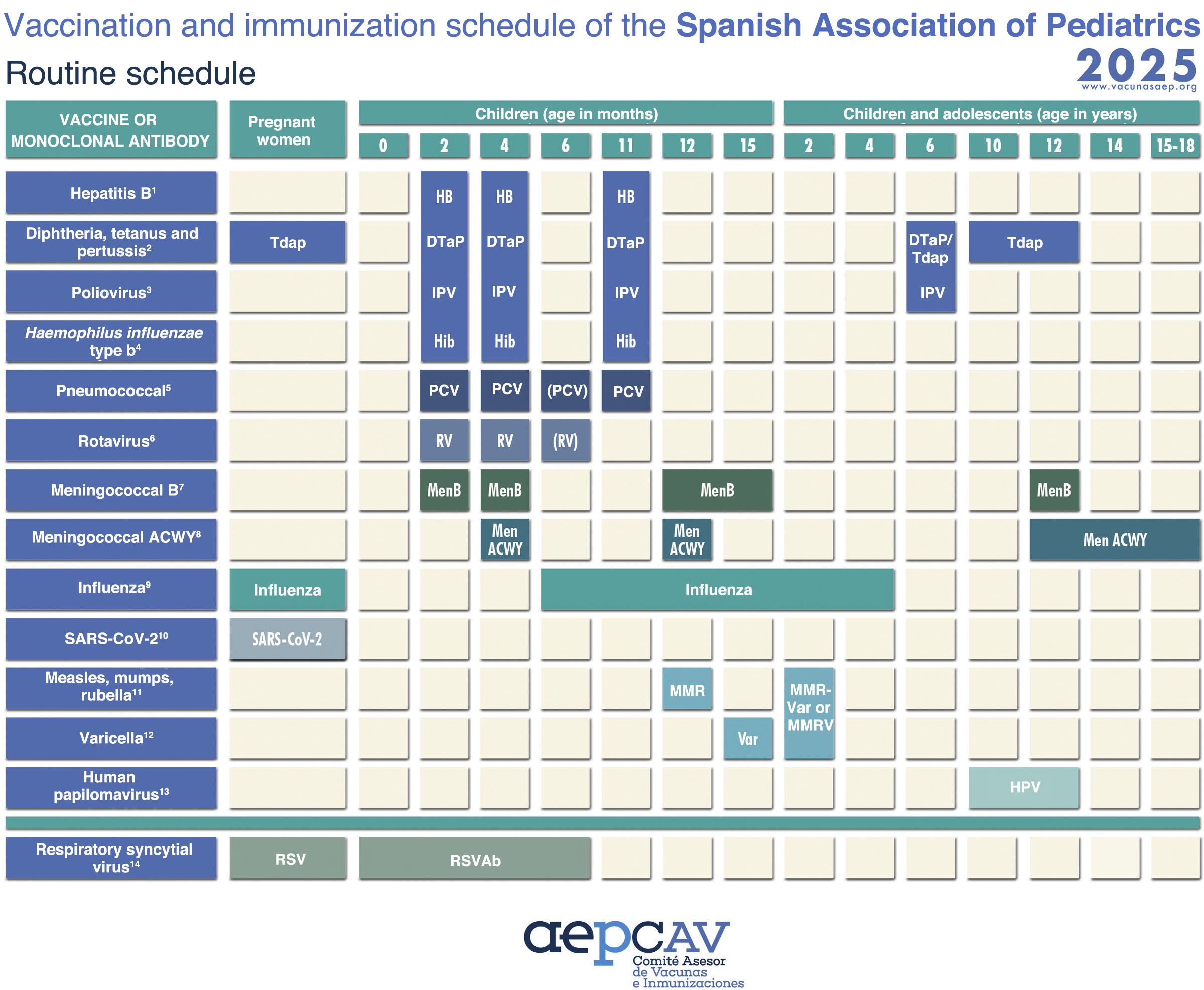
I may be well off the mark here and don't know the accuracy of these sources, but I did a quick search on MenACWY vaccination policies just to see if there were any trends that fit this data.
View attachment 31235

Norway noted that ages 16-19 may be a risk population due to graduation parties and travel, so recommends vaccination schedules to be completed right before this age:

Netherlands recommends for age 14:

Germany recommends for age 14 and again around college age:

In the UK it's around 14 years old:

In contrast, Spain which had an almost non-existent early onset spike, recommends the MenACWY vaccine only in infancy:

France doesn't seem to neatly fall into the pattern, though. It didn't have the strongest early peak, and it recommends the vaccine between 11-14:

Couple caveats: policies may have changed in recent decades so these sources might not reflect the reality of the people responding to the survey. This is also only for MenACWY--it seems like countries have different recommendations for menB boosters as well (Spain, for instance, recommends MenB boosters at 12)

Might be nothing relevant here but I just thought it would be interesting to check, especially since actual meningitis presents with sensory sensitivities similar to severe ME/CFS. LPS can trigger a neuroimmune "sickness behavior" response, so I thought a bacterial vaccine might be able to as well and might tie into some epigenetic mechanisms we've been discussing elsewhere. Or I could just be hallucinating a pattern where there is none.
I’m pretty sure the Norwegian recommendations at least do not correspond to what was common at the time the respondents to these surveys got sick. There has been a lot of discussion on the use of these vaccines and availability may differ a lot.
 
Last edited:
Regarding the Netherlands, there was an additional survey published in March 2024.

It was organised by the patiëntenfederatie for the creation of a new ME/CFS guideline (that is still underway). It asked about age of onset and had 1527 respondents. It confirmed a much larger peak in adolescence and probably none in the mid-thirties.

View attachment 31293
Source: https://www.patientenfederatie.nl/over-ons/onderzoeken/de-zorg-voor-me-cvs-patienten-moet-beter
Doesn't that just reflect the fact that someone who is 20 at the time of the survey may have got ill in their teens, but the 20 year olds at that time who will go on to develop ME/CFS in later years can't be counted. Similarly those who got sick 40 years ago will only show up if they are still alive. The ones who were teens 40 years ago will mostly be still alive and included, the ones who got sick 40 years ago at age 40+ are likely to be dead and not included. The net result is a big skew towards younger onset being included.

if you want to know age of onset from survey data, you need to take a particular calendar year or few adjacent years of onset that is fairly recent, and see how many new cases onset in that year(s) in each age group.

Which did they do?
 
Regarding the Netherlands, there was an additional survey published in March 2024.

It was organised by the patiëntenfederatie for the creation of a new ME/CFS guideline (that is still underway). It asked about age of onset and had 1527 respondents. It confirmed a much larger peak in adolescence and probably none in the mid-thirties.

View attachment 31293
Source: https://www.patientenfederatie.nl/over-ons/onderzoeken/de-zorg-voor-me-cvs-patienten-moet-beter
Various corrected typing bloopers

we don't have a good explanation for the dramatically different profile for the Netherlands. We think the diagnostic practices can be a big factor, e.g. comparing Norway with Sweden, doctors in Sweden are apparently reluctant to diagnose paediatric cases, though many are similar between Sweden and Norway.

I understand the Netherlands is good diagnosing paediatric cases, but I'm not sure that would explain the very low level of onset in early middle age
 
Last edited:
if you want to know age of onset from survey data, you need to take a particular calendar year or few adjacent years of onset that is fairly recent, and see how many new cases onset in that year(s) in each age group.
Agree with your points. Here they just asked all participants of the survey their age at onset of ME/CFS. That could have skewed findings towards younger onset but if I understand correctly this method is similar to the EMEA study. So it wouldn't explain why other countries show two peaks and the Netherlands only one?
 
Noticed that fellow ME/CFS patient from Italy Paolo Maccallini also did an analysis of the EMEA survey.
GitHub - paolomaccallini-hub/SurveyME: Reanalysis of the EMEA Pan-European ME Patient Survey by Machine Learning, Bimodal Analysis, and Local Outlier Factor · GitHub

Regarding bimodal age of onset he writes:
The bimodal fit based on two gamma densities for the age at onset was significant only for males (Figure 1), according to the two-sided Kolmogorov-Smirnov test. The lognormal fit gave a similar result, but the fit is less significant (see repository files). The normal fit was significant for males, but with a slightly higher p-value.
1774269121971.png

Figure 1. Gamma bimodal fit of age at first symptoms, performed by maximum likelihood estimation (MLE) by the function `mixfit()` of the R package `mixR`. The two-sided Kolmogorov-Smirnov test was used to test the null: the distribution comes from the fitted density.

The parameters of the two gamma densities for females, males, and both sexes are reported in Table 2. For the analogous results of the lognormal and normal distributions, see the files in the repository. Remember that only for males, the bimodal density significantly fits the data.
Group Proportion Mean SD
Younger Females 0.53 26.44 12.6
Older Females 0.47 41.28 8.26
Younger Males 0.62 26.71 12.77
Older Males 0.38 42.75 8.15
Younger Both sexes 0.54 26.44 12.61
Older Both sexes 0.46 41.43 8.29
Table 2. Parameters of the two gamma densities whose combination fits the distribution of age at first symptoms. Stratification by sex.

So rather than a Gaussian, he fit a gamma distribution which was only signifiant in males and the mean ages for the peaks seem higher.
 
Regarding the Netherlands, there was an additional survey published in March 2024.

It was organised by the patiëntenfederatie for the creation of a new ME/CFS guideline (that is still underway). It asked about age of onset and had 1527 respondents. It confirmed a much larger peak in adolescence and probably none in the mid-thirties.

View attachment 31293
Source: https://www.patientenfederatie.nl/over-ons/onderzoeken/de-zorg-voor-me-cvs-patienten-moet-beter

The EMEA survey included respondents from the netherlands right? Could we check if the EMEA survey has bimodal age peaks in the Netherlands subset?
 
The EMEA survey included respondents from the netherlands right? Could we check if the EMEA survey has bimodal age peaks in the Netherlands subset?
I think the study already did that and the Netherlands was sort of an outlier because it had a large early peak and weaker or almost no second peak.
1774271492268.png
I mainly added that second survey to show it had the same pattern.
 
Noticed that fellow ME/CFS patient from Italy Paolo Maccallini also did an analysis of the EMEA survey.
GitHub - paolomaccallini-hub/SurveyME: Reanalysis of the EMEA Pan-European ME Patient Survey by Machine Learning, Bimodal Analysis, and Local Outlier Factor · GitHub

Regarding bimodal age of onset he writes:

View attachment 31296


So rather than a Gaussian, he fit a gamma distribution which was only signifiant in males and the mean ages for the peaks seem higher.
Interesting! Gammas skew right so the means will be higher than the peaks so that checks out.
 
Last edited:
Trending on X
ME/CFS Strikes Teens and Mid-30s, Often Leading to Severe Illness

Last updated 23 minutes ago
These summaries are generated by AI:
A new study in Oxford Open Immunology analyzed data from Norway and six European countries, revealing ME/CFS often begins around age 16 or the mid-30s, with teen cases linked to infections and family history and tending to cause more severe illness. The condition brings profound fatigue, post-exertional malaise, sleep issues, cognitive fog, pain, and dizziness, yet up to 90% of cases go undiagnosed. Tomos's story from Swansea, Wales, shows the toll: once active, he became bedbound after a 2019 onset, as cases rise post-COVID and support services struggle to keep up.
 
Someone asked if the first peak could simply be a consequence of infectious mononucelosis/EBV hitting people in their teens.


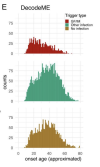
It's likely to be a substantial contributor, but it doesn't explain the first peak. See figure 3E4 for DecodeME onset ages, infectious mononucleosis, other infections and non-infectious also show an early onset spike.

And we also saw an early onset peak for non-infectious triggers in the EMEA data (I think this is in the supplementary materials, but I'm not certain).
 
Last edited:
Back
Top Bottom