Inspiratory airflow dynamics during sleep in veterans with Gulf War illness: A controlled study, 2011, Amin et al.

nataliezzz

Senior Member (Voting Rights)
Inspiratory airflow dynamics during sleep in veterans with Gulf War illness: A controlled study
Mohammad M. Amin, Zuzana Belisova, Sayeed Hossain, Morris S. Gold, Joan E. Broderick, Avram R. Gold
https://www.researchgate.net/publication/45630715_Inspiratory_airflow_dynamics_during_sleep_in_veterans_with_Gulf_War_illness_A_controlled_study (PDF available)

Purpose: To determine whether veterans with Gulf War Illness (GWI) are distinguished by sleep-disordered breathing, we compared inspiratory airflow dynamics during sleep between veterans with GWI and asymptomatic veterans of the first Gulf War.

Methods: We recruited 18 male veterans with GWI and 11 asymptomatic male veterans of the first Gulf War by advertisement. The two samples were matched for age and body mass index. Each participant underwent a first full-night polysomnogram (PSG) while sleeping supine using standard clinical monitoring of sleep and breathing. A second PSG was performed measuring airflow with a pneumotachograph in series with a nasal mask and respiratory effort with a supraglottic pressure (Psg) catheter to assess the presence of inspiratory airflow limitation during supine N2 sleep. We determined the prevalence of flow-limited breaths by sampling continuous N2 sleep and plotting inspiratory flow against Psg for each breath in the sample. We expressed the prevalence of flow-limited breaths as their percentage in the sample.

Results: Compared to controls, veterans with GWI had an increased frequency of arousals related to apneas, hypopneas, and mild inspiratory airflow limitation. During supine N2 sleep, veterans with GWI had 96 ± 5% (mean ± SD) of their breaths flow-limited while controls had 36 ± 25% of their breaths flow limited (p < 0.0001).

Conclusions: Veterans with GWI experience sleep-disordered breathing that may distinguish them from asymptomatic veterans of the first Gulf War.
 
Last edited by a moderator:
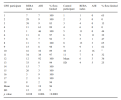
I made one thread for these two studies since they used the same subjects.

AI summary of the UARS theory (I am planning on making a new thread on the UARS theory with links to S4ME threads on all of the relevant studies such as this one, since multiple people commented my first one was too convoluted/hard to follow along with)
 
Apneas were defined here as >80% decrease in airflow from waking levels lasting at least 10s, hypopneas as a >50% decrease of inspiratory airflow for at least 10s from waking levels associated with an arousal from sleep. Respiratory effort-related arousals (RERAs) as arousals preceded by three or more breaths with an inspiratory airflow plateau that was above 50% of waking airflow. (these are different than the current recommend American Academy of Sleep Medicine [AASM] definitions which define apneas as ≥90% airflow reduction for ≥10s, hypopnea as ≥30% airflow reduction for ≥10s with ≥3% oxygen desaturation or an arousal)

Here is the individual data. As you can see, AHI/RDI (i.e. respiratory disturbance index - AHI + RERA index) does not appear to be the relevant factor here; some controls meet criteria for OSA (AHI ≥ 5) and others would meet traditional UARS criteria based on RDI (it varies, but is often AHI <5, RDI ≥10). In the GWI patients, AHI varied greatly but all had high % flow limitation. % flow limitation was determined by the following:
We sampled the airflow and Psg of the first three 2-min periods of continuous stage N2 sleep (approximately 90 breaths) to determine the prevalence of flow-limited breaths For participants with sleep apnea/hypopnea, sleep fragmentation often did not permit the sampling of two continuous minutes of NREM stage 2 sleep, For these individuals, shorter samples of continuous NREM stage 1 and NREM stage 2 sleep were summed with apneic breaths considered to be flow limited
1772675701336.png
 
Here is the individual data. As you can see, AHI/RDI (i.e. respiratory disturbance index - AHI + RERA index) does not appear to be the relevant factor here; some controls meet criteria for OSA (AHI ≥ 5) % flow limitation was determined by the following:
1772675701336.png
I haven't read the paper, but that's a very striking table. Zero overlap between groups for % flow limited
 
I haven't read the paper, but that's a very striking table. Zero overlap between groups for % flow limited

Maybe related to a batch effect of doing the sleep study on all the cases before they had finished recruiting the controls:
Because we analyzed our treatment trial data [23] before we completed recruitment of the control group for this study, we performed a second complete analysis (including staging, arousals, and breathing parameters) of the GWI participants’first PSG’s combined with those of our healthy controls by individuals who did not participate in the analysis of the treatment trial (this will explain small discrepancies between studies in the same parameters). Masking of the individual analyzing the PSGs was accomplished by assigning a random number to each PSG, unknown to the individual performing the analysis. During analysis of the pressure-flow plots to determine the presence of flow limitation, the Excel files for both GWI participants and controls were coded and mixed so that the interpreter did not know the status of the file being analyzed.

To me, it seems too good to be true to have that good of separation. Especially as this is a 15 year old study. I would expect a biomarker that perfectly separates groups to be followed up by other researchers. Or replicated by the same group.

When looking at papers that cited this paper, I don't see any titles that look like they tested the same thing in GWI.
 
Maybe related to a batch effect of doing the sleep study on all the cases before they had finished recruiting the controls:
OK, so just to understand what you are saying, you are suggesting that the difference between the two groups could be accounted for by different equipment/etc. used in the sleep studies? Like perhaps there was a different kind of nasal pressure transducer used at different time periods that could account for the differences in % inspiratory flow limitation between the GWI patients and controls? Because as stated in what you quoted there, the data from the GWI patients from the CPAP treatment trial study was all re-analyzed alongside the control data in this study (blinded to group status).
To me, it seems too good to be true to have that good of separation. Especially as this is a 15 year old study. I would expect a biomarker that perfectly separates groups to be followed up by other researchers. Or replicated by the same group.

When looking at papers that cited this paper, I don't see any titles that look like they tested the same thing in GWI.
I think you are underestimating the resistance to Dr. Gold's ideas within establishment sleep medicine. The party line is "sleep fragmentation by apnea/hypopnea-related arousals (perhaps with some contribution from RERAs) and hypoxemia is the cause of symptoms in sleep-disordered breathing (SDB) patients." Re: symptoms, the focus is largely on sleepiness and cognitive dysfunction (as well as cardiometabolic effects), and there is little/no awareness that it could be causing these other symptoms/disorders (and the concept of SDB driving disorders like GWI doesn't make sense under a traditional sleep fragmentation/hypoxemia paradigm - you need some sort of sensitization piece involved to explain it). There was one reply to his hypothesis piece Functional somatic syndromes, anxiety disorders and the upper airway: A matter of paradigms published in Sleep Medicine Reviews in 2011 from a couple sleep doctors (he said it has gone largely ignored though) - excerpts from the reply and Dr. Gold's reply to the reply below:

Is there a link between mild sleep disordered breathing and psychiatric and psychosomatic disorders?
A basic premise of Gold’s model is the belief that mild SDB, i.e., upper airway resistance syndrome (UARS) or snoring, is very common in most of these disorders and may be causally related to them. However, a careful review of the literature linking SDB to functional somatic syndromes and anxiety disorders does not support such a statement. Specifically, the vast majority of studies that the author cites are based on self-reported data,2-9 lack a control group,10-16 have a small sample size,12,17-20 do not control for confounding factors or comorbid conditions,10-16 report nonsignificant results,17 or are case reports.21,22 Also, the studies on the use of continuous positive airway pressure (CPAP) for treating mild SDB and the associated symptoms suffer from the same methodological limitations (case reports, small sample sizes, or absence of a control group).12,16,20,22 Importantly, in most of the studies reviewed a selection bias may exist, as those patients with sleep problems from clinical populations were more likely to volunteer or to be referred by a physician to participate in the studies. Notably, no studies in general population random samples using polysomnography (PSG) that support the association of SDB with these functional disorders are cited.
Dr. Gold's reply (Sci-Hub link): There Is! (FSS = functional somatic syndromes)
In their words, “Notably, no studies in general population random samples using polysomnography that support the association of SDB with these functional disorders are cited.” To these investigators, one does not have contradictory facts until one has demonstrated SDB by polysomnography in a large sample of patients with FSS and anxiety disorders recruited by advertisement.
...
Drs. Vgontzas and Fernandez-Mendoza point to factors in various studies that make them less than definitive, but do not invalidate
them. Are the statistically significant findings of small studies untrue because the sample size is small? When one demonstrates that among patients with SDB, the prevalence of FSS decreases as the severity of SDB increases, does one need a healthy control group?15 Drs. Vgontzas and Fernando-Mendoza have correctly asserted that some of the studies I cite in the review are less than definitive, but if one considers the evidence in its entirety, I believe one will agree that there remains an association between the FSS and anxiety disorders, and upper airway dysfunction during wakefulness and sleep. In dismissing the studies whose findings are unexplained by the existing paradigm of SDB, Drs. Vgontzas and Fernando-Mendoza do not appear to be considering how science proceeds. New discoveries do not come from randomized, controlled studies performed with large sample sizes.

Only within the last couple years have some papers come out with large sample sizes showing that increased flow limitation predicts symptoms (psychomotor vigilance task lapses and self-reported sleepiness) in sleep-disordered breathing patients (S4ME links): 1, 2

#1 cites only one paper by Dr. Gold Con: Sleep fragmentation causes hypersomnolence in OSA, #2 does not cite Dr. Gold's work at all. So even though there is starting to be some recognition of the importance of flow limitation, mainstream sleep medicine is still not connecting it to Dr. Gold's theory.

Doctors studying disorders like fibromyalgia and GWI are simply not aware of his small studies/his theory, and if you show them his small studies of fibromyalgia and GWI patients, they might find it interesting, but they're not necessarily in a position to make similar larger studies happen (unless they have some strong connections to researchers in sleep medicine), and perhaps some just aren't interested/are personally invested in other hypotheses.

So if there is largely ignoring/active resistance to his paradigm from within sleep medicine, and perhaps some lukewarm interest from some doctors studying disorders like fibromyalgia/GWI (who are unlikely to come across his work in the first place), you can see why nothing has really come of it...
 
Last edited:
OK, so just to understand what you are saying, you are suggesting that the difference between the two groups could be accounted for by different equipment/etc. used in the sleep studies? Like perhaps there was a different kind of nasal pressure transducer used at different time periods that could account for the differences in % inspiratory flow limitation between the GWI patients and controls? Because as stated in what you quoted there, the data from the GWI patients from the CPAP treatment trial study was all re-analyzed alongside the control data in this study (blinded to group status).
I would assume they used the same equipment. I'm encompassing any possible change that could have happened between the two groups being tested separately. Maybe the seasons and weather changed and had some effect on sleep. Maybe a different technician attached the equipment to the second group, or maybe the same technician became more skilled at proper placement over time, and did it slightly differently.

Not to say that definitely explains the difference. I'd just be more confident about the result if they were tested together in random order. Ideally with the technician placing the equipment and making the measurements blinded to group status, but I don't know if that's possible. But much more confident if another independent group replicated it.

Perfectly discriminating biomarkers are pretty rare in medicine, so my instinct is to assume something went wrong somewhere. I can't say I'm 100% sure it's not everyone else ignoring this researcher, and I'd be happy to see this validated if it was real.
 
Pointed out by nataliezzz in the thread for the trial on the same participants:
Well, they do state the AHI for each patient (only 3/18 GWI patients did not meet criteria for OSA), and like I said in the other thread, even some of the asymptomatic controls (3/11) met criteria for OSA (AHI ≥ 5).

Okay, I see now in the table in post #3 that nearly all cases fulfilled criteria for obstructive sleep apnea (OSA) and nearly all controls didn't. (Also, the data for % flow limited for one of the two controls with OSA is missing. It's two, not three, controls, right?) So it's mainly demonstrating that people with sleep apnea have more flow limitation.

It's still a bit curious that a control with a high apnea-hyponea index (AHI) of 11 had a low % flow-limited of 32, and a case with a low AHI of 2 had a very high % flow-limited of 94. But there are only a couple of counter-intuitive instances like that.

Because of the confounder of OSA, I don't think one can conclude much about gulf war illness from this.
 
Okay, I see now in the table in post #3 that nearly all cases fulfilled criteria for obstructive sleep apnea (OSA) and nearly all controls didn't. (Also, the data for % flow limited for one of the two controls with OSA is missing. It's two, not three, controls, right?) So it's mainly demonstrating that people with sleep apnea have more flow limitation.
3/11 (27%) controls met criteria for OSA - I wouldn't say that's "nearly all controls didn't" [have OSA].
It's still a bit curious that a control with a high apnea-hyponea index (AHI) of 11 had a low % flow-limited of 32, and a case with a low AHI of 2 had a very high % flow-limited of 94. But there are only a couple of counter-intuitive instances like that.
An AHI of 11 is considered low - mild OSA.
Because of the confounder of OSA, I don't think one can conclude much about gulf war illness from this.
OSA is not a confounder (at least mild OSA) - there is no separate UARS from OSAS, that was what I was trying to convey with all the quotes from Dr. Gold, the data re: snoring and sleepiness from the Sleep Heart Health Study, and the stuff about hypopneas vs. RERAs being arbitrary (a hypopnea is inspiratory flow limitation). If you really wanted to make sure you're excluding those with the OSAS phenotype where symptoms are primarily/partly driven by sleep fragmentation/hypoxemia, you could exclude those with an AHI ≥15, those with predominant apnea, etc. but it makes no sense to just exclude everyone with an AHI ≥5 because like I said, there is no data showing that apneas/hypopneas are driving symptoms in mild OSA (and we have multiple asymptomatic controls in this study meeting criteria for OSA, so...)

Anyways, I need to make a new thread laying out the theory of UARS better. That was the point of adding some of these studies (I will be adding more) - to be able to link to all of them within S4ME from a better main UARS theory thread.
 
3/11 (27%) controls met criteria for OSA - I wouldn't say that's "nearly all controls didn't" [have OSA].
I count 9/11 with AHI less than 5 in table 3.

OSA is not a confounder (at least mild OSA) - there is no separate UARS from OSAS, that was what I was trying to convey with all the quotes from Dr. Gold, the data re: snoring and sleepiness from the Sleep Heart Health Study, and the stuff about hypopneas vs. RERAs being arbitrary (a hypopnea is inspiratory flow limitation).
Anyways, I need to make a new thread laying out the theory of UARS better. That was the point of adding some of these studies (I will be adding more) - to be able to link to all of them within S4ME from a better main UARS theory thread.
I just can not see what these demonstrate that would be useful for UARS. Unless the majority of people with GWI have OSA, which I doubt, this isn't representative of GWI. It seems to be very selected for people with diagnosable sleep problems that can already be treated.
 
I count 9/11 with AHI less than 5 in table 3.
Yes, you're right, sorry. When I looked at it earlier I had accidentally counted the SD of 5 at the bottom of the column as a patient with OSA.
I just can not see what these demonstrate that would be useful for UARS. Unless the majority of people with GWI have OSA, which I doubt, this isn't representative of GWI. It seems to be very selected for people with diagnosable sleep problems that can already be treated.
I think I am not successfully conveying my points here well about OSA not being a unique "diagnosable sleep problem" separate from UARS/IFL, so it may just be better to come back to the discussion when I have made the new UARS thread that will convey those points more clearly.

However, one thing I will say is, I think people may have a couple cognitive biases going on here. One being that OSA must be a distinct medical condition causing problems in all cases (because that is what we have been told), but data like this wouldn't exist if that were the case:
There was no significant correlation between the apnea-hypopnea index (AHI - the majority of apneas and hypopneas terminate in an arousal, by the way) or % sleep time below 90% oxygen saturation (SpO2 - and % sleep time <90% SpO2 correlated with time spent in more severe hypoxemia) and Fatigue Severity Scale (FSS) or Epworth Sleepiness Scale (ESS) scores. Scores on the Body Sensation Questionnaire (BSQ - a measure of "somatic arousal" - I've included the BSQ below) correlated with ESS scores and even more strongly with FSS scores. The regression equations were the same in the UARS and OSA patients, indicating that "somatic arousal" (hypothesized to be caused by the stress response to IFL) correlates with sleepiness and fatigue in the same way in UARS and OSA patients. There was no significant correlation between AHI or % sleep time <90% SpO2 and BSQ scores.

Another is that GWI must be a separate disorder from OSAS (/UARS - I don't think OSAS and UARS are separate disorders in a high % of cases), and if a group of GWI patients almost all have OSA, then clearly their symptoms are better explained by OSAS than GWI, which cannot share a common pathophysiology with GWI (this is a small sample size study, they were recruited by advertisement - not at a sleep clinic - but still you can argue for a self-selecting bias for sleep disorders there - although, of course, sleep dysfunction is a core symptom of GWI).

But would you apply the same logic to the following: take a large group of chronic insomnia patients, exclude hundreds with OSA signs/symptoms/risk factors like excessive daytime sleepiness/witnessed apneas/obesity/etc., and 90% left still have OSA (prevalence of OSA in the general population is ~20%). Would you say, well they're not actually true chronic insomnia patients, they just have a diagnosable sleep disorder - OSA - which is causing their symptoms? (most people find the idea of OSA causing chronic insomnia counterintuitive - even mores so than something like fibromyalgia, e.g. - and would probably say something like "unless the majority of people with chronic insomnia have OSA, which I doubt...") Or does it make more sense to infer that OSA is involved in the pathophysiology of chronic insomnia in these individuals? If the results from this GWI study were replicated in a large sample of GWI patients recruited from a clinic treating GWI patients (and matched controls), e.g. would you accept that OSA/UARS/IFL is involved in the pathophysiology of GWI? Here's the study I'm referring to re: OSA and insomnia, by the way (S4ME link):

Prospective Randomized Controlled Trial on the Efficacy of Continuous Positive Airway Pressure and Adaptive Servo-Ventilation in the Treatment of Chronic Complex Insomnia
 
Last edited:
But would you apply the same logic to the following: you take a large group of chronic insomnia patients, exclude hundreds with OSA signs/symptoms/risk factors like excessive daytime sleepiness, witnessed apneas, obesity, etc., and 90% left still have OSA (prevalence of OSA in the general population is ~20%). Would you say, well they're not actually true chronic insomnia patients, they just have a diagnosable sleep disorder - OSA - which is causing their symptoms? (most people find the idea of OSA causing chronic insomnia counterintuitive - perhaps even more so than something like fibromyalgia). Or does it make more sense to infer that OSA is involved in the pathophysiology of chronic insomnia in these individuals?
If 90% of people with insomnia had OSA, then I'd say they should get treated and if they don't have insomnia anymore then OSA may have been causing their insomnia.

If the results from this GWI study were replicated in a large sample of GWI patients recruited from a clinic treating GWI patients, e.g. would you accept that OSA/UARS/IFL is involved in the pathophysiology of GWI?
If a representative sample of GWI had increased rates of sleep disorders compared to the general population matched for BMI, then I'd think that OSA may be one of the many symptoms of GWI, and OSA might also go on to cause other symptoms. I have no issue with imagining that there might be an increased risk of sleep disorders in GWI, possibly even relatively core to the cause of symptoms if everyone with GWI had very high flow limitation, as in this study. But this study is not a representative sample of GWI, so we're not talking about reality.*

What I would be surprised by is if a large proportion of people with GWI or other conditions who could not already be diagnosed with a sleep disorder by standard criteria could be treated by CPAP. It sounds from your posts that proving this is more or less the goal of Dr. Gold. The investigators could have demonstrated this by recruiting only people without sleep apnea. Instead they demonstrated the rather unsurprising result that CPAP helps with sleep apnea.

We can go and recruit 20 people who have both multiple sclerosis and OSA, or 20 people with Parkinson's and OSA, then do similar studies about flow limitation and the effect of CPAP. I expect we would see pretty much the same results. I don't think we'd learn anything about these diseases from that.

---

* Here's a study to compare to. When comparing individuals from the gulf war who developed symptoms to individuals from the same battalion that were fine, there was no difference in apneas. So it's hard to see how this thread's study, showing a very large increase in apneas between cases and controls, is showing something intrinsic to gulf war illness.

Blunted Circadian Variation in Autonomic Regulation of Sinus Node Function in Veterans with Gulf War Syndrome (Am J Med, 2004)
Ill subjects included 22 male members of the 24th Reserve Naval Mobile Construction Battalion who developed typical symptoms of Gulf War syndrome during or shortly after serving in the 1991 Gulf War. Controls comprised 18 age-, sex-, and education-matched male subjects who served in the same battalion but who remained well.
The number of central and obstructive sleep apneas per hour and the normal drop in tympanic membrane temperature during sleep also did not differ significantly between the groups.
 
Last edited:
If 90% of people with insomnia had OSA, then I'd say they should get treated and if they don't have insomnia anymore then OSA may have been causing their insomnia.
Many in the study did experience remission from chronic insomnia based on the rating scale (Insomnia Severity Index - ISI) they used: "ASV led to remission (ISI < 8) in 68% of cases compared to 24% on CPAP [Fisher's exact p = 0.010]." So if this were replicated at a larger scale, with sham PAP vs. therapeutic PAP, etc. and you were sufficiently satisfied with the evidence for OSA causing chronic insomnia, then it's worth asking: by what mechanism? Because these weren't people who were just waking up multiple times during the night due to apneas and having a bit of trouble falling back asleep:
Primary inclusion criteria were adult chronic insomnia disorder patients who believed their sleep problems were due to psychological, psychiatric, behavioral, or environmental factors and affirmed classic features of insomnia (racing thoughts at bedtime, clock-watching, anxiety and fear in the bedroom, poor sleep hygiene, lying awake in bed, 'losing sleep over losing sleep' aka psychophysiological conditioning or regular use of OTC or prescription sleep aids). Patients echoed common presentations of chronic insomnia observed at mental health, primary care, and sleep clinics [1,3]; none believed sleep breathing symptoms or disorders caused or contributed to their insomnia prior to being objectively diagnosed with sleep-disordered breathing.
How does OSA cause that? I truly believe the answer to that is key to this whole thing.

I do also think it's important to note that CPAP is recognized as not being curative for many UARS/OSAS patients, even those with "classic" OSAS (primary complaint of excessive daytime sleepiness).

What I would be surprised by is if a large proportion of people with GWI or other conditions who could not already be diagnosed with a sleep disorder by standard criteria could be treated by CPAP.
I've already shared the evidence that "standard criteria" for OSA (AHI ≥5) is meaningless and that AHI and % sleep time <90 SpO2 are not correlated with self-rated sleepiness or fatigue in OSA patients (well, at least in Dr. Gold's study, I'm not familiar with all of the data out there) so I'm not sure why the persistent focus on standard criteria...
It sounds from your posts that proving this is more or less the goal of Dr. Gold. The investigators could have demonstrated this by recruiting only people without sleep apnea. Instead they demonstrated the rather unsurprising result that CPAP helps with sleep apnea.
No, not at all, Dr. Gold gave up on seriously trying to convince people of his ideas long ago (he just focuses on and finds satisfaction in his clinical work), I would say it's more or less my goal. I mean, I think he's happy that I'm doing what I'm doing (and pleased to be invited to give a talk on it, etc.) but he doesn't expect it to lead anywhere significant any time soon (FYI @Eddie since you were asking why Dr. Gold hasn't tried harder to get people to study the GWI - inspiratory flow limitation connection further). He told me in his reply to the first email I sent him: "I have met enormous resistance to my ideas throughout my career and I have become very skeptical about people ever getting through their biases to arrive at a new understanding [of sleep disordered breathing]."

ETA: I think my first response wasn't really addressing what you were saying. But to address what I think you're saying...Dr. Gold does not believe in a paradigm where UARS is separate from OSAS, so I don't think his "goal" is taking only people with disorders like GWI and fibro who don't meet criteria for OSA and showing that they improve with CPAP (because again the cutoff/criteria for "OSA" is meaningless), but it may be a good idea to carry out a study like this to "prove" the paradigm has merit to everyone else who is focused on the OSA vs. non-OSA distinction.

We can go and recruit 20 people who have both multiple sclerosis and OSA, or 20 people with Parkinson's and OSA, then do similar studies about flow limitation and the effect of CPAP. I expect we would see pretty much the same results. I don't think we'd learn anything about these diseases from that.
In this study they didn't "go out and recruit 18 people with GWI and OSA" - they put out an advertisement for GWI patients (I'm not sure what the advertisement said, and how much it could have biased towards having sleep disorders - but again, sleep dysfunction is a core symptom of GWI - and ME/CFS, fibro, etc. - so it would be impossible to recruit samples of patients with these disorders without sleep complaints).

Unlike MS and Parkinson's, no one has been able to identify an organic disease process underlying GWI, ME/CFS, or fibro. So I don't see why we should be closed off to the idea of UARS/OSAS as the cause of these disorders (especially due to the high overlap in core symptoms of UARS/OSAS and these disorders - unrefreshing sleep, fatigue, cognitive dysfunction). There's also the fact that waking up feeling worse in the morning (and often with headaches, sore throats, etc.) are recognized to be common complaints of both OSAS and these disorders. Then you have the evidence for OSA and fibromyalgia and UARS and orthostatic intolerance. I think it's a pretty good theory when you take all the evidence together, but again, I need to lay it all out better in one thread.

* Here's a study to compare to. When comparing individuals from the gulf war who developed symptoms to individuals from the same battalion that were fine, there was no difference in apneas. So it's hard to see how this thread's study, showing a very large increase in apneas between cases and controls, is showing something intrinsic to gulf war illness.

Blunted Circadian Variation in Autonomic Regulation of Sinus Node Function in Veterans with Gulf War Syndrome (Am J Med, 2004)
I'm actually not that surprised that the number of apneas per hour wouldn't differ. I would be surprised if the number of hypopneas per hour did not differ, though (it looks like they didn't assess for that, though), because again, inspiratory flow limitation (the proposed stressor in this whole theory) is present during hypopnea, but not apnea, and there seems to be a trend towards mild SDB (predominance of hypopnea and milder inspiratory flow limitation) in patients with these disorders; e.g. in the below study - arguably a pretty representative sample - consecutive female fibromyalgia patients in a rheumatology clinic (all meeting ACR fibro criteria) were offered PSG; 40% (23) underwent PSG. 19/23 (83%) had an AHI >15; unspecified how many had milder OSA but it looks like 100% had OSA based on the graph), mean apnea index was 0.83 and mean hypopnea index was 30.6.

Thank you for discussing and finding this study though (I just did a quick search for "hypopnea" and nothing came up, but I will actually read it!)

 
Last edited:
No, not at all, Dr. Gold gave up on seriously trying to convince people of his ideas long ago (he just focuses on and finds satisfaction in his clinical work), I would say it's more or less my goal. I mean, I think he's happy that I'm doing what I'm doing (and pleased to be invited to give a talk on it, etc.) but he doesn't expect it to lead anywhere significant any time soon (FYI @Eddie since you were asking why Dr. Gold hasn't tried harder to get people to study the GWI - inspiratory flow limitation connection further). He told me in his reply to the first email I sent him: "I have met enormous resistance to my ideas throughout my career and I have become very skeptical about people ever getting through their biases to arrive at a new understanding [of sleep disordered breathing]."
Evidence for a theory in medicine relies on that theory treating the symptoms of the individual. Anyone can speculate on causes, but the causality can't ever be proven. We just assume there is a causal link when the treatment clearly seems to work.

I don't find the theory that that UARS causes GWI to be particularly interesting. If CPAP did cure GWI I think people would have figured that out by now. However, if Dr. Gold had taken 200 random people with GWI and performed a placebo controlled trial with impressive results that would be hard to ignore. Even if we are all biased against his theory, running a trial like that would be the better evidence needed in support of his claims.
 
I don't find the theory that that UARS causes GWI to be particularly interesting.
I would say this may be part of the problem. A lot of people (including doctors who treat people with/research these disorders) just don't like the idea of UARS/OSAS potentially being a cause of these disorders and think it's not interesting/not "complex" enough/doesn't align with their preferred theories (and there's also the whole issue of it seeming too close to the "brain retraining" paradigm for comfort with the sensitized limbic system stuff for those aligned with an organic disease etiology). For example, I've shared the evidence on fibromyalgia with many doctors/researchers in fibro/chronic pain (mostly on Twitter, which yes, is not the ideal place to do it) which I think most reasonable people would agree is strong enough to warrant further study: two independent case reports of fibromyalgia cures with treatment of OSA (one with the objective finding of alpha-delta sleep disappearing along with fibro symptoms), multiple smaller studies showing 50-100% rates of OSA in fibromyalgia patients (vs. ~20% in the general population), a meta-analysis showing 21% rate of fibro in OSA patients (vs. ~2% in the general population), Dr. Gold's study showing fibromyalgia patients had more collapsible upper airways (Pcrit) on par with UARS/milder OSAS patients, etc. I've gotten a few quiet likes but no actual engagement (ETA: sorry, yesterday I got an actual response from a rheumatologist saying he has seen a few fibromyalgia cures with CPAP)

If CPAP did cure GWI I think people would have figured that out by now. However, if Dr. Gold had taken 200 random people with GWI and performed a placebo controlled trial with impressive results that would be hard to ignore. Even if we are all biased against his theory, running a trial like that would be the better evidence needed in support of his claims.
I mentioned it above, but CPAP doesn't even cure most people with "classic" OSAS (primary complaint of excessive daytime sleepiness), so I don't think there's any reason to think it would be curing most people with GWI if UARS/OSAS is driving their symptoms. I do have a thread with my thoughts on why CPAP isn't more of a cure for most sleep-disordered breathing patients.

Dr. Gold isn't primarily a researcher and didn't have the resources to carry out a large sample size study of GWI/fibro/etc. patients. He's retiring soon; perhaps someone else will take an interest.
 
Last edited:
I've already shared the evidence that "standard criteria" for OSA (AHI ≥5) is meaningless and that AHI and % sleep time <90 SpO2 are not correlated with self-rated sleepiness or fatigue in OSA patients (well, at least in Dr. Gold's study, I'm not familiar with all of the data out there) so I'm not sure why the persistent focus on standard criteria...
My focus is on standard criteria because it is already treatable, meaning anyone could have correctly guessed the result of the trial before it happened. So I don't see the trial as providing evidence for any novel hypotheses.
 
Back
Top Bottom