Long COVID Treatment Guide (Patient-Led Research Collaborative & RTHM)

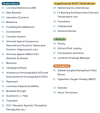
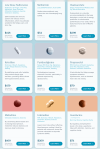
A long list of treatments presented as if they may be helpful. Treatments were selected for inclusion based on if they were highly rated in the TREATME study, with some other supporting evidence added.
This Long COVID treatment guide is meant to spark meaningful conversations with patients and their clinicians about potential treatment options that could become part of a personalized care plan.
We chose the treatments in this guide using a combination of clinical evidence (reviewed up until Nov 2025), observed real-world effectiveness, and experience treating people with Long COVID. We focused on treatment options from the Harvard/Stanford TREATME Study (PMID: 40627388) that at least 20% of participants with Long COVID reported moderate to substantial benefit.
Additionally, we included treatments that show meaningful promise in clinical practice, or that have shown benefit in other infection-associated chronic conditions.


Probably helpful for RTHM's business:

Edit: Added quotes and made wording more accurate.
 
Last edited:
The paragraph describing RTHM at the bottom:
RTHM is a pioneering telehealth clinic and HIPAA-compliant intelligence platform dedicated to complex chronic illnesses like Long COVID, ME/CFS, POTS, and MCAS, offering personalized treatment suggestions, diagnostic paths, symptom tracking, and care team collaboration powered by the latest research. Cofounders Dr. Ryan Kellogg and Dr. Jennifer Curtin drew from their personal journeys through dismissed symptoms and scarce answers in a broken system. By blending their lived experiences and clinical expertise, they transformed a vision for accessible, science-driven care into a growing community and medical home for complex illnesses.

They don't seem to mention that they prescribe medications in the list of services they offer.
 
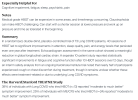
Just as an example, here's the entry for HBOT


So, it leads with a 'randomised, double-blind, placebo-controlled trial of 73 Long covid patients, 40 sessions of HBOT led to significant improvements in attention, sleep quality, pain, and energy levels'.

The forum thread for the study is here.
Turns out, only 40 patients were randomised to HBOT, and only 31 of them contributed data to the evaluation. Gains were typically small. For SF36 Physical functioning, the HBOT group's 60.3 increased to 63 (not significant), while the placebo group's increased from 50.7 to 58.6 (significant).

Even more damning, every single author had a major conflict of interest. They are part of a company rolling out HBOT clinics worldwide.
Leonid Schneider (data sleuth & scientific integrity journalist) has flagged this study because the authors have previously been involved in scientific fraud. The owner of the company, Dr Schai Efrati, has previously made claims that HBOT is an effective treatment for many conditions.
Importantly, Schneider spotted that 11% of the patients in the intervention group had been hospitalized for Covid while that number rose to 22% in the control group.


We have threads on other studies of HBOT:

Here are some comments on one that actually found and reported 'no significant effect' of HBOT.
After treatment, there were no significant differences in subjective symptoms, functional scores, and cognitive performance between any groups.

The response to treatment was highly variable, with some patients in even the ‘placebo’ group D reporting a significant improvement in their well-being. This was not reflected in any objective outcome scores. No subgroups of patients responded better to any of the treatments.

Conclusions
There was no significant effect from different doses of oxygen in a hyperbaric chamber. It is possible that the very modest improvements reported in other studies were due to a placebo effect. Claims that HBOT has a significant effect on Long COVID need further investigation before indiscriminately prescribing or promoting HBOT.

And here's a study that we didn't think much of:
Why are there so many HBOT trials with no proper control group?
The results are seriously unimpressive:
They excluded the 7/37 participants who dropped out
They do not compare results to a control group
The participants received 40 sessions, which seems quite a lot

And still the improvement was only 6.3 points on the SF-36 PF (a clinically meaningful improvement was defined as 10 points)
So it looks like the trial strongly showed that hyperbaric oxygen therapy probably doesn't work in ME/CFS.


The evidence does not suggest that HBOT is of any use for ME/CFS. We've seen a patient report of HBOT treatment - 40 sessions is exhausting and expensive. The promotion of this therapy in the Long Covid Treatment Guide is unwarranted and unethical. ME/CFS already robs so much of our capacity to do the things we want, and our wealth. And here is this guide, encouraging people to waste their remaining time and money.

It makes me feel angry. The authors of the guide probably feel that they have done something useful. They have not.
 
Valganciclovir (Valcyte) has shown effectiveness in the case of known CMV reactivations and HHV-6 + EBV reactivations in ME/CFS. In the Harvard/Stanford TREATME study, 21% of individuals with ME/CFS who tried valgancyclovir (n=52) reported "moderate to much better" symptom improvement.
The only randomized trial of Valganciclovir in ME/CFS had null results.

Acyclovir (Zovirax) is used to treat herpesvirus intections and has shown some promise in treating encephalopathy and coagulopathy in Long COVID. In the Harvard/Stanford TREATME study, 19% of individuals with Long COVID who tried acyclovir (n=21) reported "moderate to much better" symptom improvement.
Also no mention here of the ME/CFS randomized trial that null results.
 
Same issue with IVIG where they mention " In ME/CFS, three studies reported positive outcomes" but this refers to case reports. They don't seem to mention the randomized trials that had negative results.
 
For Modafinil, no mention of this negative (but very small) trial:
 
Oxaloacetate is also listed with no mention of the conflicts of interest of the people who conducted these trials.
A 2025 randomized controlled trial on oxaloacetate in Long COVID missed primary endpoints of fatigue reduction, but did see significant fatigue reduction on a secondary endpoint questionnaire and significant improvement in cognitive testing scores. An open label study found oxaloacetate reduced fatigue by 33% in ME/CFS patients and 46.8% in Long COVID patients over six weeks, with dosedependent effects in ME/CFS. A 2024 randomized control trial found oxaloacetate reduced fatigue by over 25% on average in ME/CFS patients, with 40% experiencing a 63% reduction as "super responders”. Lower natural oxaloacetate levels in ME/CFS patients suggest supplementation may enhance mitochondrial energy production.
 
Seeing all of this misinformation out there makes me think that we need to do some fact sheets on these promoted treatments.

We have the information to hand, we just need to search the forum and read the threads. It wouldn't be a hard job to pull something together for each one i.e. what the treatment is, how it is supposed to work, what evidence there is, conclusion, with relevant studies linked so people can see for themselves.
 
This is infuriating. Hard to point fingers at the “enemy” when this is the type of content put out by your “friends”, PatientLed supposedly the largest patient organisation.

S4ME might in general comes across as being negative towards the off-label approach, but I can still have sympathy towards it. What is truely problematic here is how evidence has been gathered and is selectively being reported. This is purely pseudoscience. Even a fool can see that the debunked CBT and GET has more evidental backing than much of this nonsense. It is hard to see that there are groups pushing us backwards. What's next? Leeches as off-label therapy? You will not get serious doctors and researchers involved if you peddle pseudoscience based on your own beliefs. You are doing harm.

Only a fool could think that all these things are all simultaneously effective. Conditions typically have at most a handful of effective therapies usually along similar pathways. The easiest path to being treated as a psychosomatic patient is saying there are 40 effective therapies that have nothing to do with each other at all, based on selectively selecting evidenced of negligible quality.
 
Last edited:
Oh, good grief. This guide, prepared in collaboration with the Patient-Led Research Collaborative, is giving 'patient-led research' a bad name. Please do better, you are causing harm.
I'm truly disappointed. I didn't follow them closely but I thought they had higher standards.

Seeing all of this misinformation out there makes me think that we need to do some fact sheets on these promoted treatments.

We have the information to hand, we just need to search the forum and read the threads. It wouldn't be a hard job to pull something together for each one i.e. what the treatment is, how it is supposed to work, what evidence there is, conclusion, with relevant studies linked so people can see for themselves.
I agree with you but I'm not optimistic about the outcome. I have tried sharing a more critical view of "science" encountered in patients groups and people either ignore me or say things like "my doctor/person x said...", "you need to have an open mind",... No one ever offered any scientific evidence to counter my arguments but I was attacked on a personal level.

The number of self-proclaimed patient-scientists is ever growing. They read portals with science news, papers, newsletters from various grifters talking about "the root cause". What they don't do is scrutinise what they read.

It's all about beliefs which is closer to religion than science.

Only a fool could think that all these things are all simultaneously effective. Conditions typically have at most a handful of effective therapies usually along similar pathways. The easiest path to being treated as a psychosomatic patient is saying there are 40 effective therapies that have nothing to do with each other at all, based on selectively selecting evidenced of negligible quality.
Very good post, thank you.

I'd just like to add another infuriating thing which is that I see patients sharing documents like this (or even worse pseudoscience) with their doctors and inviting other patients to do the same.

I'd like to think that doesn't affect me but then I see some doctors' comments online which indicate the opposite.
 
This is getting ridiculous. Since when is a social media survey the basis for 'evidence based' treatment? The world has gone mad.
I wouldn't necessarily fault this process if it found a very strong signal. When a formal process fails systematically, a distributed approach like this is sometimes the only viable way of working things out. It was just very unlikely to find anything.

But it didn't. All of those signals are random blips, noise. Which is no better, but not meaningfully worse, than the stream of awful clinical trials we have seen for years, which haven't found anything more than a blip either, and are usually methodologically barely better than a social media approach, sometimes a lot worse.

Acting on blips, recommending them, is the bigger problem. This process could have worked out if the solution was simple. As simple as CBT, GET, mind-body this or that, or even extensive rehabilitation. On that, the experts do no better, not even by a bit. Which is the real problem. Expert failure is driving a need to do this, but this isn't even any worse than what most experts put out there.

Frankly I find this is on the same level as what the medical profession has done. The only exception is the real lab work being done, biomedical research doing the hard work. Clinicians haven't produced anything better than this, in a 0=0 way. In fact they do even worse, because while this is put out as a set of recommendations no one has to follow, the biopsychosocial quackery in the form of coaching rehabilitation is forced onto people, presented as a sure thing by way too many, put on many people's path as a sort of test of the validity of their disability, with legal force and consequences.

Two wrongs. So many wrongs. Not a single right.
 
Frankly I find this is on the same level as what the medical profession has done.
Just because nobody has produced useful positive results that is not the same as saying all nonsense is useful. Should Fluge and Mella also accept these standards?

There are also no effective treatments for Alzheimers. Nobody would recommend pseudoscience like the Perrin Technique there. Here it is even being endorsed.
 
Just because nobody has produced useful positive results that is not the same as saying all nonsense is useful. Should Fluge and Mella also accept these standards?

There are also no effective treatments for Alzheimers. Nobody would recommend pseudoscience like the Perrin Technique there. Here it is even being endorsed.
Doing things this way can only work out if there is a simple solution. As far as I know, this almost never happens in medicine. It should have been expected here, though, because others have already done it and found none. So it was entirely useless. It's just not any worse than most of what has come out of medicine. It becomes tricky because there are so many people who do recover from those syndromes, and we just don't know why. This is very different from, say, type 1 diabetes, from which no one recovered before insulin.

When it comes to clinical trials, outside of surgeries, there are drug trials, and there's the rest. The rest is frankly universally appalling and should not be done at all. It's really odd how because of a shady history and a screwed up economic model, pharmaceutical trials and drugs in general have gotten an undeserved bad reputation, something undesirable. As if simple solutions are just better by virtue of being simple. As if willpower curing something is superior to working out the problem and fixing it. Beliefs are wild.

Frankly, medicine should mostly stick to drugs and surgeries. The rest, lifestyle and behavioral stuff, has some uses, but only as preventives. Once the harm is done, once a person is ill, it has never offered a damn thing of value. And one thing LC has proven beyond all possible doubt, it's that there are no simple solutions, at all. None. Taking it might be simple, nothing simpler than taking a pill or an injection, but figuring it out is always extremely hard.
 
Doing things this way can only work out if there is a simple solution. As far as I know, this almost never happens in medicine. It should have been expected here, though, because others have already done it and found none. So it was entirely useless. It's just not any worse than most of what has come out of medicine. It becomes tricky because there are so many people who do recover from those syndromes, and we just don't know why. This is very different from, say, type 1 diabetes, from which no one recovered before insulin.

When it comes to clinical trials, outside of surgeries, there are drug trials, and there's the rest. The rest is frankly universally appalling and should not be done at all. It's really odd how because of a shady history and a screwed up economic model, pharmaceutical trials and drugs in general have gotten an undeserved bad reputation, something undesirable. As if simple solutions are just better by virtue of being simple. As if willpower curing something is superior to working out the problem and fixing it. Beliefs are wild.

Frankly, medicine should mostly stick to drugs and surgeries. The rest, lifestyle and behavioral stuff, has some uses, but only as preventives. Once the harm is done, once a person is ill, it has never offered a damn thing of value. And one thing LC has proven beyond all possible doubt, it's that there are no simple solutions, at all. None. Taking it might be simple, nothing simpler than taking a pill or an injection, but figuring it out is always extremely hard.
I struggle to see how what you mention is of relevance here. The problem is providing treatment advice to patients and doctors, not only on shady evidence but even ignoring evidence and not clarfiying any of this to patients and just selectively reporting whatever you want. That is the problem here.

If you're advising patients that they should go to their doctors and tell them there are 40 effective treatments you might as well tell them that they should tell their doctors that they are psychosomatic.
 
Back
Top Bottom