Low Vasopressin In Myalgic Encephalomyelitis/Chronic Fatigue Syndrome, 2025, Huhmar/Bragée/Polo

[Edit: looks like we now have two pieces of evidence in favor of something blocking cAMP/CREB signaling in neurons…]
Wouldn’t that potentially tie in with the idea of generalised sensory mishaps? I’m partially thinking of ORs again here as I was reading up on their functionality and cAMP being involved but presumably it could happen in different places? I guess these are quite, generalised systems, but maybe interesting?
 
A key question would be whether low ADH might be secondary to inactivity though, since lying flat is associated with reduced blood volume.

+1 anecdote here to having polyuria without a plausible correlation to lying flat/reduced activity. Like DHagen I was gradual onset with my body's seeming hatred for being hydrated a leading sign that was fully present for the year or two where I was still trying to jog and play soccer and such.

I had the same experience as SNT Gatchaman of water seemingly going right through me. I'd feel dehydrated and headachy as if I'd just run in the hot sun and yet if I dared to drink a whole glass of water I'd soon pee out seemingly as much as I had just drunk. I had a blood draw at one point where they could only take half the tubes they needed to and complained I was too dehydrated.
 
Last edited:
Wouldn’t that potentially tie in with the idea of generalised sensory mishaps? I’m partially thinking of ORs again here as I was reading up on their functionality and cAMP being involved but presumably it could happen in different places? I guess these are quite, generalised systems, but maybe interesting?
Could be an interesting connection! cAMP is part of many very central signaling pathways and its effects tend to be highly context-specific.
 
+1 anecdote here to having polyuria without a plausible correlation to lying flat/reduced activity. Like DHagen I was gradual onset with my body's seeming hatred for being hydrated a leading sign that was fully present for the year or two where I was still trying to jog and play soccer and such.

I had the same experience as SNT Gatchaman of water seemingly going right through me. I'd feel dehydrated and headachy as if I'd just run in the hot sun and yet if I dared to drink a whole glass of water I'd soon pee out seemingly as much as I had just drunk. I had a blood draw at one point where they could only take half the tubes they needed to and complained I was too dehydrated.
Yes! Even after I became aware that something was seriously wrong and I wasn't sleeping, I remained extremely active. Early in the year I was diagnosed, I was still thru-hiking and the hardest part of doing multiple 20+ mile days with a heavy pack in a row was having to stop every 30 min or so to urinate.
 
I’m not sure, but is there a reliable way to test for low blood volume (hypovolemia)?
Has this ever been properly investigated in ME/CFS?

Studies in ME/CFS & LC.

Reduced cardiac volumes in chronic fatigue syndrome associate with plasma volume but not length of disease: a cohort study (2016)

A total of 41 of the patients with CFS and 10 of the controls matched groupwise went on to have assessment of plasma and RCV. Mean (SD) RCV was 1565 (443) mL with 26/41 (68%) of sufferers having values below 95% of the normal expected value for RCV. PV mean (SD) was 2659 (529) mL with 13/41 (32%) having values below 95% of the expected mean value. Total volume was lower in the CFS group compared with controls (4236 (139) vs 4396 (180)) although this did not reach statistical significance.

Chronic fatigue syndrome: illness severity, sedentary lifestyle, blood volume and evidence of diminished cardiac function (2010)

Analyses indicated that significant group differences emerged for the percentage difference from ideal blood volume for TBV, PV and RBCV [F(2, 72) = 14.8, P < 0.001; F(2, 72) = 13.0, P < 0.001; and F(2, 72) = 8.1, P < 0.002 respectively]. For each blood volume measurement, the severe CFS group had greater deficits than the non-severe CFS group, which in turn had greater deficits than the sedentary control group (P < 0.05).

Notably, approx. two-thirds of the severe CFS group had a below-normal TBV, a prevalence that was 2-fold greater than the non-severe CFS subjects

This neuroPASC study found no evidence (only 7 patients, testing plasma volume via 131I-albumin)

Persistent Autonomic and Immunologic Abnormalities in Neurologic Post-Acute Sequelae of SARS-CoV2 Infection (2024)

None of the patients was hypovolemic.

More studies in POTS.

Blood volume deficit in postural orthostatic tachycardia syndrome assessed by semiautomated carbon monoxide rebreathing (2024)

We showed that the hemoglobin labeling technique by carbon monoxide was able to detect hypovolemia in patients with POTS on the basis of direct measurements of hemoglobin mass

We found that POTS patients have a −13.92% blood volume deficit on average, which was clinically significant.

Acute volume loading and exercise capacity in postural tachycardia syndrome (2014)

Patients exhibited blood volume deficits (−13.4 ± 1.4% ideal volume), consistent with mild to moderate hypovolemia.

Increased plasma angiotensin II in postural tachycardia syndrome POTS is related to reduced blood flow and blood volume (2006)

Estimated blood volume technique.
A subset of POTS patients are significantly hypovolaemic, and hypovolaemia is ‘paradoxically’ associated with hyporeninaemia and hypoaldosteronaemia.

Renin-Aldosterone Paradox and Perturbed Blood Volume Regulation Underlying Postural Tachycardia Syndrome (2005)

plasma volume was significantly lower in patients with POTS (2348±438 mL) than in control subjects (2823±480 mL, P<0.010) […] patients with POTS had a mean deficit in red blood cell volume of -350 mL, which represented a 22.7% deficit from the expected red blood cell volume. The difference between the 2 groups was highly significant (P<0.003). […] The total blood volume followed the same pattern as the plasma volume and red blood cell volume components. The measured total blood volume was significantly lower in patients with POTS than in control subjects (P<0.010). Even after we corrected for individual differences in ideal total blood volume, patients with POTS still had a significantly larger relative deficit in total blood volume (16.5±6.8% versus 5.6±7.8%, P<0.001

Hypovolemia in Syncope and Orthostatic Intolerance Role of the Renin-Angiotensin System (1997)

The most striking observation in this study is that patients with orthostatic intolerance and elevated plasma norepinephrine levels often have significantly reduced blood volume associated with low levels of PRA.
 
Interesting study.
Two things that my be yellow flags are that 'Endocrine Practice' seems a pretty obscure journal, suggesting tht this has been rejected by more mainstream journals
The initial abstract (first post in this thread) was in Neurology. It would be good to know what the peer review concerns were.
Suspect it's mainly due to not having a control group.

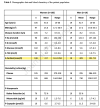
When looking up Vasopressin, it seems that it is difficult to measure due to low levels and a short half life. The main finding of this paper was that 82% of patients did not have detectable levels of Vasopressin. Perhaps some reviewers will have suspect a measurement problem, as there was no calibration or comparison of their tests to a control group.

I also read that researchers often measure the vasopressin surrogate copeptin because it's more stable. This study did this with 13 patients and while their levels were low, they were all within reference limits.

The mean osmalility (number of dissolved particles) in plasma and urine of all ME/CFS patients was also still within the reference range, although many patients were above and below it respectively.

They also measured cortisol, which was also within the reference range.

1767434015792.png
 
AI
Common Misconception: While "normal saline" for intravenous use is 0.9% salt (approximately 9 grams per liter), the natural concentration of sodium in blood plasma is actually closer to 0.6%.
 
Common Misconception: While "normal saline" for intravenous use is 0.9% salt (approximately 9 grams per liter), the natural concentration of sodium in blood plasma is actually closer to 0.6%.

An interesting point. It used to be called isotonic saline - presumably because the sodium and chloride had to make up for all the other solutes like glucose. Excess sodium would need to be peed out at higher concentration. That may not be a problem but extra salt load is generally considered to be a bad thing.
 
AI
Oestrogens (estrogens) play a significant role in regulating blood volume, primarily by increasing plasma volume, which leads to overall higher blood volume, especially during the menstrual cycle, pregnancy, and with estrogen therapy
. This expansion helps manage blood pressure, and studies show higher estrogen levels in women contribute to greater plasma volume maintenance during situations like bed rest, demonstrating estrogen's importance in cardiovascular adaptation.


I find interesting because the onset of the menopause caused a severe worsening of OI so that I went from being on my feet to wheelchair / bed bound. Caveat: used HRT for 3 years with no change to OI although it was great for the hot flushes
 
Back
Top Bottom