Sly Saint
Senior Member (Voting Rights)
Abstract
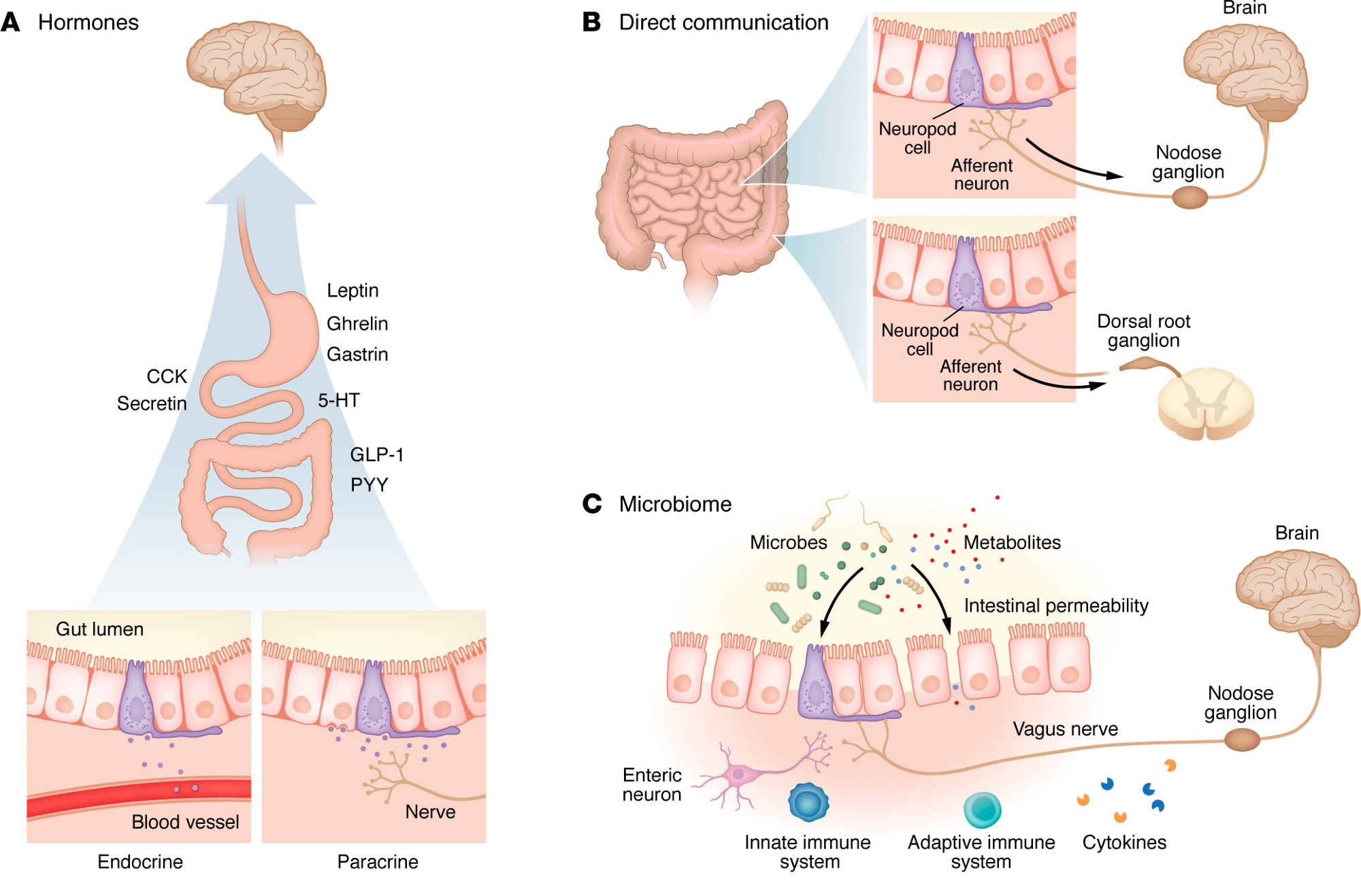
Connections between the digestive system and the brain have been postulated for over 2000 years. Despite this, only recently have specific mechanisms of gut-brain interaction been identified. Due in large part to increased interest in the microbiome, the wide use of incretin-based therapies (i.e., glucagon-like peptide 1 [GLP-1] receptor agonists), technological advancements, increased understanding of neuroimmunology, and the identification of a direct enteroendocrine cell–neural circuit, research in the past 10 years has made it abundantly clear that the gut-brain connection plays a role both in clinical disease as well as the actions of therapeutics. In this Review, we describe mechanisms by which the gut and brain communicate and highlight human and animal studies that implicate changes in gut-brain communication in disease states in gastroenterology, neurology, psychiatry, and endocrinology. Furthermore, we define how GLP-1 receptor agonists for obesity and guanylyl cyclase C agonists for irritable bowel syndrome leverage gut-brain mechanisms to improve patient outcomes. This Review illustrates the critical nature of gut-brain communication in human disease and the potential to target gut-brain pathways for therapeutic benefit.
Connections between the digestive system and the brain have been postulated for over 2000 years. Despite this, only recently have specific mechanisms of gut-brain interaction been identified. Due in large part to increased interest in the microbiome, the wide use of incretin-based therapies (i.e., glucagon-like peptide 1 [GLP-1] receptor agonists), technological advancements, increased understanding of neuroimmunology, and the identification of a direct enteroendocrine cell–neural circuit, research in the past 10 years has made it abundantly clear that the gut-brain connection plays a role both in clinical disease as well as the actions of therapeutics. In this Review, we describe mechanisms by which the gut and brain communicate and highlight human and animal studies that implicate changes in gut-brain communication in disease states in gastroenterology, neurology, psychiatry, and endocrinology. Furthermore, we define how GLP-1 receptor agonists for obesity and guanylyl cyclase C agonists for irritable bowel syndrome leverage gut-brain mechanisms to improve patient outcomes. This Review illustrates the critical nature of gut-brain communication in human disease and the potential to target gut-brain pathways for therapeutic benefit.