Preprint. See post #6 for peer-reviewed version.
Multimodal imaging suggests potential immune-vascular contributions to altered regional brain perfusion and oxygen metabolism in Post-COVID-19 Syndrome
Post-COVID-19 Syndrome (PCS) frequently presents with persistent fatigue, cognitive impairment, and emotional symptoms. Although structural brain changes remain subtle, growing evidence implicates functional and metabolic disruptions in ongoing symptomatology. We used multimodal MRI to investigate cerebral perfusion and oxygen metabolism in PCS and examined their associations with cognitive function and peripheral biomarkers.
We enrolled 40 individuals with prior mild SARS-CoV-2 infection, including 20 with persistent fatigue and 20 recovered controls matched for age, sex, BMI, and acute COVID-19 severity. Participants underwent structural MRI, arterial spin labelling (ASL) to quantify regional cerebral blood flow (CBF), and asymmetric spin echo imaging to estimate oxygen extraction fraction (OEF) and cerebral metabolic rate of oxygen consumption (CMRO₂). We assessed cognition using an online battery and measured serum levels of TNF-α, IL-6, IL-8, IL-13, IFN-γ, GFAP, and S100β, alongside blood routine tests. We performed ANCOVAs on predefined regions of interest (hippocampus, anterior cingulate cortex [ACC], insula, amygdala, striatum), followed by Bayesian inference and exploratory whole-brain analyses.
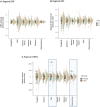
PCS participants showed increased CMRO₂ in the hippocampus and decreased CMRO₂ in the ACC. Subfield analysis revealed elevated OEF and CMRO₂ across most hippocampal regions, excluding the entorhinal cortex. Whole-brain analyses identified increased perfusion in salience-related regions (insula, ACC, thalamus) and decreased perfusion in posterior cortical and cerebellar areas, in the absence of grey matter volume differences. Higher hippocampal metabolism positively correlated with cognitive performance, suggesting compensatory adaptation to sustain function. In contrast, lower ACC CMRO₂ correlated with depressive symptoms, reduced motivation, and elevated TNF-α and GFAP, consistent with neurovascular uncoupling possibly driven by immune-glial activation.
These findings reveal distinct physiological disruptions in PCS, with potential implications for stratified, metabolism-focused interventions.
Web | DOI | PDF | bioRxiv | Open Access
Multimodal imaging suggests potential immune-vascular contributions to altered regional brain perfusion and oxygen metabolism in Post-COVID-19 Syndrome
Daniel Martins; Matthew Burrows; Owen Daily; Ziyuan Cai; Nicole Mariani; Alessandra Borsini; Valeria Mondelli; Brandi Eiff; Silvia Rota; Tim Nicholson; Laila Rida; Adam Hampshire; Federico E Turkheimer; Catherine Morgan; David Lythgoe; Steve Cr Williams; Fernando Zelaya
Post-COVID-19 Syndrome (PCS) frequently presents with persistent fatigue, cognitive impairment, and emotional symptoms. Although structural brain changes remain subtle, growing evidence implicates functional and metabolic disruptions in ongoing symptomatology. We used multimodal MRI to investigate cerebral perfusion and oxygen metabolism in PCS and examined their associations with cognitive function and peripheral biomarkers.
We enrolled 40 individuals with prior mild SARS-CoV-2 infection, including 20 with persistent fatigue and 20 recovered controls matched for age, sex, BMI, and acute COVID-19 severity. Participants underwent structural MRI, arterial spin labelling (ASL) to quantify regional cerebral blood flow (CBF), and asymmetric spin echo imaging to estimate oxygen extraction fraction (OEF) and cerebral metabolic rate of oxygen consumption (CMRO₂). We assessed cognition using an online battery and measured serum levels of TNF-α, IL-6, IL-8, IL-13, IFN-γ, GFAP, and S100β, alongside blood routine tests. We performed ANCOVAs on predefined regions of interest (hippocampus, anterior cingulate cortex [ACC], insula, amygdala, striatum), followed by Bayesian inference and exploratory whole-brain analyses.
PCS participants showed increased CMRO₂ in the hippocampus and decreased CMRO₂ in the ACC. Subfield analysis revealed elevated OEF and CMRO₂ across most hippocampal regions, excluding the entorhinal cortex. Whole-brain analyses identified increased perfusion in salience-related regions (insula, ACC, thalamus) and decreased perfusion in posterior cortical and cerebellar areas, in the absence of grey matter volume differences. Higher hippocampal metabolism positively correlated with cognitive performance, suggesting compensatory adaptation to sustain function. In contrast, lower ACC CMRO₂ correlated with depressive symptoms, reduced motivation, and elevated TNF-α and GFAP, consistent with neurovascular uncoupling possibly driven by immune-glial activation.
These findings reveal distinct physiological disruptions in PCS, with potential implications for stratified, metabolism-focused interventions.
Web | DOI | PDF | bioRxiv | Open Access
Last edited by a moderator: