Neither Metformin nor Ursodeoxycholic Acid Effectively Treats Postacute Sequelae of COVID-19, 2026, Lim et al.

SNT Gatchaman

Senior Member (Voting Rights)
Staff member
Neither Metformin nor Ursodeoxycholic Acid Effectively Treats Postacute Sequelae of COVID-19
So Yun Lim; Jacob Lee; Euijin Chang; Ji-Soo Kwon; Choi Young Jang; Yubin Seo; Jin Ju Park; Sun Hee Na; Hyejin Park; Hyeon Mu Jang; Sung-Cheol Yun; Sung-Han Kim

BACKGROUND
There is no proven treatment to alleviate symptoms of postacute sequelae of SARS-CoV-2 infection (PASC), despite its substantial public health burden.

OBJECTIVE
To evaluate the efficacy of metformin and ursodeoxycholic acid (UDCA) in improving PASC symptoms in adults.

DESIGN
Double-blind, placebo-controlled, randomized clinical trial. (Clinical Research Information Service: KCT0009342)

SETTING
Two tertiary hospitals in South Korea, July 2024 to April 2025.

PARTICIPANTS
Of 666 adults screened, 396 with a PASC index score of 12 or greater were randomly assigned.

INTERVENTION
Oral metformin (uptitrated to 1500 mg/d), UDCA (900 mg once daily), or double placebo for 14 days (1:1:1).

MEASUREMENTS
Proportion of participants achieving PASC recovery (index score <12) at 8 weeks.

RESULTS
Among 396 randomized participants (median age, 36 years [IQR, 28 to 49 years]; 72% women), 132 received metformin, 132 received UDCA, and 132 received placebo. The mean interval from SARS-CoV-2 infection was 9.8 months (SD, 7.5). The mean baseline PASC score was 19.3 (SD, 5.7). Recovery occurred in 63.6% (84 of 132) with metformin, 68.2% (90 of 132) with UDCA, and 68.2% (90 of 132) with placebo. Mean changes in PASC scores from baseline to week 8 were −10.05 (95% CI, −11.35 to −8.76) with metformin and −10.62 (CI, −11.79 to −9.45) with UDCA, compared with −10.43 (CI, −11.69 to −9.18) with placebo.

LIMITATION
Findings may not be generalizable to patients with more severe or persistent long COVID.

CONCLUSION
A 2-week course of metformin or UDCA did not significantly improve recovery from PASC.

PRIMARY FUNDING SOURCE
National Institute of Infectious Diseases, National Institute of Health, South Korea

Web | DOI | PDF | Annals of Internal Medicine | Paywall
 
Props for the straightforward description of null results. Does anyone know what kind of scale they used?

The primary end point was the PASC recovery rate at 8 weeks from baseline. This end point was chosen for the capture of sustained symptomatic improvement to evaluate the durable symptom improvement beyond the immediate posttreatment period, serving as an intermediate assessment point consistent with similar trials (14, 15). Postacute sequelae of SARS-CoV-2 infection scores were assessed at baseline and at weeks 2, 4, and 8 using a validated scoring system. Recovery rate was defined as the proportion of patients whose PASC score improved from 12 or higher (indicating PASC) to less than 12. This threshold of 12 or higher was based on a previous study that validated the PASC scoring system by identifying key symptoms that best distinguish persons with and without a history of SARS-CoV-2 infection (3). The detailed survey questions used to assess PASC symptoms are provided in the Detailed Methods section of the Supplement.
Secondary end points included the change in continuous PASC scores at week 8 across the 3 treatment groups, improvement and recovery of individual PASC symptoms, and changes in cytokine levels over time. Detailed laboratory procedures for cytokine analysis are provided in the Supplement. Safety outcomes included adverse events (AEs), serious adverse events (SAEs), hospitalizations, and deaths. Safety was assessed in all participants who received at least 1 dose of the study medication.
 

Attachments

Weird study. They accidentally had a 70% recovery rate in the placebo group. Notably the symptom that improved most in all groups was PEM, to which they gave very high weight in assessing overall illness.

Very hard to know if they are seeing true recovery or symptom fluctuation. Also, At the risk of getting culturally relative, I wonder if korean patients feel most comfortable reporting to the doctor treating them that they feel far better? A risk in any culture, perhaps strongest in cultures with high respect for authority.

I'll be interested to see this:
We plan to conduct a long-term follow-up to evaluate further symptom changes in relation to immune dysregulation.

Our study has several limitations. First, the observed recovery rate of approximately 70% substantially exceeded our initial assumption of 15%. At the time of trial design, no randomized trials had used the PASC index as a primary outcome. We therefore based our sample size calculation on longitudinal data from our prospective observational cohort of COVID-19 survivors (19, 20), in which 5% to 20% of patients experienced a decrease in PASC index score from 12 or greater to less than 12 over 2 months. However, that reference cohort differed markedly from the current trial population. The reference cohort consisted primarily of older patients (median age, 64 years [IQR, 55 to 71 years]) with severe acute COVID-19 (more than two thirds hospitalized), whereas participants in the current trial were younger (median age, 36 years [IQR, 28 to 49 years]), were predominantly vaccinated (97%), and had mild acute COVID-19 (mostly nonhospitalized). These fundamental differences in age, acute disease severity, and vaccination status may partially explain the higher spontaneous recovery rate compared with our original assumption for the recovery rate.
 
Props for the straightforward description of null results.

Ursa's Key Ingredient Shows Promise in Early Long COVID Patients
Ursodeoxycholic acid (UDCA), the active ingredient in Daewoong Pharmaceutical's liver function supplement Ursa, has shown signs of symptom improvement in long COVID patients who were in the early stages of infection.​
The findings suggest that timing of treatment could be a critical variable in addressing long COVID, as therapeutic effects appeared to vary depending on how much time had passed since infection.​
 

Ursa's Key Ingredient Shows Promise in Early Long COVID Patients
Ursodeoxycholic acid (UDCA), the active ingredient in Daewoong Pharmaceutical's liver function supplement Ursa, has shown signs of symptom improvement in long COVID patients who were in the early stages of infection.​
The findings suggest that timing of treatment could be a critical variable in addressing long COVID, as therapeutic effects appeared to vary depending on how much time had passed since infection.​
Odd write-up, since the paper doesn't seem to be nearly as optimistic.

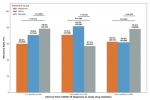
They show this figure, that looks like a lot of noise to me. I assume the p-values are uncorrected.
1773065300913.png
According to the research, the symptom improvement rate in the UDCA treatment group among patients 2 to 6 months post-infection reached 81.6%, significantly higher than the 57.1% observed in the placebo group.
The researchers explained that these results indicate timing of therapeutic intervention may be an important variable in long COVID treatment.

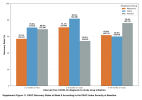
The actual figure in the supplemental file has no p-values, I assume because they realize this is noise. I wonder where they got the other figure from.
1773065477050.png
All they say about that figure in the paper is:
Subgroup analyses stratified by the interval from COVID-19 diagnosis to study enrollment and by baseline PASC score severity are presented in Supplement Figures 10 and 11 (available at Annals.org), respectively.

And I don't see anywhere that these results indicate timing may be an important variable, as they say in the article. I would hope the authors had no part in this piece.
 
Back
Top Bottom