News from France

I wanted to draw your attention to what has just happened in France, once again.

On October 11, Le Nouvel Obs, a major French news magazine, published a particularly outrageous article about ME/CFS, giving considerable prominence to the views of two doctors some of you may already be familiar with: Brigitte Ranque and Cédric Lemogne, both proponents of psychosomatic or functional approaches to the illness.

Under the guise of investigative journalism, the article once again portrays patients and their associations as activists trapped in their own beliefs, standing against medical professionals who supposedly hold the scientific truth.
It is quite a spectacular reversal of roles.

Ranque and Lemogne continue to advocate approaches whose scientific foundations, when applied to ME/CFS, are strongly contested, particularly regarding CBT and exercise-based rehabilitation. According to Millions Missing France, they also intervened with the French national health insurance authority to have several controversial studies reintroduced into its official guidance, including the infamous PACE trial.

Yet none of this seems to have prompted much critical scrutiny in the article.

Brigitte Ranque has reportedly claimed improvement rates of 90% in her CASPER programme. But where is the evidence supporting these figures? How many of these patients actually had ME/CFS with properly characterised post-exertional malaise? How many deteriorated?

Millions Missing France reports having received dozens of testimonies from patients whose condition worsened after participating in this programme.

Instead of seriously investigating these questions, the article appears primarily to discredit the very patients and associations challenging these approaches.

Perhaps the most outrageous aspect is the way this controversy is presented as an ideological battle between patients and doctors, when the real issue is the quality of the scientific evidence.
It is 2026. International guidelines have evolved. Post-exertional malaise is recognised as a core symptom of ME/CFS. Yet in France, we are still having to fight against medical narratives that perpetuate confusion between chronic fatigue, functional disorders and ME/CFS.

I find it deeply troubling that two doctors can receive such prominent media coverage without their claims being subjected to sufficiently rigorous scrutiny in light of the scientific evidence and patients' experiences.

Millions Missing France has published a strongly worded response to the article and announced its intention to exercise its right of reply.

How much longer will these controversial approaches be allowed to shape the medical and media narrative surrounding ME/CFS in France?

Le Nouvel Obs article:
 
I wanted to draw your attention to what has just happened in France, once again.
@dave30th how do you feel about a vacation in France after your last article about a German clinical therapy manual?
 
Brigitte Ranque and Cédric Lemogne, both proponents of psychosomatic or functional approaches to the illness.

I did a quick search on Ranque and came up with an article on functional somatic disorders (apparently 30-40% of all consultations) with this paragraph:

The causes are multifactorial. “It is often said that a FSDs follows a major traumatic event, such as rape. This is not always the case. A traumatic or highly distressing experience can contribute to the onset of FSDs, but such experiences take many forms, including non-sexual physical abuse, psychological abuse, emotional neglect, and adverse life events that influence brain development. Bereavement, a loved one’s serious illness, or even the fear of losing someone important can create a predisposition,” Ranque explained.

This is an obscenely ill-informed and stupid thing to put in an article. And this is a woman writing. If this is what is being served up in Frane you have my sympathy.
 
I had a look at the case file for the first version, which was interesting in that it drew on French neurological research (Prof. Guedj), and was therefore not simply a copy-and-paste of the frequently cited studies on others countries)
(I’ll try to find the link)

It is a textbook case: the associations have managed to precisely define a condition that had previously, been vaguely categorised under ‘fatigue’ and described little better than as ‘overwork’, with no recommendations whatsoever (Assessment on a case-by-case basis), and the BPS has decided to claim it as its own after the fact. (But they had already begun doing so, in internal medicine departments and in private practice, without, so, referring to the French guidelines.)

It should be interesting to find the version from before this summer to get a clear picture of all the jumps.
 
From Bluesky:

It would be more fruitful for researchers to use scientific experiments and data to convince others of their views (e.g. objective data on improvement and recovery following CBT) rather than trying to change guidelines like this.​


Love it, thank you @ME/CFS Science Blog !
1) France' public health insurance Ameli has updated its info on ME/CFS including sections critical of graded exercise and CBT.

In this article, however, proponents of psychosomatic medicine explain how they pushed back to get some of the language changed.

bafkreidngsr2tc4qcdg3l4tk7zpkjgqm3rmrsmk4rvw2jfzg7ztju6j73i


2) The authors, who include Dr. Cédric Lemogne and Dr. Brigitte Ranque criticise, for example, that the webpage presented CBT mainly as "a means of supporting patients in coping with the condition, rather than as a treatment that might itself reduce symptoms or disability."


3) They also questioned "language that might inadvertently imply an invariably poor prognosis or obscure
evidence that some patients substantially improve or recover."


4) "Some of us separately raised these concerns with the French national health insurance"., the article writes. Afterwards, the text was indeed (slightly) changed in their favour.

It now includes references to the controversial PACE and Cochrane review on GET.

bafkreib2o7izf6bdtsncc5l3pe3ucyivriz2i3qrgqvvg23a5mwkuzoide


5) In the article, the authors explain that this provides a lesson for psychosomatic medicine. They caution not to conflate onset, pathology and treatment of an illness and that blame should be avoided when discussing cognitive and behavioural aspects.


6) I personally find this influence problematic. Although multiple perspectives and insights are welcome, this seems driven by ideological views on psychosomatic medicine rather than concerns about scientific accuracy.


7) I don't think any of the authors have actually done research on ME/CFS, only on related conditions such as Long Covid, fatigue or functional disorders. So it's a bit weird to try change medical guidelines on a condition that you haven't actually studied or have expertise in.


8 ) Some proponents of psychosomatic medicine have become involved in ME/CFS just because this field has largely rejected CBT and other psychosomatic approaches. So they think that this can't be right and feel a need to correct this before it spreads to other fields.


9) I don't like this development: don't want ME/CFS to become the battleground for the relevance of psychosomatic medicine in the 21th century. This type of lobbying will only encourage further controversy, conflict and division.


10) It would be more fruitful for researchers to use scientific experiments and data to convince others of their views (e.g. objective data on improvement and recovery following CBT) rather than trying to change guidelines like this.

Link:
www.sciencedirect.co...
 
Now it is forced out into the open, alleging "mass hysteria" lol. Europe did burn 4 million witches and wizards alleging supernatural powers to manifest sickness etc, meticulously recording their trials (but not their anonymously vanished children).

Funnily enough, the bulk of patients disagree with Lemogne.
 
So what is the pre-planned agenda for this highly organised swerve? Where did it seem to converge with the consensus, and where did it then plan to diverge?

Exactly where and how does its planned future differ from the hard-won agenda which the bulk of patients insist on instead? Must mass hysteria ensue therefore?

At this parting of the ways, without bandying words, is there a slam-dunk refutation or denunciation to alert this gathering crowd to the grave error of their ways:

- the Lancet, the Journal of Psychosomatic Research, Science Direct, Elsevier, AMELI, ANRS/MIE, and France (government and press)? How can Retraction Watch help?

Over-riding errors, inflated evidence, and wastrel directives amounting to a costly and tragic misdirection - the grave error of their ways.

Where is the strategically targeted evidence of swelling sick-leaves (across the world)? Simon Wessely's "extreme personality traits" don't apply at this scale.

PEM and syndrome (symptomatic flare, relapse, decline, brain / muscle limitation): where is the targeted evidence, rigorously reviewed by my lavishly libelled NICE?
 
Lancet:
Long COVID in the general population: reassurance without dismissal
Lemogne, Oct 26

S4ME:
Long COVID in the general population: reassurance without dismissal
- Cedric Lemogne's comment in The Lancet, Regional Health, Europe, upon:

S4ME:
Recovery trajectories and predictors of symptom resolution in post-COVID-19 condition: a population-based cohort study, 2026, Brunet et al.

Cedric Lemogne says: "Two priorities follow:

"First, epidemiological surveillance and outcome assessment should move beyond the presence of any persistent symptom to identify clinically consequential PCC."

[ [ [ What does this mean? Does it broaden the catchment? Does it confuse research"? ] ] ]

[ [ [ Which bits do and don't make sense? ] ] ]

[ [ [ Does it also mean he cannot abide any "syndrome" interfering with his re-defined collections of indecipherable, personalised, somatic "symptoms"? ] ] ]

"This requires pre-infection baselines, repeated measurements, appropriate comparison groups, and multidimensional assessment of recovery, including symptoms, functioning, and participation. [9]"

[ [ [ Given the proviso - gone beyond particular symptoms - what comparisons are "appropriate", as proposed? And appropriate to what or who? ] ] ]

[ [ [ Objective and / or subjective measurements? "Recovery" by which scale? Did he already say there is limited recovery in his "polysymptomatic" grouping? ] ] ]

[9] refers to: A core outcome set for post-COVID-19 condition in adults for use in clinical practice and research: an international Delphi consensus study
Lancet Respir Med. 2022; 10:715-724
Full Text, Full Text (PDF), Scopus (109), PubMed, Google Scholar

"Second, treatment research should focus particularly on people who remain polysymptomatic and disabled after the period of fastest improvement."

[ [ [ WOW wow wow
He has accepted the evidence that an initial period of potential improvement did not need "intervention" to modify mind, thought, belief, behaviour and plans - never needed. Misled clinics across England thought it crucial, built a base, contracts, evidence, special interest group and credibility on this pretext, refuse to comply, give no other choice, will not make CBT and loading programs optional. ] ] ]

[ [ [ Eeeeeeeeek, ah, so, he wishes to focus on us - other - survivors instead ] ] ]

[ [ [[ [ [ Polysymptomatic and not recovered - are we talking about ME/CFS/LC? ] ] ]

"Evidence is already emerging:

"cognitive behavioural interventions and combined physical and mental-health rehabilitation probably improve selected outcomes, although the optimal intervention, target phenotype, and timing remain uncertain. [10]"

[ [ [ Yet another big fat research budget? Please. Don't give it to them instead, give it back to us. As @neophyte32 identified - a spectacular role reversal. ] ] ]

[ [ [ Ok, so. Is his evidence high or low quality for his "probability"? Did France really want to swerve off-road upon his probability? ] ] ]

[ [ [ "Target phenotype" Said Wallitt and Wessely. Uncertain target - hold your fire. We can all bank on uncertainty. Social security and social service can maintain indefinitely all the suspicion it planned to resolve. More unresolved suspicion is more power to your elbow, when push comes to shove. Not at all sociable. ] ] ]

[10] refers to:
Interventions for the management of long covid (post-covid condition): living systematic review,
Zeraatkar, D. ∙ Ling, M. ∙ Kirsh, S. ∙ et al.
BMJ. 2024; 387, e081318
Crossref, Scopus (41), PubMed, Google Scholar

"The next challenge is therefore not simply to count long COVID, but to identify early who will recover, who will not, and what can alter these trajectories."

[ [ [ Mind control? ] ] ]

Contributors
- Cédric Lemogne:
- writing—original draft.

Declaration of interests
- Cédric Lemogne's work on post-COVID-19 condition in the past 36 months has been supported by:

ANRS|MIE (Agence nationale de recherche sur le Sida et les hépatites virales | Maladies infectieuses émergentes).
 

I feel this fits here:

Neutrality towards bogus medicine is not tolerance but a violation of medical ethics
Published Thursday 08 October 2026


A treatment that does not work beyond a placebo effect causes harm not necessarily through direct toxicity, but by displacing evidence-based care. When a suffering patient relies on ineffective remedies, critical diagnostic and therapeutic interventions will be delayed or abandoned altogether.

Suffering that could be mitigated and diseases that might be cured are instead allowed to persist. Silence vis a vis such a prospect is not a neutral backdrop; it functions as tacit validation, leading patients to believe that bogus therapies hold equivalent scientific standing to proven medical science.
​

 
They could have added that bogus treatments create the appearance of there being effective treatments for conditions without treatments. This removes some of the perceived urgency to find effective treatments.

It gets even worse when the bogus treatments are endorsed by some, with e.g. loss of benefits from «choosing» to no go through with the bogus treatments.
 
Neutrality towards bogus medicine is not tolerance but a violation of medical ethics
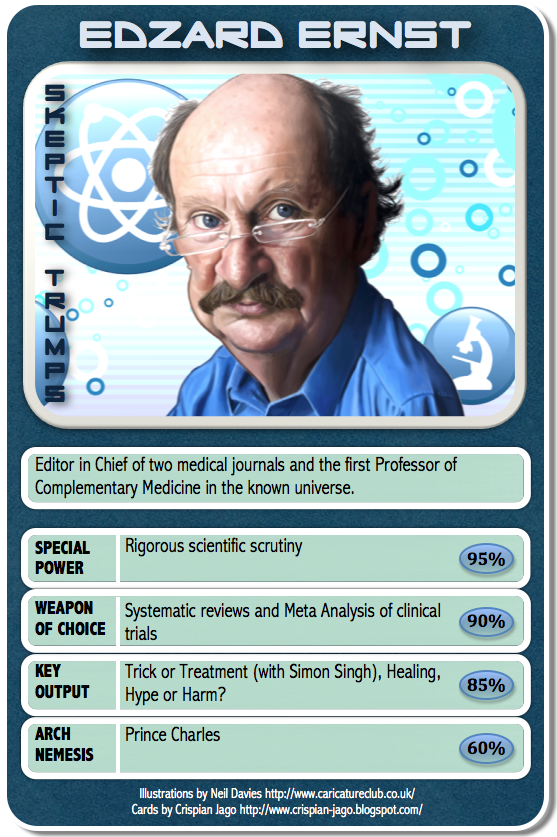
I read up on the author, Professor emeritus Edzard Ernst, and noticed that there's a section in the German Wikipedia that doesn't exist in the English one: [Wrong, my blunder]
Google Translate

Machine translation:


Controversy​
​
In 2005, a "scandal" occurred when Ernst resigned from the lead expert commission a few days before the publication of a report on the potential of alternative medicine for the National Health Service (NHS).​
​
The report was commissioned by the then-heir to the throne, Prince Charles, and concluded that substituting several standard therapies with alternative methods could save significant costs. Ernst called the report "scandalous and full of errors."​
​
For example, the report would suggest treating asthma patients with homeopathy, which, according to Ernst, would cause 150 deaths per year. Prince Charles' office accused Ernst of violating a confidentiality agreement. This was followed by a 13-month investigation by the University of Exeter, which ultimately found no misconduct on Ernst's part.​
​
According to Ernst, however, the university stopped the funding for the department's research.[14] Consequently, Ernst agreed to retire on the condition that funding for the department would continue. Those who had campaigned for his departure were elevated to the British peerage.[15][16] In 2010, the House of Commons decided that homeopathy should no longer be funded by the NHS and that homeopathic remedies should no longer be advertised as effective.[17]​
​
According to his own statements, Ernst received death threats from proponents of homeopathy after one of his studies found that Arnica globules are ineffective.[16]​


Last edited:
Gosh, well noticed. Fascinating it hasn’t survived in the English entry, despite being about an event in England.
A pattern emerges:

French Wikipedia:
Controversy

Ernst criticizes Prince Charles, believing that he promotes alternative therapies and misleads the public[4]. He specifically accuses him of selling dubious plant-based detox remedies (dandelion, artichoke)[15] that lack scientific foundation—via the organization

The Prince’s Trust, which markets products from his organic farm—and of being a "snake oil salesman"[6],[16]. Ernst openly criticized[17] the Smallwood Report published in 2005 and was accused by Prince Charles's private secretary of breaching a confidentiality agreement regarding this report[18].

The investigation conducted by the University of Exeter was very unpleasant for him, and although it accepted his innocence, he says he became persona non grata and his funding was cut. He retired in 2011, two years before the end of his term.[citation needed]

With the release of his book *More Harm Than Good?* in 2018, Ernst again criticizes Prince Charles, who has long been a supporter of homeopathy and also acts as an advocate for other pseudo-scientific practices such as iridology.

The royal household responded that the book misrepresented the Prince's positions and that it was not surprising that the book was more critical of alternative medicines than he was, given its title and subject matter[18].

Spanish Wikipedia:
Early retirement from Exeter

Ernst was accused by the private secretary of the then-Prince Charles of having breached a confidentiality agreement regarding the 2005 Smallwood report.

After being subjected to a "very unpleasant" investigation by the University of Exeter, the university "accepted his innocence but continued, in his opinion, to treat him as 'persona non grata'. All fundraising for his department ceased, which forced him to exhaust his core funds and allow his 15 employees to leave."[28]

Writing in 2022, after Charles's accession to the throne, Ernst said: "There was never a formal confidentiality agreement with a signature, etc. But I felt obliged to keep the contents of the Smallwood report confidential. The investigation by my university was not only 'very unpleasant', but it was also too long. It lasted 13 months!

I had to hire lawyers against my own University! Furthermore, it was unnecessary, primarily because a university should simply establish the facts and, if reasonable, defend its professor from external attacks. The facts could have been established over a cup of tea with the vice-chancellor in less than half an hour. When my department had been destroyed in the process, I retired voluntarily and was subsequently rehired for half a year to help find a successor.

In retrospect, I see this move as a clever tactic by the University to keep me content and prevent me from going to the press. A successor was never hired; a good candidate was found, but he was told that he had to find 100% of the funding to do the work. No person with a strong reputation would have found this acceptable, and therefore, the only good candidate was not even tempted to accept the position."[29]

He retired in 2011, two years before his official retirement.[11][30] In July 2011, a Reuters article described his "long-running dispute with the Prince over the merits of alternative therapies" and stated that "on Monday he accused Prince Charles, heir to the British throne, and other sponsors of alternative therapies of being 'snake oil salesmen' promoting products without a scientific basis," and that the dispute "had cost him his job, a claim that Prince Charles's office denied".[15][31]

According to Ernst, "the snake oil salesman story is a completely separate matter," which "happened years later." He added: "It is true that Charles's office denied that Charles knew that his first private secretary wrote to my vice-chancellor asking him to investigate my alleged breach of trust." Ernst claims that since Sir Michael Peat wrote his letter in his capacity as the Prince's private secretary, Ernst finds it "extremely difficult to believe" that the prince was unaware.[29]

In 2009, Ernst's name appeared on a list of supporters of Republic, an organization that campaigns for the abolition of the British monarchy.[32] However, writing on his website in 2022, Ernst clarified his position: "Although Charles did an excellent job trying, I did not become a republican. I have many doubts that Charles is a good king (his reign could even be the end of the monarchy), and I helped the republican cause on several occasions, but I never formally joined any such group (in general, I am not a member of parties, clubs, or interest groups)."[29]
 
I read up on the author, Professor emeritus Edzard Ernst, and noticed that there's a section in the German Wikipedia that doesn't exist in the English one:
Isn't this story in the English page too?
Ernst was accused by Prince Charles' private secretary of having breached a confidentiality agreement regarding the 2005 Smallwood report. After being subjected to a "very unpleasant" investigation by the University of Exeter, the university "accepted his innocence but continued, in his view, to treat him as 'persona non grata'. All fundraising for his unit ceased, forcing him to use up its core funding and allow its 15 staff to drift away."[15]

Writing in 2022, after Charles' accession to the throne, Ernst said, "There never was a formal confidentiality agreement with signature etc. But I did feel bound to keep the contents of the Smallwood report confidential. The investigation by my University was not just 'very unpleasant', it was also far too long. It lasted 13 months! I had to take lawyers against my own University! In addition, it was unnecessary, not least because a University should simply establish the facts and, if reasonable, defend its professor from outside attacks. The facts could have been established over a cup of tea with the Vice Chancellor in less than half an hour. When my department had been destroyed in the process, I retired voluntarily and was subsequently re-employed for half a year to help find a successor. In retrospect, I see this move as a smart ploy by the University to keep me sweet and prevent me from going to the press. A successor was never hired; one good candidate was found but he was told that he had to find 100% of the funds to do the job. Nobody of high repute would have found this acceptable, and thus the only good candidate was not even tempted to accept the position."[28]

He retired in 2011, two years ahead of his official retirement.[9][29] In July 2011, a Reuters article described his "long-running dispute with the Prince about the merits of alternative therapies" and stated that he "accused Britain's heir-to-the-throne Prince Charles and other backers of alternative therapies on Monday of being 'snake-oil salesmen' who promote products with no scientific basis", and that the dispute "had cost him his job – a claim Prince Charles's office denied".[13][30] According to Ernst, "The snake oil salesman story is an entirely separate issue", which "happened years later." He added, "It is true that Charles's office denied that Charles knew about his 1st private secretary writing to my Vice Chancellor asking him to investigate my alleged breach of confidence." Ernst claims that as Sir Michael Peat wrote his letter in his capacity as the Prince's private secretary, Ernst finds that "exceedingly hard to believe."[28]

Ernst's book, Charles, the Alternative Prince: An Unauthorised Biography, was published in February 2022. It focuses on Charles's interest in alternative medicine, with a critical assessment of his views.[31] In 2009, Ernst's name appeared on a list of supporters of Republic – an organisation which campaigns for the abolition of the British monarchy.[32] However, writing on his website in 2022, Ernst clarified his position: "Even though Charles did a sterling job in trying, I did not become a republican. I do have considerable doubts that Charles will be a good King (his reign might even be the end of the monarchy), and I did help the republican cause on several occasions but I never formally joined any such group (in general, I am not a joiner of parties, clubs or interest groups)."[28]
 
Back
Top Bottom