Wow.. that is shockingly bad..Ours is £6,175 per year, so less than half that.

You are using an out of date browser. It may not display this or other websites correctly.
You should upgrade or use an alternative browser.
You should upgrade or use an alternative browser.
News from Republic of Ireland
- Thread starter Sly Saint
- Start date
-
- Tags
- ireland regional thread

Kitty
Senior Member (Voting Rights)
Wow.. that is shockingly bad..
People who'd never needed it before the pandemic couldn't believe it.
Same with Universal Credit, the main out-of-work benefit that people had to claim when they lost their jobs due to the pandemic. That was about £4,900 a year.
Even if you were on a really modest salary, £25k or so, that's a hell of a shock. To people who were used to twice that or more—and needed it to cover their mortgages—it sounded like a bad joke.

Chandelier
Senior Member (Voting Rights)
1800 word article about a pwME:

 m.independent.ie
AI Summary:
Long-Covid is still here. I can’t walk, cook, work, socialise or live independently – and I am not alone
The country, and the rest of the world, was in the grip of a global pandemic, so when Lydia Fischer Dooley, developed a dry cough, fatigue, weakness and lack of appetite at the start of 2022, she rightly assumed that she had developed Covid-19.
m.independent.ie
Dr Savinelli says that because there are still so many uncertainties about long-Covid, it is difficult for doctors to know what the most effective treatment should be. “Among the things that we are learning, is that care needs to be personalised,” he says.
“For many patients, rehabilitation approach has been shown to be the best treatment in multiple studies so far.
“Patients should have access to a team that includes occupational therapy, chartered physiotherapy, and clinical psychology. Patients should also have access to specialist services for specific problems, like respiratory medicine, cardiology, neurology and psychiatry. Unfortunately, both access to rehabilitation teams and specialist services are quite limited and many long-Covid clinics are still not fully staffed at this stage. It is extremely important that people affected by long-Covid understand the ethical concerns around prescribing unproven treatments.”
AI Summary:
Long-Covid is still here.
I can’t walk, cook, work, socialise or live independently – and I am not alone.
The Onset of Long-Covid
In early 2022, Lydia Fischer Dooley contracted Covid-19, expecting a short illness. After a second infection later that year, her symptoms changed dramatically, causing major mobility issues, dizziness, exhaustion, and neurological problems. Despite numerous tests, results appeared normal, and she was diagnosed with functional neurological disorder. Her symptoms worsened over time, including tremors, internal vibrations, and severe head pressure.
Life Transformed
Once living and working in Dubai, Lydia’s illness forced her to move back to Ireland and live with her parents. She is now housebound, unable to walk, cook, work, or socialise. Even small activities cause a relapse, and she spends most of her days resting in darkness to manage sensory sensitivity. Attempts to work part-time led to further health decline, leaving her financially and physically dependent.
Lack of Support and Awareness
Lydia criticises the Irish healthcare system for offering minimal long-Covid support. She says most care must be sought privately and that long-Covid remains misunderstood and neglected. She calls for public awareness campaigns and recognition that even healthy, premenopausal women are at risk.
Medical Uncertainty
Doctors confirm that there is no universal definition or treatment for long-Covid. Estimates suggest 1–10% of infected individuals develop it, most being women. Rehabilitation is currently the most effective known approach, but access remains limited.
Continuing Hope
Despite her struggles, Lydia urges others not to give up. She advocates for awareness and research so future generations will not be “forgotten behind closed doors.”
Chandelier
Senior Member (Voting Rights)
The Irish podcast The Hard Shoulder has a pwLC and Professor Jack Lambert on.

 www.goloudnow.com
Description:
AI Summary:
The Hard Shoulder - What is it like to still suffer from long...
Sinn Fein’s Pádraig Mac Lochlainn raised the issue of long Covid and renewed calls for the State to recognise long Covid as an occupational illness in line with oth...
www.goloudnow.com
Description:
Sinn Fein’s Pádraig Mac Lochlainn raised the issue of long Covid and renewed calls for the State to recognise long Covid as an occupational illness in line with other EU member states.
It was found that the Department of Social Protection reviewed the EU recommendation and determined that Covid does not meet the criteria required for recognition in respect of the Social Welfare Acts.
But, what is life like for those who still suffer from long Covid?
Joining Ciara Doherty to discuss is Jennifer, who has been dealing with long Covid since her first infection in 2020 and Professor Jack Lambert, Consultant in Infectious Diseases, with a special interest in long Covid.
AI Summary:
Introduction to Long Covid
00:00:00 - 00:00:45
The discussion opens with Sinn Féin's Podrick MacLachlan calling for the Irish state to recognize long Covid as an occupational illness, similar to other EU countries. The Department of Social Protection had reviewed EU recommendations and concluded that Covid does not meet the criteria for certain social welfare legislation. The focus then shifts to personal accounts of those dealing with long Covid, with Jennifer sharing her struggles since contracting the virus in 2020.
Jennifer's Personal Struggles with Long Covid
00:00:45 - 00:02:23
Jennifer describes her ongoing health issues related to long Covid, including breathlessness, tachycardia, brain fog, migraines, and extreme fatigue. She also recounts a traumatic experience when she suffered a pulmonary embolism, which mirrored her long Covid symptoms, and how she almost died before receiving treatment. Following the embolism, Jennifer developed severe panic attacks, experiencing up to 350 of them in the past two years, which she finds even harder to deal with than the physical side of her illness.
The Psychological Toll of Long Covid
00:02:23 - 00:05:29
Jennifer goes on to describe how the panic attacks feel, describing intense chest pain, difficulty breathing, and losing sight. She highlights how traumatic it is for others to witness her attacks, especially when they occur in public. She also shares how these mental health challenges, including anxiety and depression, have affected her ability to resume normal life. Jennifer talks about her anxiety being so severe that she plans where she can escape in case of an attack, showing how much her mental health now dominates her daily routine.
Impact on Family and Career
00:05:29 - 00:06:10
Jennifer reflects on how her life has changed since contracting Covid, particularly how it has affected her family life and career. Prior to the illness, she had a busy, active family life and worked in banking. Now, she is trying to regain a sense of normality, though she struggles with the constant impact of long Covid, including panic disorder and generalized anxiety. Her efforts to return to work are part of her plan to regain some control over her life.
Long-Term Effects and Ongoing Struggles
00:06:10 - 00:07:15
Jennifer recalls how her first panic attack occurred in the hospital while being treated for her pulmonary embolism, and how it was dismissed initially as just physical symptoms. She speaks to the ongoing nature of her condition, even two years after her initial diagnosis, and how her mental health issues are often overlooked or misunderstood. She emphasizes the complexity of long Covid, which affects many aspects of her life, from physical health to mental well-being.
Professor Jack Lambert on Long Covid
00:07:15 - 00:09:00
Professor Jack Lambert, a consultant in infectious diseases with a special interest in long Covid, joins the conversation. He explains how the long Covid clinic was established early in the pandemic, and how patients—some of whom have been sick for years—continue to struggle with the condition. He also talks about the challenges in recognizing long Covid as an occupational illness in Ireland, contrasting it with most European countries. Professor Lambert notes that long Covid affects each individual differently, with symptoms ranging from brain fog to severe fatigue and tachycardia.
Stigma and Misunderstanding of Long Covid
00:09:00 - 00:11:00
Lambert discusses the stigma associated with long Covid, particularly how patients often don't appear visibly ill, making it harder for others to believe or understand their condition. He explains that long Covid is complex, with over 200 possible symptoms, and how its effects are often dismissed as psychiatric issues, even though the condition involves significant physical damage to the body. He also notes that healthcare workers suffering from long Covid are often denied benefits and recognition, contributing to further anxiety.
Social Stigma and Isolation
00:11:00 - 00:12:00
Jennifer shares her experience of being dismissed by others as lazy or unwilling to work, a stigma that has plagued long Covid sufferers on social media and in everyday life. She talks about how difficult it was to see such negative perceptions of long Covid, and how it led her to step away from support groups to protect her mental health. Despite these challenges, she is now working to rebuild her career, but still faces the stigma and misunderstanding surrounding her illness.
Chandelier
Senior Member (Voting Rights)
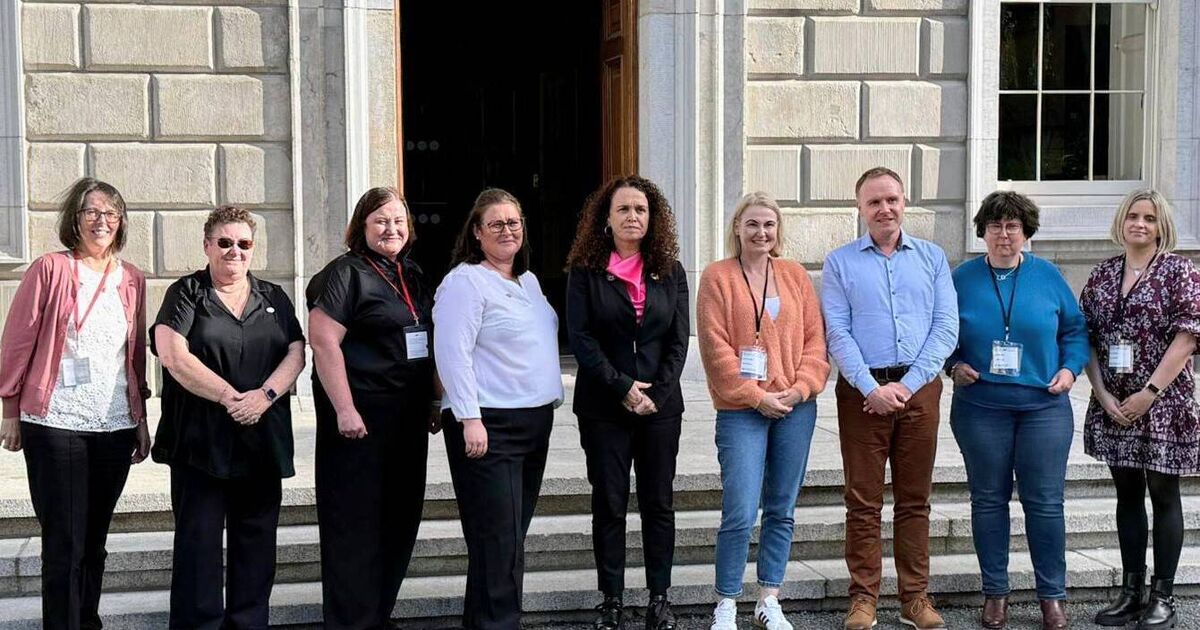
Cork nurses with long covid facing pay cuts in December
The Department of Health and HSE has confirmed that the final extension of the temporary Long Covid scheme will expire on December 31.www.echolive.ie
https://labour.ie/news/2025/11/20/heartless-refusal-of-government-to-consider-new-long-covid-scheme/
Summary:
- 159 healthcare workers with long-covid will be abandoned as workers lose full pay due to winding down of special scheme on the 31st of December.
- Ireland among small number of EU countries to have not recognised Covid-19 as an occupational illness.
- Heartless decision by Government not to put in place a new scheme for the small number of essential healthcare workers whose lives have been turned upside down by long-covid.
Chandelier
Senior Member (Voting Rights)

Laois Councillors seek review as Ireland chooses not to recognise 'long Covid' as an occupational illness - Laois Today
Laois County Council is to write to the Minister for Health after Ireland opted not to recognise 'long Covid' as an occupational illness.
 www.laoistoday.ie
AI Summary:
Laois Councillors seek review as Ireland chooses not to recognise long Covid as an occupational illness
Laois County Council will write to the Minister for Health after Ireland decided not to recognise long Covid as an occupational illness. The issue was raised by Councillor Barry Walsh, who requested a review, noting that 24 EU Member States have already granted such recognition.
Walsh said a local group of frontline care workers who contracted Covid during the pandemic are now suffering from long Covid symptoms such as memory loss, shortness of breath, nausea and headaches. They were supported through a special financial scheme that ends on 31 December 2025, after which they must move to the public service sick leave scheme, offering only limited full and half pay.
Following a Labour Court decision, Ireland does not recognise long Covid as an occupational illness, leaving 159 affected people facing the prospect of significantly reduced disability payments. Walsh highlighted the financial pressure on those with mortgages and the disappointment expressed by ICTU, noting that care workers had been promised they would not be left out of pocket. He urged the government to urgently review the decision, saying many affected individuals feel let down and are suffering mentally.
Walsh received cross-party support, with several Independent, Fianna Fáil and Fine Gael councillors backing him. Councillor Caroline Dwane-Stanley said many affected people were frontline hospital staff who may never return to work, adding that other EU countries already recognise long Covid. Councillor Tommy Mulligan spoke of knowing people with long Covid, while Councillor Aisling Moran said everyone she knows with the condition had worked on the frontline and that some were asked to repay wages due to administrative errors, adding further stress.
Councillor Paddy Buggy said it was disappointing that those who served the public during the pandemic are now being penalised after putting their lives on the line.
Chandelier
Senior Member (Voting Rights)
Sherlock criticises "heartless" cuts to Long Covid scheme for healthcare workers
"We went from applauding our healthcare heroes to essentially telling them to get over it" - Labour TD Marie Sherlock has called the government “heartless” for refusing to continue a scheme for healthcare workers who contracted Long Covid
 dublinpeople.com
LABOUR TD and health spokesperson Marie Sherlock:
This issue will not quietly go away as the government may hope. These workers need our support. I am calling on the government, the Minister for Health, and the HSE to intervene to reverse this cruel decision and to extend supports to protect the incomes of these workers suffering from this debilitating condition

Yann04
Senior Member (Voting Rights)
$$$Makes you wonder what on earth the argument is for not doing it.
Chandelier
Senior Member (Voting Rights)
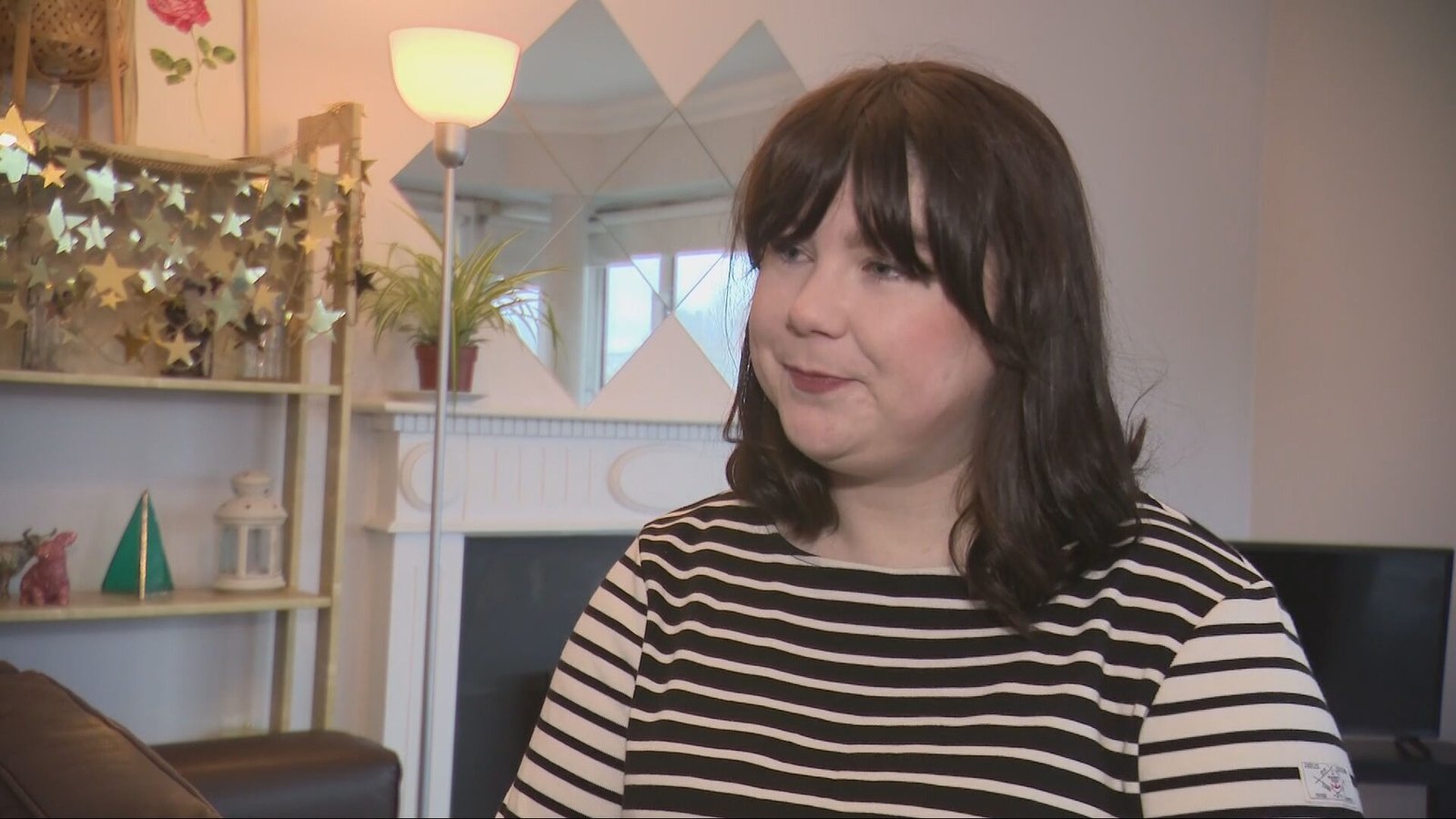
Long Covid turned my life upside down, says scientist
Five years on from contracting Covid, medical scientist Rebecca Broni is still living with its effects and now faces a cut in financial support.
AI Summary:
Long Covid turned my life upside down, says medical scientist
Rebecca Broni, a medical scientist, contracted Covid while working in a Dublin hospital five years ago and continues to suffer from its effects, particularly debilitating fatigue. This exhaustion affects her physical and mental functioning, making everyday tasks difficult.
Despite attempts to return to work, she has been unable to do so for the past two years. A government support scheme for healthcare workers with Long Covid has helped her financially, but it will end in December 2025, leaving her concerned about her future living situation.
Broni expressed frustration over the government's response, highlighting the lack of recognition for Long Covid as an occupational illness and the lack of ongoing support for those still suffering.
Unions and opposition parties have criticized the decision, and Broni calls for better care for those who remain ill after the pandemic.

Evergreen
Senior Member (Voting Rights)
Rebecca, a medical scientist with long covid, describes how it affects her and how stressful the change from full-time pay is:
 www.rte.ie
The transition from one scheme to another is stressful, as you don't know what money you will have and when.
But it's tricky. Should they be paid full-time until they reach pension age but healthcare workers/teachers/bus drivers who get long covid or ME/CFS from an infection contracted at work should not?
Are healthcare workers with long covid in France/Belgium/Spain/Netherlands (where long covid is considered an occupational illness apparently) going to be paid full-time until pension?
Long Covid turned my life upside down, says scientist
Five years on from contracting Covid, medical scientist Rebecca Broni is still living with its effects and now faces a cut in financial support.
In a statement, the Department of Health said the conclusion of the scheme "does not mean that supports will end" and said there are social welfare options. Those who remain unfit for work will transition to Public Service Sick Leave. It said there are other supports too.
There are currently around 159 staff on the scheme, most, the Department has said, have remained on full pay for almost five years.
The transition from one scheme to another is stressful, as you don't know what money you will have and when.
But it's tricky. Should they be paid full-time until they reach pension age but healthcare workers/teachers/bus drivers who get long covid or ME/CFS from an infection contracted at work should not?
Are healthcare workers with long covid in France/Belgium/Spain/Netherlands (where long covid is considered an occupational illness apparently) going to be paid full-time until pension?

Peter T
Senior Member (Voting Rights)
But it's tricky. Should they be paid full-time until they reach pension age but healthcare workers/teachers/bus drivers who get long covid or ME/CFS from an infection contracted at work should not?
Are healthcare workers with long covid in France/Belgium/Spain/Netherlands (where long covid is considered an occupational illness apparently) going to be paid full-time until pension?
For me the issue is, were employers negligent and consequently what level of damages is appropriate. People with Long Covid unable to work need to go through the normal ill health retirement processes, but their employers need to address do they additionally need to pay damages. This would apply to everyone including bus drivers and school teachers.
I think this Irish scheme was a positive short term solution, but agree they need to move a more appropriate long term approach. I imagine Ireland was as bad as the UK in getting effective PPE in place quickly enough in hospitals, I see some new scheme covering damages is still needed.
MinIreland
Senior Member (Voting Rights)
Ireland has enough money. There's really no excuse.
Yann04
Senior Member (Voting Rights)
So does Switzerland.Ireland has enough money. There's really no excuse.
But the rich people at the top always want more for themselves. Hence why the richest countries in the world have austerity politics.
I agree it’s horrendous.
Kitty
Senior Member (Voting Rights)
People with Long Covid unable to work need to go through the normal ill health retirement processes, but their employers need to address do they additionally need to pay damages.
I wonder if there might be existing models to follow, where industrial injury arises without a level of negligence that meets a legal test. People who weren't injured because health & safety procedures were flouted, but because the procedures themselves were inadequate.
My male relatives were miners and steelworkers between the 1930s and 1980s, and many of them had this kind of injury. It was mostly industrial deafness and pneumoconiosis, but one or two had deafness and vibration white finger. Where they were too ill to work they got ill-health pensions, but there were additional pensions for the injuries. These didn't pay a lot, but they were paid for life and they were a public recognition that the men had been injured at work. I got the sense that the dignity this brought was as important to the workers as the extra money.

My view is that health care workers/researchers should get the same treatment from the system that non-HCW patients get.
Might sound harsh, but I can't think of a better way to wake them up to how bad and desperate is the situation for us.
Don't enjoy saying that, I wish it were not so. But if that is what it takes (in part), then let's get on with it.
Might sound harsh, but I can't think of a better way to wake them up to how bad and desperate is the situation for us.
Don't enjoy saying that, I wish it were not so. But if that is what it takes (in part), then let's get on with it.
Kitty
Senior Member (Voting Rights)
My view is that health care workers/researchers should get the same treatment from the system that non-HCW patients get.
I think it is a different situation for nurses and other frontline workers. They went to work with poor or no protection and before the vaccine was developed, while many of the rest of us had the chance to keep ourselves and our families safe.
For health and social care staff it was traumatic as well as a risky. Some moved out of their homes for fear of infecting their families. Others went through elaborate avoidance procedures, like the friend married to a T1 diabetic with asthma. She spent £2k having plumbing installed in the garage and buying a washer and dryer to put in there, so she never needed to take the scrubs she'd worn on the ward into the house. She was stripping to her underwear in a freezing garage after 12-hour shifts because she was caring for middle aged asthmatics and diabetics dying of Covid, and she was terrified the same would happen to her husband.
She did get infected at work, and if she'd also developed long Covid I'd expect her to be offered compensation, especially after what she went through on the Covid wards. Her son, who earns more than she does, got to do his NHS job from home.
Chandelier
Senior Member (Voting Rights)

Revealed: Medical staff with long-Covid could be left without sick pay for over three years
A senior palliative care nurse at a busy hospice has told how she pleaded with a manager for high-grade medical masks before testing positive for Covid during the pandemic.
m.independent.ie
900-word article behind paywall.
Revealed: Medical staff with long-Covid could be left without sick pay for over three years
A nurse who contracted the virus in early 2021 has said the prospect is a ‘tremendous worry’AI Summary:
- A senior Irish palliative care nurse contracted Covid in January 2021 while working on a Covid-designated ward and is now on long-term sick leave with long-Covid.
- She was not vaccinated at the time and said requests to use higher-grade FFP2 masks were refused due to hospital policy; most nurses on her ward became infected.
- She described severe, ongoing symptoms including extreme fatigue, cognitive impairment, sensory overload, and difficulty with daily tasks, which ended her ability to work and live normally.
- Since 2021, she has spent €21,500 on medical and therapeutic treatments and has seen some improvement, but her condition fluctuates.
- A special sick-pay scheme for healthcare workers with long-Covid is ending, and the Oireachtas Health Committee has asked Health Minister Jennifer Carroll MacNeill to extend it.
- About 120 nurses are affected; once moved to the standard HSE sick-pay scheme, they will receive full pay for three months, half pay for three months, then no sick pay for up to three-and-a-half years.
- The nurse said this could reduce annual income to €26,000 and creates serious concern, especially as HSE policy considers medical retirement after five years unfit for work.
Chandelier
Senior Member (Voting Rights)

Major blow as special pay for key group axed amid union plea & 'disregard' claim
A MAJOR warning has been issued to a key group of healthcare workers after a special sick pay was scrapped yesterday. Some 164 employees suffering from long Covid had been in receipt of a special s…
 www.thesun.ie
AI Summary:
Major blow for healthcare workers as special long-Covid pay scheme ends
A special sick pay scheme for healthcare workers with long Covid ended on December 31, affecting 164 employees who had been receiving full pay.
The scheme was temporary and its end followed a Labour Court recommendation, according to the HSE and the Department of Health.
Despite calls from unions and a request from the Oireachtas Health Committee to extend it, the Government did not agree to make the scheme permanent.
After its closure, affected staff can move to the general Public Service Sick Leave Scheme, which allows up to 183 days on full pay, followed by 182 days on half pay.
Unions including the INMO and Siptu criticised the decision, arguing it disregards healthcare workers’ sacrifices during the pandemic and fails to recognise Covid-19 as an occupational disease.
Chandelier
Senior Member (Voting Rights)

Sligo Councillors seek support for healthcare workers suffering form Long-Covid
A motion proposed by Cllr Ann Higgins calling for “Minister for Health Jennifer Carroll MacNeill to introduce a long-term scheme to recognise and support healthcare workers who continue to experience long-Covid” received widespread support from her fellow Councillors at the February meeting of...
m.independent.ie