#NotJustFatigue

A recording of the September 25 livestream by #NotJustFatigue has been posted:

https://www.notjustfatiguelivestream.org/

(click on the link and scroll down)

I only watched the first couple of minutes, not the whole thing.

I presume that some members of US Congress (representatives or senators, not sure which) were invited to attend this livestream because Ryan Prior said, "I especially want to thank Congressional staff who carved out time to be here. Your presence sends a powerful signal that this issue matters." I'm not sure how to find out which staff members attended or how many.
 
I respect anyone who tries to create something to raise awareness about ME. Personally, I can’t agree with the name Notjustfatigue. If it were called Notfatigue or something that distanced itself from the idea of fatigue, I might connect with it more. But the word just still makes it sound like it’s partly about fatigue. I simply don’t like the name. In general, I prefer to use the word exhaustion.

Their first videos featured patients explaining what ME is and how debilitating it can be. Yet everyone was sitting upright. I asked the MDs in Doctors as Patients not to present themselves in a way that looks better than how they normally feel. If they would usually talk to family members while lying down, they should do the same in the videos, even if they can sit up for a short time. The films by NJF gave the wrong impression for me.

I like the yellow colors on the website, but yes, the animations are a bit intense.

So while I admire anyone who starts a project like this, I haven’t really been able to connect with it.
 

In Her Own Words: Elizabeth Ansell documents economic impact of chronic fatigue syndrome​


It takes an incredible amount of energy to create an advocacy group for an often-ignored chronic disease. Ironically, that’s what is most impacted for those with ME/CFS (Myalgic Encephalomyelitis/Chronic Fatigue Syndrome) like Elizabeth Ansell, who created #NotJustFatigue.

At 26, I was loving my life in New York City, working in the production field for a number of years, most recently as an associate producer for ABC News. Then a health crisis didn't just change my life; it revealed a massive market failure affecting up to 9 million Americans today. What started as a personal battle with ME/CFS (Myalgic Encephalomyelitis/Chronic Fatigue Syndrome), a post-viral disease that has no FDA-approved treatment, became the foundation for creating an award-winning nonprofit, #NotJustFatigue.

Continues at: https://www.bizjournals.com/bizwomen/news/latest-news/2026/02/in-her-own-words-elizabeth-ansell.html

 
From r/cfs:


u/Gazebu moderate-severe • 6h ago​
​

Hi everyone, I’m a volunteer with #NotJustFatigue (notjustfatigue.org) and a moderate-severe ME patient. We are looking for US-based caregivers of people with ME to speak with Senate offices about their observations of their loved ones. Your participation will help us advocate for $50 million in research funding to be allocated for the NIH ME/CFS Research Roadmap.​
​
We’ve had a wonderful response from patients so far, but we urgently need caregivers to join us and back up our testimonies. Having trusted caregivers tell Senate offices directly about how disabling and debilitating ME is makes a massive impact on lawmakers. Lawmakers need to hear how this illness impacts families and the daily reality observed by those closest to us. If you or a caregiver you know are interested in participating, please comment below or message me directly by going to my profile and selecting "New Chat."​
​
In addition to caregivers from anywhere in the US, we are also still looking for patients from West Virginia, North Dakota, and Mississippi.​
​
Thank you so much for your support!​


New video from #NotJustFatigue group
(not quite 3 minutes long)

"Man On The Street Interviews in Chicago"


From an email:
#NotJustFatigue email said:
#NotJustFatigue took to the streets of Chicago to explore how the names “chronic fatigue syndrome” and “myalgic encephalomyelitis” shape perceptions of the same disease.

When asked about chronic fatigue syndrome, people spoke about overwork, stress, and lack of sleep. Some thought it sounded like something everyone experiences.

When asked about myalgic encephalomyelitis, the tone changed. Although the name was unfamiliar, people thought it sounded much more serious.

“It sounds very serious,” one participant said. Another explained that the average person would be more concerned by that name than by “chronic fatigue.”

These conversations illustrate a frustration patients know well: the name “chronic fatigue syndrome” can make a very serious illness sound ordinary. Simply changing the words prompted people in our video to take it more seriously.

Edit: I'm pretty sure that at least one (maybe more) research study that compares the different names used for ME/CFS has been done.
 
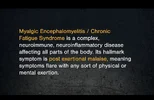
Gosh, the lack of knowledge is dispiriting. It's a good video. I'm just concerned that the team are convinced they know what ME/CFS is ("a complex neuroimmune, neuroinflammatory condition that affects all parts of the body"). I don't think we can be certain about those ideas.

Putting across a message of 'look, all these people have the wrong idea about ME/CFS' loses its credibility if unevidenced ideas about what it really is are simultaneously promoted.
 
Gosh, the lack of knowledge is dispiriting. It's a good video. I'm just concerned that the team are convinced they know what ME/CFS is (a complex neuro-immune, neuro-inflammatory condition that affects all parts of the body). I don't think we can be certain about those ideas.

Putting across a message of 'look, all these people have the wrong idea about ME/CFS' loses its credibility if unevidenced ideas about what it really is are simultaneously promoted.
I was disappointed to see the usual sort of comments on something to do with DecodeME, lost of people wanting to tell the team to “read about X theory by Y researcher it’s obviously caused by “insert theory” (mitochondria/neuroinfammation/overexcited T cells/cytokine storms) plus an obligatory “cured myself by resetting my nervous system” and someone complaining that ME and CFS are two different things.

If we can’t even agree among ourselves…or more to the point, everyone is very certain they know the answer whilst nobody does…what hope is there?

Imagine trying to tell cutting edge researchers what they “should” be looking at!
 
@Hutan - I agree that the text at the end was disappointing. I even took a screenshot and was going to post but ran out of energy yesterday. Screenshot below for those who did not watch the whole video.


And I'm not even sure the main premise of the video is helpful. At least in the USA pretty much every organization uses the combined term ME/CFS. (Newspapers sometimes still say Chronic Fatigue Syndrome, and some headlines still shorten that to "Chronic Fatigue" but I've had luck getting headline writers to change that to ME/CFS).

Anyway, I think that 10 years ago this name comparison might have been helpful but I'm not sure how helpful it is now that NIH, CDC, and most researchers and patient advocates use ME/CFS.

I think a better video would be to go on the street and ask people, "Do you know what ME/CFS is?"

Not what exact words does ME/CFS stand for, and definitely not how to spell them or pronounce them, but ask them if they've ever heard of it?

Maybe before that question you could ask them, "Do you know what MS is?" Same idea - not what the exact words are, and not how to spell them, but have you heard of this illness, do you know what it is?

And then explain that more people in the USA have ME/CFS than MS and yet more people know about MS. (I'm pretty sure there's evidence that more people have ME/CFS than MS and also that COVID has increased the number of people with ME/CFS) And also add that medical schools often don't include anything about ME/CFS in their curriculum.

I do appreciate what the #NotJustFatigue group is trying to do. They're trying to show that this is a serious illness and the ridiculous CFS name that was coined in 1989 (is that the right date?) minimizes the impact the illness has on patients. I just wonder if they're going about it the right way.

Anyway, just some rambling thoughts from me.
 
And I'm not even sure the main premise of the video is helpful. At least in the USA pretty much every organization uses the combined term ME/CFS. (Newspapers sometimes still say Chronic Fatigue Syndrome, and some headlines still shorten that to "Chronic Fatigue" but I've had luck getting headline writers to change that to ME/CFS).
Good point.

I'd like to see your suggested video @ahimsa.
 
Good point.

I'd like to see your suggested video @ahimsa.
I think as a ‘technique’ it maybe works as a gentle way to open people’s eyes to how they might have been getting the wrong idea of what pwme are actually suffering from (but read on as I think it needs polishing from what it is)

And to re-open their ears - I can’t think of nicer words but atm what we battle with is everyone going into ‘yeah I already know’ mode whatever we speak on

And that ‘yeah I’m on the right side because I’m not the yuppy flu lot and get that it needs serious CBT’ does a good job

I think it’s now to be replaced by bacme etc doing the same exact party trick again to boost that attitude by adding a twisting of the ‘no GET’ think into ‘and of course we know you don’t exercise it off now’ and then missing it was the stuff with nuance that was harmful and so ‘we just build them up slowly’ is them selling the same damn thing by having done a switch and bait on what harmed us before

Telling people outright that they’ve been manipulated or misled tends to lead to them doubling down as if we’ve called them stupid (when it was really the bps thinking that and singling them out as their ‘marks’ to lie to who thought that) and so get defensive and retort to us that we are wrong by calling us conspiracy theorists when we say the bps they listened to had an agenda etc

Whereas getting people to do these little experiments of whatever the better term is removed that bit from being at the front and walks them through how the terms used clearly attached meaning. And perhaps opens the conversation in a better way?

So I think it is good for thought as a technique that perhaps needs to be polished better regarding what the point they are trying to achieve is
 
Last edited:
Sadly, I think it just encourages the folklore that is stopping us from getting any further ahead.

You even have speakers at the PRIME research meeting last week trotting out the nonsense about complex multisystem disease and saying all the different theories are right because it is so multifaceted. And they have got it from the advocacy groups, not the other way around.

It's garbage, and it is wasting tens of millions in research money and leading to ill people pouring money down the drain.
 
You even have speakers at the PRIME research meeting last week trotting out the nonsense about complex multisystem disease and saying all the different theories are right because it is so multifaceted. And they have got it from the advocacy groups, not the other way around.
Maybe they did indeed but that says more about the speakers than the advocacy groups.
 
I can relate to the video as I thought CFS was something similar. Needing a lot of sleep, working too much, needing rest. It sounded pretty nice. I definitely needed a holiday of some sort. So it's good to show what a name can do purely based on how it's perceived.

That being said, the first screen on what ME is, it's overstated. Unfortunately. Plus I don't think ME or ME/CFS, or whatever you want to call it, is not "not *just* fatigue". It's not about fatigue, so the "just" word doesn't work for me either. I therefore always feel somewhat uncomfortable to share things from this group although they do their best to raise awareness.
 
You even have speakers at the PRIME research meeting last week trotting out the nonsense about complex multisystem disease and saying all the different theories are right because it is so multifaceted
You know who I blame for this? High profile people finding negative results in trials or studies who use this complex/multisystem/whatever narrative to spin findings as anything but negative to keep the money machine going. That is what gives this notion the most credibility. Of course patients and advocates are going to take it up if scientists or clinicians with tens or hundreds of thousands of online followers are strategically pushing this messaging every day. They know exactly what they are doing. Maybe they have deluded themselves into also believing it but the root is still self interest.
 
Last edited:
You know who I blame for this? High profile people finding negative results in trials or studies who use this complex/multisystem/whatever narrative to spin findings as anything but negative to keep the money machine spinning. That is what gives this notion the most credibility. Of course patients and advocates are going to take it up if scientists or clinicians with tens or hundreds of thousands of online followers are strategically pushing this messaging every day. They know exactly what they are doing. Maybe they have deluded themselves into also believing it but the root is still self interest.
Can't "like" this enough.
 
Back
Top Bottom