Trial Report Plasma cell targeting with the anti-CD38 antibody daratumumab in ME/CFS -a clinical pilot study, 2025, Fluge et al

F/M declare at the end of the paper their conflict of interest based on their involvement in a patent owned by Haukeland University Hospital, with F/M listed as inventors (we just don’t know in which jurisdictions the patent is valid).
I think it’s this one:
 
I don't see patents as being a significant incentive for Fluge and Mella. They have a personal commitment to try to solve a biomedical problem that at least for one of them is very close to home. They don't cut corners. They actually want to get a useful answer. They will have good salaries and live in a nice place.

The chances of Haukeland getting much out of a discovery are probably quite small. I am personally familiar with this situation and pharma lawyers are way ahead of university lawyers. The best you can do is get another pharma company to hire even better lawyers to quash unjustified patents.
Thank you for that information. As I don’t know them or the amount of money they could potentially make from it, reading the conflict of interest initially made me think it was more significant than it actually is. So knowing that this it doesn’t discredit the study is good news.

Although, speaking for myself as someone with the disease, having someone close to you affected can potentially introduce some bias when interpreting subjective data (specifically when unblinded), or at least create an emotional conflict of interest.
 
Thank you for that information. As I don’t know them or the amount of money they could potentially make from it, reading the conflict of interest initially made me think it was more significant than it actually is. So knowing that this it doesn’t discredit the study is good news.

Although, speaking for myself as someone with the disease, having someone close to you affected can potentially introduce some bias when interpreting subjective data (specifically when unblinded), or at least create an emotional conflict of interest.
Bias will always be an issue when humans are involved. If it isn’t personal, it’s monetary, self-esteem, etc. Which is why they are doing blinded trials and being very thorough. They know that if they want to actually help, they need to be right, not just think they are right.
 
I haven't seen any kind of a timeframe for the ixatuximab study, afaik there isnt a protocol or anything anywhere yet.
There isn’t one so far. I think the question Venicequeenf asked me was based on an announcement by Dr. Carmen Scheibenbogen at Fatigatio 2025, saying that a study with an anti-CD38 antibody in cooperation with Sanofi is planned.

It would be good if it finished before or at the same time as dara, esp if both were positive. It would provide an added degree of confidence for off label prescription and phase 3.
Hope so!
 

Attachments

Bias will always be an issue when humans are involved. If it isn’t personal, it’s monetary, self-esteem, etc. Which is why they are doing blinded trials and being very thorough. They know that if they want to actually help, they need to be right, not just think they are right.
Of course. It’s much better to be motivated by something personal like this than by money or greed, for the reasons you mentioned.
 
There isn’t one so far. I think the question Venicequeenf asked me was based on an announcement by Dr. Carmen Scheibenbogen at Fatigatio 2025, saying that a study with an anti-CD38 antibody in cooperation with Sanofi is planned.


Hope so!
According to the pictures from her powerpoin5 slideshow which I found somewhere on this forum I think they want to start middle of 2026, which seems very ambitious
 
Yes, Dara is used for b-cell depletion, but it has many other effects, some known and some unknown. Cell depletion per se might be irrelevant for ME/CFS.
I understand. Seeing the correlation between improvement and NK cells, a sustained drop in IgG, as well as early data on immunoadsorption, I became excited about the hypotheses of Fluge/Mella and Scheinbogen.

I think the «responders» had a similar step count with Ritux, when you correct for the different types of sensors. See e.g. this comment.
From what I saw, F/M were not very clear about the difference in step counts between those who improved and those who did not in the previous studies. Here, it seems they tried to rely on more objective data.

There are also some anecdotes about long-lasting but eventually unsustainable increases in activity following Lightning Process courses.
I don’t know for how long improvements were reported, but I’m not aware of any that lasted 12–24 months. Everything about LP and Born Free is very suspicious (reports of improvement that were probably not genuine / people angry about having been misled).

And of course the spontaneous recoveries in the NIH study (the effort preference one).
Patients with recent-onset disease, mild enough to undergo a 1-day CPET (people with more severe PEM would tend not to be included in the study). There is a higher chance of false diagnoses and of selecting people who mainly want to take a test to find out what they have (indeed, 20% left the study after receiving alternative diagnoses), and the paper does not describe with any score or metric how patients were at baseline and how they ended the study.

On the other hand, Fluge and Mella selected patients with moderate to severe disease, most of them ill for more than a decade, and people willing to use a potent immunosuppressant. A different selection profile. I know, it was the same with Ritux.

It seems to me that the odds would be against spontaneous recovery in 4/17, as well as in 6/10. Of course I'm just hoping that the synchronized improvement after 6–8 weeks (or 2–4 weeks after the last dose of daratumumab, as in the five cases in the extension study), together with the correlation with NK cells and IgG, might mean something.

But I understand. These are small studies of a disease without a biomarker, and without a control group. Any analysis in this direction is ultimately just wishful thinking — or, at best, a reasonable starting point.

Yes, it might be a bit too soon for those discussions because there are still so many unknowns.
If Fluge and Mella are thinking autoimmune, it’s hard to imagine a long-lasting autoimmune disease that doesn’t require a maintenance treatment regimen (as they tried in phase II Rituximab studies). But you’re right, they first need to prove autoimmunity or the efficacy of an inducing drug before considering how to treat those ‘relapses’ (even though they are already doing so in one patient by repeating Dara).
 
I understand. Seeing the correlation between improvement and NK cells, a sustained drop in IgG, as well as early data on immunoadsorption, I became excited about the hypotheses of Fluge/Mella and Scheinbogen.
The NK cell correlation might have been a fluke. The IgG is as expected with Dara if I’ve understood the people that know these drugs correctly.

Is there any data on immunoabsorption? I can’t remember any controlled studies. It looks like an expensive solution in search of market, but I might be too cynical.

I don’t think F/M have the same hypothesis as S, but I have to admit I don’t really understand what she thinks is going on.
 
The NK cell correlation might have been a fluke. The IgG is as expected with Dara if I’ve understood the people that know these drugs correctly.
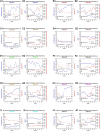
Yes, but those who didn’t improve after receiving Daratumumab were the ones who didn’t sustain the drop, if I remember the graphs correctly.

Is there any data on immunoabsorption? I can’t remember any controlled studies. It looks like an expensive solution in search of market, but I might be too cynical.
As I mentioned, just some early data. No controlled studies.
I’m not trying to prove a point here — just showing that there are some early data that could, in the future, support the hypothesis.

I don’t think F/M have the same hypothesis as S, but I have to admit I don’t really understand what she thinks is going on.
My thoughts are that they converge on autoimmunity, possibly responding to anti-CD38.
 
Yes, but those who didn’t improve after receiving Daratumumab were the ones who didn’t sustain the drop, if I remember the graphs correctly.
C, D and I had sustained drops of IgG without a response, and look quite similar to G that had a response:
IMG_0633.png
As I mentioned, just some early data. No controlled studies.
I’m not trying to prove a point here — just showing that there are some early data that could, in the future, support the hypothesis.
Someone made a thread but there’s not much to go on as you said.
My thoughts are that they converge on autoimmunity, possibly responding to anti-CD38.
Looks like you might be right about that, this is F/M’s hypothesis paper from 2021.
 
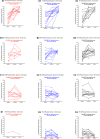
Sorry for the lazy question but do we have similar graphs for individual ''responders'' in their earlier studies?

Never actually glimpsed at these before and realized how significant 5 of them actually looked. Wasn't what I was expecting.

Maybe I am reading tea leaves but the 5 responders are what you would expect from a treatment that works very well. Whereas the 6th ''responder'' is the kind of ''improvement'' I would personally expect in a bogus trial or in a placebo arm for MECFS due to the possible random fluctuations of the illness.

Obviously still have to be skeptical, but I'm more optimistic now.
 
Last edited:
Me neither- all the responses start bang on six weeks too...
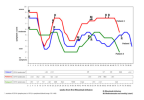
I went back and looked at the very first rituximab trial and interestingly you see this:

1773408894228.png

All three had improvement of all CFS symptoms. Patients 1 and 2 had major amelioration from 6 weeks after intervention, patient 3 slight improvement from the same time, but then improved markedly from 26 weeks after intervention. The symptomatic effect lasted until weeks 16, 18 and 44, respectively. At relapse, all were retreated with a single (patient 1) or double rituximab infusion (patients 2 and 3). Again, all three had marked symptom improvement, mimicking their first response. After new symptom recurrence, patients 1 and 2 were given weekly oral methotrexate, patient 1 having effect also from this agent. Patients 1 and 2 were again treated for a third rituximab infusion after new relapse, again with a marked clinical benefit.

The massive difference is of course that 6 months in there is no doubt that 5 of the ´´responder`` patients in Dara had a genuine long lasting stable improvement. Like FM say the improvement started around those 6-8 weeks and for all of them pretty much just kept going (except one patient who worsened for one data point).

Meanwhile the infamous 6th ´´responder`` has some similarities to the initial 3 rituximab patients (who received a treatment we can be almost certain simply does not work).

You can somewhat poorly follow individuals here from the six year follow up to cyclo and rituximab: https://journals.plos.org/plosone/article?id=10.1371/journal.pone.0307484#pone-0307484-g005


1773403105614.png
Interestingly mild-moderate were included in both studies, whereas mild patients were only included in the rituximab study. Dara had neither mild nor mild-moderate as I understand. This might also help explain the increase in fluctuations in those rituximab trials. Which mostly seems to not happen in Dara. With the exception of one patient you get a very clear picture of whether patients improve or nothing happens.

Of course none of this ultimately matters, what matters will be the ptwo results, but Daratumumab does not look as much as early rituximab trials as I feared.
 
Last edited:
I went back and looked at the very first rituximab trial and interestingly you see this:

1773401679406-png.31105


The massive difference is of course that 6 months in there is absolutely no doubt for 5 of the ´´responder`` patients in Dara had a genuine long lasting stable improvement and like FM say the improvement started around those 6-8 weeks and for all of them pretty much just kept going (except one patient who worsened for one data point).

Meanwhile the infamous 6th ´´responder`` has some similarities to the initial 3 rituximab patients (who received a treatment we can be almost certain simply does not work).

You can somewhat poorly follow individuals here from the six year follow up to cyclo and rituximab: https://journals.plos.org/plosone/article?id=10.1371/journal.pone.0307484#pone-0307484-g005


View attachment 31108
Interestingly mild-moderate were included in both studies, whereas mild patients were only included in the rituximab study. Dara had neither mild nor mild-moderate as I understand. This might also help explain the increase in fluctuations that could fool in those rituximab trials. Which mostly seems to not happen in Dara. With the exception of one patient you get a very clear picture of whether patients improve or nothing happens.

Of course none of this ultimately matters, what matters will be the ptwo results, but Daratumumab does not look as much as early rituximab trials as I feared.
This is quite encouraging!
 
Back
Top Bottom