Protocol Post-acute Infectious Syndrome - Aripiprazole Symptom Evaluation (PAIS-AriSE), 2026, Franke et al.

Silip

Established Member (Voting Rights)
Protocol for a new study on Low Dose Aripiprazole at Charité Berlin:


This is a phase 2b, randomized, double-blind, placebo-controlled crossover trial. Approximately 138 participants with PAIS will be enrolled. Participants will be randomly assigned to one of two treatment sequences. One group will receive low-dose aripiprazole for 8 weeks followed by placebo for 8 weeks. The other group will receive placebo first, followed by low-dose aripiprazole. The two treatment periods will be separated by a 2-week washout period. Neither the participants nor the study team will know which treatment is being given during each treatment period.

The primary objective is to determine whether low-dose aripiprazole improves fatigue after the first 8-week treatment period compared with placebo. Fatigue will be assessed using the Chalder Fatigue Questionnaire. Secondary objectives include evaluating the effects of treatment on physical functioning, quality of life, memory and cognitive performance, mood, post-exertional malaise, illness-related anxiety and distress, and fatigue in participants who meet diagnostic criteria for myalgic encephalomyelitis/chronic fatigue syndrome (ME/CFS). Safety will be assessed throughout the study by monitoring adverse events.

Link to the protocol: https://clinicaltrials.gov/study/NCT07714213
 
Looking at the protocol I already found some important points that I don't like to see at all.

1. the Chalder Fatigue Scale as primary outcome

2. inclusion criteria are extremely broad, quote:

  • History of confirmed or suspected (PCR or serology or rapid antigen detection, certificate of attending physician, sick note) infectious disease
  • Ongoing symptoms of PAIS/PCC for ≥ 3 months
  • Self-reported neuropsychiatric symptoms at screening
3. Low Dose Aripiprazole will only be given for 8 weeks, so no way of looking at long term benefits which of course is especially difficult because so many people report that benefits diminish over time or disappear completely.
 
Low dose Abilify has helped me and I am disappointed by the design of this trial.

Starting at 1mg with no titration?! What is going on here? Did they talk to no current patients before designing this?

ChatGPT tells me that trial design is still fungible at this point, is this true?

Would others be up for a mass email writing campaign to Fr. Franke to improve the trial?

Edit: I just sent her the following email. I happen to speak German, so it's in German:

Edit2: got her auto reply, she's on holiday until August 8th

Sehr geehrte Frau Franke,

Mein Name ist Liam Rosen & ich bin Patient mit schwerer ME. Ich bin Ami und lebe in New York City, habe aber ein Austauschjahr in Freiburg gemacht (daher mein Deutsch!)

Eine der wenigen Drogen, die mir persönlich geholfen hat, ist Aripiprazol (LDA). In den vergangenen Jahren habe ich außerdem hunderte Patientinnen und Patienten bei der Anwendung von LDA begleitet und auch eigene Umfragen zu Dosierung, Verträglichkeit und Wirksamkeit durchgeführt, meistens durch unsere Facebookgruppe "Low Dose Abilify for ME/CFS".

Ich freue mich sehr über die Studie aber Gleichzeitig sind mir ein paar Punkte im Studiendesign aufgefallen, bei denen ich mich frage, ob sie noch einmal überdacht werden könnten. (Vielleicht gibt es dafür auch gute Gründe, die ich nicht kenne!).

1. Startdosis von 1 mg ohne Aufdosierung

Nach meiner Erfahrung ist ein Einstieg mit 1 mg für viele Patientinnen und Patienten zu hoch. Ich zb bin CYP2D6 Poor Metabolizer, sodass 1 mg Aripiprazol bei mir ungefähr 1,8 mg bei einem normalen Metabolisierer entspricht.

Da sich der CYP2D6-Status stark unterscheidet und Nebenwirkungen gerade am Anfang oft dosisabhängig sind, beginnen viele Patienten mit deutlich niedrigeren Dosen (0,1 mg) und steigern langsam. Ein direkter Einstieg mit 1 mg ist eher unüblich.

2. Chalder Fatigue Scale

Die Chalder Fatigue Scale wurde zwar häufig verwendet, wird heute aber von vielen als nur begrenzt geeignet angesehen, weil sie funktionelle Einschränkungen bei ME nicht besonders gut erfasst.

FUNCAP wäre aus meiner Sicht eine bessere Alternative, da sie speziell für ME entwickelt wurde und funktionelle Veränderungen besser abbildet.

3. Zusätzliche Endpunkte

Aus Patientensicht berichten viele nicht in erster Linie über weniger Fatigue, sondern über Verbesserungen bei Licht- und Geräuschempfindlichkeit, Bildschirmtoleranz, kognitiver Belastbarkeit und sensorischer Überreizung. Diese Bereiche zusätzlich systematisch zu erfassen, könnte einen möglichen Nutzen von LDA vollständiger abbilden.

4. Studiendauer

Ich wollte außerdem fragen, ob die relativ kurze Studiendauer von 8 Wochen wegen Budget ist?

Falls ja: Über welche zusätzlicher Finanzierung würde man ungefähr sprechen, um die Studie zu verlängern oder?

Für uns wäre das Thema Tachyphylaxie sehr wichtig. In unseren Gruppen beobachten wir, dass etwa die Hälfte der Patientinnen und Patienten im Verlauf eine nachlassende Wirkung von LDA erlebt. Eine längere Beobachtung wäre deshalb wissenschaftlich sehr wertvoll.

Ich bin außerdem mit mehreren Patientengruppen vernetzt, die vllt bei einer zusätzlichen Finanzierung unterstützen könnten. Falls das Budget tatsächlich ein limitierender Faktor ist, würde ich gerne prüfen, ob wir dabei helfen können.

Vielen Dank für Ihre Zeit!
 
Last edited:
Low dose Abilify has helped me and I am disappointed by the design of this trial.

Starting at 1mg with no titration?! What is going on here? Did they talk to no current patients before designing this?

ChatGPT tells me that trial design is still fungible at this point, is this true?

Would others be up for a mass email writing campaign to Fr. Franke to improve the trial?

Edit: I just sent her the following email. I happen to speak German, so it's in German:

Edit2: got her auto reply, she's on holiday until August 8th

Sehr geehrte Frau Franke,

Mein Name ist Liam Rosen & ich bin Patient mit schwerer ME. Ich bin Ami und lebe in New York City, habe aber ein Austauschjahr in Freiburg gemacht (daher mein Deutsch!)

Eine der wenigen Drogen, die mir persönlich geholfen hat, ist Aripiprazol (LDA). In den vergangenen Jahren habe ich außerdem hunderte Patientinnen und Patienten bei der Anwendung von LDA begleitet und auch eigene Umfragen zu Dosierung, Verträglichkeit und Wirksamkeit durchgeführt, meistens durch unsere Facebookgruppe "Low Dose Abilify for ME/CFS".

Ich freue mich sehr über die Studie aber Gleichzeitig sind mir ein paar Punkte im Studiendesign aufgefallen, bei denen ich mich frage, ob sie noch einmal überdacht werden könnten. (Vielleicht gibt es dafür auch gute Gründe, die ich nicht kenne!).

1. Startdosis von 1 mg ohne Aufdosierung

Nach meiner Erfahrung ist ein Einstieg mit 1 mg für viele Patientinnen und Patienten zu hoch. Ich zb bin CYP2D6 Poor Metabolizer, sodass 1 mg Aripiprazol bei mir ungefähr 1,8 mg bei einem normalen Metabolisierer entspricht.

Da sich der CYP2D6-Status stark unterscheidet und Nebenwirkungen gerade am Anfang oft dosisabhängig sind, beginnen viele Patienten mit deutlich niedrigeren Dosen (0,1 mg) und steigern langsam. Ein direkter Einstieg mit 1 mg ist eher unüblich.

2. Chalder Fatigue Scale

Die Chalder Fatigue Scale wurde zwar häufig verwendet, wird heute aber von vielen als nur begrenzt geeignet angesehen, weil sie funktionelle Einschränkungen bei ME nicht besonders gut erfasst.

FUNCAP wäre aus meiner Sicht eine bessere Alternative, da sie speziell für ME entwickelt wurde und funktionelle Veränderungen besser abbildet.

3. Zusätzliche Endpunkte

Aus Patientensicht berichten viele nicht in erster Linie über weniger Fatigue, sondern über Verbesserungen bei Licht- und Geräuschempfindlichkeit, Bildschirmtoleranz, kognitiver Belastbarkeit und sensorischer Überreizung. Diese Bereiche zusätzlich systematisch zu erfassen, könnte einen möglichen Nutzen von LDA vollständiger abbilden.

4. Studiendauer

Ich wollte außerdem fragen, ob die relativ kurze Studiendauer von 8 Wochen wegen Budget ist?

Falls ja: Über welche zusätzlicher Finanzierung würde man ungefähr sprechen, um die Studie zu verlängern oder?

Für uns wäre das Thema Tachyphylaxie sehr wichtig. In unseren Gruppen beobachten wir, dass etwa die Hälfte der Patientinnen und Patienten im Verlauf eine nachlassende Wirkung von LDA erlebt. Eine längere Beobachtung wäre deshalb wissenschaftlich sehr wertvoll.

Ich bin außerdem mit mehreren Patientengruppen vernetzt, die vllt bei einer zusätzlichen Finanzierung unterstützen könnten. Falls das Budget tatsächlich ein limitierender Faktor ist, würde ich gerne prüfen, ob wir dabei helfen können.

Vielen Dank für Ihre Zeit!
Thank you for doing this!

Scheibenbogen has been very adamant that fatigue is the wrong endpoint for trials. I wonder if she is involved here? Christiana Franke seems to be part of neurology, not immunology.

I am thinking it might make sense to reach out to Scheibenbogen, so that she might talk to the people responsible for the trial directly. Maybe that's a larger lever.

At least it seems sufficiently powered for once.
 
I‘m afraid that Scheibenbogen has no influence on this again, like in the RTC of immunoabsorption at Charité done by the Neurology department.

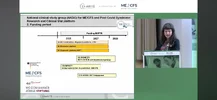
According to this slide from the ME/CFS conference this year the Abilify study should be part of the NKGS group which has a Biomarker program
IMG_7022.webp
 
I‘m afraid that Scheibenbogen has no influence on this again, like in the RTC of immunoabsorption at Charité done by the Neurology department.

According to this slide from the ME/CFS conference this year the Abilify study should be part of the NKGS group which has a Biomarker program
View attachment 33540
I thought the whole point of the NKSG was to collaborate. Now we'll get another trial of immunoabsorption because they couldn't coordinate their trial designs, and a flawed Abilify trial on top.

Let's hope the secondary endpoints are useful at least.
 
That's very disappointing. As with LDN, what is the rationale for using these specific (high-low) doses and dosing schedules? Has any minimal research been conducted to determine the (approximately) optimal dosing regimen for this treatment in ME/CFS? If not, why they don't do a dose dependent clinical trial first?

Drug and supplement sensitivity is a core manifestation of ME/CFS. In fact, hypersensitivity is one of the most pervasive features of the disease, affecting virtually every aspect of life for PwME i.e. sensitivity to cognitive and physical exertion, medications, food, alcohol, atmospheric and barometric pressure changes.

Without meaningful input of PPI groups in designing the methodology of these type of clinical trials, are prone to fail.

If there is insufficient funding to conduct an adequately designed dose-finding study, its better to skip at all these trials rather than proceed with underpowered or poorly designed studies. Like doing this stuff simply for the sake of running a trial or securing grants it utterly disappointing and enraging.
 
I thought the whole point of the NKSG was to collaborate. Now we'll get another trial of immunoabsorption because they couldn't coordinate their trial designs, and a flawed Abilify trial on top.

Let's hope the secondary endpoints are useful at least.
To my understanding the new immunoadsorption study by Scheibenbogen group is done to identify candidates for B cell depletion studies since responding to and deteriorating again is a requirement
 
That's very disappointing. As with LDN, what is the rationale for using these specific (high-low) doses and dosing schedules? Has any minimal research been conducted to determine the (approximately) optimal dosing regimen for this treatment in ME/CFS? If not, why they don't do a dose dependent clinical trial first?
Yes! Sometimes I feel like the 2mg from Stanford became lore and are not being questioned anymore.

There's been studies on D2/D3 receptor occupancy, that show relatively high occupancy even at low doses (Here). So LDA may not be so low-dose after all. However, this doesn't replace actual dose-response data.
 
I‘m afraid that Scheibenbogen has no influence on this again, like in the RTC of immunoabsorption at Charité done by the Neurology department.

According to this slide from the ME/CFS conference this year the Abilify study should be part of the NKGS group which has a Biomarker program
View attachment 33540

Thanks, I was wondering that. I did BCC Frau Scheibenbogen but I think that should be avoided in the future so as not to annoy her.

People are independently starting email writing campaigns on reddit, too:

One point I forgot to include in my email is that Long Covid is not distinguished from ME, or any other diagnosis for that matter.
 
Might be relevant: a previous study by Dr. Christiana Franke had to be terminated prematurely:

Randomized controlled double-blind trial of methylprednisolone versus placebo in patients with post-COVID-19 syndrome and cognitive deficits: study protocol of the post-corona-virus immune treatment (PoCoVIT) trial
This previous study by her seems to have been aborted due to hospitalizations of five participants.
Was there a dosage related issue in this study as well?
 
Back
Top Bottom