Recovery from chronic fatigue syndrome: a reflexive thematic analysis of experiences of people before, during and after treatment, 2025, Chalder+

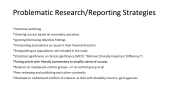
A paper shall pass the test if it has:
- objective outcomes
- at six months or later
- registered in advance
- which are clinically as well as statistically significant
- with <20% cumulative drop outs / lost to follow up at any point
- and which is accurately summarised in the abstract and conclusion
- incorporating rigorous analysis of the direction of causation
- and acknowledgement of potential attrition bias.
 
Last edited:
:thumbup:

Suggested modifications:

- objective and/or adequately controlled (i.e. blinded) subjective outcomes
- final outcome assessment ≥ 6 months after the last treatment session, preferably ≥ 12 months
- registered in advance, with no deviation from the registered protocol for the initial reporting and analysis
- with <20% cumulative drop outs / lost to follow up at any point, and
- reporting of reasons for any missing data, with a sensitivity analysis of its potential consequences.
 
- registered in advance, with no deviation from the registered protocol for the initial reporting and analysis
I find this difficult, you don't necessarily know if the analytic approach you planned can be done with the data you end up having. It might not fit the planned statistical tests assumptions, which may or may not break the analysis if changes are not made.
 
Well, yes. But it is just too easy to sneak in self-serving unscientific changes via post-hoc modifications, and once they are done they become the received wisdom and extremely difficult to undo, as we saw all too clearly with PACE, the very real consequences of which are still with us today.

Better, I think, to publish as planned, and then do an additional analysis with any modifications, so it is clear what the differences are.
 
For everyone who can't quite understand what CBT atcually looks like in practice I can highly recommend an interview by Dan of Post-Exertional Mayonnaise on CBT for patients with ME/CFS with Eliza Charley from Australia.

It's a cult like movement that involves brainwashing.
Thanks PagesofME. That was a very interesting listen, I haven't quite got to the end.

There is a lot of discussion there relevant to the reframing of recovery that goes on in the various forms of brain retraining. She talks about how, when she was unable to go back to work full time, her therapists would ask her 'well, why do you want to go back to work full time?', 'maybe these feelings your body has are just a way of getting you to acknowledge that you don't want to work full time'.

Eliza acknowledges up front that she wholeheartedly bought into the brain retraining ideas to start with, and that she may change how she thinks about ME/CFS yet again as she knows more. I think that is very likely, she seems to have accepted some biological ideas that I think deserve more skepticism. But, as an example of the real life impact of the whole GET, CBT, think yourself to wellness paradigm, Eliza does a great job of describing it.
 
Back
Top Bottom