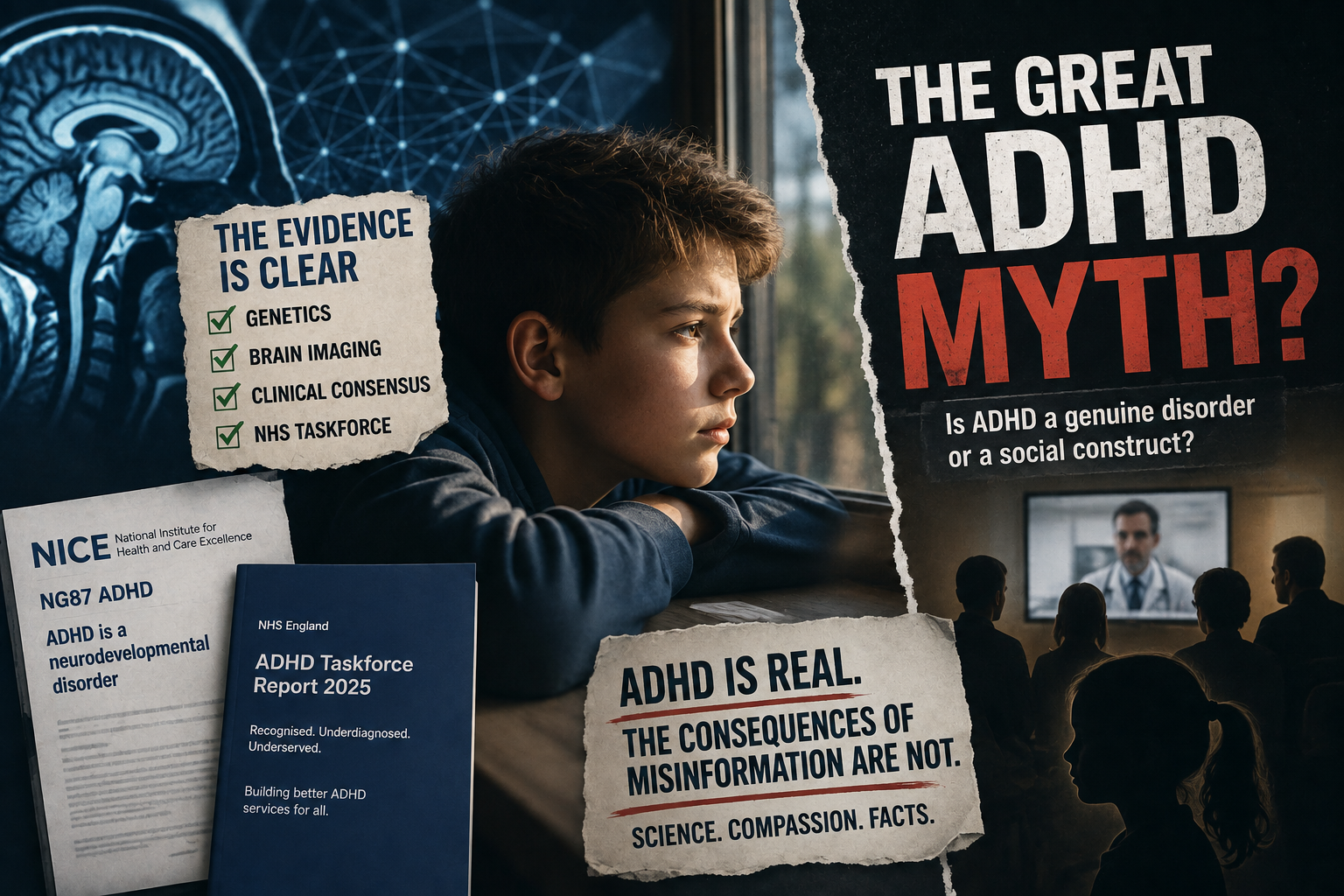
"The ADHD Myth"

How does constant mental stimulation, zero autonomy and a demand constant performance affect the growth of child's brain? Does the brain literally grow used to operating in a certain mode, so much that when the stimulation is abset, no other person is there to set goals, and there's nothing to do the brain suddenly struggles?
I see what you mean and I'm not going to contradict you. I would like to add that going back in the past, not that long ago, our ancestors had jobs as children and were having their own children in teenage years. Some were slaves. That couldn't have been nice and easy for their brains either.
 
So it looks as if ADHD is a real biomedical phenomenon but may require careful diagnosis - familiar?
An important difference from ME is that ADHD has (please correct me if I'm wrong) somewhat reliable treatments. That affects the likelihood of getting a diagnosis (especially if doctors get bonuses for getting patients hooked on profitable drugs). Even without a bonus, it's a diagnosis that gets a "problem solved" result, which is more desirable than having to tell the patient: "Sorry, can't help you."
 
Thus the new "PEM must be delayed" dictum may be fair enough for clear blue water between ME and other fatiguing conditions for study but it is not fair imo to deny the term to those whose PEM is more immediate
I hadn't heard of that change. My physically-induced PEM had a very reliable 24 hr delay, but my cognitively-induced PEM had a much shorter (less than an hour) and more variable delay. I don't consider any of the ME criteria to be absolute truth, but rather attempts at making a tool that's usable for a specific purpose ... and it's nowhere near perfection.
 

Global ADHD Network Statement on Channel 4's "The Great ADHD Myth?" Documentary


This was issued on August 4th, 2026 BEFORE the program was broadcast.
It looks like they went ahead and broadcast the program anyway.

Where's the accountability for the potential harm this program may cause?
 
I'm not really convinced. Sounds like a weak generic "modern life is to blame for everything" argument.

By everything I've heard from my parents and grandparents, I'd say teachers used to be stricter. My gut feeling is that older generations had to sit more still and be more focused in school. There's a lot of teaching through games and play and all sorts of interactive ways, which are more chilled than how it used to be in the past.

Wouldn't there be documented increased numbers of people with ADHD-like traits and behaviours in the generations that grew up during wars, if reduction in outdoor activity was a problem?

I'm not sure about mobile phones either. There are many people seeking ADHD diagnosis who've had problems their whole life but got their first mobile phone when they were adults. I got my first mobile phone when I was a teenager but I had my obsessions, i.e. activities I was really into, which kept me in the bedroom before the phones and remained obsessed despite having a phone (I don't have ADHD, just talking about my experiences and observations). I appreciate the mobile phone world is very different now as well as many other things but it's not that our childhoods were ideal before them. Trends and stupid ideas spread from person to person but they existed. Not everyone played super smart games in optimal amounts to facilitate their development and read books. I don't know... Somehow I don't find it convincing enough.
When I was a child we were always being warned about getting “square eyes” from too much tv. Whatever happened to that? Maybe it was just virtue signalling rather than a genuine concern about screen use.
 
I didn't watch the programme but I'll guess it was the usual mix of some people who understand the issue alternated for "balance" with people who don't understand it but are keen to sound off about their own pet ththeories.
It wasn't. It was completely one-sided with no opposing voices and no nuance.
 
Back
Top Bottom