Treatment effects of multimodal inpatient psychotherapy for post-COVID patients: First results from a non-randomized, controlled study, 2026, Koller+

SNT Gatchaman

Senior Member (Voting Rights)
Staff member
Treatment effects of multimodal inpatient psychotherapy for post-COVID patients: First results from a non-randomized, controlled study
Koller; Hanc; Herold; Kastel-Hoffmann; Morawa; Erim

BACKGROUND
Evidence-based treatment options for post-COVID syndrome remain limited. This study evaluated the effectiveness of a five-week inpatient psychosomatic treatment program for post-COVID patients.

METHODS
In this prospective non-randomized controlled trial, patients with confirmed post-COVID syndrome were recruited from a specialized Post-COVID Center and allocated, based on treatment preference, either to a five-week multimodal inpatient psychosomatic program (intervention group) or to treatment-as-usual without inpatient psychosomatic care (control group). Outcomes were assessed at baseline (T0) and after five weeks (T1). Measures included post-COVID symptom severity (PCS score), fatigue (FSS), depressive symptoms (PHQ-9), anxiety (GAD-7), health-related quality of life (SF-36), and illness-related coping competence (PCQ-2). Group differences over time were analyzed using repeated-measures analysis of covariance, controlling for the T0-T1 interval.

RESULTS
The present study included 71 patients in the intervention group and 49 in the control group, with no baseline group differences in outcomes. Compared with controls, the intervention group showed significantly larger improvements in depressive symptoms (p = .042, η2ₚ = 0.035), mental health-related quality of life (p = .014, η2ₚ = 0.064), social functioning (p = .005, η2ₚ = 0.084), and overall patient competence (p = .018, η2ₚ = 0.048). No group-by-time interaction effects were found for post-COVID symptom severity, fatigue, anxiety, or physical health-related quality of life. Within the intervention group, significant but small improvements were found for fatigue (p = .029, d = 0.275) and anxiety (p = .008, d = 0.324), alongside improvements in psychological outcomes.

DISCUSSION
A structured inpatient psychosomatic program can improve psychological well-being and coping competence in post-COVID patients with mental health comorbidities. While effects on physical symptoms were limited, strengthened coping resources may facilitate longer-term stabilization.

TRIAL REGISTRATION
German Clinical Trial Register (DRKS), retrospectively registered: 15.02.2024; DRKS-ID: DRKS00033562.

HIGHLIGHTS
• Patients coping competence increased significantly following treatment.

• Inpatient psychosomatic care reduces psychological burden of post-COVID patients.

• Depressive symptoms decreased more with inpatient treatment than with usual care.

• Mental health–related quality of life improved more in the intervention group.

• Fatigue showed pre–post improvement in the intervention group.

Web | DOI | PDF | Journal of Psychosomatic Research | Open Access
 
Outcomes were assessed at baseline (T0) and after five weeks (T1).

On subjective self-report outcomes, after just five weeks treatment for a condition known to last years (and potentially a lot longer), via an inpatient program designed to get patients to report better scores on subjective self-report measures.
 
The in-group differences for the treatment group as far to small to be of any value in real life.

The authors do not acknowledge the issues caused by using subjective outcomes without blinding.

Yet another case of researchers living in a make-believe world.
 
Evidence-based treatment options for post-COVID syndrome remain limited. This study evaluated the effectiveness of a five-week inpatient psychosomatic treatment program for post-COVID patients.
Treatment options are limited, so they 'tested' the current option that has been standard from day 1 and to which hundreds of thousands have been subjected, hence the widely known fact that there are no treatments. Yup, makes perfect sense when you don't think about it. Especially when they find it's not effective and recommend it anyway.

Also it's odd to frame this as "first results", because easily 100+ such trials have been done already, so it only leaves the idea that they will publish more results, which is not needed and a complete waste of time, resources and lives.

But, hey, they add a few citations to their academic index, as long as their stonks go up who cares, right? Stonks go up, lives go down. Can't explain that.
 
They needed to adjust the hyphen.

non-randomized controlled trial → non randomized-controlled-trial

Also it's a prospective study but retrospectively registered.


Inclusions said:
For the intervention group, an indication for inpatient psychosomatic treatment was required, such as (5) a diagnosed mental disorder according to ICD-10, significant limitations in the ability to manage daily life (e.g., maintaining daily structure), and/or subjective stress so severe that quality of life and everyday resilience were considerably reduced. The inclusion criterion (5) was assessed and confirmed by physicians in advanced or completed specialized training in psychosomatic medicine and psychologists in advanced or completed training in clinical psychotherapy during a psychosomatic consultation at the Post-COVID Center; in addition, (6) patients had to opt for inpatient treatment. Eligibility for the control group required (7) a decision against the inpatient treatment with (8) clinically relevant depressive symptoms (PHQ-9 ≥ 10). The PHQ-9 was also assessed during the initial consultation at the Post-COVID Center.

Exclusions said:
Exclusion criteria for the intervention and the control group included (1) severe physical impairment (predominantly bedridden patients), (2) a primary diagnosis of substance abuse (ICD-10 F10-F19), schizophrenia or psychosis (F20-F29), or organic psychiatric disorders (F00-F05), as well as (3) acute suicidality. Additionally, control group patients were excluded if they (4) made use of post-COVID-specific inpatient psychotherapeutic treatment or psychosomatic rehabilitation during the 5week assessment period.
 
At the same time, several studies, particularly in chronic fatigue, have demonstrated improvements in physical functioning (SF-36) following CBT [70,71]. However, these effects are typically observed after longer treatment durations or extended follow-up periods, suggesting that the five-week intervention period in the present study may have been insufficient to produce measurable changes in physical health-related quality of life.
So why did they not use a longer term assessment? The issues with confounding effects in short-term self-report assessments, especially for CBT, et al, that require time to wash out, are well known including in ME/CFS studies.

Interestingly, given it is supposedly the "definitive" work on this stuff, the one study they don't cite is PACE, which in fact showed that there is no long-term benefit from CBT (nor GET) over treatment as usual (aka Standard Medical Care, SMC) on the SF-36 (nor the Chalder Fatigue Scale).

Which weakens their claim about it possibly being due to only using short-term outcome assessments.

Beyond the improvements in coping competence captured by our coping measure, the intervention may also have reduced other cognitive and behavioral factors that are known to exacerbate depressive symptoms – such as catastrophizing, fear-avoidant behavior, negative expectations, and physical inactivity - and these changes may have contributed independently to improvements in depression and mental health-related quality of life. Such factors have been shown to perpetuate psychological distress and symptom burden in persistent somatic conditions [23] and are also suspected to contribute to symptom maintenance after SARS-CoV-2 infection [44,61–63]. A recently published study that examined mediating factors in the relationship between CBT and fatigue supported and expanded upon this assumption. The study showed that patients' perceptions and beliefs about activity and the controllability of fatigue significantly mediated the effects of CBT on fatigue outcomes [64]. This suggests that modifying illness-related beliefs and activity-related cognitions could be an important mechanism through which psychotherapeutic interventions act on post-COVID syndrome.
Lot of implicitly and explicitly asserted causality in there, but little hard evidence presented. Usual weasel words: may, suspected, assumption, suggests, could be,...

Some of the studies they cite are also relatively old (as early as 2001) ME/CFS stuff from some of the usual suspects, that was ranked poor quality by NICE (UK) and IQWIG (Germany). i.e. 69, 74-76

I will also bet that some of the more recent citations themselves rely on the concepts and therapeutic claims made in the older poor quality studies.
 
According to a summary by the Norwegian ME Association, Flottorp recently claimed under oath in a Norwegian court that she was not aware of 1) Crawley’s replication of FITNET with null results, and 2) MAGENTA with null results.

Either they are living under rocks, or they are prepared to lie to everyone about anything that doesn’t agree with them, which is how dictators themselves has defined propaganda.
 
On top of the psych stuff, the people who opted for the in-patient intervention were expected to do a fair amount of physical activity:
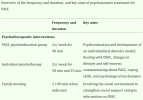
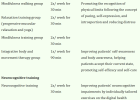
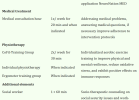
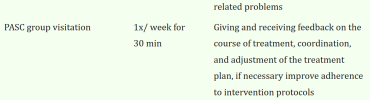
The intervention consisted of a five-week inpatient psychosomatic program based on an integrative concept combining depth-psychological and cognitive-behavioral therapy (CBT).

Patients were treated in closed groups of four to seven patients and received both individual (twice a week, 50 and 25 min) and group psychotherapy (twice a week for 90 min group therapy with psychoeducation, twice a week 30 min mindfulness walking, relaxation and mindfulness training; once a week for 90 min integrative body and movement therapy) grounded in CBT and acceptance and commitment therapy (ACT), with a focus on validating symptoms, strengthening self-efficacy, and teaching coping strategies within a biopsychosocial framework; depth-psychological components included biographical anamnesis and a focus on therapeutic and group interactions, as well as consideration of personality structure and conflicts classified according to Operationalized Psychodynamic Diagnosis (OPD) criteria to foster motivation and illness understanding.

Additional key elements included the 3P principle (pacing, planning, prioritizing) to prevent PEM, neurocognitive training via the NeuroNation MED app [49], and tailored physical therapy (circuit training, breathing exercises, and pulse-controlled ergometer training) adapted to patients' capacities. Medical care comprised a comprehensive assessment at admission and discharge, weekly consultations, and specialist evaluations as needed. Further details of the intervention, especially the frequency and duration of therapy sessions, are described in the study protocol [45 link does not go to right paper].
and they didn't benefit from it in terms of symptom reduction, physical health-related quality of life or fatigue.
 
Last edited:
At the same time, several studies, particularly in chronic fatigue, have demonstrated improvements in physical functioning (SF-36) following CBT
Uh, that's also not true. It's usually not the physical functioning that reports improvement, notwithstanding a couple of trials that may have randomly had that happen. It doesn't even make sense anyway, as CBT does not target physical functioning. Good grief why are we stuck with the weirdest new age cult in history holding our lives captive?
 
Good grief why are we stuck with the weirdest new age cult in history holding our lives captive?
I have no idea but it would be incredibly funny if it wasn't so deeply destructive and frightening. These people think they are doing science. They think this parade of woo nonsense and reheated Freudianism is good science. And apparently so do the people that fund them.
 
This paper is going to cause harm.
That sounds like torture.
Cause harm to participants or to the authors?
A program full of torture should have ended the careers of this bunch of so-called researchers.

As should happen to the group that did the same kind of torture including Nordic walking, paper on that a few weeks ago.
That group "taught ' participants about pacing, the authors did GET and pacing up in one go. (1000 steps a day extra)

What's wrong with german therapists, behaving like drill-sergeants?
Ethics people doing nothing but say everything ok.
A new target group for @dave30th
 
According to a summary by the Norwegian ME Association, Flottorp recently claimed under oath in a Norwegian court that she was not aware of 1) Crawley’s replication of FITNET with null results, and 2) MAGENTA with null results.

Either they are living under rocks, or they are prepared to lie to everyone about anything that doesn’t agree with them, which is how dictators themselves has defined propaganda.
There is literally no possible excuse for somebody claiming any degree of expert status to not know the full history of their field, and in considerable detail.

That is their damn job.

Anything less is reckless wilful ignorance at best, and extreme incompetence, dishonesty, and callousness at worst.
 
Back
Top Bottom