Well-known, famous people with ME/CFS (public thread)

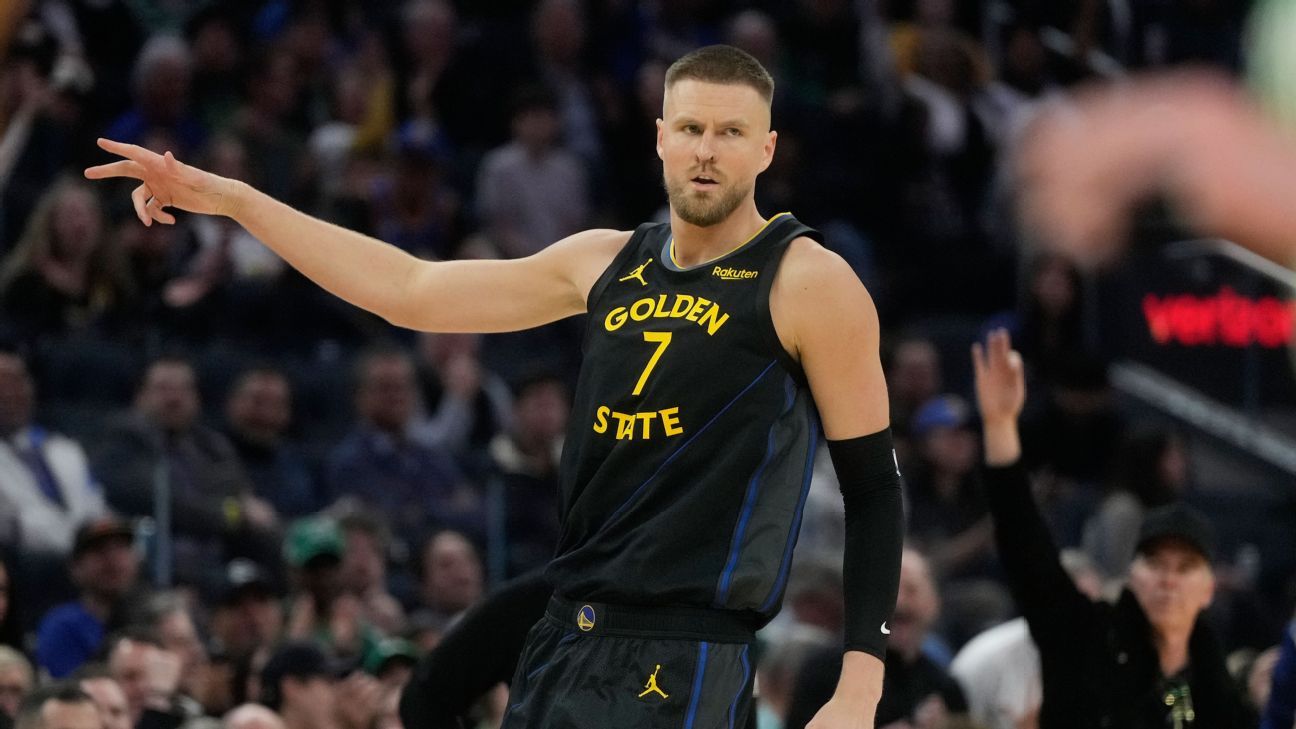
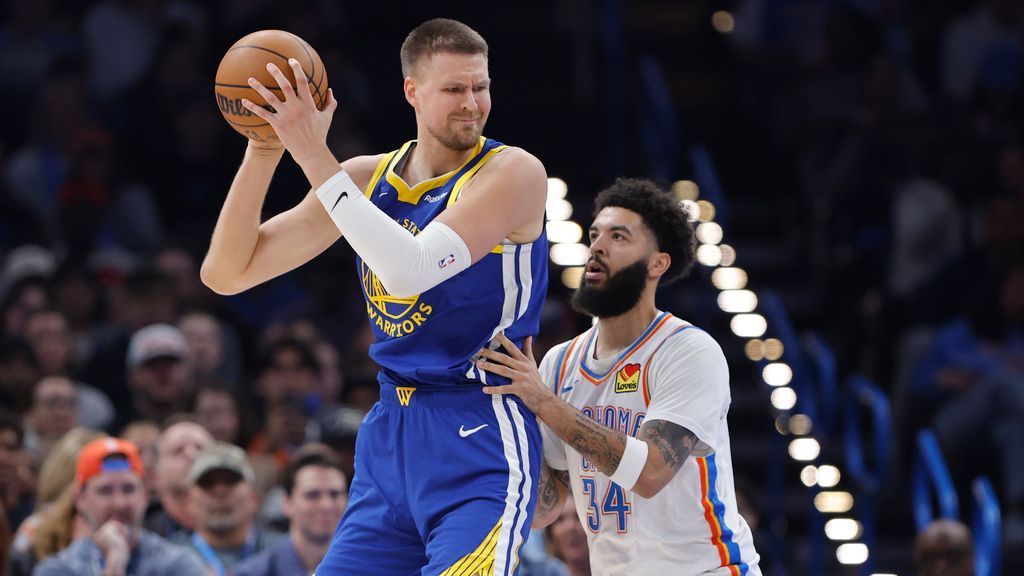
The 30-year-old big man has been battling an illness that Warriors coach Steve Kerr described on Monday as "mysterious" when asked if there was any clarity on the situation.

"Not really," Kerr told reporters. "It's a little mysterious. We're obviously working with him and hoping that he can get some clarity, and he can break through and get to a point where he's consistently healthy.

"That's something that the medical staff is working hard on with him. I'm not going to even posit any medical theories anymore."


I'm not sure how it takes someone over a year to figure out what's going on in this day and age especially given the resources he has? Or maybe it's because he relies on ignorant doctors instead of asking Dr Google.
 
We're obviously working with him and hoping that he can get some clarity, and he can break through and get to a point where he's consistently healthy ...That's something that the medical staff is working hard on with him.[/QUOTE}

This sounds so ominous. Medical staff worked hard on his return to full-time work. No more sick leave. No more crippled. Be consistent.

Expect him to get clarity, see the light and break through, get himself to the point of "no return".

As if that is a return to work and no return to illness. As likely the other way round. Return him to illness of his own accord. Take himself past the point of no return.

"He's obviously wanting to be back and wanting answers, and we'll keep supporting him."

Whati f it was one of those injuries that end a career - is coaching feasible and more conducive. What support for a star investment.
 

I'm not sure how it takes someone over a year to figure out what's going on in this day and age especially given the resources he has? Or maybe it's because he relies on ignorant doctors instead of asking Dr Google.
Do you know that he has only been his coach for a month? They traded for him recently.
 
Do you know that he has only been his coach for a month? They traded for him recently.

The star had a year of costly medical advice on how to recover (and in good faith get traded). The new Coach can't work it out either. Medical advice is still unclear.

This medicine is widely supposed to be advanced, jet-set, safe sports medicine. It had a free hand. Maybe there is a new clinic on the job. The buying and selling coach are friends. Everyone is insured. The doctors are insured. Its not a car-crash.

It is such a responsibility to promise and program a return to health and work with such confidence that these 2 people are keen to follow the program for its promise.

If he doesn't - as prescribed - see the light, break through and stop ailing - then who is to blame for this result, how much longer does it stop him earning, who takes the loss, how many loss-adjusters to add that up

This is too much riding upon one ill person, riding his mind, governing his regime, and perturbing all his surround-sound supporters.
 
Porzingis has been ill since last year and has not been able to play regularly. The new coach just didn't ask enough questions before the trade. And I'm talking about Porzingis and his medical staff.
Ok. Your post quoted Steve Kerr so that’s who I presumed you were talking about.


A YouTube doctor with 865K followers. Discusses POTS and then addresses the elephant in the room: Long COVID. Discusses medical reporting in sports and speculation.

But I haven't seen anybody mention this because I think everybody is afraid to talk about it. […] I'm not even going to try to get into the pathophysiology of Long COVID because I do not understand it adequately enough to do it justice.
 
That was actually pretty good. I mean, the doctor did a bit of waving in the direction of autoimmunity and problems with autonomic function, but he managed to acknowledge the fact that he doesn't understand the pathology. And, best of all, he made it clear that 'these conditions' can have a serious impact and some people don't get better, and he didn't wave in the direction of psychosomaticism.

Shoutout to Dr Brian Sutterer. It's a shame 'these conditions' have to become common before we get to this point, but that video creates a bit of hope that attitudes are changing.
 
In terms of raising visibility amongst the general public it's probably worth noting a few of the good comments —

Thanks Doc, for mentioning long COVID. It's no joke. A close friend came down with it. He has all of the symptoms you have described, in such severity that he considered suicide many times until he found a therapist & joined a support group of other patients.

Okay. I used to date someone with POTS. It totally makes sense why he would go long stretches of flare ups that makes it impossible to play. He is at risk of fainting basically out of nowhere which he obviously can't do in a game

8:14 this is why I respect you so much. Some doctors let their ego get the best of them and refuse to acknowledge when they’re wrong or uneducated on a certain topic which is sad and disappointing. I wish all doctors were upfront and honest when there were specific things they weren’t very familiar with. Great video as always!

You know its serious if Dr Sutterer is chiming in.

As a fan of the channel and also as someone that's part of the original Long COVID group (March 2020), I've been disabled and out of work for 5 years now (the first year I had no idea what was wrong and tried to push through making myself so much worse). I can say I was sitting here ready to be upset with what you were going to say about this illness. Soooooo many doctors have no idea about this condition that affects millions and milllions of people worldwide. But you did a pretty good job. The only nitpick I'll make is that when you refer to it as Chronic Fatigue Syndrom that name comes across as 'oh you're a little tired sometimes' when it's actually a much more serious condition.

One mild COVID infection in 2022 sent me from running marathons to barely able to run errands. Yeah, Long COVID is real. And yeah, Porzingis' story has been pissing me off because there are hundreds of thousands of us out there whose lives have been destroyed by this curse and society keeps acting as if it weren't a thing. Thank you for emailing him. And Doctor, thank you for being one of the real ones. Now about that cure...
 
Quite a few quotable portions from that article.

Porzingis has sat out 110 games combined the past 2½ seasons.

Then he yawned again, sending out a hidden reminder of the persistent exhaustion that is threatening to derail his NBA career: The 30-year-old former All-Star was diagnosed last year by Celtics doctors with postural orthostatic tachycardia syndrome (POTS), an autonomic condition that can dramatically increase heart rate and cause dizziness and fatigue.

"I felt all right. Far from being in perfect shape," Porzingis said. "But I think for [the] first game back after a while, getting some energy back, feeling good. ... I think it's just a matter of time to get in a better rhythm."

Three mornings later, Porzingis woke up sick in his team-provided San Francisco hotel room and called the training staff. He went from being the spotlight story of the ABC afternoon game against the Denver Nuggets to being so ill that he couldn't even come to the arena.

that Saturday afternoon, he was ruled out again with a general illness, continuing an absence that has now reached six consecutive games, during which he has rarely been seen in public.

When feeling its ill effects, Porzingis has likened it to the type of exhaustion someone experiences after a full day of hard work. He has tried to manage it with proper hydration, nutrition and sleep.

"The simple answer on that for me is I heavily rely and trust our medical group," Warriors general manager Mike Dunleavy told ESPN. "So when they look at the stuff and they say, 'We're good, we feel comfortable with what we're dealing with,' then I'm on to the next thing from a basketball standpoint.

"Honestly, as quickly as possible," Porzingis said. "Even if I am exhausted out there, I want to still push myself. ... It's always weird coming back after a while, but I've had my ups and downs in my career and I've been out for a bit and I'm kind of pretty good at jumping right back in."

But this experience has been wholly different. It's not about toughness or resilience or pain or attitude. It's just about his day-to-day health and what that could mean for his long-term future.

"When a guy is hurt or sick or whatever, there's no one around here like pressuring you, like, 'Yo, what's going on?' We don't move like that," Green said. "So I don't think in this locker room, we feel the uncertainty as much as everyone else does, because that's just not how we operate. We know if he's healthy, he's going to get back out there.

"We don't sit around pressuring guys to make them feel this angst that they got to get back. No, you'll get back when you can get back."

Note to rehabilitationists and BPS more generally: we will all get back when can get back.
 
Back
Top Bottom