Andy
Senior Member (Voting rights)
Full tile: Which cognitive-behavioural factors play a role in the reduction of post-COVID-19 fatigue following cognitive behavioural therapy and care as usual? A secondary analysis of the ReCOVer study
Open access
Highlights
- Changes in activity-related perceptions seem to mediate the CBT-effect on fatigue.
- Increased self-efficacy also appears to mediate the CBT-effect on fatigue.
- Change in these beliefs might be generic mechanisms to reduce fatigue.
Abstract
Objective
A previous randomized controlled trial (RCT) showed the efficacy of cognitive behavioural therapy for fatigue (CBT-F) in relieving severe fatigue in a subgroup of post-COVID-19 patients as compared to care as usual (CAU). The aim of this study, a secondary analysis of the RCT, was to investigate which cognitive behavioural variables mediate the fatigue-reducing effect of CBT and which variables predict a reduction in fatigue independent of the intervention condition.Methods
A total of 114 patients (CBT-F = 57, CAU = 57) were included. The primary outcome was fatigue severity assessed with the Checklist Individual Strength, subscale fatigue. Assessments were conducted at baseline and directly post-CBT-F or CAU. Mediation analyses and linear regression analyses were performed with purposeful selection of variables based on statistical significance and relevance.Results
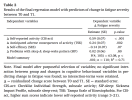
The final parallel mediation model included increased self-reported activity and self-efficacy regarding fatigue as well as a reduction in anticipated adverse consequences of activity as mechanisms explaining the reduction in fatigue in CBT-F as compared to CAU. Across conditions, the same three variables predicted a decrease in fatigue; problems with sleep and sleep-wake pattern was retained in the model based on purposeful selection principles.Conclusion
Perceptions and beliefs regarding activity and the controllability of fatigue seem to mediate the effect of CBT-F on fatigue as compared to CAU. Changes in these variables might be generic mechanisms explaining reductions in fatigue as they also seem to be related to the reduction in fatigue across intervention conditions.Open access