Artificial intelligence will solve ME/CFS, and is the only thing that matters

There are valid arguments about how important traditional research is still needed, such as gathering and processing tissue samples, but it's my prediction that it's already pointless to even bother, because most of it won't contribute anything, and it's too inefficient anyway. If an AI swarm working on ME/CFS arrives at a point at which it needs this kind of real world data, it will simply ask for it, in precise parameters, and organize the logistics of making it happen ASAP. In weeks, even days, not years. And it will organize all the results in a way to optimize its utility in ways that human labor simply cannot achieve. Humans for the most part will only need to push buttons at this point.
This paragraph ends on a key point. Given all that you have written in the past about the deliberate, often willfully cruel dismissal of ME/CFS, why would we think anyone with access to such buttons will actually push the ones we hope they will?
 
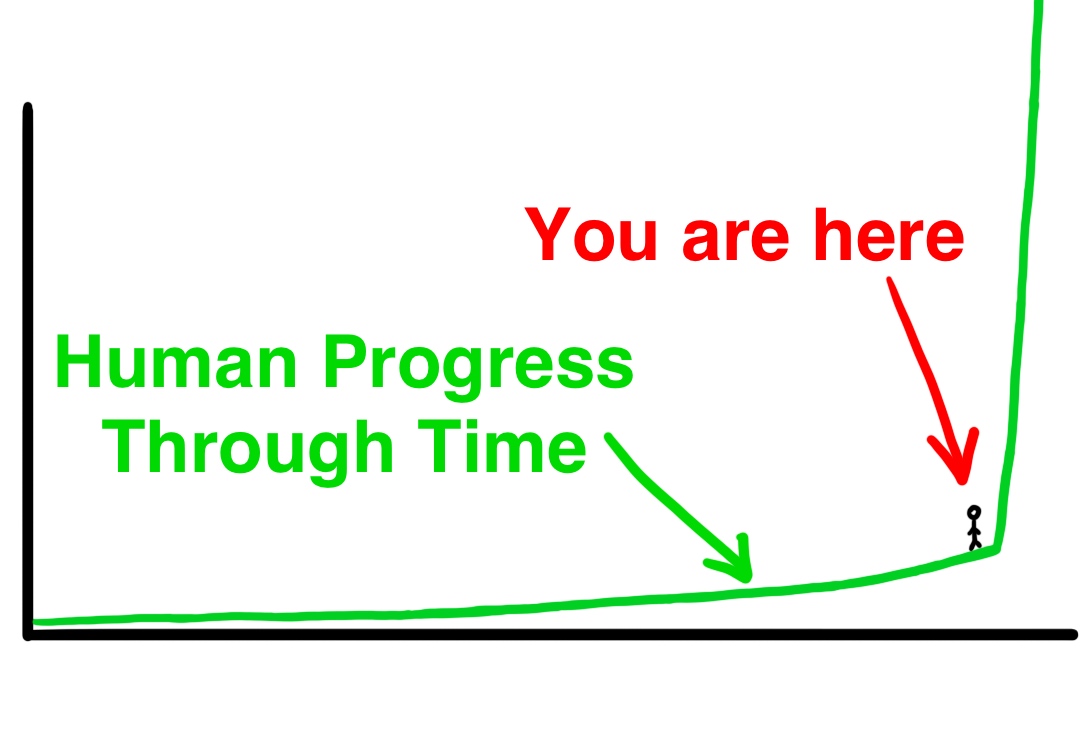
AI will solve ME/CFS, likely within two years at most, probably not even that.
Solve, like cure? No. Unless the 'solution' is already out there waiting to be associated with relevant data to combine into a comprehensive solution, I doubt it.

Garbage in equals garbage out implies that quality (experimental) data is required to solve a problem, even with computational techniques including machine learning. I'm a skilled engineer and near daily 'AI' user. I must be profoundly out of touch if I can't see this coming, but I've lived through a few hype cycles in tech and have some perspective.

If you truly believe this, you may as well believe in utopia being achieved on the same timeline. AI or not, <1% of the population with me/cfs has never been and won't likely ever be a priority in terms of difficult problem to solve for civilization.

I don't mean this in an insulting way but without any evidence given for extraordinary claims, the original post may as well be psychosis.

It's going to be a good thread. *microwaves popcorn*
 
Also just want to say even Dario’s grand vision, CEO of Anthropic, says 10 years all diseases cured and he’s the most bullish of them all. ME/CFS other than a handful of studies are shit, we won’t be first in line even if this magical utopia appears purely because there’s nothing to build on. 2 years for ME/CFS cured is truly wildly optimistic unless someone forks over an army of sequencers to Chris to build an actual good data set so this magical AI can have even the slightest clue of what’s going on.


By the time AI is good enough to crack ME/CFS with the existing data there will be so many other issues and probably temporary collapse of society due to encryption breaking and loss of work; my top two fears
 
Last edited:
IMO there's certainly hope that within the next few years there will be a major breakthrough that will kickstart drug research etc. But I don't see how AI is going to learn to do biomed research and solve things itself instead of just being a tool that some like the genetics lot on here use to assist research.

The maths stuff is impressive but I haven't seen that much impressive stuff from biomed research except the AlphaGenome/Deemind stuff. I don't see how LLMs suddenly learns to sift through mountains of garbage data and find the answer to a complex biomedical problem.
 
By the time AI is good enough to crack ME/CFS with the existing data there will be so many other issues and probably temporary collapse of society due to encryption, breaking and loss of work as my top two fears
Im still extremely skeptical that AI is going to collapse society. I think thats criti hype engaged in by people in tech who are trying to market it as much more powerful than it is.
 
Im still extremely skeptical that AI is going to collapse society. I think thats criti hype engaged in by people in tech who are trying to market it as much more powerful than it is.
An argument against the idea that people who appear worried about things like that are just marketing: https://www.astralcodexten.com/p/ai-safety-is-not-a-corporate-plot

The summary:
AI companies like Anthropic and OpenAI have long mentioned the possibility that their products could be existentially dangerous, but this has recently crescendoed into even more dire warnings, including suggestions that we have to pace the frontier, ie coordinate to slow AI progress.

In response, cynical commentators have suggested this is a conspiracy to boost the companies’ stocks. [...]

Many debates about AI are complicated and hard to resolve, but this one isn’t: all of these stories are clearly false. Some evidence:
  • The AI experts who aren’t affiliated with big companies are just as concerned as the ones who are.
  • The AI company leaders giving these warnings were giving the exact same warnings before they had AI companies - and in many cases, before they worked in the industry, or before the industry existed.
  • If these corporate plots were real, they would be incredibly dumb.

 
Im still extremely skeptical that AI is going to collapse society. I think thats criti hype engaged in by people in tech who are trying to market it as much more powerful than it is.
Pre-LLM hype AGI was predicted to hit in the next 50 years. I’ve been following it from 2016 and they said then within 50 years and that was before the breakthrough of transformers. The current lineup are hype men but more sane ppl have called it for decades happening in the middle to late 2000s
 
By the time AI is good enough to crack ME/CFS with the existing data there will be so many other issues and probably temporary collapse of society due to encryption, breaking and loss of work as my top two fears
I have concerns about this too. I personally don't like the way things are heading. We are getting too connected. Along with natural disasters we will have added data disasters, affecting banks, water supply? etc.
 
I'm always a bit out of sync on threads but I just want to say I hope S4ME makes the breakthrough. I'm always impressed by your science minds. I'm very grateful and I longed for this day when I could hear and read the constant concentration on researching our illness. I was in the dark without the internet, alone for my worst years.
 
Have I shared this before? Published in 2015, this is sparked my interest in AGI:

I guess part 2 of this is really “nobody knows and everybody has been arguing about it since forever but most likely on the mid to late 2000s”

I do think recent advancements the people interviewed may have changed their timelines since 2015
 
I don't think AI will take over anything.
But what i do think is that a few unscrupulous human individuals will use AI to take over everything.
In one sense the building of data centres, that has made all attempts at halting climate change empty, shows that it is already here. There is one I can see from my window. But within about two years someone will find a way to completely disable all e-tech in other countries. They just need to buy in a few more chips. We will probably then have a general version of the Leeds Biobank situation in which all AI is shut down., or bombed by drones.

I think we should carry on solving ME/CFS here. We are getting somewhere.
 
An argument against the idea that people who appear worried about things like that are just marketing: https://www.astralcodexten.com/p/ai-safety-is-not-a-corporate-plot

The summary:
Based on the summary I'm not sure the three points at the end stack up. If AI experts are people who have bought into the hype that AGI is imminent then surely they will be worried. And the AI companies and their founders have been beating this drum forever because it gets them funding from states who want to develop an incredibly powerful technology and do it before anybody else. It's advertising. I'm not sure that a corporate plot to market your technology as incredibly powerful, get loads of investors and get rich off of it is dumb at all. Unethical sure but not dumb. I also think many of these people are completely high on their own hype supply.

I'll read the full piece when I have capacity but those are my thoughts on those three points.
 
The wet lab stuff will still be a barrier for getting data, but I’m most concerned by the amount of bad data that has flooded academia for decades.
This is actually an area where it will benefit enormously: by weeding it out. There is a ton of noise and not a lot of signal in there. Pushing out all the noise will make the signals much clearer.

One major mechanism by which science works is by eliminating paths that don't work. It's how it normally works, and one of the reasons why medicine has miserably failed us is by not doing that. The psychosomatic approach has been completely discredited, yet still gets all the energy and attention. No academic discipline can succeed that way.

The scale of the noise is so extreme that it's frankly normal that no human effort can make anything out of it.
 
What I don’t understand yet is if LLMs would be able to conceive of things that do not exist in the data.
It managed to solve some of the hardest problems in all of science despite that. The meme of a "next-token predictor" doesn't change that the answer doesn't need to be in the training data to be figured out. AIs have moved so far beyond that, while also benefiting from a quasi brute force approach that is able to do the equivalent of months of work on a human schedule in days or even hours. It can do things on a simple hunch that no human would do because it would take far too much time.
I don’t think a self-driving car that has never seen a plastic bag before in the training would have any means of knowing what it is.
A good example but it's a totally different set of problems. The issue with that example is that a self-driving car has to make millisecond decisions with real-life consequences. A model reasoning through a problem doesn't need to make a decision here and now about what kind of threat a plastic bag represents to the immediate environment.

There is a huge debate over the value of intelligence, especially the potential of LLMs, that can solve the hardest math problems yet can't do many of the things a toddler does. It's an entertaining debate but mostly irrelevant. AI doesn't need to be able to tell its own ass from a hole in the ground in order to do science. People like LeCunn and others who keep ranting about world models have a perspective that is too focused on the human experience as being central to solving "true" intelligence. World models will be important, but they are not intellect.
 
Back
Top Bottom