Association of rapamycin treatment with the modulation of purine metabolism…, 2026, Gile, Kaufman, Gottschalk, Roy+

SNT Gatchaman

Senior Member (Voting Rights)
Staff member
Association of rapamycin treatment with the modulation of purine metabolism, reduced microglial inflammatory responses, improved mitochondrial energy metabolism, and alleviation of fatigue symptoms in ME/CFS subjects: pilot findings from phase-II observational study
Gile, Brooke; Bulbule, Sarojini; Toriola, Mubaraq A; Ruan, Brian T; Marium, Shabnam; Benko, Anna; Grach, Stephanie; Mueller, Michael; Bateman, Lucinda; Bell, Jennifer; Yellman, Brayden; Berner, Jon; Chheda, Bela; Kaufman, David; Gottschalk, Gunnar; Roy, Avik

BACKGROUND
and rationale In our ongoing phase II observational pilot trial, the compounded formulation of low-dose rapamycin significantly reduced fatigue-related clinical symptoms in ME/CFS subjects. Although the underlying molecular mechanism remains unclear, exploring metabolic pathways involving circulating blood-borne factors is warranted. Recent studies suggest that increased levels of purines may exacerbate oxidative stress in ME/CFS patients. It is not known if rapamycin modulates purine biosynthesis and improves disease symptoms.

METHODS AND RESULTS
To address, we performed a comprehensive LCMS-based quantification of purine biosynthetic intermediates in plasma from responder cohort of ME/CFS participants, both at baseline (BSL) and after 90 days of rapamycin therapy (T3). Notably, differential regulation was observed in the enzymatic conversion of inosine monophosphate (IMP) to xanthosine-5-monophosphate (XMP) and hypoxanthine (HPX) between BSL and T3 samples. Flow cytometry assays on PBMCs confirmed that rapamycin reduces IMP dehydrogenase activity, thereby limiting the conversion of IMP to XMP. Further analyses, including mitochondrial oxidative stress assessments, Seahorse OCR following purine supplementation, and flow cytometry indicate that altered purine levels can impair mitochondrial energy metabolism, and may contribute to inflammatory processes in microglia.

CONCLUSION
Collectively, these findings highlight the therapeutic potential of rapamycin to enhance energy metabolism in patients with ME/CFS.

MAJOR LIMITATIONS
There is no placebo group, and molecular results are somewhat biased to responders.

TRIAL REGISTRATION
CLINICALTRIALS.GOV, NCT06257420. Registered 11 December 2023, https://clinicaltrials.gov/study/NCT06257420.

Web | DOI | PDF | Journal of Translational Medicine | Open Access
 
Why are we still doing unblinded trial for ME/CFS outside small pilots?
Overall, 65 participants completed the full BSL-to-T3 protocol. Analysis of the primary endpoints identified that among these completers, 26 participants were classified as responders, 31 as partial responders, and 5 as non-responders.
FUNCAP was a secondary outcome, but if you look at the overall score the changes are negligible:
IMG_0034.webp
I don’t understand what the F is.

They say they collected wearable data (including step count) for some, but make up a lot of excuses for why it wasn’t useable:
Wearable device data were collected from a subset of participants; however, the absence of a standardized wearable platform limited meaningful cross- subject comparisons. This limitation was driven in part by budgetary constraints, but reflects broader challenges associated with wearable implementation in ME/CFS research.
Current commercially available devices vary substantially in cost, battery requirements, software architecture, and accessibility to raw physiologic data, limiting inter-device compatibility for advanced metrics such as heart rate variability, sleep architecture, and estimated VO2 max.
In addition, few platforms have been validated specifically for long-term monitoring in ME/CFS or other highly disabled patient populations and are designed to track and promote physical exercise which is contraindicated in ME/CFS [79].
Future studies will require the implementation of a single, validated wearable platform suitable for decentralized clinical monitoring and compatible with the functional limitations of this patient population. Until such approaches become standardized, validated self-reported outcome instruments, including those used in the present study, remain the primary measures of clinical efficacy in ME/CFS research.
They just asked the participants if they had a wearable device so I understand that you can’t compare step counts on a group level when they don’t have the same model. But they could have looked at the step count of each individual and calculated the change, e.g. as a percentage of the baseline.

And there is nothing wrong with giving people a fitbit and telling them to ignore the instructions or turn them off because they are not pacing-compatible. This has been done for years. They are way under $100 each.

Several limitations should be acknowledged in the present investigation. First , the study was not designed as a placebo- controlled trial. Instead, each participant served as their own control, with baseline (BSL) measurements compared to those obtained after treatment at the T3 stage. This approach may introduce certain biases and limit the ability to fully account for placebo effects or other confounding variables.
This is far too weak. It will introduce a lot of biases, as seen in the ritux phase 2 trial that was published more than a decade ago.

Accounting for the expected biases, the results are very underwhelming:
IMG_0035.webpIMG_0036.webp
 
Why are we still doing unblinded trial for ME/CFS outside small pilots?

FUNCAP was a secondary outcome, but if you look at the overall score the changes are negligible:
View attachment 33195
I don’t understand what the F is.

They say they collected wearable data (including step count) for some, but make up a lot of excuses for why it wasn’t useable:


They just asked the participants if they had a wearable device so I understand that you can’t compare step counts on a group level when they don’t have the same model. But they could have looked at the step count of each individual and calculated the change, e.g. as a percentage of the baseline.

And there is nothing wrong with giving people a fitbit and telling them to ignore the instructions or turn them off because they are not pacing-compatible. This has been done for years. They are way under $100 each.


This is far too weak. It will introduce a lot of biases, as seen in the ritux phase 2 trial that was published more than a decade ago.

Accounting for the expected biases, the results are very underwhelming:
View attachment 33197View attachment 33198
I agree with everything you say here and have to add that looking at this groups previous papers about Rapamycin I fear that they will (again) frame their study as successful and tout Rapamycin as a highly promising drug regardless of results, let alone the clinical relevance of their findings.
 
It was posted elsewhere but presumably they are going over these results today:


Unfortunately I cannot make it.
 
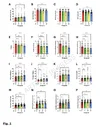
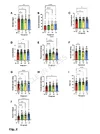
I have to say when reading the manuscript it sounds very positive, so much improvement and all significant. Looking at the graphs it’s a completely different story, especially when you factor in this is not placebo controlled.

They do plan to do a placebo controlled trial:

As a future direction for this project, we plan to recruit participants for a double blinded placebo-controlled step-wedge clinical trial to strengthen the validity of our findings

I can’t say I’m particularly hopeful, I think we saw better results in the placebo arm of LDN! I was pretty excited about this 2 years ago, now I’m just following out of curiosity. I even bought some rapamycin at the time, but never took and was waiting for the ground breaking results that never came.
 
It seems like to me they should not be highlighting the P-values if there’s no placebo arm, since you’ve basically just proven that there is a placebo effect. They really should be putting the MCID (Minimal Clinically Important Difference) as a red dashed line on those fatigue charts so anyone can come to the conclusion that even with significant P-values (that just tells you to there’s an overall up trend, which is irrelevant without placebo) that barley anyone in a small cohort had clinically meaningful improvement.

How is this acceptable for our own charities to not be highlighting these findings for everyone, they are tweeting asking for donations but burying the fact that only 40% of patients achieved a MCID non-placebo controlled trial. They obviously knew this as they subgrouped the biological tests to this standard.


Two years ago I would have just read significant P-values and popped open my rapamycin bottles, as I’m sure many desperate others are doing so now. There is impact in not reporting negative results that effects the community now.
 
Last edited:
As a future direction for this project, we plan to recruit participants for a double blinded placebo-controlled step-wedge clinical trial to strengthen the validity of our findings
I had to look up what a step-wedge trial is:
IMG_0039.webp
It looks like the kind of trial you do when rolling out vaccines.

I found this paper through wikipedia, so that checks out. A few parts:
Alternatively, are you an explanatory researcher arguing that a SWT is appropriate, whereas a parallel cluster randomized trial is not, because the potential benefit of the interventions seems clear, at least in principle, and the research question turns on efficacy or effectiveness in a certain context? If so, you may need to think again. Planning a SWT requires you to be clear about where the equipoise lies [12, 13].
It may lie in uncertainty about the effectiveness of an intervention whose efficacy has been established, or in uncertainty about potential efficacy in a setting that is substantially different from those of previous studies. However, the equipoise has to lie somewhere because without it there is no ethical justification for delaying implementation in some clusters [11].
(…)
Researchers should consider five questions before starting a stepped wedge trial.

Why are you planning one? Researchers sometimes think that stepped wedge trials are useful when there is little doubt about the benefit of the intervention being tested. However, if the primary reason for an intervention is to measure its effect, without equipoise there is no ethical justification for delaying implementation in some clusters. By contrast, if you are undertaking pragmatic research, where the primary reason for rolling out the intervention is for it to exert its benefits, and if phased implementation is inevitable, a stepped wedge trial is a valid option and provides better evidence than most non-randomized evaluations.
It seems to me like an SWT is mostly used when you’re sure the effect is positive, but you don’t know how large it is. You need that information, but you also need to get the intervention out to everyone, so you do it gradually. Usually it’s forced to be gradual due to logistics and resource limitations, so you might as well make use of it in the trial design.

But an SWT has its own challenges and it limits how much info you can actually get out of it. And it’s not ideal for testing if and intervention actually is effective at all.

Why can’t they just do a normal RCT with two arms? It seems like an unnecessarily complicated design.

Recruitment should be easy enough. Fluge and Mella got >300 applicants for ResetME from primarily Bergen and some from Oslo. Bergen has <300k inhabitants and Oslo is at about 1.1M. If they think recruitment would be an issue because people don’t want placebo, just do a 2:1 like ResetME.

We need proper, reliable data. I’m not convinced the people involved here have the same goals. If they do, we do not agree on how to achieve them.
 
They had a questions section last time during their zoom, but ignored my questions on effect size last time so I’m not hopeful. Might be worth a shot asking why they are doing this trial design @Utsikt

It does seem rather odd, I don’t think with 40% MCID results this trial necessitates this design, and it’s definitely not a “cure”. It really feels like they want to over complicate this…
 
Back
Top Bottom