

Dolphin
Senior Member (Voting Rights)
Press release from Australian government announcing $1.1 million for the NHMRC to develop ME/CFS guidelines
https://www.emerge.org.au/news/medi...tter-support-for-people-with-chronic-fatigue/
OFFICIAL
MARK BUTLER MP
MINISTER FOR HEALTH AND AGED CARE
MEDIA RELEASE
BACKING BELIEF WITH BETTER SUPPORT FOR PEOPLE WITH CHRONIC FATIGUE
The Albanese Government has heard the calls for better support for people with Myalgic Encephalomyelitis/Chronic Fatigue Syndrome (ME/CFS), Long COVID and related conditions, with funding to develop new Australian clinical guidelines.
The Government will provide $1.1 million to the National Health and Medical Research Council (NHMRC) to develop the guidelines in consultation with patient groups, health professionals, and medical scientists.
Consultations will include engagement with Emerge Australia, ME/CFS Australia, the Royal Australian College of Physicians and the Royal Australian College of General Practitioners, among others.
ME/CFS is a neurological condition affecting up to 250,000 people in Australia.
Symptoms can be debilitating and include sleep issues, pain, problems with memory, sensitivity to light, touch and sound, problems with standing and balance, and body temperature and weight.
A central feature of ME/CFS is post-exertional malaise (PEM), which means that symptoms can get worse after physical or mental activity for some people. Adults and children can also experience recurrent and persistent flu-like symptoms.
The new guidelines will determine diagnostic criteria to help doctors and their patients with better treatments, coping strategies, and options for care.
In addition to ME/CFS, the guidelines will make reference to other post-infection onset conditions with similar or aligned symptoms, like Post-Acute Sequelae of COVID-19, also known as Long COVID, postural orthostatic tachycardia syndrome (POTS) and fibromyalgia.
Quotes attributable to Minister Butler:
“I’d like to thank people with ME/CFS for their ceaseless campaign to be heard and believed in the face of, frankly, years of doubt and disregard.”
“ME/CFS does not discriminate. It affects people of all ages, ethnicities, and socioeconomic backgrounds.
“The development of new Australian clinical guidelines will provide GPs and their patients with better diagnosis, treatment and care.
“The NHMRC will lead the development of these guidelines, in consultation with and for the benefit of the more than 250,000 people who suffer daily, often silently, with ME/CFS and related conditions.”
Quotes attributable to Emerge Australia CEO, Anne Wilson:
“The Albanese Labor Government is the first Australian Government in over 20 years to fund development of clinical guidelines for people with ME/CFS.
“This is a landmark and monumental announcement by Health Minister Mark Butler.
“It will be a game changer for Australia’s 250,000 people with ME/CFS. They have been seen, heard and not left behind.”
Quotes attributable to ME/CFS Australia Spokesperson, Penelope McMillan:
“We welcome this exciting announcement. Thank you to Minister Butler and his department for their commitment to this much-needed development in the care of people with ME/CFS, Long COVID, and related conditions.
“We look forward to working alongside other groups representing patients and our colleagues from the health professional groups and experts in the evaluation of scientific evidence.
“This will change lives for patients and those who care for them.”
MONDAY, 17 JUNE 2024
MEDIA CONTACT: Lucy Caruso:
==============
Emerge Australia press release:
https://www.emerge.org.au/news/stop-press-update-me-cfs-clinical-guidelines/
Media release: published 20 June 2024
New Hope for Australians battling ME/CFS and Long COVID
Emerge Australia, the national patient organisation for people living with ME/CFS and Long COVID, has welcomed Federal Government funding to update evidence based clinical guidelines, so health professionals can better diagnose and manage these debilitating conditions.
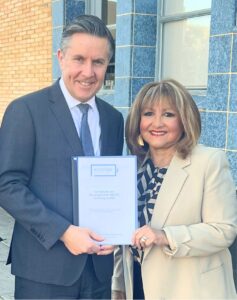 Emerge Australia’s chief executive officer, Anne Wilson said today, “we congratulate the Federal Health and Aged Care Minister Mark Butler for his government’s leadership on this critical and long -awaited decision, and express our appreciation to the Minster’s team and the Departmental personnel who have shown courage and thought leadership on behalf of over 250,000 Australians with ME/CFS alone.”
“Australia’s ME/CFS clinical guidelines are over 20 years old. This is the first government who has been willing to address these outdated clinical guidelines that do not reflect international best practice in the care of patients. We are truly grateful for the advocacy from many people, over many years that has led to this announcement.”
Today, the Minister has confirmed that his department is working with the National Health and Medical Research Council (NHMRC) to commission this vital work.
“The guidelines will follow the rigorous NHMRC guideline standards and will include an opportunity for all Australians to have their say on draft guidelines. The guidelines will take two to three years to develop and the NHMRC will consult broadly with all stakeholder groups representing patients and with health professional groups and experts in the evaluation of scientific evidence,” Minister Butler said in a letter to Emerge Australia today.
In welcoming this significant milestone, Anne Wilson explained that she is looking forward to continuing this vital trajectory with ongoing, advanced discussions unfolding around much needed funding for clinical education, patient support and research.
“We welcome this first step and will continue to emphasise the urgent need for more to be done for those living with ME/CFS and Long COVID.”
Emerge Australia, provides patient support, information, clinical education, advocacy, and biomedical research for up to 500,000 people living with Myalgic Encephalomyelitis/ Chronic Fatigue Syndrome (ME/CFS) and Long COVID.
Contact: Claire Heaney Emerge Australia. Anne Wilson CEO Emerge Australia is available for interview
https://www.emerge.org.au/news/medi...tter-support-for-people-with-chronic-fatigue/
OFFICIAL
MARK BUTLER MP
MINISTER FOR HEALTH AND AGED CARE
MEDIA RELEASE
BACKING BELIEF WITH BETTER SUPPORT FOR PEOPLE WITH CHRONIC FATIGUE
The Albanese Government has heard the calls for better support for people with Myalgic Encephalomyelitis/Chronic Fatigue Syndrome (ME/CFS), Long COVID and related conditions, with funding to develop new Australian clinical guidelines.
The Government will provide $1.1 million to the National Health and Medical Research Council (NHMRC) to develop the guidelines in consultation with patient groups, health professionals, and medical scientists.
Consultations will include engagement with Emerge Australia, ME/CFS Australia, the Royal Australian College of Physicians and the Royal Australian College of General Practitioners, among others.
ME/CFS is a neurological condition affecting up to 250,000 people in Australia.
Symptoms can be debilitating and include sleep issues, pain, problems with memory, sensitivity to light, touch and sound, problems with standing and balance, and body temperature and weight.
A central feature of ME/CFS is post-exertional malaise (PEM), which means that symptoms can get worse after physical or mental activity for some people. Adults and children can also experience recurrent and persistent flu-like symptoms.
The new guidelines will determine diagnostic criteria to help doctors and their patients with better treatments, coping strategies, and options for care.
In addition to ME/CFS, the guidelines will make reference to other post-infection onset conditions with similar or aligned symptoms, like Post-Acute Sequelae of COVID-19, also known as Long COVID, postural orthostatic tachycardia syndrome (POTS) and fibromyalgia.
Quotes attributable to Minister Butler:
“I’d like to thank people with ME/CFS for their ceaseless campaign to be heard and believed in the face of, frankly, years of doubt and disregard.”
“ME/CFS does not discriminate. It affects people of all ages, ethnicities, and socioeconomic backgrounds.
“The development of new Australian clinical guidelines will provide GPs and their patients with better diagnosis, treatment and care.
“The NHMRC will lead the development of these guidelines, in consultation with and for the benefit of the more than 250,000 people who suffer daily, often silently, with ME/CFS and related conditions.”
Quotes attributable to Emerge Australia CEO, Anne Wilson:
“The Albanese Labor Government is the first Australian Government in over 20 years to fund development of clinical guidelines for people with ME/CFS.
“This is a landmark and monumental announcement by Health Minister Mark Butler.
“It will be a game changer for Australia’s 250,000 people with ME/CFS. They have been seen, heard and not left behind.”
Quotes attributable to ME/CFS Australia Spokesperson, Penelope McMillan:
“We welcome this exciting announcement. Thank you to Minister Butler and his department for their commitment to this much-needed development in the care of people with ME/CFS, Long COVID, and related conditions.
“We look forward to working alongside other groups representing patients and our colleagues from the health professional groups and experts in the evaluation of scientific evidence.
“This will change lives for patients and those who care for them.”
MONDAY, 17 JUNE 2024
MEDIA CONTACT: Lucy Caruso:
==============
Emerge Australia press release:
https://www.emerge.org.au/news/stop-press-update-me-cfs-clinical-guidelines/
Media release: published 20 June 2024
New Hope for Australians battling ME/CFS and Long COVID
Emerge Australia, the national patient organisation for people living with ME/CFS and Long COVID, has welcomed Federal Government funding to update evidence based clinical guidelines, so health professionals can better diagnose and manage these debilitating conditions.
“Australia’s ME/CFS clinical guidelines are over 20 years old. This is the first government who has been willing to address these outdated clinical guidelines that do not reflect international best practice in the care of patients. We are truly grateful for the advocacy from many people, over many years that has led to this announcement.”
Today, the Minister has confirmed that his department is working with the National Health and Medical Research Council (NHMRC) to commission this vital work.
“The guidelines will follow the rigorous NHMRC guideline standards and will include an opportunity for all Australians to have their say on draft guidelines. The guidelines will take two to three years to develop and the NHMRC will consult broadly with all stakeholder groups representing patients and with health professional groups and experts in the evaluation of scientific evidence,” Minister Butler said in a letter to Emerge Australia today.
In welcoming this significant milestone, Anne Wilson explained that she is looking forward to continuing this vital trajectory with ongoing, advanced discussions unfolding around much needed funding for clinical education, patient support and research.
“We welcome this first step and will continue to emphasise the urgent need for more to be done for those living with ME/CFS and Long COVID.”
Emerge Australia, provides patient support, information, clinical education, advocacy, and biomedical research for up to 500,000 people living with Myalgic Encephalomyelitis/ Chronic Fatigue Syndrome (ME/CFS) and Long COVID.
Contact: Claire Heaney Emerge Australia. Anne Wilson CEO Emerge Australia is available for interview


