neophyte32
Senior Member (Voting Rights)
Is this false advertising? Or not ?

Nature News actually reported on this development. I don't think I am allowed to share the article because it requires a subscription (which I have). I can share this one quote that might be the most important takeaway.Why ME/CFS Biomarker Headlines Keep Failing to Deliver
Every few years, headlines appear claiming that scientists have finally found a biomarker for myalgic encephalomyelitis/chronic fatigue syndrome (ME/CFS). Each time, the community feels a surge of hope: maybe this is it—the long-awaited diagnostic test that will legitimize the disease and speed up treatment research.
And yet, decades later, we still don’t have a clinically validated biomarker. The latest announcement about the EpiSwitch blood test is just the newest chapter in this long story of excitement and disappointment.
Why a Biomarker for ME/CFS Matters
A biomarker—a measurable biological signal that identifies a disease—could change everything for ME/CFS. It could shorten the years-long diagnostic delays, help distinguish ME/CFS from overlapping illnesses, and guide treatment development (Jason et al., 2023).
But identifying one has proven incredibly difficult. ME/CFS is a heterogeneous condition. No two patients are the same, and the biological pathways involved—immune, metabolic, vascular, and neurological—are deeply interconnected (Proal & VanElzakker, 2025).
The Pattern: Discovery, Hype, and Disappointment
The ME/CFS field has followed a predictable pattern for years:
This cycle has played out with cytokine panels (Montoya et al., 2017), mitochondrial enzyme assays (Armstrong et al., 2015), metabolomic signatures (Naviaux et al., 2016), and red blood cell deformability (Saha et al., 2019). Each produced intriguing findings, but none proved specific or stable enough to serve as a diagnostic test.
- A small study identifies a biological difference between patients and healthy controls.
- The media declares it a “breakthrough blood test.”
- The findings fail to replicate in larger, more diverse groups.
- The discovery fades—until the next big claim.

ME/CFS Biomarkers: Why Every New Blood Test Isn’t the Breakthrough It Seems — Post-Viral Nutrition
Every few years, new headlines promise a biomarker for ME/CFS. Learn why most fail, what’s behind the EpiSwitch test, and why real progress will take a cluster of biomarkers.www.postviralnutrition.com
 www.nature.com

Don’t take this a legal advice because I don’t have a legal background, but I think fair use generally allows for sharing a fairly large chunk of the article for non-commercial comment or criticism.Nature News actually reported on this development. I don't think I am allowed to share the article because it requires a subscription (which I have). I can share this one quote that might be the most important takeaway.
“I think it’s really cool they brought this method to the field,” says Katie Glass, a molecular biologist who studies ME/CFS at Cornell University in Ithaca, New York. “As far as it being a biomarker, my enthusiasm would be pretty tempered because the cohort is very small and they looked at only very severe patients.”
The tools available to researchers keep improving.
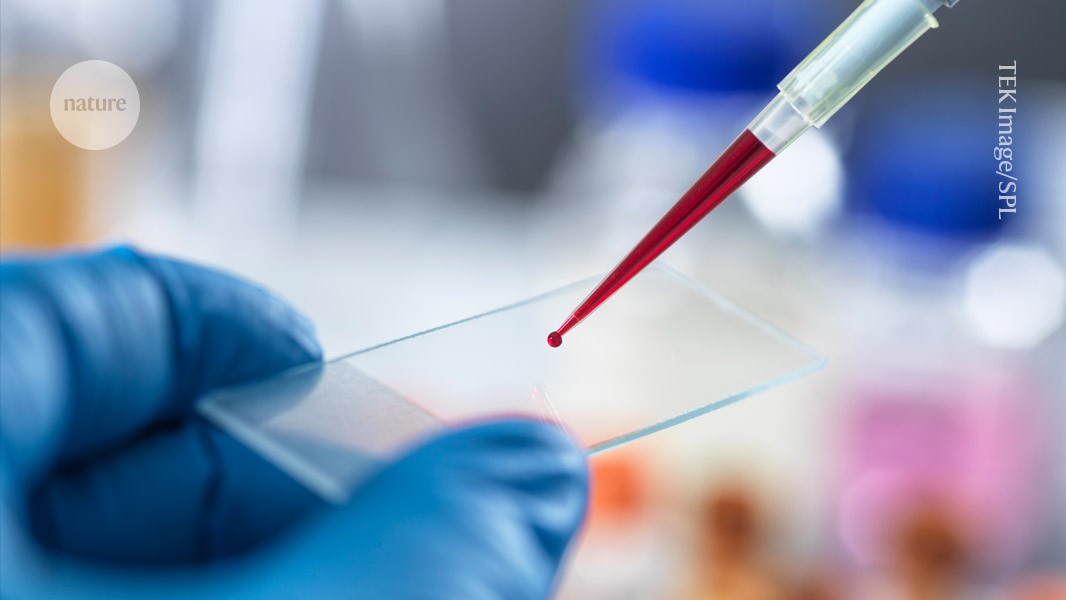
First proposed blood test for chronic fatigue syndrome: what scientists think
A blood test has achieved 96% accuracy in diagnosing the condition in a small study of individuals. What does the test detect, and is it a biomarker of the condition?

Turns out, Chronic Fatigue Syndrome (CFS) and long Covid have a few things in common. For one, they're notoriously tricky to diagnose. So when researchers said they developed a blood test that may be able to detect both of these conditions, our curiosity was piqued.
In case you're not familiar with the diseases, CFS is a disease that causes extreme, life-altering fatigue, per the Centers for Disease Control and Prevention (CDC). It's estimated that it impacts 3.3 million people in the US. In the UK, recent research suggests that approximately 403,000 people are living with ME/CFS – roughly 0.6% of the population – though older estimates put the figure closer to 250,000.
Long Covid is a chronic condition that happens after someone has a Covid-19 infection, with symptoms like fatigue, trouble breathing, and brain fog lasting for at least three months, per the CDC. It's affected roughly two million people in the UK.
While the study focused on CFS, there is some biological overlap with long Covid, says Dmitry Pshezhetskiy, PhD, lead study author and research fellow at the University of East Anglia.
Basically, because the two conditions may create similar changes (called biological "signatures") in DNA and biology that are detectable on a blood test, this CFS test could eventually be adapted and tweaked in order to detect long Covid. Still, more and larger studies will need to confirm all of this.
What does this mean for patients?
“It would be hugely helpful—incredibly valuable—to have a test for long Covid,” says James C. Jackson, PsyD, research professor of Medicine at Vanderbilt Medical Center and author of Clearing the Fog: From Surviving to Thriving with Long Covid—A Practical Guide. “In the absence of an objective test, diagnosing long Covid is challenging and, often, it is a diagnosis of exclusion—meaning that if clinicians can't come up with other explanations, it is only then that they land on a diagnosis of long Covid.” This process takes a lot of time and resources and can be “incredibly frustrating” for patients, Jackson says.
Similarly, for CFS, diagnosis is often based on symptoms and ruling out other causes, which can take months or even years. A reliable blood test would give patients faster answers.
Ultimately, figuring out where these two illnesses overlap can help guide researchers into developing targeted treatments to help get to the root of what is causing these conditions, Pshezhetskiy says.

 www.womenshealthmag.com


This letter to the editor promotes oxygen-ozone therapy for ME/CFS in the absence of reliable evidence. The authors of the letter appear to have a strong commitment to this therapy, yet they declare they have no conflict of interest.Response to the study


It's interesting that the authors think the most notable issue in a paper about developing a diagnostic test is that they didn't discuss alternative treatments.
5. Chirumbolo S, Franzini M, Tirelli U. Post-infective myalgic encephalomyelitis/chronic fatigue syndrome (ME/CFS) and post-COVID as two puzzling faces of the same medal. Recent insights. Int Immunopharmacol. 2025;152:114365. https://doi.org/10.1016/j.intimp.2025.114365
6. Tirelli U, Franzini M, Valdenassi L, Pandolfi S, Berretta M, Ricevuti G, Chirumbolo S. Patients with myalgic Encephalomyelitis/Chronic fatigue syndrome (ME/CFS) greatly improved fatigue symptoms when treated with Oxygen-Ozone autohemotherapy. J Clin Med. 2021;11(1):29. https://doi.org/10.3390/jcm11010029
7. Chirumbolo S, Valdenassi L, Franzini M, Pandolfi S, Ricevuti G, Tirelli U. Male vs. Female differences in responding to Oxygen-Ozone autohemotherapy (O2-O3-AHT) in patients with myalgic Encephalomyelitis/Chronic fatigue syndrome (ME/CFS). J Clin Med. 2021;11(1):173. https://doi.org/10.3390/jcm11010173
Scientists have developed a simple, accurate blood test that can potentially identify Myalgic Encephalomyelitis / Chronic Fatigue Syndrome (ME/CFS) — a long-term, debilitating condition that affects millions of patients worldwide.The study, led by the University of East Anglia in partnership with Oxford BioDynamics, used cutting-edge 3D genomic technology to look at how DNA is folded inside blood cells. Just like origami, the shape and folds of DNA control which genes are switched on or off.The team discovered a distinctive pattern of these folds that appears only in people with ME/CFS — providing a clear biological “fingerprint” of the disease. Using this pattern, the researchers created a blood test that can diagnose ME/CFS with 96% accuracy. Until now, doctors have had to rely on symptoms alone and rule out other illnesses, a process that can take years. This test offers the potential for quicker, more confident diagnoses, and could end the uncertainty many patients face.Beyond diagnosis, the findings also point toward disrupted immune and inflammation pathways, which may help scientists develop targeted treatments in the future. The same approach could even pave the way for a similar test for Long Covid, which shares many of the same biological features as ME/CFS.This discovery marks an important turning point; it brings scientific validation to patients whose symptoms have too often been dismissed, and it opens the door to better understanding, earlier support, and more effective care for people living with this complex condition.In this webinar, Solve CEO Emily Taylor hosts research team members Dr. Dmitry Pshezhetskiy, Dr. Alexandre Akoulitchev, MA, PhD, FRSM, Bartu Ahiska, and Ewan Hunter to discuss the development of their new blood-based assay, the EpiSwitch CFS test, and its potential impact on diagnosing and treating people with ME/CFS and Long Covid.


Felix Kania (@kania_felix) said:EMERGE by Oxford BioDynamics
The company is further pursuing their proposed diagnostic test for ME/CFS
Last year they reported 92% sensitivity and 98% specificity for EpiSwitch in a small cohort
Now they plan to validate on 840 participants, including other chronic diseases
View Original Post

 intheloop.oxfordbiodynamics.com
Concerningly does not mention matching for age, sex and activity.We're now preparing for the EMERGE trial: a prospective study across seven NHS sites that will test our biomarker in 840 participants, including patients with varying ME/CFS severity, Long COVID, multiple sclerosis (MS), and rheumatological conditions. This will determine whether our test can reliably distinguish ME/CFS from conditions that can clinically mimic it.
I think "utm_source=chatgpt.com" at the end of a link just means chatgpt is the one who referred someone to that page.From here (might be AI generated judging from the end of that hyperlink):

Yep. It means the person who first clicked on and shared the link got it from a chatgpt conversation.I think "utm_source=chatgpt.com" at the end of a link just means chatgpt is the one who referred someone to that page.