Covidivici
Established Member (Voting Rights)
Dysregulated NK-cell gene expression defines the enduring symptoms of long COVID-19
Abstract
Introduction Long-term COVID-19 syndrome (LTCS) or “long COVID” is a debilitating post-viral condition affecting approximately 2%–8% of individuals after SARS-CoV-2 infection. It manifests typically ≥3 months post-infection with symptoms persisting for at least 2 months, including fatigue, pulmonary dysfunction, and cognitive impairment, in the absence of alternative diagnoses. The biological mechanisms underlying LTCS remain poorly defined, yet emerging evidence implicates immune dysregulation.
Methods We profiled plasma antibodies and cytokines from healthy controls (HC, N = 66), convalescents (CONV, N = 24), and LTCS patients ( N = 94), followed by multiparametric 14-color flow cytometry of PBMCs from HC ( N = 9), CONV ( N = 6), and LTCS ( N = 23) participants. To gain mechanistic insight, we performed single-cell transcriptomic profiling (scRNA-seq) on PBMCs from HC ( N = 8), CONV ( N = 6), and LTCS ( N = 32) individuals.
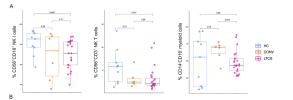
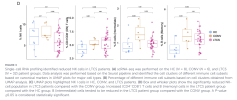
Results LTCS patients exhibited elevated anti-SARS-CoV-2 IgG (spike S1/RBD/N) titers compared with HC, but displayed significantly reduced systemic cytokine levels, including IFN-γ, TNF-α, IL-6, and IL-10. Flow cytometry revealed marked depletion of CD56 + CD16 + NK cells and CD56 + CD3 + NKT cells, accompanied by altered T-cell activation states. scRNA-seq confirmed NK type I cell loss and uncovered broad transcriptional reprogramming with upregulation of PDCD4 , CHD1 , CXCR4 , and SLC7A5 and downregulation of TGFBR3 , RIPOR2 , and MBNL1 . Gene set enrichment analyses indicated activation of circadian and translational programs and suppression of olfactory receptor, neurotransmitter receptor, and GABA-gated ion-channel pathways. Functional assays validated reduced NK-cell inflammatory capacity in LTCS participants.
Discussion LTCS is characterized by systemic cytokine attenuation and a quantitative and functional NK-cell deficit coupled to neurosensory pathway suppression. These findings identify NK cells as key sentinels of LTCS pathophysiology and highlight an NK-centric neuroimmune axis as a promising target for biomarker discovery and therapeutic intervention.
Web | DOI | PDF | Frontiers in Immunology
Ray, Urvi; Schulze Selting, Antje; Perera, Roshan Priyarangana; Yang, Zhiqi; Lysenkov, Vladislav; Göpel, Siri; Bitzer, Michael; Salker, Madhuri S.; Ossowski, Stephan; Riess, Olaf; Casadei, Nicolas; Singh, Yogesh
Abstract
Introduction Long-term COVID-19 syndrome (LTCS) or “long COVID” is a debilitating post-viral condition affecting approximately 2%–8% of individuals after SARS-CoV-2 infection. It manifests typically ≥3 months post-infection with symptoms persisting for at least 2 months, including fatigue, pulmonary dysfunction, and cognitive impairment, in the absence of alternative diagnoses. The biological mechanisms underlying LTCS remain poorly defined, yet emerging evidence implicates immune dysregulation.
Methods We profiled plasma antibodies and cytokines from healthy controls (HC, N = 66), convalescents (CONV, N = 24), and LTCS patients ( N = 94), followed by multiparametric 14-color flow cytometry of PBMCs from HC ( N = 9), CONV ( N = 6), and LTCS ( N = 23) participants. To gain mechanistic insight, we performed single-cell transcriptomic profiling (scRNA-seq) on PBMCs from HC ( N = 8), CONV ( N = 6), and LTCS ( N = 32) individuals.
Results LTCS patients exhibited elevated anti-SARS-CoV-2 IgG (spike S1/RBD/N) titers compared with HC, but displayed significantly reduced systemic cytokine levels, including IFN-γ, TNF-α, IL-6, and IL-10. Flow cytometry revealed marked depletion of CD56 + CD16 + NK cells and CD56 + CD3 + NKT cells, accompanied by altered T-cell activation states. scRNA-seq confirmed NK type I cell loss and uncovered broad transcriptional reprogramming with upregulation of PDCD4 , CHD1 , CXCR4 , and SLC7A5 and downregulation of TGFBR3 , RIPOR2 , and MBNL1 . Gene set enrichment analyses indicated activation of circadian and translational programs and suppression of olfactory receptor, neurotransmitter receptor, and GABA-gated ion-channel pathways. Functional assays validated reduced NK-cell inflammatory capacity in LTCS participants.
Discussion LTCS is characterized by systemic cytokine attenuation and a quantitative and functional NK-cell deficit coupled to neurosensory pathway suppression. These findings identify NK cells as key sentinels of LTCS pathophysiology and highlight an NK-centric neuroimmune axis as a promising target for biomarker discovery and therapeutic intervention.
Web | DOI | PDF | Frontiers in Immunology
Last edited by a moderator: