It's just a burden, not a help.
I really hope that
@nanay and the app developers take this to heart. You've given such helpful and detailed feedback
@Trish that i'm sure it will be useful in rebuilding the app for people like us.
And
@nanay, I hope you take these comments to heart, especially when Trish says we want to be helpful. We do want to be helpful to you (and understand that you are trying to help us too) and hope that you incorporate this feedback into your next iteration. Our type of fatigue is so different from other types of fatigue that don't involve orthostatic intolerance and PEM that the same suggestions won't help.
I'll restate some of what Trish has said in my own words for improvement:
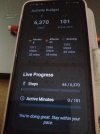
1) The app needs to respond to user input and tailor it's recommendations to the user's ability and history in terms of things like activity levels and step count. Setting a goal for 6000 steps in a person who regularly does 1200 steps is inapropriate for a healthy couch potato, who would probably get injured and discouraged by this extreme increase and certainly not someone who is ill. It does not show the app learning from the user's reality. or true abilities. Since we all want to do more than we can, an app that could truly recommend safe activity levels would be helpful. The analogy here is that you have built a CGM that encourages diabetics to eat more and more sugar.
2) The app needs to be able to monitor orthostatic intolerance and separate activity with and without orthostatic strain.
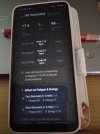
3) The level of detail in symptom reporting is onerous. We need an app that will explain our symptoms to us in a way that gives us new insights, rather that obligates us to give it overly detailed data (which it then seems to ignore). If the app could differentiate PEM, rolling PEM, fatigue and where we are in these trajectories it would be helpful.
4) Talk to mental health professionals for the cheery messages problem. Your app has the potential to have profound mental health effects and that should be based on clinical expertise and research in the relevant patient populations. Chronic illness itself comes with mental health challenges. The depressed person with anhedonia needs one type of help and the MS patient struggling with a cane and leg numbness needs different help. Don't be generic.
5) Talk to exercise professionals/sports physiologists about your exercise/activity recommendations. Different illnesses have different problems that curtail exercise ability. Blanket recommendations to increase steps won't help anyone who is ill. Also, there are many online sources for deconditioned people who want to get back in shape and this app doesn't even have that level of assistance. What personal assistance is your app adding? You have potential in this area if you get it right.
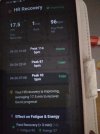
6) A lot of us use wearables already, such as visible and various forms of heartrate monitors. What is you app adding specifically? The fuctionalities that Trish describes seem very generic and trying to be all things to all people. Can you clarify you goals a bit more, perhaps with patients input? Helping with fatigue is laudable, but it's much to broad, since fatigue itself is much too varied. I would like to see separate aps for people with mental and physical illnesses.
@nanay , I know your intentions are good and you want to help us. However, you need to do research with your end users and then rebuild based on that. Consider this your fist research step with our illness. I would be very interested to see and compare the research you get with other fatiguing illnesses, such as MS, RA, cancer, and depression. You have the potential to build something very worthwhile if you can sort out the types of fatigue that each of these groups experiences. That's a huge research gap you could fill. Please keep up your work, incorporating our suggestions.