Genetics: NEGR1

Jonathan Edwards

Senior Member (Voting Rights)
A quick look on AI.

The
NEGR1 (Neuronal Growth Regulator 1) gene, located on chromosome 1p31.1, encodes a GPI-anchored cell adhesion molecule critical for brain development, synaptic organization, and neuronal connectivity. Strongly associated with obesity, depression, and neurodevelopmental disorders, NEGR1 regulates energy balance and synaptic plasticity. Studies suggest it plays a role in cognitive, emotional, and social behaviors.

Key Aspects of the NEGR1 Gene:
  • Function: As part of the IgLON family (including LSAMP, OPCML, NTRA, IGON5), NEGR1 acts as a cell adhesion molecule in the nervous system. It is involved in regulating synapse assembly, cholesterol homeostasis, and axon growth.
  • Disease Associations:
    • Obesity: Multiple GWAS studies consistently link NEGR1 variants with body mass index (BMI).
    • Neuropsychiatric/Developmental: NEGR1 deletions or dysfunction are linked to intellectual disability, developmental delays, autism spectrum disorder (ASD), dyslexia, anxiety, and depression.
    • Neurobiology: Deficiency in mice leads to altered dopamine/serotonin systems, reduced locomotor activity, and impaired social behavior.
    • Mechanism: It works as a trans-neural growth-promoting factor and is involved in modulating synaptic plasticity, particularly in corticolimbic circuits.
    • Expression: Predominantly expressed in the brain, including the hypothalamus, cortex, and hippocampus.
 
Looking at the gene cards for the non coding elements a number of these seem to be promoters/enhancers related to NEGR1. I guess not surprising given the proximity. But could here be something here (and potentially with other variants or near misses on significance) which means we’re seeing some, perhaps tissue specific, effects of relevant genes up or down regulated?

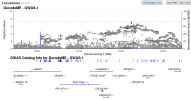
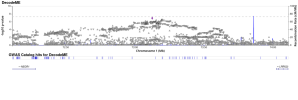
These can be seen in the relevant area on LocusZoom by toggling to show all features. But since I have new toys I ran them on the DecodeME data around NEGR1, lowering the significance threshold and looking specifically at the area of interest, which resulted in

ENSG00000225087
ENSG00000280317
KRT8P21
LINC01360
LINC02238
LINC02796
RN7SKP19
RNA5SP50
RNU6-1246P
 
NEGR1 deficiency disrupts lipid metabolism and steroidogenesis in Leydig cells, linking testosterone to behavior (2025)

Neuronal growth regulator 1 (NEGR1) has been identified as a critical risk factor for major depressive disorders in humans. Although NEGR1 is predominantly expressed in the brain, its deletion in mice (Negr1−/−) results in abnormalities in peripheral tissues, suggesting a role beyond the nervous system, particularly in intracellular lipid trafficking. However, the role of NEGR1 in testosterone production has not yet been elucidated.

Here, we demonstrate that Negr1−/− mice exhibit significantly reduced serum and testicular testosterone levels, accompanied by diminished male reproductive behaviors. The expression of key testosterone-synthesizing enzymes was downregulated in Leydig cells, and histological analysis revealed disorganized testicular and epididymal structures with lipid droplet accumulation in testicular cells. Additionally, Negr1−/− mice displayed a significant increase in abnormal sperm morphology. Notably, testosterone supplementation alleviated their impaired sexual behaviors and mitigated anxiety- and depression-like phenotypes.

These findings highlight a crucial role for NEGR1 in testicular function, particularly in testosterone production and spermatogenesis, underscoring the intricate link between hormonal balance and mental health.

Web | PDF | Journal of Lipid Research | Open Access

As NEGR1 is highly expressed in the cerebral cortex and hippocampus of the adult brain, its neuronal function became a subject of interest when a GWAS discovered NEGR1 as a locus associated with human obesity. However, the findings that Negr1 − /− mice show abnormalities in peripheral tissues such as increased adiposity, hepatic fat accumulation, and muscle atrophy, and NEGR1 interacts with lipid carriers in adipocytes, support the concept that NEGR1 has non-neuronal functions in lipid transport and metabolism in peripheral organs.

Here, we show that NEGR1 deficiency causes pronounced lipid droplet accumulation in testicular cells, reduced expression of steroidogenic enzymes, and markedly decreased serum and testicular testosterone levels. The elevated expression of genes related to lipid uptake and storage further supports the conclusion that NEGR1 is essential for efficient cholesterol mobilization in the testes. Among testicular cells, Leydig cells have a particularly high demand for intracellular cholesterol to sustain testosterone synthesis, and appear especially vulnerable to this defect. NEGR1 loss likely leads to serious stagnation of free endosomal cholesterol—the genuine precursor of steroids—ultimately impairing steroidogenesis and spermatogenesis.

In conclusion, this study identifies NEGR1 as a previously unrecognized regulator of cholesterol trafficking and testosterone biosynthesis in Leydig cells. By impairing lipid mobilization, NEGR1 deficiency disrupts steroid hormone production, spermatogenesis, and testicular architecture, with secondary systemic effects on reproductive and affective behaviors. These results expand NEGR1’s functional significance beyond the nervous system, highlighting its broader role in lipid metabolism within peripheral tissues and its potential relevance to disorders linking metabolic, reproductive, and neuropsychiatric domains.
 
Is it possible to link poor functioning NEGR1 gene to the loss of the CHR neurons?

Edit: I asked Gemini, and it’s so far outside my knowledge I don’t know if I just got slop back:


Summary of the Hypothesis


While there is likely no direct paper linking NEGR1 to this specific ME/CFS autopsy result yet (as the findings are very new), the biological logic follows a clear path:


1. ME/CFS Finding: CRH neurons in the PVN are depleted.


2. NEGR1 Function: NEGR1 maintains the structural integrity and synaptic connections of neurons in the PVN.


3. Theoretical Mechanism: A failure in NEGR1 could cause the structural collapse of the CRH neural network, leading to the observed depletion of neurons and the subsequent exhaustion (dystrophy) of the microglia trying to save them.”
 
Back
Top Bottom