Germany's "National Decade Against Post-Infectious Diseases"

If they soak up money that could be spent on good studies (as in studies with a decent rationale), they kind of are standing in the way at least. That can put is back just as many years as a BPS study.
From what I, as a layman, know of our German healthcare system, our administration and political leadership, it goes without saying that a great deal of money will be wasted on nonsense.But there are also some people who are serious about it, who are trying to carry out proper research, and who will also receive funding. Out of 50 million a year, perhaps 10 million – given the level of waste in other areas of public spending – if we’re lucky. The rest will mostly be useless, I suppose
 
Are there any studies we want to see that we could get German advocates to lobby for? Any replications or any areas we think would be important to look at? Any basic lab work following on from DecodeME?
maybe replicate the early dutch brain bank results? as in establish an mecfs brain bank.
proper pem sampling.
Long term funding and expansion of the NKSG throughout germany.
 
maybe replicate the early dutch brain bank results? as in establish an mecfs brain bank.
proper pem sampling.
Long term funding and expansion of the NKSG throughout germany.
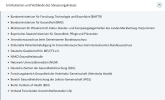
We´d have to contact the people in the "Steuerungskreis" of the national decade. There is only one patient organization in it and that is the "Deutsche Gesellschaft for ME/CFS". they are very knowledgeable but the question is whether they will heard.
other members can be viewed here, mostly scientists with no - a lot knowledge in LC/PAIS and politicians:1774346525333.png
 
National Decade againt Post-infectious Diseases: Status update and next steps

The implementation of the "National Decade against Post-Infectious Diseases," announced by the Federal Government in Germany last November, has begun. We report on the current status and the information available regarding the next steps of the research programme.
...
Key messages from the BMFTR’s meeting on 9 June 2026 addressed to the participating organisations:

  1. Research priorities: Initially, the focus will be on the conditions ME/CFS and Long COVID (or post-COVID syndrome). This is where the need for research is most urgent. Over the course of the ten-year initiative, other post-acute infection syndromes (PAIS) may also be addressed.
  2. Disease definition: BMFTR bases its approach on the current state of scientific knowledge regarding the definitions of ME/CFS and post-COVID syndrome as complex, somatic multisystem diseases. Currently, no specific focus or funding measures are planned for psychosomatic research.
  3. Funding guidelines: The first funding guideline was published on 2 June. More guidelines covering other areas of focus (e.g. funding for additional phases of clinical trials) are currently being prepared and are scheduled for release in 2026. Private companies are expected to be eligible to apply in the future.
  4. Cohort formation: The selection of cohorts and patient subgroups (based on current evidence and disease definitions) is intended to be a central component of the BMFTR’s calls for proposals and review processes.
  5. Post-Vac: The "National Decade" aims to generate meaningful and actionable insights in the fields of diagnostics (e.g. biomarkers) and treatments. These research findings are intended to benefit those affected by Post-Vac conditions as well. Although Post-Vac is not explicitly named, it is recognised and taken into account within post-COVID syndrome research.
  6. Severely ill patients: BMFTR is mindful of this group of affected individuals and will aim to facilitate their inclusion in projects wherever possible (e.g. through outreach or telemedicine approaches). This issue presents a major medical challenge, as well as a logistical one for conducting studies.
  7. Children and adolescents: The "National Decade" is also focusing on this particularly vulnerable group. Pediatric expertise is represented in every working group. Incorporating this into clinical trials is complex; work is underway on an approach designed to include children and adolescents.
  8. Patient representation: Involving affected individuals is considered essential—both as sources of knowledge and for the recruitment of study participants. Patient organisations participate on an equal footing, with voting rights, in the steering committee and the working groups. This practice is also intended to apply to the review of funding applications.
  9. Improving care: Issues related to healthcare provision—such as physician training, off-label treatments, and assistance—lie with the responsibility of the Federal Ministry of Health (BMG) and are not a primary focus of the "National Decade." BMG is involved in the "National Decade," and a separate working group focuses on care-related research.
  10. More information: A dedicated website for the "National Decade" is currently being planned. Additional formats for exchange with patient organisations are also in the preparation.
Full article (in German)
 
Disease definition: BMFTR bases its approach on the current state of scientific knowledge regarding the definitions of ME/CFS and post-COVID syndrome as complex, somatic multisystem diseases. Currently, no specific focus or funding measures are planned for psychosomatic research.
It very nice to have this clearly stated. It could be perceived as biased, but at the same time it’s not like any of the proposals they could come up with should qualify based on quality or rationale alone.
Improving care: Issues related to healthcare provision—such as physician training, off-label treatments, and assistance—lie with the responsibility of the Federal Ministry of Health (BMG) and are not a primary focus of the "National Decade." BMG is involved in the "National Decade," and a separate working group focuses on care-related research.
I hope they manage to make a fair assessment if the evidence for off-label. And make some good instructions for what’s medically necessary in terms of accommodations and such.
 
3. Funding guidelines: The first funding guideline was published on 2 June. More guidelines covering other areas of focus (e.g. funding for additional phases of clinical trials) are currently being prepared and are scheduled for release in 2026. Private companies are expected to be eligible to apply in the future.
This was published on the same website on the 15th June. I'll copy/paste just the 1st part of it.

First funding measure of the "National Decade Against Post-infectious Diseases" published – summary and comment​


On 1 June 2026, the Federal Ministry for Research, Technology and Space (BMFTR) announced the first funding measures under the "National Decade Against Post-Infectious Diseases." Researchers in Germany can now apply for project funding for clinical trials on the diagnosis and treatment of post-acute infection syndromes (PAIS) until 2 September 2026.

What research will be funded?​

The aim of the "Guideline on Funding Projects around Clinical Trials Highly Relevant to the Care of Patients with Post-Infectious Diseases" (external link) is to close evidence gaps regarding the care of people living with post-acute infection syndromes (PAIS). The goal is to generate new findings on how these patients can be better diagnosed in the future and which drugs can be used for targeted treatment. The call for proposals focuses on PAIS, specifically including Long COVID/post-COVID syndrome and ME/CFS (myalgic encephalomyelitis/chronic fatigue syndrome). Other infection-associated diseases, such as multiple sclerosis or type 1 diabetes, are not covered by this funding.

New research projects will be funded across three modules:
  • Module 1 (duration of up to 5 years): Confirmatory and exploratory clinical trials
  • Module 2 (duration of up to 2 years): Systematic reviews of clinical trials
  • Module 3 (duration of up to 18 months): Concept phases with active patient participation
Module 1 targets projects involving multicenter, prospective, randomised, controlled clinical trials designed to demonstrate the efficacy of diagnostic procedures and/or treatments (e.g., drugs) for PAIS. This module also supports exploratory clinical trials involving a small number of patients, provided these trials serve as a preparatory basis for subsequent, larger-scale projects with a greater number of patients. All trials must involve at least two study sites, although justified exceptions are possible.

Module 2 supports the development of review articles—specifically, scientific papers (including updates) concerning clinical trials on PAIS. This module thus aims to foster the compilation and systematic synthesis of findings at a theoretical level. Insights gained in this way can, in turn, serve as a basis for future clinical trials conducted with additional funding under the “National Decade,” such as drug trials.

Module 3 is particular in that it explicitly funds conceptual phases during which patients (and other relevant target groups) play an active role in planning and designing future clinical trials (as outlined in Module 1). This encompasses, for example, the collaborative design of future research projects or the participatory development and/or piloting of drug trials. Following the conceptual phase of a funded proposal, the planned project undergoes a prompt review. Project outlines that receive a positive assessment may even be implemented as clinical trials with funding under this module, provided that close cooperation with patients continues.

I'm not sure if I misunderstood something but I'm honestly disappointed it's so heavily focused on clinical trials, as if there were so many options to trial. I was hoping to see basic research into the mechanisms. I see diagnostic procedures are included in Module 1 which might include research into the mechanisms but I fear that "trials designed to demonstrate the efficacy of diagnostic procedures" will be about measuring downstream noise and trying to pack it into a test.

I checked Guideline on Funding Projects around Clinical Trials Highly Relevant to the Care of Patients with Post-Infectious Diseases linked in the excerpt, and only those 3 modules were mentioned in the automated English translation.
 
I'm not sure if I misunderstood something but I'm honestly disappointed it's so heavily focused on clinical trials, as if there were so many options to trial. I was hoping to see basic research into the mechanisms.
I agree! But trying to look at the bright side: if SequenceME and ResetME gives us any indications about pathology within the next two years, there will hopefully be funding for projects that are ready to test some of those hypotheses with medications when appropriate.

And negative results for treatments will provide valuable data for pathology/mechanism research. It might be the cost we have to pay to get the efforts to focus more instead of repeating the same memes over and over.
 
I was hoping to see basic research into the mechanisms.
I don't know why there isn't more basic research announced. But I'm worried that that's because Prof. Scheibenbogen and the other leading German researchers have already convinced themselves that the problem is a highly complex autoimmunity issue. They might think that it was not worthwhile understanding it precisely because too complex (for clinicians to reserach). Instead they might have decided to simply fight what they imagine is the problem with random drugs (like Fluge).

Thanks god the Americans are going after herpes with renewed forces! Because whether it is herpes or not when we know about the role of herpes we will know more for sure while all these other projects – especially the drug studies and genetics combined with machine learning – may all just fail and bring no new insights to a better understanding.
 
Last edited:
National Decade againt Post-infectious Diseases: Status update and next steps

The implementation of the "National Decade against Post-Infectious Diseases," announced by the Federal Government in Germany last November, has begun. We report on the current status and the information available regarding the next steps of the research programme.
...
Key messages from the BMFTR’s meeting on 9 June 2026 addressed to the participating organisations:

  1. Research priorities: Initially, the focus will be on the conditions ME/CFS and Long COVID (or post-COVID syndrome). This is where the need for research is most urgent. Over the course of the ten-year initiative, other post-acute infection syndromes (PAIS) may also be addressed.
  2. Disease definition: BMFTR bases its approach on the current state of scientific knowledge regarding the definitions of ME/CFS and post-COVID syndrome as complex, somatic multisystem diseases. Currently, no specific focus or funding measures are planned for psychosomatic research.
  3. Funding guidelines: The first funding guideline was published on 2 June. More guidelines covering other areas of focus (e.g. funding for additional phases of clinical trials) are currently being prepared and are scheduled for release in 2026. Private companies are expected to be eligible to apply in the future.
  4. Cohort formation: The selection of cohorts and patient subgroups (based on current evidence and disease definitions) is intended to be a central component of the BMFTR’s calls for proposals and review processes.
  5. Post-Vac: The "National Decade" aims to generate meaningful and actionable insights in the fields of diagnostics (e.g. biomarkers) and treatments. These research findings are intended to benefit those affected by Post-Vac conditions as well. Although Post-Vac is not explicitly named, it is recognised and taken into account within post-COVID syndrome research.
  6. Severely ill patients: BMFTR is mindful of this group of affected individuals and will aim to facilitate their inclusion in projects wherever possible (e.g. through outreach or telemedicine approaches). This issue presents a major medical challenge, as well as a logistical one for conducting studies.
  7. Children and adolescents: The "National Decade" is also focusing on this particularly vulnerable group. Pediatric expertise is represented in every working group. Incorporating this into clinical trials is complex; work is underway on an approach designed to include children and adolescents.
  8. Patient representation: Involving affected individuals is considered essential—both as sources of knowledge and for the recruitment of study participants. Patient organisations participate on an equal footing, with voting rights, in the steering committee and the working groups. This practice is also intended to apply to the review of funding applications.
  9. Improving care: Issues related to healthcare provision—such as physician training, off-label treatments, and assistance—lie with the responsibility of the Federal Ministry of Health (BMG) and are not a primary focus of the "National Decade." BMG is involved in the "National Decade," and a separate working group focuses on care-related research.
  10. More information: A dedicated website for the "National Decade" is currently being planned. Additional formats for exchange with patient organisations are also in the preparation.
Full article (in German)
Thank for this.

There are two sets of information at the link:

In English:
https://mecfs-research.org/en/news-ndpe-update-jun26/

In German:
 
I don't know why there isn't more basic research announced. But I'm worried that that's because Prof. Scheibenbogen and the other leading German researchers have already convinced themselves that the problem is a highly complex autoimmunity issue. They might think that it was not worthwhile understanding it precisely because too complex (for clinicians to reserach). Instead they might have decided to simply fight what they imagine is the problem with random drugs (like Fluge).

Thanks god the Americans are going after herpes with renewed forces! Because whether it is herpes or not when we know about the role of herpes we will know more for sure while all these other projects – especially the drug studies and genetics combined with machine learning – may all just fail and bring no new insights to a better understanding.
Trying to run before they can crawl. Its one thing to be using drug trials to test theories about the condition and try and tease out what is cause and what is effect its a whole different thing when the goal is treat something they know so little about. We might still learn things, heck we might even get lucky and something works, but it seems to me more fundamental mechanism research is required to confirm prior findings and to trace down the cause of those findings.

Ideally we have research funded to the extent they can trial all the drugs they want and do fundamental mechanism research and sequence all the patients DNA etc. But this is a field with minimal funding so we can't do all the things at once. Getting too fixated on auto immune theories based on some failed trials of immune absorption doesn't remotely seem like a good idea.
 
Getting too fixated on auto immune theories based on some failed trials of immune absorption doesn't remotely seem like a good idea.
I don't think that these failed trials are the cause for this conviction. I'd rather track this back to the fact the both Fluge and Scheibenbogen are oncologists by training. The way they work is just like in cancer research, throw one chemotherapy after another at the patients. The difference is that in cancer they have a good understanding how defective or older and tired immune systems can't control cancerous cell growth anymore. Whereas ME/CFS might well be an infectious disease and this needed certainly other pharmacological and immunotherapeutic responses than cancer.

This is not to say that I am not incredibly grateful that Fluge and Scheibenbogen have done a lot in Europe to help make ME/CFS understood as an underresearched somatic illness and have invested all their status as established university doctors/researchers to do so. And I want to honour that too.
the link you posted is only the first research call. there will be many many more, some in 2026. there will be one on basic research in the coming months too. i heard they want to do genome research too. and clinical research for start ups.
 
the link you posted is only the first research call. there will be many many more, some in 2026. there will be one on basic research in the coming months too. i heard they want to do genome research too. and clinical research for start ups.
Yes, I have seen that it is planned that they spend 50 Mio. Euros a year. Unfortunately, it doesn't change anything that the Germans have narrowed their interest to what can be found out about their completely speculative idea of an overreacting immune system with autoimmunity as the cause. Scheibenbogen is not just a doctor. She's by far the most influential German ME/CFS researcher and she is the main expert at both organisations, the German Society for ME/CFS and the ME/CFS Research Foundation.
 
Last edited by a moderator:
Instead they might have decided to simply fight what they imagine is the problem with random drugs (like Fluge).
There is nothing random about Fluge and Mella’s approach. They have very good reasons for trying Dara, even if they might not be right in the end. They are also doing everything they can to stack the odds against themselves so they avoid false positives as much as possible.
 
There is nothing random about Fluge and Mella’s approach. They have very good reasons for trying Dara, even if they might not be right in the end. They are also doing everything they can to stack the odds against themselves so they avoid false positives as much as possible.
I have no doubt that the drug matches their imagination of the pathomechnism perfectly.
:)
 
It very nice to have this clearly stated. It could be perceived as biased, but at the same time it’s not like any of the proposals they could come up with should qualify based on quality or rationale alone.
I see it the other way: it leaves the door open. But I only see it this way because it literally always happens like this. It should be banned entirely from this program, for the same reasons why faith healing and any other form of pseudoscience would be, on grounds of validity and quality of proposals alone.

I have zero doubt that plenty of resources will be wasted on psychosomatic nonsense, because it's always disguised, and this language easily allows it. Plus there is all the pressure that will happen in secret, behind closed doors, which is where 99% of decisions are made.

The emphasis on clinical trials is also problematic. Clinical trials are not viable without a plausible mechanism to address a known pathophysiology, and we don't have that yet. Given everything that's happened with the debacle of LC research, it's very clear that money spent on clinical trials is entirely wasted at this stage. This is especially problematic because trials take years to slowly cruise from one end of the pool and back. They are one of the least effective and efficient processes known to humanity, and almost never work out, even when we know what to target. Which we don't.

If someone has a plausible mechanism for a drug that might work, it would be far more efficient to do basic research to validate this mechanism, rather than trying anything that might affect it. It's faster and cheaper, while actually serving the purpose.

This is not encouraging at all.
 
I see it the other way: it leaves the door open.
Fair point.
It should be banned entirely from this program, for the same reasons why faith healing and any other form of pseudoscience would be, on grounds of validity and quality of proposals alone
There is no reason to ban a field explicitly if the quality assessment by the grant panels is good enough because bad research won’t get through it then. And they’d still find ways to get the research framed as biological, e.g. by doing some basic bloodwork alongside the CBT or whatever.
If someone has a plausible mechanism for a drug that might work, it would be far more efficient to do basic research to validate this mechanism, rather than trying anything that might affect it. It's faster and cheaper, while actually serving the purpose.
That might not always be possible depending on the nature of the mechanism. But I agree that only doing clinical trials is very limiting.
 
Back
Top Bottom