Preprint Global and local genetic overlap among ME/CFS, irritable bowel syndrome and psychiatric traits: a hypothesis-generating analysis, 2026, Lee

Nightsong

Senior Member (Voting Rights)
Abstract:
Background. Myalgic encephalomyelitis/chronic fatigue syndrome (ME/CFS) and irritable bowel syndrome (IBS) frequently co-occur following infection, yet shared genetic architecture at the locus level has not been systematically characterised. Aims. To estimate global and local genetic correlations between ME/CFS (including infection-onset subgroup), IBS, major depressive disorder (MDD) and loneliness/isolation, and characterise ME/CFS cell-type heritability enrichment.

Method. GWAS summary statistics: DecodeME (15,579 ME/CFS; 9,738 infection-onset), FinnGen R9 (9,296 IBS), PGC MDD Wave 2 (45,396) and UK Biobank loneliness (N=455,364). LDSC for global correlations; LAVA for local correlations across 2,495 loci; MAGMA for cell-type enrichment (Descartes Human atlas); coloc.abf for colocalisation.

Results. All pairwise global correlations were significant after Bonferroni correction, including ME/CFS-all-MDD (rg=0.598, 95% CI 0.46-0.74) and ME/CFS-all-IBS (rg=0.573, 0.39-0.75). Of 4,232 local tests, 16 reached FDR<0.05; two loneliness×MDD loci were Bonferroni-significant. ME/CFS-MDD showed three FDR-significant local correlations, but all were boundary-estimated and non-Bonferroni-significant. A borderline infection-onset ME/CFS-IBS signal occurred at chr12q24.22 (ρ=1.000, FDR=0.046), but colocalisation did not support a shared causal variant (PP.H4=0.007). ME/CFS heritability was enriched in inhibitory neurons (P=1.210×−7) and enteric nervous system neurons (FDR=0.004), with no FDR-significant peripheral immune cell-type enrichment in the atlas used.

Conclusions. High global ME/CFS-MDD correlation was accompanied by limited, boundary-estimated, non-Bonferroni-robust local sharing; the data do not support reducing ME/CFS to depression at the genetic-architecture level. Neural enrichment, including enteric nervous system neurons, supports involvement of neural components in ME/CFS susceptibility without excluding immune mechanisms. A borderline ME/CFS-IBS signal at a NOS1-containing region generated hypotheses requiring replication.

Link | PDF (MedRxiv preprint, June 2026, open access)
 
Looks like a useful analysis, with similar findings to what we previously discussed.

The genetic correlation with ME/CFS and depression was substantial (around 0.6, as we posted before using tools such as LDSC and BIGA GWAS). But when they looked for strong signals for both ME/CFS and depression, they couldn't find one that was the same in both diseases. That is similar to what the DecodeME preprint reported. So while there is similarity, the authors note that "the data do not support reducing ME/CFS to depression at the level of genetic architecture."

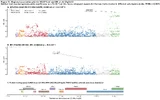
The correlation between ME/CFS and IBS was similar, around 0.57. They found a locus on chromosome 12 that was similar but it was only borderline significant, and the signal was a bit different. In Me/CFS it was mostly located above the gene TOAK3, while in IBS, it pointed more toward NOS1. They say that "NOS1encodes neuronal nitric oxide synthase, the dominant isoform regulating nitrergic neurotransmission in the enteric nervous system. Loss of NOS1 function in mice produces gut dysmotility." So it could be an interesting locus if confirmed in larger sample sizes.

1781177266421.webp

The genetic correlation between the entire DecodeME cohort and the subgroup with post-infectious onset was very high (rg=0.997), indicating that using the full cohort is probably the best option for most analyses.
 
They also did cell-type analysis and found the strongest connection with inhibitory neurons.

These are slightly different cells from what we previously saw with the Siletti et al. brain atlas. The data source they used is the Descartes Human single-cell atlas, which is fetal-derived (77 cell types, Level 2). That might explain the difference, and the p-values also aren't that significant in the first. It does confirm that the most significant signals are for neural cells.

The authors caution, however, that "the non-significance of peripheral immune cell-type enrichment should be interpreted in the context of both atlas-resolution limitations (the Descartes atlas may not adequately represent adult immune cell types or activated immune states) and reduced power for small effects."
 
From Supplementary Table 4, data for the full DecodeME-chort.
Cell TypeRaw p-valueFDR-p-value
SATB2_LRRC7_positive_cells0.00136070.04380017
Purkinje_neurons0.00146420.04380017
Inhibitory_interneurons0.00170650.04380017
Ganglion_cells0.00355580.06844915
Limbic_system_neurons0.00755720.10887928
SLC24A4_PEX5L_positive_cells0.00848410.10887928
Granule_neurons0.0150560.165616
Adrenocortical_cells0.0259560.2498265
Excitatory_neurons0.0339030.2622851
SKOR2_NPSR1_positive_cells0.0340630.2622851
Inhibitory_neurons0.0386610.270627
Bipolar_cells0.0498730.30480154
Unipolar_brush_cells0.051460.30480154
Horizontal_cells0.0697830.3838065
Amacrine_cells0.08640.44352
Lens_fibre_cells0.111750.53779688
Lymphoid_cells0.150610.68217471
Skeletal_muscle_cells0.173350.74155278
CLC_IL5RA_positive_cells0.210520.85316
Chromaffin_cells0.227010.85547
Thymic_epithelial_cells0.244910.85547
AFP_ALB_positive_cells0.2490.85547
Oligodendrocytes0.255530.85547
Erythroblasts0.269020.86310583
Photoreceptor_cells0.315150.970662
Thymocytes0.33860.97178667
CCL19_CCL21_positive_cells0.349250.97178667
Visceral_neurons0.357670.97178667
SLC26A4_PAEP_positive_cells0.381810.97178667
Hepatoblasts0.407210.97178667
ENS_neurons0.408250.97178667
Sympathoblasts0.408370.97178667
ELF3_AGBL2_positive_cells0.416480.97178667
Cardiomyocytes0.431190.97651853
Astrocytes0.481270.99997
Hematopoietic_stem_cells0.496880.99997
Myeloid_cells0.5130.99997
Retinal_pigment_cells0.518490.99997
Megakaryocytes0.559390.99997
Retinal_progenitors_and_Muller_glia0.569720.99997
Schwann_cells0.600320.99997
Stellate_cells0.612740.99997
PDE11A_FAM19A2_positive_cells0.613990.99997
Corneal_and_conjunctival_epithelial_cells0.625090.99997
Microglia0.629990.99997
Trophoblast_giant_cells0.634530.99997
CSH1_CSH2_positive_cells0.644170.99997
Ciliated_epithelial_cells0.665320.99997
Endocardial_cells0.67770.99997
Satellite_cells0.685490.99997
STC2_TLX1_positive_cells0.725440.99997
ENS_glia0.725960.99997
Antigen_presenting_cells0.757060.99997
Epicardial_fat_cells0.786150.99997
Neuroendocrine_cells0.797090.99997
Syncytiotrophoblasts_and_villous_cytotrophoblasts0.847670.99997
Islet_endocrine_cells0.857770.99997
Acinar_cells0.870310.99997
Smooth_muscle_cells0.881180.99997
MUC13_DMBT1_positive_cells0.898980.99997
Intestinal_epithelial_cells0.91740.99997
Bronchiolar_and_alveolar_epithelial_cells0.934040.99997
Mesothelial_cells0.940750.99997
Lymphatic_endothelial_cells0.944280.99997
Ureteric_bud_cells0.948770.99997
Parietal_and_chief_cells0.951750.99997
Extravillous_trophoblasts0.952210.99997
Vascular_endothelial_cells0.95380.99997
PDE1C_ACSM3_positive_cells0.953810.99997
PAEP_MECOM_positive_cells0.973120.99997
IGFBP1_DKK1_positive_cells0.982120.99997
Goblet_cells0.98370.99997
Ductal_cells0.98970.99997
Metanephric_cells0.997650.99997
Mesangial_cells0.999130.99997
Squamous_epithelial_cells0.999210.99997
Stromal_cells0.999970.99997
 
The author originally planned to include multisite chronic pain in the analysis. Here is the explanation for exclusion, which I don't totally understand, from the supplementary materials: [edit: I guess the author wanted fibromyalgia and couldn't be sure this was a similar enough trait]
One trait initially included as a fibromyalgia proxy was removed following pre-analysis quality review. The endpoint corresponds to a multi-site chronic pain (MCP) phenotype derived from UK Biobank questionnaire items rather than a clinically confirmed fibromyalgia diagnosis; the identity of the underlying phenotype against the fibromyalgia construct of interest could not be verified to the standard required for inclusion as a primary trait. The MCP results are retained in S-Tables 1, 2, 5 and 6 for full transparency about the exclusion; all primary multiple-testing correction and all main-text findings are based exclusively on the post-exclusion 5-trait, 4,232-test analytic set.
The results for MCP were still included in the supplementary table, though. The genetic correlation between MCP and ME/CFS-all cases was rg=0.6429, p=2.18E-09.

Supplementary Table 6 says that the cross-trait intercept indicates sample overlap:
The h² intercept (diagonal) ~1.0 indicates well-calibrated GWAS with minimal residual confounding. The cross-trait intercept (off-diagonal) measures sample overlap; values near 0 indicate independent samples (cf. ME/CFS-IBS ≈ −0.003 confirms the 'no meaningful overlap' claim in the main text Methods).
The cross-trait intercept between ME/CFS-all cases and MCP was -0.0003. If they both used the UK BioBank for controls, should this be higher? Maybe if there is only overlap in controls, it doesn't accurately show sample overlap?
 
Last edited:
From Supplementary Table 4, data for the full DecodeME-chort.
I think table 4 is showing the MAGMA results from the less precise sensitivity analysis, where instead of using continuous expression values, the author created a binary gene set in which the top 10% highest value genes were labeled as 1 and all others labeled as 0.

Supplementary Table 7 includes the main MAGMA results. These are all the FDR significant ME/CFS-all cases cell types:
traittrait_labelFULL_NAMETYPENGENESBETABETA_STDSEPFDR
mecfs_allME/CFS (all-cases)Inhibitory_neuronsCOVAR225540.00260.03290.00051.22E-070.0000
mecfs_allME/CFS (all-cases)Purkinje_neuronsCOVAR225540.00240.03030.00051.20E-060.0000
mecfs_allME/CFS (all-cases)SKOR2_NPSR1_positive_cellsCOVAR225540.00230.02880.00053.35E-060.0001
mecfs_allME/CFS (all-cases)Inhibitory_interneuronsCOVAR225540.00220.02770.00056.91E-060.0001
mecfs_allME/CFS (all-cases)Limbic_system_neuronsCOVAR225540.00220.02770.00057.54E-060.0001
mecfs_allME/CFS (all-cases)Granule_neuronsCOVAR225540.00210.02720.00051.05E-050.0001
mecfs_allME/CFS (all-cases)SLC24A4_PEX5L_positive_cellsCOVAR225540.00220.02720.00051.10E-050.0001
mecfs_allME/CFS (all-cases)OligodendrocytesCOVAR225540.00200.02460.00057.79E-050.0008
mecfs_allME/CFS (all-cases)Excitatory_neuronsCOVAR225540.00170.02210.00053.13E-040.0027
mecfs_allME/CFS (all-cases)SATB2_LRRC7_positive_cellsCOVAR225540.00150.02030.00054.05E-040.0028
mecfs_allME/CFS (all-cases)Ganglion_cellsCOVAR225540.00160.02110.00054.07E-040.0028
mecfs_allME/CFS (all-cases)Unipolar_brush_cellsCOVAR225540.00160.02120.00054.99E-040.0032
mecfs_allME/CFS (all-cases)ENS_neuronsCOVAR225540.00160.02040.00056.23E-040.0037
mecfs_allME/CFS (all-cases)AstrocytesCOVAR225540.00170.02060.00057.79E-040.0043
mecfs_allME/CFS (all-cases)Bipolar_cellsCOVAR225540.00140.01840.00051.66E-030.0085
mecfs_allME/CFS (all-cases)Adrenocortical_cellsCOVAR225540.00140.01850.00052.11E-030.0101
mecfs_allME/CFS (all-cases)Horizontal_cellsCOVAR225540.00140.01790.00052.43E-030.0110
mecfs_allME/CFS (all-cases)Amacrine_cellsCOVAR225540.00140.01760.00052.86E-030.0122
mecfs_allME/CFS (all-cases)ErythroblastsCOVAR225540.00130.01720.00053.66E-030.0148
mecfs_allME/CFS (all-cases)SympathoblastsCOVAR225540.00130.01660.00054.32E-030.0166
mecfs_allME/CFS (all-cases)Photoreceptor_cellsCOVAR225540.00130.01660.00054.84E-030.0178
mecfs_allME/CFS (all-cases)MegakaryocytesCOVAR225540.00120.01560.00057.61E-030.0266
mecfs_allME/CFS (all-cases)MicrogliaCOVAR225540.00120.01480.00051.09E-020.0364
 
I think table 4 is showing the MAGMA results from the less precise sensitivity analysis, where instead of using continuous expression values, the author created a binary gene set in which the top 10% highest value genes were labeled as 1 and all others labeled as 0.

Supplementary Table 7 includes the main MAGMA results. These are all the FDR significant ME/CFS-all cases cell types:
Oh apologies, I didn't realize he did a sensitivity analysis. If I understand correctly, the primary analysis is with the full gene set and the average of the dataset as a covariate, while the sensitivity analysis is only with the top 10% of genes by specificity score for each cell type, hence the lower p-values.

Bit surprising, then perhaps, that inhibitory neurons came out on top, compared to Paolo's analysis, which mostly found excitatory/glutamatergic neurons. Perhaps it's due to this Descartes atlas being foetus-derived?
 
Bit surprising, then perhaps, that inhibitory neurons came out on top, compared to Paolo's analysis, which mostly found excitatory/glutamatergic neurons. Perhaps it's due to this Descartes atlas being foetus-derived?
I'm not sure. Maybe the different source or maybe just noise. At this point, I feel like we can be pretty confident about ME/CFS involving neurons, but it seems like the results that are more specific than that are still too all over the place to be very sure of anything. Maybe synapses, but that's not a whole lot more specific.

A fetal cell atlas certainly seems a bit problematic.
Well, in case the relevant problems in ME/CFS occur during development, then in theory it'd be good to test if the genetics of ME/CFS matches cells found during development. It might be unlikely that ME/CFS is related to early development since ME/CFS typically starts later, but you never know. Maybe one of these cell types would have been extremely significant compared to the adult cell types. The p-values seem to be about the same as the adult cell types from the other MAGMA analyses shared on the forum, though.
 
Back
Top Bottom