Heart Rate Variability and ME/CFS

I also have a irregular heartbeat. Or anyway I'm not sure if it's the right term but I regularly skip beats. Beat-beat-skiiip-beatbeat-beat-beat etc.

I have no idea how to check for that. My heart has been checked several times and it's apparently fine but I've had those skips for a long time and either it's normal or it wasn't noticeable with the tests I did.

I used a Fitbit for a while and it doesn't seem to be part of the data. I guess you need a specific device for that?

As i mentioned in some posts in PR, my irregular heartbeats used to be so intense that i went to a cardiologist. He told me to wear a holter device for 24 hours. After analyzing the data they told me how many incidents of irregular heartbeat i had but they said that these were "extra heartbeats therefore not dangerous".

After doing specific interventions they faded away within a month.
 
Last edited:
Interesting stuff. I have been shopping the past couple weeks for a HR monitor to do HRV tracking! I'm going to get the Polar H10. Have you tracked your HRV overnight while sleeping?

To try and increase parasympathetic tone, have you tried or heard of transcutaneous vagus nerve stimulation? There are threads on PR and Healthrisin describing how to do it and techniques.

EDIT : I believe that Dr Morten is being researching the response of ME/CFS patients to cold.
Yes, a Polish colleague of Morten is looking at cryotherapy to increase parasympathetic tone.
 
There are soooooo many variables it is often hard to see what has been the cause of a downturn and what has a an effect on an upturn. I hope you have found something for you.

May I suggest that if you think Mg is having the positive effect that you stop it for a few days and see if HRV gets lower. If it does go lower restart Mg and see if HRV increases. I know this is hard if you think something is working, but remember if it's not the Mg causing the improvement you may be adding something your body doesn't need.

Many of us think we have found the next great thing, only to discover it no longer works, or it wasn't the thing that caused the improvement after all.

Do you also wear a HR watch that tracks daily resting HR? I was intrigued by @diwa post that shows resting HR inversely correlates with HRV with HRV lagging resting HR slightly (did I get that right?).


I do understand your way of thinking and it makes sense. Unfortunately i cannot stop magnesium as i believe that my body has taken too much these past 15 days. I need to make sure that whatever i went through will not happen for some time (say a month). But i will try it.

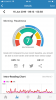
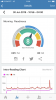
Here is how my results look at the moment :

IMG_3494.PNG


observe below how the line chart shows the stabilisation of HRV to normal levels


IMG_3493.PNG
 
Last edited:
I wanted to provide a short update on my HRV monitoring.


Things have been going exceptionally well. I do not have any occurences of irregular heartbeat and the HRV is steady over 50. I also confirm for once again that specific symptoms of ME/CFS correlate with a low HRV (speaking for myself).

29BF13E3-ED10-45D6-B557-4D04D59C2822.png
 
Into month 3 of HRV tracking. Uninterpretable so far, still.

The yellow bars are my actual HRV scores, and the thick blue line is a 15-day moving average of those values. The thicker purple line is a 15-day moving average of my resting heart rate (RHR) as calculated by Fitbit. I think Fitbit must apply some smoothing to their RHR calculation, as the EliteHRV RHR calculation is much noisier.

Screenshot 2019-08-24 at 20.03.59.png

One thing that I do find quite interesting is that my HRV has been increasing steadily since I began tracking it, and it's correlated with a period of having a relatively consistent RHR. Both of those measurements also correlate with a crash that started in June.

The up-and-down waves in RHR at the beginning of the year are normal, and I was able to get out of the house a few times a week then, as I was feeling much better. Seems that a higher HRV, not just a lower HRV, could also be a helpful indicator of things not being quite right, especially taken alongside RHR discrepancies.

https://hrvcourse.com/the-8-biggest-mistakes-made-when-measuring-hrv/

Just as a low HRV reading is not always bad, a high HRV reading is not always good. If a single HRV measurement is abnormally high compared to an individual’s baseline or norm, then it can mean something is off. Here are a few examples of when a high reading does not always indicate better health and resiliency.

  • For certain mild illnesses or sicknesses, an elevated immune system can increase Heart Rate Variability. This is favorable for recovery from the illness but should not be seen as an increase in health.
  • If an individual is in a state of hyper recovery, their HRV can be abnormally high. When the body accumulates too much stress to the point where it can no longer effectively handle the stress and resources are depleted, the body might force itself into a hyper-recovery mode as a last resort to protect itself. This state is not ideal for long-term health or performance.
  • Continuous low grade stressors can cause HRV to be higher in the short term because the body is constantly trying to recover from them. If your HRV is high but you frequently feel fatigued or drained, then you might be exposed to chronic low grade stress that is constantly stealing energy and resources from your body. This is not ideal and over the long-term, if these accumulated low grade stressors are not dealt with, they can eventually cause HRV and health to decrease.
A high reading does not always indicate better health and resiliency.

Sounds familiar, right? :dead:

More data needed before I can say whether any of this is telling me anything useful, but thought I'd post some preliminary findings all the same.
 
Last edited:
Here is an update regarding my HRV readings. I am very happy to say that there is sustained normalisation of the HRV readings. However, the most important aspect i believe is the fact that my irregular heartbeats are virtually gone (second snapshot = 0 artifacts detected and corrected) :


IMG_3860.PNG


IMG_3861.PNG
 
Here is an update regarding my HRV readings. I am very happy to say that there is sustained normalisation of the HRV readings. However, the most important aspect i believe is the fact that my irregular heartbeats are virtually gone (second snapshot = 0 artifacts detected and corrected) :
What treatment approach did you use? Submerging face in ice water, breathing, humming, gargling? How long did you persist at this? Did you notic any other changes besides your irregular hearbeats?
 
What treatment approach did you use? Submerging face in ice water, breathing, humming, gargling? How long did you persist at this? Did you notic any other changes besides your irregular hearbeats?

I do not believe that sharing my treatment is the right thing to do since it may well be the case that something i am taking is beneficial to me but not to someone else. What i wanted to highlight through these posts is that it appears that my symptoms correlate with low HRV readings (and also that irregular heartbeats are part of my symptoms)

I've been taking these readings on and off to be honest, as soon as i found that low HRV correlate with my symptoms
 
Digging around old threads because I did not want to hijack @danielborschel 's welcome thread.

I am definitively a bit biased towards believing in low HRV in ME/CFS. When I slid from mild/moderate into severe, my HRV halved pretty quickly.

It has stayed low since then. For determining my day-to-day shape, resting heart rate seems to be much more reliable.

The grey bar in the screenshot shows the normal HRV range based on the last 4 weeks. End of September I was still working from home, End of October I couldn't tolerate screens anymore and barley made it to the bathroom.

38892.webp
 
This isn't about ME/CFS but may be of interest. Looks like HRV naturally varies cyclically which, if true, would make interpreting HRV data more difficult

Infradian rhythms of human heart rate reveal distinct multiday cycle periods in healthy adults (2026) De Silva et al

Research in context

Evidence before this study​

Before conducting this study, we searched the literature for any studies that investigated infradian rhythms in humans, predominately in the areas of autonomic physiology and cardiology. We used Google Scholar and PubMed with search strategies that combined one or more of the terms; “infradian”, “rhythm”, “multiday”, “circaseptan”, “weekly”, “monthly”, “lunar”, “circatrigintan”, “seasonal”, “heart”, “heart rate”, “cardiac”, “arrhythmia”, “blood pressure”, with no restrictions on language or dates. A few older texts and case studies observed infradian rhythms in the heart rate or blood pressure of individuals at multiday periodicities, particularly weekly and seasonal cycles which were thought to have environmental origin. Multiday patterns in the occurrence of cardiac abnormalities including arrhythmia and heart attacks had also been confirmed in recent studies, predominantly considering day-of-week and lunar or seasonal effects at the population-level. Female menstrual cycles were commonly correlated to rhythmic fluctuations in autonomic biomarkers, including wearable-recorded heart rate. However, other long-term, individual rhythms of cardiac activity outside of known environmental zeitgebers were rarely considered. One cohort study assessed continuous implant recordings from people with cardiovascular disease and found weekly, quarterly (3-month) and seasonal cycles at the individual level. Another study showed seven-day periodicities in the heart rate of neonates. Longitudinal infradian rhythms of heart rate, and temperature from wearable data were linked to seizures for some adults with epilepsy and a small group (n = 15) of control participants also showed multiday heart rate cycles. There is limited investigation of multiday heart rate cycles over long timeframes in the wider population.

Added value of this study​

We utilised a large cohort (n = 623) of college-aged adults enrolled in an observational study, NetHealth, which captured wearable heart rate for 2–4 years per person. This allowed us to identify heart rate cycles over multiday time scales and consider the effects of demographic (sex), behavioural (activity, sleep, social networks) and environmental factors (day-of-week, lunar phase, season) as drivers of infradian rhythms in the heart.

Implications of all the available evidence​

Prominent, individual-specific infradian heart rate rhythms were identified in 70% (369/525) of people, with clusters identified at weekly (∼7 days), monthly (∼25–35 days), and multi-month (>35 days). Longer, biannual and annual cycles were also common. Heart rate rhythms were influenced by environmental cycles (day-of-week and seasonality) but were not tightly correlated to external cues. Additionally, heart rate rhythms were synchronised to the menstrual cycle in most menstruating females, although monthly rhythms were also observed in males and menopausal women.
Heart rate rhythms may have applications in modelling disease; for instance, in epilepsy these rhythms can provide a biomarker for individual seizure likelihood. The broader potential for heart rate rhythms to herald vulnerabilities in related autonomic systems including individual susceptibility to stress, mood fluctuations or other disease symptoms warrants investigation. More generally, a better understanding of these systemic, physiological cycles may shed new light on human biological rhythms and disease.

 
Can I make sure I understand - the change to severe happened first, and then the HRV changed afterwards, is that right?
Pretty simultaneously as far as I recall.

Third week of September I was still working from home, even going for a short walk occasionally.

I considered myself severe from maybe first or second week of October. And end of October, I had the crash due to using my phone too much, that left me unable to use screens for the next months.

That's pretty much the timeframe you see in the graph.

I can't exclude a few days of lag in either direction, don't know the exact dates anymore.

Maybe I should also add, that it measures the nightly averages, so my daytime activity can only influence it indirectly.
 
Last edited:
Back
Top Bottom