How research directions and patient experiences connect to the terms ME, CFS and future names

I think I must be missing something; if Beth's actions in speaking up and telling her story will have no effect, I am at a loss as to what actions will help.

I am saying that it is almost certain to have no effect if couched in term sof "ME" because that is an automatic off switch for everyone who might have the power to help. It would have been brilliant if instead of referring to ME it referred to ME/CFS and instead of the old stuff about complex neuroimmune disease and affecting lots of systems it said 'for which we now have major new evidence of biological origin within the nervous system' or something.

With that change in words people who sit on MRC committees or Royal COllege of Physician committees may just possibly thinkg "Oh, that's intriguing, maybe there is something to this after all'. Or their spouse or young medical daughter may say to them "Did you read that thing in the Times, mum, it made me think; what do you think".
neuroimmune is backed up by the DecodeME findings, and ME/CFS is the least worst available option.

It looks as if ME/CFS is neural. The immune bit looks uncertain. Even BTN2A1 may be a CNS marker. Yes, neuroimmune is sort of backed up, but as it stands 'neuroimmune' will be read by the committee member as the same old fairy story about ME, which was another disease in another century that never was and never had the neuro bits claimed. Without specific reference to the new completely different evidence for a neural basis there will be no connect. If the piece said why the genetics was so exciting and why Sequence is needed to build on Decode - in the very simplest terms - it could have hit the mark.

Nobody is denying that Beth's attempt to get attention for ME/CFS is brave and worthy. It is just a question of having some hope of it working.

And yes, ME/CFS is the least worst available, but it was not used.
 
What do people think abut the term enervation in relation to ME/CFS?

To enervate means to weaken, tire, or sap the strength, vitality, or energy of someone or something.
It always just makes me think of the French énervé (annoyed) and ça m'énerve (that p****s me off, that drives me mad). Given our effect on the majority of the medical profession, I just can't get on board with it. In English, it's theoretically OK, but the vast majority of the public has no idea what enervate means, so it just obfuscates.
 
What I think might make a huge impact is a review article in something like the Lancet with a title like:

ME/CFS as a hypothalamic disease: revisiting old evidence in the light of new.

It would benefit from Felipe's paper being accepted for publication.

I don't have the skills to write that but maybe somebody else will do?
Superb idea, I really hope someone takes this up!
 
We have to make sure it makes sense first.
Exactly, otherwise we'd once again be seen as crazy and lose all credibility for good.

If I've understood correctly, we need to wait for Felipe and his team to replicate their initial findings on CRH neurons, and see what comes out of the next DecodeME analyses.

Could the buspirone test also provide further evidence of hypothalamic dysfunction?

I've been reading quite a bit about the hypothalamus lately, and I'm genuinely struck by how closely its functions seem to match my symptoms. Almost everything, really! Dysautonomia, problems with the autonomic nervous system, sleep, temperature regulation, responses to stress, but also emotions, particularly these sudden outbursts of anger that come out of nowhere, and above all, the extremely violent panic attacks. The amygdala is also directly connected to the hypothalamus, if I'm not mistaken.
 
It looks as if ME/CFS is neural. The immune bit looks uncertain. Even BTN2A1 may be a CNS marker.
I have to admit I'm a little confused why there seemingly has been a further turn away in your thinking from the idea of a tissue resident immune element in pathology when it has become obvious lately that Edinburgh think the immune system is likely still in play, and we have seen several genetic pointers to monocytes and T cells crop up over the past few weeks, and the three less significant HLA findings, including what may be another isoform of DQ as the most significant of the smaller hits, replicated as per Josh Dibble's PRIME symposium talk.

I understand why we're not thinking autoimmune/adaptive immunity any more, and I understand focussing on hypothalamus etc for the moment, but I am a bit confused as to why immune cells in tissue as part of an immune-brain pathology is being ruled out before anyone has even begun the biopsies or focussed genetic studies or theraputic trials which would rule in or out the kind of immune signalling in tissue we have been speculating about. We have not seen the X chromosome analysis yet either.

I am as interested by the buspirone and other challenges, hypothalamus and CRH stuff as anyone but I don't understand why them being promising, as opposed to other brain elements, rules out immune pathology playing a part beyond the initial trigger. Is it that with the hypothalamic involvement, which you said the other day could explain all the symptoms of MECFS at stroke, an immune loop would be somewhat extraneous? You said there was some discussion of itaconate in PRIME neurology seminar. I'll be interested to see that. You also pointed out recently that interferon alpha acts on the hypothalamus.The old interferon paper from Pariente (iirc) might prove very relevant in that case. And we have hotblacks FS cells in the pituitary gland to consider, with their links to various immune mechanisms.

I found this study just now after a quick Google:


[This post started as a reply to your comment on a WE&ME thread I realised that I didn't want to pull off topic, so it's not solely a reply to what you say in the quoted portion of your above post]
 
I understand why we're not thinking autoimmune/adaptive immunity any more, and I understand focussing on hypothalamus etc for the moment, but I am a bit confused as to why immune cells in tissue as part of an immune-brain pathology is being ruled out
I’m curious about the answer to this as well. My own speculation is that there is still an immune involvement, but the quirks behind the immune activation aspect are common in a much broader population — and so the immune aspect is not a disease, just something that comes into play in ME/CFS when it interacts with the neural disease oddities of pwME/CFS.
 
I have to admit I'm a little confused why there seemingly has been a further turn away in your thinking from the idea of a tissue resident immune element in pathology when it has become obvious lately that Edinburgh think the immune system is likely still in play, and we have seen several genetic pointers to monocytes and T cells crop up over the past few weeks, and the three less significant HLA findings, including what may be another isoform of DQ as the most significant of the smaller hits, replicated as per Josh Dibble's PRIME symposium talk.

I understand why we're not thinking autoimmune/adaptive immunity any more, and I understand focussing on hypothalamus etc for the moment, but I am a bit confused as to why immune cells in tissue as part of an immune-brain pathology is being ruled out before anyone has even begun the biopsies or focussed genetic studies or theraputic trials which would rule in or out the kind of immune signalling in tissue we have been speculating about. We have not seen the X chromosome analysis yet either.

I am as interested by the buspirone and other challenges, hypothalamus and CRH stuff as anyone but I don't understand why them being promising, as opposed to other brain elements, rules out immune pathology playing a part beyond the initial trigger. Is it that with the hypothalamic involvement, which you said the other day could explain all the symptoms of MECFS at stroke, an immune loop would be somewhat extraneous? You said there was some discussion of itaconate in PRIME neurology seminar. I'll be interested to see that. You also pointed out recently that interferon alpha acts on the hypothalamus.The old interferon paper from Pariente (iirc) might prove very relevant in that case. And we have hotblacks FS cells in the pituitary gland to consider, with their links to various immune mechanisms.

I found this study just now after a quick Google:


[This post started as a reply to your comment on a WE&ME thread I realised that I didn't want to pull off topic, so it's not solely a reply to what you say in the quoted portion of your above post]
I’m curious about the answer to this as well. My own speculation is that there is still an immune involvement, but the quirks behind the immune activation aspect are common in a much broader population — and so the immune aspect is not a disease, just something that comes into play in ME/CFS when it interacts with the neural disease oddities of pwME/CFS.

I think the evidence for immune involvement primarily comes from the often infectious onset, combined with the immunity like flu like symptoms and tender lymph nodes. But there haven't been any biochemical findings relating to immune abnormalities that have really stood up with large effects sizes and/or replication. @ME/CFS Science Blog wrote a nice blog entry going through the findings here.

Conversely the evidence for neurological involvement also comes from the symptoms as well as very strong evidence from genetics. My view is it seems quite possible that beyond the insult from an immune response to an infection, the disease and its flu like symptoms could be entirely neurologically driven. In this Jin 2024 mouse basic biology study, if you interfere with the nucleus of the solitary tract in the brainstem it leads to low level chronic production of certain cytokines in the periphery, as well an a compromised ability to mount a quick response to an infection. It seems the brain has a role in organising the immune response to infection.
 
My view is it seems quite possible that beyond the insult from an immune response to an infection, the disease and its flu like symptoms could be entirely neurologically driven.
I fully agree that could be the case. I’m disinclined still to drop a potential immune system role in PEM onset because of 1) the sickness state just being so core across cases, and how it gets flicked on, fades, gets flicked back on etc; 2) people with PVF seem to go through what pwME/CfS go through, they just get over it within 6 months (which looks like a sustained immune response but which is then not retriggered); 3) the delayed onset characteristic of PEM might be easier to explain if there is a neuro-immune interaction, with, say, a neurological trigger acting on the immune system that then later causes the PEM onset; 4) signs there may be a kind of “combination lock” process needed to activate PEM, which might be why trigger mechanisms mysteriously vary from incident to incident, which sounds like the immune system and its need for multiple signals from several sources to get an activation.
 
I have to admit I'm a little confused why there seemingly has been a further turn away in your thinking from the idea of a tissue resident immune element in pathology

I was not intending to imply that. Just that the neuro tag remains clear and the other still uncertain. I have not turned away from there maybe being some misbehaviour of macrophages of T cells in the hypothalamic region. However, that said, my reading of the work going on on S4ME is that things are pointing more to brain and not particularly more to immune cells.

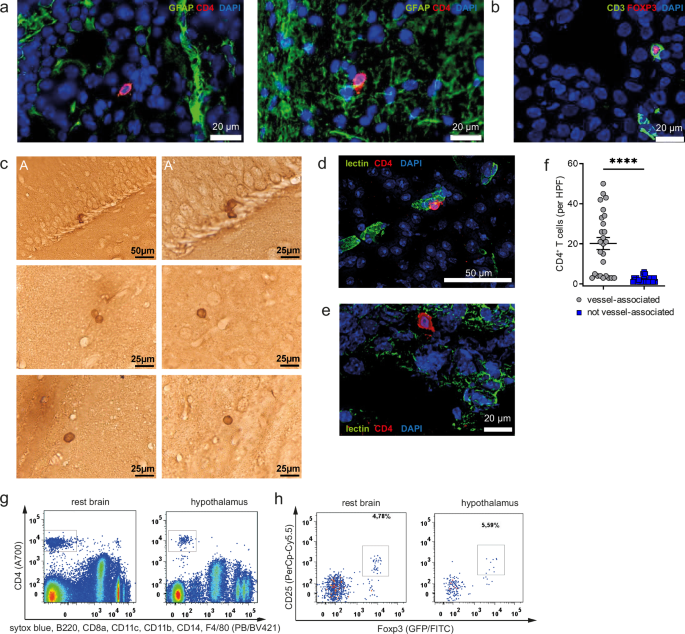
And even if we need to be careful about interpreting the CRH findings reported by Felipe, it seems that the microglial findings do not point to inflammation and nor did basic structural observations that would pick up infiltrating cells, which they must have done as a preliminary.
 
I think the evidence for immune involvement primarily comes from the often infectious onset, combined with the immunity like flu like symptoms and tender lymph nodes. But there haven't been any biochemical findings relating to immune abnormalities that have really stood up with large effects sizes and/or replication. @ME/CFS Science Blog wrote a nice blog entry going through the findings here.

Conversely the evidence for neurological involvement also comes from the symptoms as well as very strong evidence from genetics. My view is it seems quite possible that beyond the insult from an immune response to an infection, the disease and its flu like symptoms could be entirely neurologically driven. In this Jin 2024 mouse basic biology study, if you interfere with the nucleus of the solitary tract in the brainstem it leads to low level chronic production of certain cytokines in the periphery, as well an a compromised ability to mount a quick response to an infection. It seems the brain has a role in organising the immune response to infection.
Nobody is denying that the brain is involved or that the evidence for that is strong. The question is whether we have an immune-brain disease or a brain disease often triggered by an immune insult.

Some of the most interesting immune studies have not yet had replication attempts (e.g the ifny paper from Cambridge uni), and some immune abnormalities have come up several times from the same lab (e.g. CD24 and possibly CD38 in Mensah/Armstrong/Cambridge studies) but have not had external repolication. In addition, a lot of the kinds of immune signalling that could be involved wouldn't show up in blood, just like it doesn't in several other chronic diseases with confirmed immune involvement.

I'm very far from certain you are wrong but I think that you brain only lot are far too certain that you are right!
 
I was not intending to imply that. Just that the neuro tag remains clear and the other still uncertain. I
As I said at the bottom, this reply started life as something I typed out in response to a different comment of yours in a WE&ME thread (obviously I can't point to it here) so I was talking about your recent posting more generally. Apologies for the confusion.
 
Nobody is denying that the brain is involved or that the evidence for that is strong. The question is whether we have an immune-brain disease or a brain disease often triggered by an immune insult.

Some of the most interesting immune studies have not yet had replication attempts (e.g the ifny paper from Cambridge uni), and some immune abnormalities have come up several times from the same lab (e.g. CD24 and possibly CD38 in Mensah/Armstrong/Cambridge studies) but have not had external repolication. In addition, a lot of the kinds of immune signalling that could be involved wouldn't show up in blood, just like it doesn't in several other chronic diseases with confirmed immune involvement.

I'm very far from certain you are wrong but I think that you brain only lot are far too certain that you are right!

I don't feel certain at all! Just going on the weight of evidence, immune system is not ruled out at all.
 
I'm very far from certain you are wrong but I think that you brain only lot are far too certain that you are right!

Who are the 'brain only lot'? I think you are over-reading compressed email comments.
Immune responses seem to be important but they may only be important for 40% or 60% of cases. The core problem we want to pick out may be something triggered in a variety of ways, some not immunological, or even arise without a trigger as autoimmune disease tends to.
 
Who are the 'brain only lot'? I think you are over-reading compressed email comments.
Immune responses seem to be important but they may only be important for 40% or 60% of cases. The core problem we want to pick out may be something triggered in a variety of ways, some not immunological, or even arise without a trigger as autoimmune disease tends to.
The members here who seem confident that studying the immune system further is a waste of resources because in their view MECFS is a brain only disease invoving neurons etc and DecodeME proves there is no immune involvement.

I wasn't referring to you, and I apologise if I caused any offense to anyone else, it was meant in a jovial manner.
 
Back
Top Bottom