Incidence age is bimodal for [ME/CFS], with higher severity burden for early onset disease, 2026, McGrath et al

Something I have been wondering about is whether susceptibility might cluster around a regulatory shift that works a bit like a software update.

We are very used to the idea that in other types of animals complete software rewrites are obvious. The classic ones are insects undergoing metamorphosis as pupae, re-writing the caterpillar as a butterfly and tadpoles being re-written as frogs.

We know that the immune system undergoes shifts in things like thymic education of T cells but that isn't really a re-write and the timing doesn't seem to fit. Puberty is a sort of software re-write and so is menopause but again, as already mentioned, these do not seem to fit too well with the apparent peaks. People talk of male menopause but it isn't that obvious.

That leaves the possibility that there might be hypothalamic re-writes that we haven't thought of at all but that might make sense. The transition from responding to environment as a child to responding as an adult is quite big. Another shift in mid thirties might seem implausible but from an evolutionary point of view might not be totally unexpected. People's sleep patterns can change quite markedly in mid life, for instance.

Maybe the immune system itself does not change at these time points but the software for neural responses to immune signals that drives epigenetic changes over days, weeks or months undergoes shifts?
 
Totally anecdotal, but looking at the peaks, I realize that they roughly correspond to two major changes in my own course of disease: something went wrong around the time I was 18-19. This didn't disable me, and I probably would not have met most criteria for diagnosis with ME/CFS, but it did mean decades of feeling off, being heavily fatigued, responding oddly to food and exercise (neither made me feel good nor gave me energy, though I was not prevented from pursuing either), and insomnia, eventually leading me to largely depend upon a mix of stimulants (caffeine, nicotine) and depressants (mostly alcohol) to maintain function and any semblance of a daily activity cycle. Things remained more or less stable until around 40, when they fell off a cliff and left me where I am now. Around each transition point, there were a lot of other factors at play, but the peaks do more or less line up. While gradual onset doesn't seem to be too uncommon, multiple decades before serious deterioration does seem to be quite rare. All the same, I wonder if there is anyone else who had a staged progression and, if so, whether those stages might find any correspondence here.
 
Given that many cases of ME/CFS are triggered by infection, could the onset peaks be partly a reflection of two phases in many people's lives when they are most exposed to infections - when they are at school, and when their children are at school?
 
Given that many cases of ME/CFS are triggered by infection, could the onset peaks be partly a reflection of two phases in many people's lives when they are most exposed to infections - when they are at school, and when their children are at school?
Interesting that Germany is reported here with a later age then other countries given that school ends at an earlier average age of 16/17 in Germany.
 
Interesting that Germany is reported here with a later age then other countries given that school ends at an earlier average age of 16/17 in Germany.

Only for those who don't do A levels. About 10 years ago I think there were some experiments where children would start school at 4/5 years old, but that was reverted back to 6/7. Add 13 years of school (now 12) and a third of students leave school aged 18/19.

And then it depends on the state of course. From Wikipedia: "in Brandenburg, school must be attended until the end of the school year in which the pupil turns 18."
 
@Simon M @chillier this looks really interesting, is there a more accessible format of the paper available anywhere or can someone provide the plain text so I can create an audio version?

It looks like there’s only the PDF and it is sadly formatted in way which makes screen readers or other text to speech very difficult and will take a lot of work to clean up. I’d love to dig into the full thing but for now have settled for the abstract and an LLM summary.
I think we were expecting to publish once they had a formatted web version. That is coming, hopefully soon. I'm sorry this is so inaccessible for you.
 
Are there differences in recommended vaccine policies between countries that might explain the stark difference in early onset reports? Some of the meningococcal strains? In the US there’s some strain-specific vaccines that get recommended for infants and others during teens years or before college, not sure how it is in other countries. Just spitballing to see if anything might line up with the data.
 
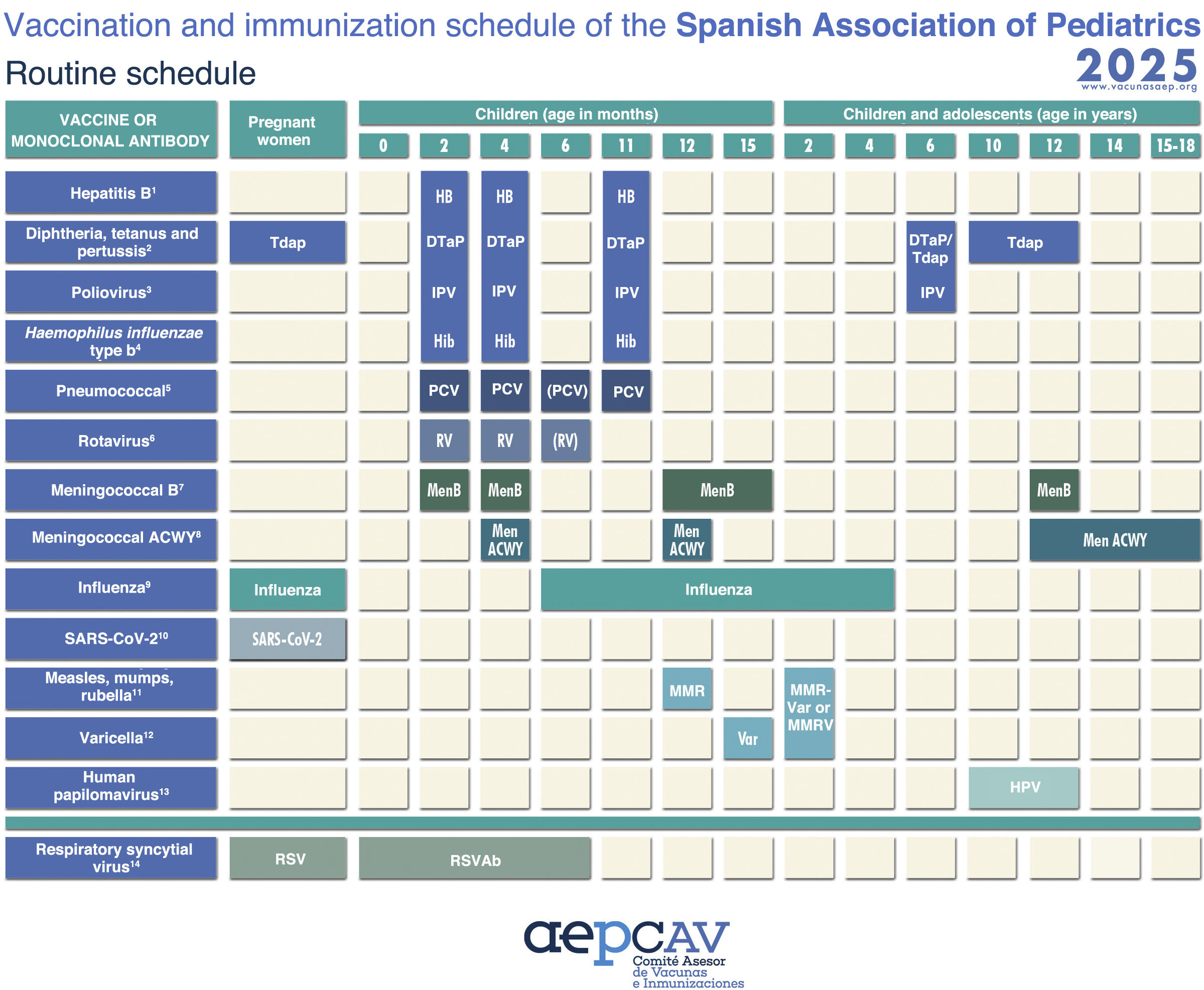
I may be well off the mark here and don't know the accuracy of these sources, but I did a quick search on MenACWY vaccination policies just to see if there were any trends that fit this data.
1774132643072.png

Norway noted that ages 16-19 may be a risk population due to graduation parties and travel, so recommends vaccination schedules to be completed right before this age:

Netherlands recommends for age 14:

Germany recommends for age 14 and again around college age:

In the UK it's around 14 years old:

In contrast, Spain which had an almost non-existent early onset spike, recommends the MenACWY vaccine only in infancy:

France doesn't seem to neatly fall into the pattern, though. It didn't have the strongest early peak, and it recommends the vaccine between 11-14:

Couple caveats: policies may have changed in recent decades so these sources might not reflect the reality of the people responding to the survey. This is also only for MenACWY--it seems like countries have different recommendations for menB boosters as well (Spain, for instance, recommends MenB boosters at 12)

Might be nothing relevant here but I just thought it would be interesting to check, especially since actual meningitis presents with sensory sensitivities similar to severe ME/CFS. LPS can trigger a neuroimmune "sickness behavior" response, so I thought a bacterial vaccine might be able to as well and might tie into some epigenetic mechanisms we've been discussing elsewhere. Or I could just be hallucinating a pattern where there is none.
 
Last edited:
Those with first degree relatives with ME/CFS had greater odds of early than late onset ME/CFS (OR = 1.43, 95% CI [1.25—1.63], P = 4.4 × 10−07).
This seems to suggest higher genetic influence for early onset cases. I guess we should expect this in most conditions. Those who have genes increasing risk of a condition are born with that risk factor, so onset can happen early on. Environmental risk factors can emerge at any time in a person's life, thus for those with less genetic risk, the average age of onset might be later.

Maybe it'd be good to do a GWAS of the early onset cases from DecodeME if we expect higher heritability/stronger signal.

Edit: Or it could be due to shared environment with family members, as noted in the paper.
We hypothesised that cases with first degree relatives with ME/CFS were more likely to harbour greater risk for developing ME/CFS due to shared genetics or shared environmental exposures.
 
Last edited:
Given that many cases of ME/CFS are triggered by infection, could the onset peaks be partly a reflection of two phases in many people's lives when they are most exposed to infections - when they are at school, and when their children are at school?

I think the problem with the theory is that exposure to most infections is there right from primary school and exposure to EBV when kids get romantic is a bit too late for the first peak. Linking the first peak to EBV is an obvious possibility that the authors were well aware of. I dont know if it is discussed. But when I looked at the data it didn't seem very plausible. Te second peak is very wide and doesn't seem likely to bear much relation to infection exposure.
 
Looks impressive, thanks so much to the team who did this analysis especially @Simon M

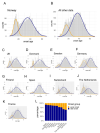
If i understand correctly you tried to apply a unimodal distribution to the age of onset data from 10 different survey countries + DecodeME and it often didn't fit (using the Hartigan's Dip Test). 3 means didn't work well either, but using bimodal modelling, you get means and sd that are almost the same in every country.
View attachment 31231

More or less! The Dip test is a test for multimodality where you fit a normal to your data and see how closely it follows the cumulative density of your data, and measure the maximum deviation between the two - the dip. You then compare this against null distribution of dip values from simulated normal data to get your p value. We did also do a permutation based analysis to see if a bimodal fit was better than one mode and that was significant too (didn't include this in the paper).
 
This is how I understood things when going through with Audrey a while back.

The difficult thing to get a handle on I think is that we should not expect Gaussian peaks for age profiles for a disease. It would make more sense to have more complex profiles, still based in inverse exponentials (as Gauss is) but asymmetrical, so that the upswing and downswing may have quite different parameters. There may of course be no downswing at all.

Perhaps the most intriguing question is what shift/jolt in what biological regulatory system provides the impetus for a peak and should we expect it to precede the peak (a predisposer) or sit in the middle of it (a trigger).

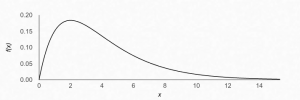
It might be that gamma distributions would be better, many diseases seem to follow this kind of shape. It can look like this, with a longer tail to the right:
1774168464102.png

This shape tends to come about as the natural result of a Poisson process where there are multiple causal events that need to occur before you get a disease, and each event has the same probability of occurring every day - therefore meaning for each event the probability of it occurring effectively increases exponentially over time.

To fit these for two distributions you'd need to estimate 6 parameters, the two parameters for the distribution as well a shift parameter for when we think at what age these event(s) start to happen. Then of course it might be the nature of the events are different with different probabilities of occurring at different ages so it can get much more complicated.

This could be worth coming back to but for this paper we thought to keep the analysis relatively simple and easy to interpret.
 
Alternative speculation to vaccine administration or infection exposure: lipid metabolism.

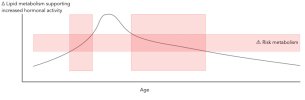
I'd commented in the narcolepsy two age peak thread about the possibility of a risk region during global lipid metabolism remodelling moving to support the hormonal requirements of young adulthood. The risk metabolism region could be in effect during both moving to and away from the peak change, while the peak itself might be non-risk.

Global lipid metabolism must be changing in association with newly active steroid hormones in adolescence. Is it going through an onset and offset phase as things ramp up, peak in early adulthood and then presumably ramp down afterwards? Could those two "ramp" periods be vulnerable?

An exaggerated graphic of this concept would be something like —


Change in Lipid Metabolism.jpg

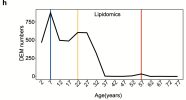
Although it wasn't a particularly large cohort, I note in A Global Metabolomic and Lipidomic Landscape of Human Plasma Across the Lifespan (2026) that there do seem to be two age peaks with lipid changes, at least in terms of numbers of differentially expressed lipid metabolites. FWIW those age peaks are a bit ahead of the peaks we're discussing here, though could precede risk; or potentially only the peak in early adulthood could be relevant and align with the broad idea in the graphic above of changes either side of that peak.

Lipidomics.png


It is noteworthy that the metabolome and lipidome reach a crest concurrently at the age of 7. However, in the later stages of life, the lipidome peaked earlier (age 57) than the metabolome (age 67). Additionally, the lipidome showed a unique peak at age 22, suggesting a rapid, more sensitive response to metabolic state changes than the metabolome, which may serve as a more agile reflection of alterations in an individual's health status, potentially acting as an early warning indicator. The limited overlap of metabolites and lipids at peak ages indicates that the developmental and aging processes in humans differ significantly across age stages. Thus, the fluctuations in metabolism during the nonlinear process of aging are noteworthy.

In summary, many of the changes in the metabolome and lipidome across the lifespan are nonlinear. Clustering these changes by trajectory reveals distinct characteristics, demonstrating that the timing and duration of accumulation, or decline of certain components, may vary significantly across life.
 
Given that many cases of ME/CFS are triggered by infection, could the onset peaks be partly a reflection of two phases in many people's lives when they are most exposed to infections - when they are at school, and when their children are at school?

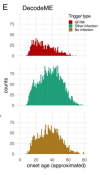
This is something we've discussed a bunch! We're not certain and it might be a combination of things. My opinion is the bimodality is not fundamentally due to exposure to infection, because we see in the data the bimodal shape holds (albeit maybe more weakly) in the people who do not report an infectious onset ( though we can't know that some of these people didn't have for example an asymptomatic infection). We show this in the decodeME data:
1774168987540.png
I think the problem with the theory is that exposure to most infections is there right from primary school and exposure to EBV when kids get romantic is a bit too late for the first peak. Linking the first peak to EBV is an obvious possibility that the authors were well aware of. I dont know if it is discussed. But when I looked at the data it didn't seem very plausible. Te second peak is very wide and doesn't seem likely to bear much relation to infection exposure.

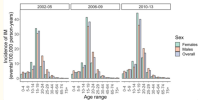
Although we do seem to see that increased glandular fever incidence during adolescence probably contributes substantially to the early peak (15-20 peak in our data matches well with the IM incidence estimated from Kuri et al 2020 below). Spain has drastically fewer glandular fever cases than the UK, and has a very muted early MECFS onset peak.

Kuri et al 2020:

1774169502030.png
 
I wonder if there are two age peaks to participation in sport or other kinds of physical training? Anecdotally there might be, with people being active in their teens, tending to stop in their 20s as life gets in the way, then returning to it in their mid/late thirties when they realise signs of ageing are starting to appear.

Just wondered if it might fit with formerly active people apparently being overrepresented in ME/CFS...
 
Given that many cases of ME/CFS are triggered by infection, could the onset peaks be partly a reflection of two phases in many people's lives when they are most exposed to infections - when they are at school, and when their children are at school?
We know that ME/CFS often follows EBV and other acute infections or symptoms of acute infection. But do we know enough to say with confidence that ME/CFS is often triggered by infection?

I’m not saying we don’t. It certainly seems likely but is it a safe assumption or are there other possibilities? Could it be that the early stages of ME/CFS make people susceptible to infection, or induce the symptoms of acute infection, rather than the infection triggering ME/CFS?
 
I may be well off the mark here and don't know the accuracy of these sources, but I did a quick search on MenACWY vaccination policies just to see if there were any trends that fit this data.
View attachment 31235

Norway noted that ages 16-19 may be a risk population due to graduation parties and travel, so recommends vaccination schedules to be completed right before this age:

Netherlands recommends for age 14:

Germany recommends for age 14 and again around college age:

In the UK it's around 14 years old:

In contrast, Spain which had an almost non-existent early onset spike, recommends the MenACWY vaccine only in infancy:

France doesn't seem to neatly fall into the pattern, though. It didn't have the strongest early peak, and it recommends the vaccine between 11-14:

Couple caveats: policies may have changed in recent decades so these sources might not reflect the reality of the people responding to the survey. This is also only for MenACWY--it seems like countries have different recommendations for menB boosters as well (Spain, for instance, recommends MenB boosters at 12)

Might be nothing relevant here but I just thought it would be interesting to check, especially since actual meningitis presents with sensory sensitivities similar to severe ME/CFS. LPS can trigger a neuroimmune "sickness behavior" response, so I thought a bacterial vaccine might be able to as well and might tie into some epigenetic mechanisms we've been discussing elsewhere. Or I could just be hallucinating a pattern where there is none.
https://vaccine-schedule.ecdc.europa.eu/ This website seems useful for comparing different countries, seems like Spain does menB & C as well as varicella which the other countries I checked do not do.
Edit: although none of these seem to really match up with the data
 
Last edited:
https://vaccine-schedule.ecdc.europa.eu/ This website seems useful for comparing different countries, seems like Spain does menB & C as well as varicella which the other countries I checked do not do.
Edit: although none of these seem to really match up with the data
Thanks that’s really helpful! Yeah, seems like there’s nothing to the pattern. If I have more time I can try to go back through historical record to see if there were recent policy chances but it probably won’t reveal anything
 
I'm trying to get my head around how far this two-peak business gets us. I understand that it would make sense from this point to maybe stratify groups by age at onset - is there scope for going through old biomedical research studies where age of onset was captured? Are there any such?

Also, the paper says that having two age-peaks is unusual, and names some other disease where it happens but what does that tell us about these diseases? For example, is it telling us that we're really looking in each case at different mechanisms that result in the same end-point? Are there two different diseases masquerading as one? Is there anything that all the two-peak diseases have in common that the other diseases don't have?

I feel as though I'm not understanding the full implications of the finding but I can't really put my finger on what I'm not seeing and can't currently formulate a good question.

Maybe it's not really understanding what a disease is - @Jonathan Edwards has pointed out several times that a layperson's typical understanding of the concept is not correct.
 
Back
Top Bottom