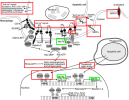
A problem is that we don't actually have good data on what happens to people with ME/CFS during pregnancy. Certainly, not everyone improves during pregnancy.In another coincidence (?) efferocytosis is very active during pregnancy.
We absolutely need to have good data - pregnancy is a perfect natural experiment. I thought it was important enough to ask about it in a forum survey about changes during pregnancy here. That small survey did not show that the majority of people with ME/CFS improved while pregnant. Actually marginally more people reported deteriorating during pregnancy.
Maybe not everyone has the same disease, or not everyone has the same things happen during pregnancy or different things happen during different stages of pregnancy? But possibly the reported mixed effects of pregnancy are due to random changes and variations in lifestyle changes associated with pregnancy rather than some underlying biology?
Perhaps the biological mechanisms that lead to ME/CFS onset may be different to the biological mechanisms that lead to changes in ME/CFS symptoms once the disease has started. There has been at least one study that found that there was a lower chance of long covid symptoms in pregnant people than in non-pregnant people (but perhaps that is because mild fatigue and aches and pains were attributed to pregnancy rather than Long covid?).
Mariovitali, I appreciate your efforts. You were definitely an early adopter of the data analysis approaches you have used. But, like @Utsikt, I am concerned about the noise and errors in the papers that provide the inputs for the theory and like @ME/CFS Science Blog I'd far rather see a theory based on actual data than on what researchers say about their work in their abstracts or even their papers.
Perhaps your ideas would gain more traction if you linked up your keywords into a hypothesis with meat on its bones?, something that sets out a story of cause and effect to help people understand what you are proposing and includes some ways to test what you are suggesting? For example, your description in post #197 doesn't actually say if efferocytosis is expected to increase or decrease to cause PEM.