Machine Learning-assisted Research on ME/CFS

In another coincidence (?) efferocytosis is very active during pregnancy.
A problem is that we don't actually have good data on what happens to people with ME/CFS during pregnancy. Certainly, not everyone improves during pregnancy.

We absolutely need to have good data - pregnancy is a perfect natural experiment. I thought it was important enough to ask about it in a forum survey about changes during pregnancy here. That small survey did not show that the majority of people with ME/CFS improved while pregnant. Actually marginally more people reported deteriorating during pregnancy.

Maybe not everyone has the same disease, or not everyone has the same things happen during pregnancy or different things happen during different stages of pregnancy? But possibly the reported mixed effects of pregnancy are due to random changes and variations in lifestyle changes associated with pregnancy rather than some underlying biology?

Perhaps the biological mechanisms that lead to ME/CFS onset may be different to the biological mechanisms that lead to changes in ME/CFS symptoms once the disease has started. There has been at least one study that found that there was a lower chance of long covid symptoms in pregnant people than in non-pregnant people (but perhaps that is because mild fatigue and aches and pains were attributed to pregnancy rather than Long covid?).


Mariovitali, I appreciate your efforts. You were definitely an early adopter of the data analysis approaches you have used. But, like @Utsikt, I am concerned about the noise and errors in the papers that provide the inputs for the theory and like @ME/CFS Science Blog I'd far rather see a theory based on actual data than on what researchers say about their work in their abstracts or even their papers.

Perhaps your ideas would gain more traction if you linked up your keywords into a hypothesis with meat on its bones?, something that sets out a story of cause and effect to help people understand what you are proposing and includes some ways to test what you are suggesting? For example, your description in post #197 doesn't actually say if efferocytosis is expected to increase or decrease to cause PEM.
 
As someone who’s only vaguely aware of this kind of AI, and try my best to follow the research on ME/CFS as a layperson, I have not been able to understand how you’ve gotten to the answers you say you have.

The fact that you do not understand how I've gotten to the answers is irrelevant, given the fact that whatever methods were used it *appears* to be working (note the term "appears" - more on this below) .


And I’ve not been able to understand how certain concerns have been addressed, like how most publications and especially abstracts are polluted with wast amounts of noise and bias.
This has been answered previously in this thread. My approach was to identify associations between medical concepts and the volume of information basically negates the noise and bias you are referring at. Also, I disagree that "most" publications are polluted when it comes to abstract information.

There might be a barrier of technical skills, but there might also be a barrier of communication. If people are not able to understand what you’re doing or what the data they are looking at means, how would they be able to justify prioritising spending time on it rather than something they already believe is worth their efforts? There is an alternative cost to working on something else, and people will need help understanding why they should pivot or divide their attention.

This is not my problem. A balanced approach would be to act as follows :

"This approach APPEARS to be doing something. It did so many times - not just once- so whatever this approach is doing let's look at it more closely. What are the ways we can test it? Which targets have been identified which have not been yet looked at? Do these targets make sense biologically?"

Have you seen this approach taking place ? I sure haven't. What I have seen over these 10 years was mostly immediate disbelief to the point of negative bias. And a lot of other things that I cannot discuss here.

Let me tell you, things are not that benevolent.
 
Last edited:
A problem is that we don't actually have good data on what happens to people with ME/CFS during pregnancy. Certainly, not everyone improves during pregnancy.

We absolutely need to have good data - pregnancy is a perfect natural experiment. I thought it was important enough to ask about it in a forum survey about changes during pregnancy here. That small survey did not show that the majority of people with ME/CFS improved while pregnant. Actually marginally more people reported deteriorating during pregnancy.

Maybe not everyone has the same disease, or not everyone has the same things happen during pregnancy or different things happen during different stages of pregnancy? But possibly the reported mixed effects of pregnancy are due to random changes and variations in lifestyle changes associated with pregnancy rather than some underlying biology?

Perhaps the biological mechanisms that lead to ME/CFS onset may be different to the biological mechanisms that lead to changes in ME/CFS symptoms once the disease has started. There has been at least one study that found that there was a lower chance of long covid symptoms in pregnant people than in non-pregnant people (but perhaps that is because mild fatigue and aches and pains were attributed to pregnancy rather than Long covid?).


Mariovitali, I appreciate your efforts. You were definitely an early adopter of the data analysis approaches you have used. But, like @Utsikt, I am concerned about the noise and errors in the papers that provide the inputs for the theory and like @ME/CFS Science Blog I'd far rather see a theory based on actual data than on what researchers say about their work in their abstracts or even their papers.

Perhaps your ideas would gain more traction if you linked up your keywords into a hypothesis with meat on its bones?, something that sets out a story of cause and effect to help people understand what you are proposing and includes some ways to test what you are suggesting? For example, your description in post #197 doesn't actually say if efferocytosis is expected to increase or decrease to cause PEM.

Thank you @Hutan I really appreciate your approach. As you know I am not a medical professional and it would be a shame for me to generate a hypothesis without prior knowledge. However in a nutshell this could be one hypothesis :

**Myalgic encephalomyelitis/chronic fatigue syndrome (ME/CFS) arises from a chronic, exertion-amplified state of endoplasmic reticulum (ER) stress combined with inadequate proteostatic and efferocytic resolution of cellular damage, leading to persistent disturbances in lipid handling, ER–Golgi trafficking, glycosylation, glycosaminoglycan maintenance, and inflammatory resolution.**


It is the work of medical professionals to take this, see if it make sense given the findings. I did that numerous times (=suggest hypotheses) but there has been no response.

I also propose that efferocytosis is impaired. I sure could use AI to form hypotheses but as we know, this needs to be evaluated. I cannot evaluate what I do not know.
 
The fact that you do not understand how I've gotten to the answers is irrelevant, given the fact that whatever methods were used it *appears* to be working (note the term "appears" - more on this below) .
As I tried to explain above, if you want others to spend time on your ideas rather than their own, I’m fairly certain they’ll want to be able to understand it. If you dismiss understanding as irrelevant, I suspect you’ll continue having a hard time gaining any traction.
This has been answered previously in this thread. My approach was to identify associations between medical concepts and the volume of information basically negates the noise and bias you are referring at. Also, I disagree that "most" publications are polluted when it comes to abstract information.
I think we’ve seen too many examples of publications based on very poor quality data and with equally poor interpretations.
This is not my problem. A balanced approach would be to act as follows :

"This approach APPEARS to be doing something. It did so many times - not just once- so whatever this approach is doing let's look at it more closely. What are the ways we can test it? Which targets have been identified which have not been yet looked at? Do these targets make sense biologically?"

Have you seen this approach taking place ? I sure haven't. What I have seen over these 10 years was mostly immediate disbelief to the point of negative bias. And a lot of other things that I cannot discuss here.

Let me tell you, things are not that benevolent.
I’m coming at this from a business perspective and not a research perspective, because my background is business.

No matter how brilliant your product is, it will fail to be adopted if you can’t get people to understand its brilliance. There are countless stories of extremely smart engineers that find incredible solutions to problems but never get any uptake on it because they don’t understand how to market or sell it.

Like it or not, but people will be hesitant to spend time on things they don’t understand. Especially people that are overworked and underfunded like most researchers. If you want someone to adopt your product, you need to adapt to their needs. You can’t expect them to give you anything. You might think that unfair or biased or whatever, and that’s understandable, but it’s still how things work in business and I suspect it’s also how things work in research.
 
Disclaimer : The following information is NOT a suggestion to try Sulodexide. Please, please talk to your doctor before trying any supplement or medication

Sulodexide is a medication containing Heparan sulfate (80%) and Dermatan sulfate (20%).

I propose that research should be targeted to HS , its roles in cell biology, signaling, immune regulation, homeostasis, vascular function, and environmental interactions and how these relate to ME/CFS symptoms and most importantly the failure to reach homeostasis. Given my very limited knowledge I may actually make more harm than good so I leave this to the experts.


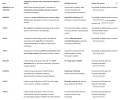
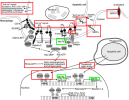
Why is heparan sulfate (HS) relevant in MECFS and LongCOVID ? The key aspect (my hypothesis) is that since HS needs a working ER-golgi trafficking network (https://pubmed.ncbi.nlm.nih.gov/33436240/), certain genetic deficiencies found in the GWAS Study and from PrecisionLife study greatly affect its levels. Here is a relevant table :


Screenshot 2026-01-26 at 11.04.15.png


Some potential associations :

1) COVID binds to HS

https://pmc.ncbi.nlm.nih.gov/articles/PMC8227597/

2) Hepresviruses and Heparan sulfate

https://www.jci.org/articles/view/13799

3) From MePedia. Treating patients with Heparin improved their symptoms

https://me-pedia.org/wiki/Hypercoagulation_hypothesis#cite_note-6

4) Patient trying Sulodexide on YouTube


And may I add also my n=1 with heparin injections which I mentioned earlier in this forum. For 2 days I felt completely normal then my symptoms got back.
 
Last edited:
Back
Top Bottom