Salt

Mij

Senior Member (Voting Rights)
Salt from the autonomic perspective, 2022, William P Cheshire - editorial

Regarding the management of orthostatic hypotension, it may come as a surprise that there is no empirical evidence to support increasing dietary salt (Biaggioni, 2022). The rationale for increasing salt derives from the inability of patients with neurogenic orthostatic hypotension to reduce renal sodium excretion when exposed to salt restriction. These patients frequently also have supine hypertension, which induces nocturnal pressure diuresis with further loss of sodium. In these patients added dietary salt has the goal, not of expanding intravascular volume, but of sustaining it by replacing sodium lost during the night (Biaggioni, 2022).

https://www.sciencedirect.com/science/article/pii/S1566070222000297?dgcid=author#bb0005
 
Last edited by a moderator:
Great find Mij.
Regarding the management of orthostatic hypotension, it may come as a surprise that there is no empirical evidence to support increasing dietary salt
Wow, yes, it does come as a surprise. I wonder if there is any evidence to support the use of salt as a treatment for other sorts of orthostatic intolerance, or to improve orthostatic intolerance symptoms in ME/CFS.

The rationale for increasing salt derives from the inability of patients with neurogenic orthostatic hypotension to reduce renal sodium excretion when exposed to salt restriction.
It would be good to know if people with ME/CFS are able to reduce renal sodium excretion when exposed to salt restriction. Presumably that is part of autonomic dysfunction?
 
Wow, yes, it does come as a surprise. I wonder if there is any evidence to support the use of salt as a treatment for other sorts of orthostatic intolerance, or to improve orthostatic intolerance symptoms in ME/CFS.

I don't know if there are any studies on ME/CFS patients, but I've seen some studies on the use of high sodium diets for POTS patients.

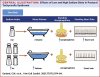
Here's one, from May 2021. Small numbers (14 POTS patients and 13 healthy controls) but it did show differences:

Effect of High Dietary Sodium Intake in Patients With Postural Tachycardia Syndrome
Journal of the American College of Cardiology
Volume 77, Issue 17, 4 May 2021, Pages 2174-2184

https://www.sciencedirect.com/science/article/abs/pii/S0735109721006306?via=ihub

Low vs High Sodium diets POTS.jpg
 
High sodium diet is also mentioned in this video from Dysautonomia International, Understanding Blood Volume & Hemodynamics in POTS (posted on April 23, 2021):

Code:
https://vimeo.com/540671549

The section on salt supplementation starts at about 14:15.
 
It would be good to know if people with ME/CFS are able to reduce renal sodium excretion when exposed to salt restriction. Presumably that is part of autonomic dysfunction?
My n=1 is that urine is normal on normal tests including salts (was lucky to have this tested when I had polyuria for extended time), but it was the muscles of my blader that was the problem. Unfortunately the treatment offered was retraining my bladder, which in no way took it into account that the problem came and went based on my level of exertion.
 
Getting back to the topic of salt, and whether there is evidence for high sodium diets helping certain patients -

The first post in this thread uses the term Orthostatic Hypotension (OH). Terms and definitions can differ, or overlap, but I think most folks use OH to mean a fairly quick drop in blood pressure after standing. One definition I found:
Orthostatic hypotension is a physical finding defined by the American Autonomic Society and the American Academy of Neurology as a systolic blood pressure decrease of at least 20 mm Hg or a diastolic blood pressure decrease of at least 10 mm Hg within three minutes of standing.

By this definition, I do not have OH at all. I can quickly stand up without any sudden drop in blood pressure. I get no symptoms - no dizziness, no seeing stars, no graying out of vision, and definitely no fainting - when I first stand up.

I think if my only diagnosis was OH, and nothing else, I'd only have to be careful about standing up quickly - that transition from sitting or lying to standing up. I wouldn't have all these other disabling symptoms.

And if I did have OH symptoms, I probably would have been diagnosed a lot sooner when I first got sick. I always passed those standard BP tests (take blood pressure when lying/sitting/standing) in the doctor's office. It took five years after the onset of my OI symptoms (pre-syncope symptoms while standing - in the shower, in line at stores, when temperatures were high - but never any fainting/syncope) before someone suggested a tilt table test.

All my OI symptoms are delayed. My symptoms do not happen during the transition from sitting to standing. I start to feel uncomfortable after standing still for about 4-5 minutes. Then it takes 20-30 minutes (roughly) on a tilt table test before my blood pressure plummets and I pass out.

I don't understand all the diagnostic differences between OH and different forms of Orthostatic Intolerance (OI). Also, I think people can have OH along with other diagnoses.

But it seems like there might be different mechanisms that drive OH vs. other types of OI?

And if that's true, then maybe salt can reduce OI symptoms but not OH symptoms?

I have no idea, but it does seem like they are different.

Hope this makes sense. Off to rest - too much brain work this morning!
 
I don't get dizziness/lightheaded when I go from lying down to standing in general, but I do get blurry vision and head, chest pressure when upright for too long. My BP doesn't drop when sitting/standing or lying down. I have heat intolerance, but not all the time.

There is also something called orthostatic cerebral hypoperfusion syndrome w/o OH. There is an abnormal orthostatic drop of cerebral blood flow velocity. Caffeine reduces cerebral blood flow and I experience a negative effect from drinking coffee after lying down and standing up. It makes it all worse until the caffeine leaves my system after 6 hours.
 
I read that vestibular dysfunction can trigger autonomic symptoms.


Then I found that for some vestibular dysfunctions, a diet LOW in salt is recommended.

For those experiencing vestibular disorders, reduction of sodium (along with caffeine and alcohol) is one of the well-known dietary modifications that is recommended. Too much dietary sodium can upset the fluid balance of the body by causing the body to retain water. Changes in body fluid may alter the volume and composition of endolymph (fluid in the inner ear), which supports normal hearing, balance and movement. This is important information, because the fluctuation of inner ear fluid is thought to contribute to symptoms of vestibular disorders.
https://vestibular.org/the-salt-balance/#:~:text=For those experiencing vestibular disorders,the body to retain water.
 
Oh, I forgot to mention that increasing salt intake in POTS is presumed to address hypovolemia (chronic low blood volume), i.e. you want to move the patient from hypovolemia to euvolemia (normal blood volume).

Some of the dangers from increased salt consumption that have been found in the general population come from healthy people increasing their blood volume above normal levels, leading to high blood pressure and other adverse effects.

When medical organisations adopt this technology …
https://detalo-health.com/

… we will be able to measure blood volume, establish whether hypovolemia is really a problem in ME/CFS, POTS, and similar*, and then test individual patients to see whether they have it or not and treat accordingly. Also patients can be monitored to see whether they are under- or over-doing their volume expansion efforts.

On a personal note, my daughter spent a year trying volume expansion measures because no testing is available and specialists have to assume hypovolemia in orthostatic intolerance syndromes. Turns out she does not have low blood volume. We could have saved a lot of time and unnecessary medication trials, some of which cause lingering side effects.

The process could be streamlined by going straight to a short trial of IV saline. If that works, then you can start trialling the less-risky options with some clue that they are worth trying. But it doesn’t happen like that. You have to work your way up to the IV saline, potentially wasting a lot of time.

If I win the lottery, I’ll be donating a couple of the blood volume measurement devices to organisations that will make good use of them. Don’t even need to win big – the device is not that expensive to purchase or run.

*There are studies pointing this way, but only small ones, so lots more verification is needed.

EDIT: Apparently I caused a bit of confusion by not specifying that OI patients are advised to increase salt and fluid intake. I didn’t mention the fluid because nobody comes home from the doctor’s and says “Honey, the doctor told me to increase my salt and fluid intake. Is that guy crazy? Everyone knows extra salt and fluid gives you heart attacks.”

They come home concerned (and confused) about the increase in salt, because that is what is talked about in public health advice.

The water part doesn’t cause any concern, I don’t think, because people are familiar with the basic first aid advice that having a glass of water can help when you feel faint.

Phew.
 
Last edited:
Oh, I forgot to mention that increasing salt intake in POTS is presumed to address hypovolemia (chronic low blood volume), i.e. you want to move the patient from hypovolemia to euvolemia (normal blood volume).

As far as I know there is no physiological reason why eating salt should change blood volume. Salt passes readily by diffusion in and out of the circulatory compartment so it does not 'hold water' in the circulation. I have no idea where this idea has come from but I have never come across it in mainstream medicine. If someone is salt and water depleted then you want to give salt as well as water but just giving salt makes no sense to me.
 
As far as I know there is no physiological reason why eating salt should change blood volume.

Does it cause an increase in fluid volume somehow? That's what the heart heath/blood pressure charities seem to say, but I'm a bit unclear about it—it isn't very obvious whether it's been established, or is more a theory about how high sodium intake and hypertension are linked.
 
Does it cause an increase in fluid volume somehow?

I have no idea why it should and I know of no evidence.
If you eat salt your kidneys reduce their reabsorption of salt in the tubules and within a short while you have peed it out. There may be a period of feeling thirsty because of a slight increase in body salt concentration. Total body water might increase a bit but that is no help to the circulation. You would just get swollen feet, or if lying down, face.
 
As far as I can tell from a quick search the evidence for an effect of salt on blood volume seems fairly scant. There is a 1996 paper in Heart of 31 postural syncope patients:
8 weeks after treatment, 15 (70%) of the 21 patients given salt and three (30%) of the placebo group showed increases in plasma and blood volumes and in orthostatic tolerance, and decreases in baroreceptor sensitivity. Improvement was related to initial salt excretion in that patients who responded to salt had a daily excretion below 170 mmol.
where the authors concluded:
In patients with unexplained syncope who had a relatively low salt intake administration of salt increased plasma volume and orthostatic tolerance, and in the absence of contraindications, salt is suggested as a first line of treatment
Also, in the "24th International Symposium on the Autonomic Nervous System" (link) there is a short poster presentation ("Differential effects of dietary salt on blood volume regulation in postural tachycardia syndrome and healthy subjects") with 6 female POTS patients and 4 healthy controls where a high-salt diet was said to increase blood volume in the POTS patients but not in the controls:
Total BV (TBV) increased in POTS with a HS diet (LS 3703±265mL vs. HS 4148±205mL; p=0.007), and this was driven by an increase in plasma volume (PV; LS 2435 ± 185 mL vs. HS 2835 ± 182 mL; p = 0.007). In contrast, HS in controls did not increase either TBV (LS 3773 ± 424 mL vs. HS 4013 ± 894 mL; p = 0.473 or PV (LS 2511 ± 277 mL vs. 2756 ± 639 mL; p = 0.373). There was a trend toward decreased orthostatic tachycardia with HS among POTS patients (LS 55±11bpm vs. HS 46±7bpm; p=0.066), but not among controls (LS 33 ± 15 bpm vs. HS 29 ± 13 bpm; p = 0.430).
 
As far as I can tell from a quick search the evidence for an effect of salt on blood volume seems fairly scant. There is a 1996 paper in Heart of 31 postural syncope patients:

I can see a problem there that if patients were more active as a result of expectation of improvement, their blood volume might changer as a result of that.

It looks as if high salt has no effect on blood volume in healthy people, which is what I would expect. The question is whether people with OI genuinely have some sort of salt sensitive lowering of blood volume other than due to spending more time recumbent. Unless they are just salt-starved for some reasons it doesn't seem very plausible. The alternative seems much more plausible, that researchers will always find what they expecting to find if their methodology isn't that good.
 
As far as I know there is no physiological reason why eating salt should change blood volume. Salt passes readily by diffusion in and out of the circulatory compartment so it does not 'hold water' in the circulation. I have no idea where this idea has come from but I have never come across it in mainstream medicine. If someone is salt and water depleted then you want to give salt as well as water but just giving salt makes no sense to me.

No, I was addressing two topics: one, that increased salt intake has been linked to health problems in the general population, and that that causes concern for people with orthostatic intolerance when their doctor suddenly tells them to eat more salt as opposed to the public health messages to cut back salt to recommended levels that we have all heard for many years.

And two, the reason for increased salt and water intake recommendations for people with orthostatic intolerance, and why that might overrule the “eat less salt” advice for the general population.

Presumably, nobody is going to come home from the doctor worried that they have been advised to drink more water, so I didn’t mention that. It’s the extra salt that gives them pause. Also, doctors seem to often omit to explain the purpose of the extra salt and fluid intake, adding to the confusion.


Are you saying that increased salt intake in the general population is not linked to high blood pressure through mild hypervolemia, and this type of information is incorrect? Presumably healthy people consuming high-salt foods get thirsty and take in extra fluids.

E.g.

“Your body responds to excess sodium by holding on to water to dilute the sodium. As a result, the amount of fluid in your blood vessels increases. That raises the pressure inside your blood vessels and makes the heart work harder.”

https://www.health.harvard.edu/heart-health/dietary-salt-and-blood-pressure-a-complex-connection

I see this simple connection has been questioned:
https://www.medicalnewstoday.com/articles/317099
 
“Your body responds to excess sodium by holding on to water to dilute the sodium. As a result, the amount of fluid in your blood vessels increases. That raises the pressure inside your blood vessels and makes the heart work harder.”

That sounds like straight nonsense. It looks as if you are quoting from some Harvard health advice page. Presumably it has been dumbed down out of all physiological recognition.

I am not sure how solid the evidence is for a causal effect of high salt intake on blood pressure. High salt intake is very likely to be associated with high cholesterol, sugar and meat intake and obesity. Studies have probably controlled for obesity but I doubt we have clear evidence for the salt actually causing a rise in BP.

Even if it does, that is something quite different from increasing blood volume and probably not associated with it. In normal people I strongly suspect that high salt intake makes no difference to blood volume (as quoted in the study mentioned above). That odd ting is that the renin angiotensin system that put B up is designed in part to retain salt if I remember rightly. So eating a lot of salt should lower angiotensin levels. Some of the best antihypertensives are angiotensin blockers so it doesn't easily add up.

All of this leaves the question of whether people with low blood pressure as in orthostatic hypotension do better eating more salt - again a different question because it is about the effect of salt specifically on a dysregulated volume control system. It would be interesting to now what renin levels are like in people with OI of various sorts.
 
Back
Top Bottom