There's a good argument to make about this being problematic with PEM but it sidesteps the fact that even without the evidence for exercise therapy, and for psychotherapy, in Long Covid is just not there, and not even plausible in the first place. It's literally not there at all, all of which should be offensive to anyone with a scientific mind when it's been known, and asserted from the start as a good thing, how there is a high proportion of natural improvements, far more than the mediocre boasts from trials, which have not once met a single minimum clinical significance threshold. Climate change deniers pointing to minor blips on large graphs are no less dishonest than this, it's exact the same thing.
And that's even before you get to the even more absurd application of this to problems like loss of smell. There is not a single plausible explanation, model or mechanism for exercise to be a meaningful solution to a problem that has absolutely nothing to do with lack of exercise.
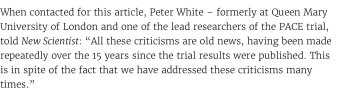
Absurd quote from Peter White, both Andrew Wakefield and Richard Horton very likely said the same thing, but for 12 years instead of 15. Because when one major error goes unpunished, it just leads to more of the same. The tobacco companies must have said the same thing as well.
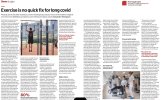
“If you don’t achieve the level that’s minimally clinically important, you don’t go around claiming success,” says David Tuller at the University of California, Berkley. In response, Berry says it’s not for us to say whether an individual would benefit from this improved mobility. “I think that’s open to interpretation.”
This, they call evidence-based medicine. Most advertising laws make this explicitly illegal when it comes to commercial products and services, it would be considered fraudulent and prosecuted. In medicine? It's all fine and good. Because money is more important than lives.
And you can bet everything you own on the fact that when we finally pass through the last obstacle and all of this scandal is blown open, everyone involved will pretend like it was all just a small misunderstanding and they couldn't possibly know otherwise. Once you shed integrity, you can never wear it again.