News from Austria and Switzerland

ME/CFS: New PAIS supply path fixed

"The authorities responsible for health care in Austria have agreed on a supply pathway to post-acute infection syndromes such as ME/CFS or Post Covid. After more than a year and a half of discussion, a corresponding decision was taken on Friday in the responsible Federal Target Control Commission. The federal, state and social insurance companies are committed to the development of pensions in their areas. The question of the recently strongly criticized opinions remained open."
 
The decision was preceded by a year-long debate on the future care of those affected - both in medical terms and with regard to social protection, such as the loss of capacity to work. The now-accorded paper, which has not been made public for the time being, is likely to lag behind the numerous recommendations for action of the National PAIS Action Plan, which was still being drafted under former Health Minister Johannes Rauch (Greens), but parts were included: Health Secretary Königsberger-Ludwig (SPÖ) emphasized before the start of the meeting on Friday, of course, the action plan of Minister Rauch as "instructions" had been taken, many points In a background discussion in front of journalists, she emphasized that the decision was only a prelude: "This is not over now, but now the work really begins."
(auto-translated by firefox)

hmm…

we‘ll have to see what this actually means, concretely.
 
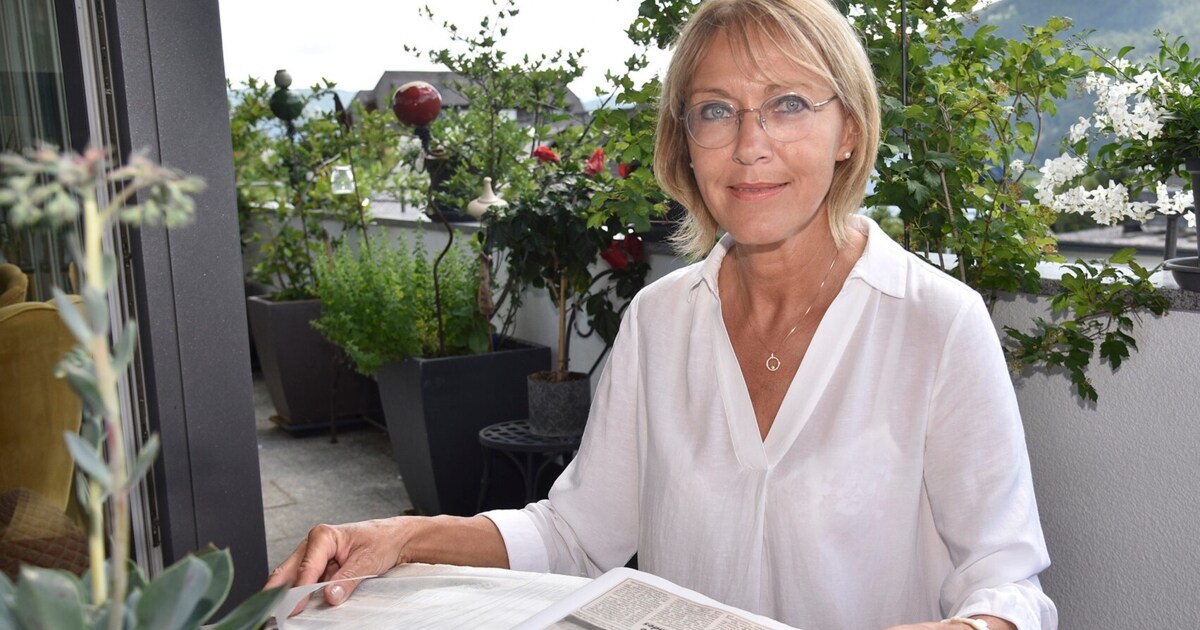
The Robert Hochner Award 2026 goes to Constanze Ertl of ORF. The journalist is being honored for her “courageous and persistent investigative work and enlightening reporting on the highly sensitive area of the neglected and severe illness ME/CFS.” [source]

On her blog, Constanze Ertl published her remarkable acceptance speech.

Machine Translation:

What ME/CFS reveals — my speech for the Robert‑Hochner Prize​

At the awarding of the Robert‑Hochner Prize 2026 I spoke about what ME/CFS reveals. Our health and political systems fail to respond adequately to new challenges.
Constanze Ertl July 1, 2026

What ME/CFS reveals — my speech at the Robert‑Hochner Prize ceremony

“ME/CFS is when one medical assessor declares you fit for work and another grants you assisted suicide.”

This quote comes from Christoph Ströck. He has been severely ill with ME/CFS for ten years. For nine years he has had to lie on his mattress — as he puts it — in his darkened room, in pain, without a single moment of physical well‑being, completely dependent on his caregivers to survive. With the little strength he has, he has been campaigning for recognition of the disease and for research for years.

Anyone who believes — or perhaps understandably hopes — that Christoph was deliberately exaggerating must, I’m afraid, be disappointed.

The scientist and artist Judith Schoßböck died by assisted suicide in December 2024 at the age of 43 in Upper Austria. Judith wanted to live. She made the best of the cards life dealt her until the end. But her condition continued to deteriorate. In addition to ME/CFS she suffered from other — equally neglected — illnesses. In the end her body even reacted to water with a massive worsening of her condition. A few weeks before Judith’s death, public advocate Bernhard Achitz announced “good” news on the ORF program Bürgeranwalt. After a long fight, the pension insurance PVA had granted Judith a permanent disability pension. Until the end she had — although bedridden since 2021 — only care level 3 out of 7 possible.

Parents under suspicion​

ME/CFS plunges the sick people themselves and their relatives into despair. The 82‑year‑old Carinthian Peter Strauss has been primarily responsible for caring for his 47‑year‑old daughter, who is severely ill with ME/CFS, for four years. Before her illness Christina Strauss was a doctor herself. Her father lives in constant worry because he does not know what will become of her if something happens to him. The former major general of the Austrian Armed Forces has already contacted several politicians and tried to draw attention to the care crisis around ME/CFS. He cannot believe how much ME/CFS patients are being let down by the republic he has always believed in.

ME/CFS is also when parents come under suspicion because they want their sick child to receive the best possible diagnosis and treatment. In 2024 the illness began for 14‑year‑old Mia after a Covid infection with severe head and neck pain and strong light sensitivity. Later extreme weakness and severe food intolerances developed. A hospital stay becomes a horror trip for the family. The girl is not helped; instead the parents are accused of locking up and making their child ill. A child welfare report to the youth welfare office follows. Mia has since received the diagnosis ME/CFS — made by a recognized specialist. Mentally Mia is doing well, her parents say. They themselves are a little surprised that she is in such good spirits. Mia’s father sums up the prejudices they were first met with by the pediatrician, then in the hospital and finally at the university clinic: “A young girl is healthy and if she’s not healthy, she belongs with the psychiatrist.”

What ME/CFS reveals​

ME/CFS is often called the invisible illness. Those affected may still be able to work part‑time or from home, but they must forgo leisure activities because of their limited energy budget. The severely affected are too ill to leave their homes. The most severely affected are bedridden. They all disappear from their workplaces, their circles of friends, their families.

But ME/CFS is also an illness that reveals a great deal. ME/CFS shows that our health system and our political system are unable to respond in a timely manner to a new reality — to the suffering of tens of thousands of people and their relatives in Austria alone — with substantial improvements. Not new because ME/CFS itself is new, but because the Covid pandemic caused the number of sufferers to rise quickly and sharply. A large proportion of those with long Covid now meet the diagnostic criteria for ME/CFS.

Early on after the start of the pandemic, the few ME/CFS specialists in Austria and the patients themselves warned of exactly this development. Yet within the system they remained outsiders. They are not represented on committees or in major medical societies — nor in political parties or the social partners — and are therefore rarely heard. And when, through great effort, they do manage to make themselves heard, their concerns end up in working groups where people discuss them without them. The conciliators get to speak. And those who manage the status quo and therefore feel no great pressure to change. Major initiatives do not emerge that way.

In my view ME/CFS also reveals what journalism can achieve and what conditions are needed for that. With our investigative project on assessments by the pension insurance PVA, Christian Haberhauer of the APA and Eja Kapeller made visible what had previously been denied: that the diagnosis ME/CFS is usually not recognized in assessments and that people therefore often do not receive social benefits.

That is only possible when investigative work is valued by editors and managers. When the newsroom is not so depleted that everyone has to produce a piece every day to fill the programs. And above all, when journalists have the freedom to take up topics that have not been covered at all or have been insufficiently examined.

ME/CFS has shown me that it is worth it: not only because of this beautiful award, but because I have met so many very strong and impressive people who, despite their severe illness — fortunately often together with their relatives and friends — fight for their rights and for research. If ME/CFS is recognized, cared for, and treated in the future like any other disease, it will be thanks to them.
 

Machine Translation:
Mother fights: “We want to encourage others!”
Salzburg 05 July 2026

On the accessible ground floor everything is darkened: for Thomas (33), even the smallest bit of light or any noise is too much. Years before the Covid pandemic, at age 25, he became infected with the Epstein–Barr virus and never recovered. “At first it was like a severe flu. Then he kept collapsing,” says his mother, Martina Obermayer‑Rauter. On top of that came constant pain. Finally, the devastating diagnosis: ME/CFS, the fatigue syndrome, better known as chronic exhaustion, which is often not taken seriously.

Thomas moved back home. “He can’t do anything on his own, can’t go to the doctor, can’t take care of himself,” says his mother, who is also the principal of the St. Michael primary school.

Yet Thomas had actually been the most lively of her triplets. “He ran a lot and even did a parachute jump two months before the illness.”

The family is calling for a support system for relatives. A disease in which energy is the scarcest resource must not depend on the strength of family members.

And Thomas dreams of becoming completely healthy again. “One day he wants to see the Northern Lights and run as far as his feet will carry him.”
 

1.3 million euros awarded for ME/CFS research, with 450,000 euros for a project building on the results of DecodeME.

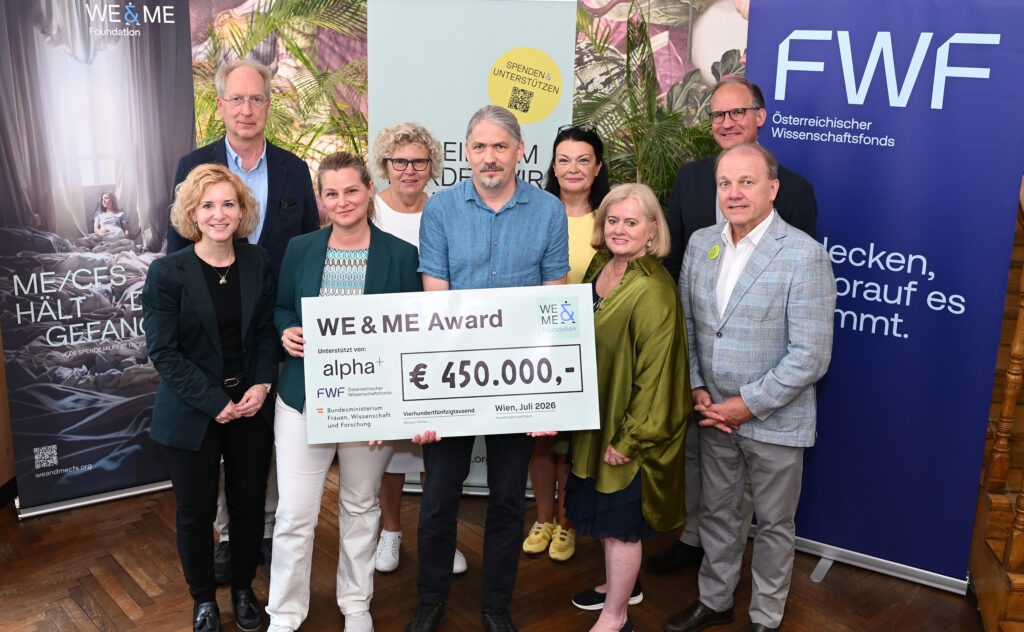
The WE&ME Award , presented for the first time, is one of Austria’s most generously endowed privately funded research prizes, with a prize of 450,000 euros, and supports basic research into the multisystem disease ME/CFS. In a competitive selection process based on reviews by international experts, epidemiologist Matthias Wielscher and three other researchers stood out. Wielscher’s project will receive the WE&ME Award and will be funded by a 450,000-euro donation from the WE&ME Foundation to the alpha+ Foundation. In addition, the Austrian Science Fund (FWF) is funding three other research projectson ME/CFS with a total of 1.3 million euros.

“We chose Matthias Wielscher’s project because, for us, recognizing the heterogeneity of this disease is a central focus of current biomedical research on ME/CFS, and because the lack of patient stratification prevents consistent study results—and thus also targeted therapies. Genetic studies and correlations enable more precise subtyping with the goal of deciphering different disease mechanisms and, as a result, providing starting points for diagnostics and therapies. “The necessary international networking and collaboration with the largest genetic dataset for ME/CFS (DecodeME)—whose sequencing is supported, among others, by WE&ME—is also a key component of this project,” said Gabriele Ströck of the WE&ME Foundation regarding the selection of the WE&ME Award.

This is a quote from the Austrian Science Minister! FWF is the Austrian Science Fund.
“Behind every research question regarding ME/CFS are people whose lives have been fundamentally altered by this serious illness. It severely limits the lives of thousands of people affected by it, while at the same time still raising many scientific questions. This award-winning project lays an important foundation for better understanding the biological causes of the disease and developing new approaches to diagnosis and treatment. “I would like to express my heartfelt thanks to the WE&ME Foundation for its extraordinary commitment. Together with the FWF, we are enabling research that creates concrete prospects for those affected,” said Science Minister Eva-Maria Holzleitner.
 

Google Translate

ME/CFS: Criticism of the pension insurance system​

At the Praevenire health symposium in Alpbach on Thursday, criticism was voiced regarding the pension insurance system's handling of patients suffering from post-acute infectious disease syndrome (ME/CFS). In contrast, the Austrian Health Insurance Fund (ÖGK) received praise.

Doctor shares his experience​

“There is still a massive stigma surrounding ME/CFS as a mental illness. (…) It is not a mental illness. I made a home visit to a patient with Long Covid. This is a completely mentally healthy person. Just sitting up from the bed, her pulse increased by 50 beats, and by 80 beats to 170 when she stood up.

“Failure of gigantic proportions” in neurology​

Some medical specialties are also complicit in the misguided response to severe cases of ME/CFS or Long Covid. According to the psychiatrist, himself a trained neurologist, Austrian neurology is delivering "a failure of gigantic proportions."

The patient could only survive at 14 degrees Celsius.​

A large proportion of those severely affected require care level III or higher. Everything that happened in the rehabilitation of ME/CFS patients in 2022/2023 was "catastrophic." He, Psota, knows a patient who, due to a very specific, severe form of chronic neuritis resulting from ME/CFS, can barely survive at 14 degrees Celsius. "Nobody voluntarily lies in bed constantly at 14 degrees."
 
I am getting the impression of a lot more medical professionals plainly describing the situation as disastrous. I can't remember much of that in previous years. It used to be much more oblique and non-committal. We need more of this, it's good to see.
 
I am getting the impression of a lot more medical professionals plainly describing the situation as disastrous. I can't remember much of that in previous years. It used to be much more oblique and non-committal. We need more of this, it's good to see.
We can thank Covid for giving it hard kick towards the centre of the playing field, where nobody can ignore it or make up fairy tales about it so easily anymore.
 
I am getting the impression of a lot more medical professionals plainly describing the situation as disastrous.
We can thank Covid for giving it hard kick towards the centre of the playing field, where nobody can ignore it or make up fairy tales about it so easily anymore.
I might be wrong but having a force of nature like the WE&ME Foundation advocating in such a small mountain country might be a major factor in why we are witnessing these very welcome changes in public opinion.
 
The Austrian publication DOSSIER is conducting investigative journalism on practices within the PVA (the pension authority that decides disability cases), to seek out secret directives on how to handle ME/CFS cases. The PVA had previously produced incomplete documents and asserted that no more existed. DOSSIER made a FOIA request and pursued the issue to a tribunal, which has revealed that what the PVA had said was false.

In January 2026, Constanze Ertl and I, together with Christian Haberhauer from the APA, made a request for the Freedom of Information Act. We wanted to know: What does the PVA convey to its experts and employees about ME/CFS and Post Covid? And with what technical assessments does it contribute to this issue in health policy negotiations? The PVA's responses were incomplete in our view. That’s why we went to the legal process – right up to the administrative court.
During the legal remarks, interesting details came to light. Thus, it became clear that the PVA itself was not legally a member of a working group on PAIS (postacute infection syndromes) in the Ministry of Health, but at the request of the umbrella organization of the social insurance institutions, sent an expert representative in their meetings. In addition, it has central documents of the working group: the written project mandate and meeting minutes – i.e. documents on ME/CFS and Post Covid, which have been withheld from us so far.

This puts the PVA representative in need of explanation: he says that the documents are secret, because they have agreed with the other partners that everything remains secret. This also applies to the project order, which the judge can be handed over. He leafs in it, then looks up and says, “At first glance, I feel like it’s not very secret.” With regard to a possible non-disclosure agreement with the other partners of the working group, he says that these partners are “sadly spurned” on him.
Which brings us to the second major point of contention – and the decisive moment of the day. It is about materials of the PVA's chief medical department on ME/CFS and Post Covid, which are provided to employees. The PVA had referred to our request only to review forms and stated that there was no relevant information.

But that's not true, and we can prove it. DOSSIER, APA and the ORF have an internal PVA newsletter. It refers to a controversial statement by the German Society of Neurology on ME/CFS. So the newsletter is a document that we explicitly asked for – the PVA concealed that it exists.
At the end of the trial, the judge’s mandate to the PVA is clear: within four weeks, the authority must firstly submit all the protocols it has obtained to the PAIS working group. Secondly, it must present all the materials in the head medical department on the subject of ME/CFS and Post Covid, which the PVA has been doing since 1. January 2020 sent to employees.

A blanket reference to secrecy is no longer sufficient. For each individual document, the PVA must now justify which bodies it wants to keep secret, on which legal secrecy interests it relies – and why these should actually be justified in the specific case.
 
Final Report on the Care Pathway for People with Post-Acute Infection Syndromes (PAIS)

Bluesky post from Austrian neurologist Stingl.
Machine Translation:
The final report from the ZS-G on #PAIS and #MECFS has now been released.

And, to be honest, it's hard to get excited about it.

Given the recent developments, it was clear that expectations shouldn't be set too high. Even so, there was still some hope.

In the end, what is missing are time-bound implementation mandates, minimum numbers of specialized care centers, dedicated funding, quality indicators, and clearly defined responsibilities.

In other words, the report contains very little in the way of operational accountability.

Pacing is described as "strengthening self-management and health literacy."

While that is true, the report fails to address the conditions needed to make pacing feasible in practice, such as workplace accommodations or adequate nursing and care support.

Also notably absent is any discussion of social protection, despite the well-documented current problems with disability assessments. The explanation given is that this falls outside the group's remit.

The background to that decision would be extremely interesting—especially considering that the social insurance institutions were all involved in developing the action plan.

The strong emphasis on relying on existing structures seems unconvincing, given that this approach has not worked so far.

Without appropriate reimbursement models and resources, the proposed care coordination by primary care physicians and Primary Care Units (PCUs) is unlikely to be realistic. Specialist outpatient clinics are mentioned, but without any meaningful detail.

There is no dedicated concept for pediatric ME/CFS, and primary prevention is no longer addressed.

The proposals outlined in the action plan for the care of people with severe ME/CFS are absent. The report also leaves unanswered the question of how appropriate hospital care for these patients is supposed to be delivered.

Assessing functional impairment is important, but the report does not specify which instruments should be used to assess which domains.

This is particularly important because the document leaves it unclear when rehabilitation is appropriate—and when it is not.

"Once appropriately coded diagnoses become available in the private specialist sector, the effectiveness of this segment of care for PAIS should be evaluated."
I'm doing my part by diligently submitting the relevant diagnostic codes.

We already know that data from hospital-based care, as well as from the Austrian Pension Insurance Institution (PVA), underestimate the true number of cases.

It also remains unclear how patient organizations will be involved in the implementation, evaluation, and further development of these measures.

More broadly, the report does not set out any meaningful mechanism for quality assurance or oversight of how its recommendations will actually be implemented.

Past experience shows that necessary and routine medical and social care repeatedly fails because of institutional interests, conflicts over responsibilities, and a lack of recognition of ME/CFS.

This is why there is concern that the report may serve more as evidence that action has been taken than as a robust plan for delivering care.

Let us hope for the best—while maintaining a critical perspective.

Report in German: PDF
 
This reads to me like a complete process failure. As usual. Disappointing, but not surprising. Still nothing but obstacles within the institutions of health care, they simply don't want to budge from their traditional disastrous mishandling no matter what, and Long Covid made absolutely zero difference to that.

I have rarely seen people so dedicated to failure without anyone or anything making them do it. It's all by choice, every bit and every step along the way. All this does is raise further questions about just how common this behavior is, because if it can happen at this scale, it can pretty much happen about anything, for any reason and for perpetuity.
 
Tweet by psychiatrist Michaela Bauer.
Machine Translation:
Michaela Bauer @DrMichaelaBauer
Continuing Education on ME/CFS and Psychiatric Misdiagnoses. Accredited by the FSP and SGPP (2 credits).
For physicians, psychologists, psychotherapists, and other healthcare professionals. Registration: eventfrog.ch/de/p/kurse-semi…

Participants from outside Switzerland are very welcome.

ME/CFS – Addressing Psychiatric Misdiagnoses​

Wednesday, October 14, 2026
6:00–8:00 PM (CEST)
Online Event


Topics​

  • Post-exertional malaise (PEM) as the key diagnostic feature
  • Diagnosis, disease severity, and comorbidities
  • Differentiating ME/CFS from psychiatric disorders
  • The consequences of psychologization and psychiatric misdiagnoses
  • The role of psychiatry and psychotherapy in the care of people with ME/CFS

Target Audience​

Healthcare professionals as well as professionals working in the social services and insurance sectors.

Speaker​

Dr. med. Michaela Bauer
Board-certified specialist in Psychiatry and Psychotherapy (FMH)
Certificate of Advanced Competence in Addiction Medicine

Accreditation​

Participants will receive 2 continuing education credits, accredited by the Swiss Society of Psychiatry and Psychotherapy (SGPP) and the Swiss Federation of Psychologists (FSP).
 
The francophone Swiss National Broadcaster (RTS) published a detailed report on Long COVID:

(all of the following is either hand or machine translated from french into english, the original article is 100% in french)

Six years after the pandemic, what has become of long Covid patients?

Last 19 February, a 22-year-old Austrian man named Samuel resorted to assisted suicide to end his “unimaginable suffering” caused by long Covid. More than six years after the start of the pandemic, in Switzerland too, many people continue to suffer from this illness in almost total indifference.

Some extracts
“We are forgotten, we are invisible. Most of the clinics are closed now.” Chantal Britt is among the 300,000 to 450,000 people in Switzerland suffering from long Covid. She, who founded the association Long Covid Switzerland, laments the current situation.
Interest in Covid-19 has clearly weakened among the population and specialised institutions. Many websites dealing with the disease, such as those of the Federal Office of Public Health (FOPH) or the Rafael platform of the Geneva University Hospitals (HUG), seem to have not been updated for a long time, the latest news stopping in 2024.

Specialised consultations have also closed, such as that of the Zurich Paediatric Hospital in 2025 or that of the Riviera-Chablais Hospital in Rennaz in May 2024.
Some professionals – minority – consider this disease to be psychosomatic. "It's a myth. It's wrong. Clearly wrong," retorts Christian von Plessen. "There's a lot of documentation now." The specialist also cites Professor Bernard Favrat, current director of Unisanté's long Covid consultation, who does not speak of a psychosomatic disease, but a "somatopsychic" disease.
It was this psychological support that helped Julie manage the anger and confusion at the beginning of her illness. But in the long run, what was supposed to help her became a problem: "Talking for an hour, for me, is really very hard. And as a result, I was making repeated crashes related to psychotherapy sessions."
Even with severe symptoms attested by a specialist, many patients report refusals to grant a pension after a very long and demanding process.

The Covid Long Switzerland association also denounces a very disparate care according to the cantons. Contacted, the Federal Social Insurance Office (OFAS) specifies that "in the absence of data, it is not possible to assess any cantonal differences regarding the duration of the procedure and the granting of annuities for people with long Covid."

The OFAS also stated in 2025 that applications for long Covid submitted between 2021 and 2023 were often more easily accepted than others. The office explains in writing that it does not have "more recent data on this subject. The AI [Name of the disability pension scheme] no longer collects specific data on long Covid."
But AI pension or not, the financial consequences are important for those affected. Julie and Delphine were recognised as 100% invalid by the AI, a "huge chance" according to the first. But before obtaining this pension, she was without income for more than two years. She and her husband finally had to decide to move abroad.
Many methods are mentioned in the Facebook group: kinesiology, naturopathy, ozone therapy, etc., with results that seem, according to the feedback, very mixed.

For Delphine, who was able to try several therapies and dietary supplements, "overall, what we read in the testimonies is that there is no magic wand."


Not a perfect article but I’d say the good outnumbers the bad.
 
30-min Wiener Wissen podcast episode on ME/CFS in Austria.
You can listen to the podcast here.

Some quotes from the two short articles:
In the current issue of Wiener Wissen, internist Corinna Geiger [runs the Long Covid Online Klink],
entrepreneur Mikis Waschl,
and WWTF Program Manager Benjamin Missbach [active user on S4ME]
examine the sobering everyday reality faced by people living with the multisystem disease ME/CFS, which affects around 80,000 people in Austria.
Speaking about his childhood friend Christoph Ströck, who has ME/CFS, Waschl says: “Christoph has been confined to bed for many years.
People like him live in the dark and feel alone.”

When asked whether the situation is likely to improve, Geiger, who also runs an online clinic for people with long COVID, says: “We are fighting opinion with evidence.”
Geiger:
The exact number—whether 80,000 people are affected or more—is ultimately of secondary importance: “In any case, it's far too many—and somehow, care simply has to begin.”
 
Last edited:
From Twitter.

Machine Translation (linked documents in German):
Austrian Society for ME/CFS publishes audit and position statement on the Final Report of the Target-Based Health Governance Initiative

With the National Action Plan on Post-Acute Infectious Syndromes (PAIS) 2024, a shared health policy framework for the care of people with post-acute infectious syndromes was established for the first time. In June 2026, the Target-Based Health Governance Initiative (Zielsteuerung-Gesundheit) published its Final Report on the implementation of the Action Plan.

The Austrian Society for ME/CFS has taken this Final Report as an opportunity to systematically compare its contents with those of the National Action Plan 2024. The result is a document-based audit that clearly outlines the changes in the areas of diagnostics, healthcare provision, governance, stakeholder involvement, and implementation. In addition, we have summarized our professional assessment in a position statement.

Our audit shows that while many elements of the National Action Plan 2024 have been incorporated, key scientific foundations and structural policy objectives have only been adopted in part. In our view, this applies in particular to the diagnostic classification of ME/CFS, the planned models of care, and the transparency of the ongoing implementation process.

We are publishing both documents to facilitate a transparent, evidence-based discussion on the further implementation of the National Action Plan.

Audit

Position Statement

National Action Plan on Post-Acute Infectious Syndromes (PAIS) (2024)

Final Report: Target-Based Health Governance Initiative Activities on PAIS (2026)
 
A paper finding that few GP consultations were coded as being for Long Covid in Switzerland:

 
Tweet by psychiatrist Michaela Bauer.
Machine Translation:


Michaela Bauer‘s second free CME on ME/CFS.
Machine Translation from Twitter:
Michaela Bauer
An assessment itself can become a health burden for people with ME/CFS.
The second part of my free continuing education series focuses on the challenges ME/CFS poses for social insurance systems and outpatient care.
SGPP & FSP: 2 CME credits.
Registration: https://eventfrog.ch/de/p/kurse-sem...erung-von-leistungen-7478466108493673817.html

Text from screenshot of PowerPoint slide (OCRed):
ME/CFS
Social Insurance and Benefits

Online via Zoom • November 11, 2026 • 6:00–8:00 p.m.

Topics
  • Fundamentals of ME/CFS and post-exertional malaise (PEM)
  • Challenges in health insurance, daily sickness benefit insurance, and disability insurance
  • Implications for work capacity, rehabilitation, and return to work
  • Recommendations for PEM-sensitive insurance medical assessment practice

Accredited for 2 CME credits (SGPP and FSP).

She’s a lot of fun to follow on Twitter.
Here are some excerpts:
In ME/CFS, every claim is scrutinized against the evidence—and rightly so.
Why, then, is the biopsychosocial model so often treated as the scientific standard without its empirical basis being subjected to the same level of critical scrutiny?

"Brain Retraining" or "Brainwashing"?
The inadequate care available for people with ME/CFS is problematic enough.
Even more concerning is the promotion of programs that encourage people to reinterpret their symptoms, disregard warning signals, and cultivate positive expectations.

2 comments on the PsyLoco study (s4me):
How much longer are we going to keep investing time and resources in the psychologization of these illnesses instead of consistently advancing biomedical research?
Rather than art classes, consistent protection against reinfection and access to biomedical care would seem to be the more sensible priorities—especially in the absence of evidence demonstrating the effectiveness of such interventions.


Medicine must be able to tolerate uncertainty.
A "we don't (yet) know" must never become a psychiatric diagnosis.
In #MECFS, this happens far too often—despite the scientific evidence supporting a somatic etiology.
How can this be prevented?
 
Back
Top Bottom