I also remember that UKE is a stronghold for doctors who advocate for the view that ME is psychiatric, having launched considerable research along those lines. At the same time, university hospitals are large enough to accommodate differing perspectives—this group might well be different, which would make sense. In Germany, largely thanks to Scheibenbogen at Charité and influential upper-middle-class patient advocacy groups like DG ME/CFS and Fatigatio, the consensus has clearly shifted toward understanding ME/CFS as an underresearched, somatic condition.The UKE has a pretty bad reputation when it comes to PAIS.
I couldn’t find more details about the proposed 3-tier care model.

You are using an out of date browser. It may not display this or other websites correctly.
You should upgrade or use an alternative browser.
You should upgrade or use an alternative browser.
News from Germany
- Thread starter TiredSam
- Start date
-
- Tags
- germany me/cfs news regional thread


Chandelier
Senior Member (Voting Rights)
True.At the same time, university hospitals are large enough to accommodate differing perspectives
I would have liked to have a look at the model to get an idea of what we’re at here.
Chandelier
Senior Member (Voting Rights)
Post on Bluesky by @privilegienschreck
Machine Translation:
Professor Kleinschnitz works at uni Essen.
Machine Translation:
At Neuro Essen, Long COVID and ME/CFS are still treated as psychosomatic despite the current scientific evidence. At the same time, it hosts continuing education events asking whether "there is a crisis of freedom of expression in Germany and whether this has also affected science and universities."
Neuralgic – A Different Kind of Continuing Education Event | September 17, 2026
Julia Ruhs, German journalist, to speak at the Department of Neurology
Lecture | Information Event | Continuing Medical Education (CME) | Other
Declining Trust: The Media, Science, and the Crisis of the Public Sphere
Julia Ruhs studied Democracy Studies and Communication Studies in Passau, Rome, and Regensburg.
Her master's thesis, "Russia's Disinformation Policy Against the West," was awarded the Special Prize of the Bavarian State Government as well as the First Young Talent Award of the Security Policy Dialogue Forum.
The freelance journalist gained national recognition as the host of the ARD documentary series Klar.
An episode on migration, in which Ruhs criticized shortcomings in Germany's asylum policy, sparked considerable public debate and ultimately led to her removal from the program by NDR.
Ruhs now works primarily for Bayerischer Rundfunk (BR) and also writes regular opinion columns on socio-political issues for BILD; previously, she wrote for Focus Online.
As part of our continuing education series "Neuralgic," she will address the question of whether freedom of expression in Germany is facing a crisis, and whether this has also affected science and universities. Her lecture is entitled:
"Declining Trust: The Media, Science, and the Crisis of the Public Sphere."
We look forward to welcoming a large audience and to a lively discussion.
CME Credits:
This event has been accredited with 2 CME credits by the North Rhine Medical Association (Ärztekammer Nordrhein).
Registration:
No registration is required.
Venue:
Auditorium Maximum
University Hospital Essen
Hufelandstraße 55
45147 Essen, Germany
Professor Kleinschnitz works at uni Essen.

This feels like it was written by a very junior intern. Maybe it comes off better in its original German, but the problem isn't grammar, it's the infantile notions behind. Looks completely unserious, and not surprising given Kleinschnitz. It's really awful that the medical profession is incapable of dealing with miscreants like this. It would be exactly like funding a prominent HIV denier for AIDS research.
This is not a serious primary outcome.The primary outcome is the change in self-efficacy
We expect with a high probability that the patients’ self-efficacy and health status...

Chandelier
Senior Member (Voting Rights)
Sabine Hermisson on Bluesky about a song her brother wrote for Mila and released today on severe ME day: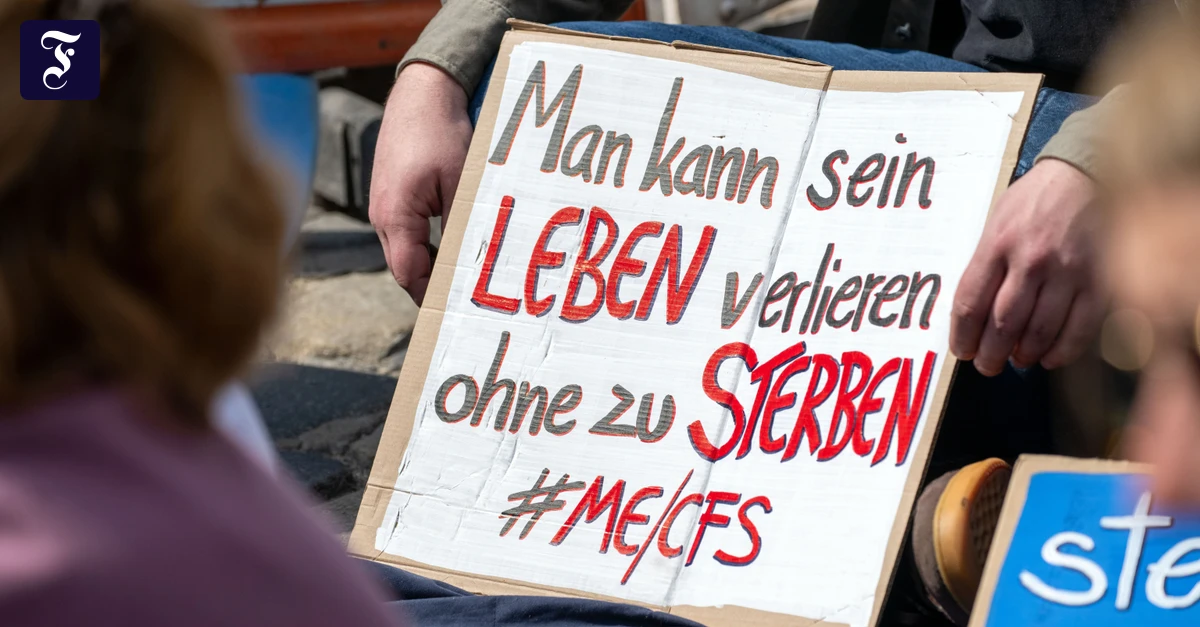
Long Covid und Fatique: Hilfe für Angehörige bei ME/CFS
Ob junge Frau oder Mann im besten Alter: Corona hat viele aus der Bahn geworfen. Die Familien von bettlägerigen Fatigue-Patienten fühlen sich vom Sozialstaat alleingelassen. Eine Selbsthilfegruppe stellt nun mehrere Forderungen.www.faz.net
Good article in the Frankfurter Allgemeinen Zeitung (FAZ).
The article accurately points out how massively ME/CFS affects pwMEs and their families.
Worth a read via Google Translate.
I skipped that aspect to focus on: what should the state policy be regarding ME/CFS care?
The article mentions an Austrian care guide.
For context, Joachim Hermisson is its main author, a math professor and also the Scientific Coordinator at the WE&ME Foundation.
He published two excellent care guides:
- Pflegeanleitung für schwer- und schwerstkranke ME/CFS-Patient:innen 2025
- Transdisciplinary Expert Statement: care guide for people severely affected by ME/CFS in home-based care, 2026 (mentioned in the article)
His wife, Sabine Hermisson, is advocating on Bluesky for pwME.
Their daughter, Mila, is sadly a very severe pwME.
There was a big article about Mila in DER SPIEGEL back in 2022: “You can lose your life without dying”.
Her mother also blogged about the article here.
Hermisson‘s, thank you so much for your important work and advocacy!
If you should ever be in my local area, know that I will always have some After Eight ready for you in store.
My dear brother Lukas Völker has written a song for his niece Mila who has been living with very severe ME/CFS for six years.
The line “only three words” is not a metaphor.
For many years, three words – no more than six syllables – were the most we could say to Mila in a good day. #SevereMEDay
Today, on #SevereMEDay – which also happens to be Lukas’s birthday – we remember those most severely affected.
In my dreams you're awake
Braid your hair in the mirror
Humming The Swan
As you try on a necklace
To match with your sister's
You'll be groomsmaids today
With a bucket of rose petals
You lead and I follow
Until dawn draws a tear from my eyeBut I keep dreams, I keep memories
Keep them safe in my heart
To have you close, til you come back to life
But you're buried in a dark room, every sound carries pain
How do I tell you I love you
With only three words
Cover art by Lukas Völker and Gro Lygre Petersen.
The song is available for free on all platforms.
Links below.
Lukas uses a fairly unusual instrument in this song.
Can you make out what it is?
A kiss should give comfort
An embrace soothe a pain
A lullaby take you
Into Morpheus' realm
Where we shed the day's quarrels
While you strive to rest
After another day In silent oblivion, waiting
Waiting and waiting evermoreBut I keep dreams, I keep memories
Keep them safe in my heart
To have you close, til you come back to life
But you're buried in a dark room, every touch carries pain
How do I tell you there's still hope
With only three words
Chandelier
Senior Member (Voting Rights)
Tweet by Sabine Hermisson from severe ME day 2022:Sabine Hermisson on Bluesky about a song her brother wrote for Mila and released today on severe ME day:
#severeMEDay
50 years ago, my mother became ill with severe #mecfs. She was sent from one physician to the next and so heavily gaslighted that she stopped seeing medical doctors altogether. As a child, I only knew her bedridden in a dark room.
1/16
My mother is one of the strongest people I know. As a young nurse, she set up a mobile clinic in a remote region in Africa with no access to medical care. Back in Europe, seriously ill herself with no treatment, she felt she could just as well have stayed in rural Africa.
2/16
Three years ago, one of my twin daughters, Mila (then 16), became ill with #mecfs. Since Nov. 2021, she has been even more severe than my mother has ever been, fully bedridden in a dark room, too weak to talk or be talked to, needing the little energy she has to just survive.
3/
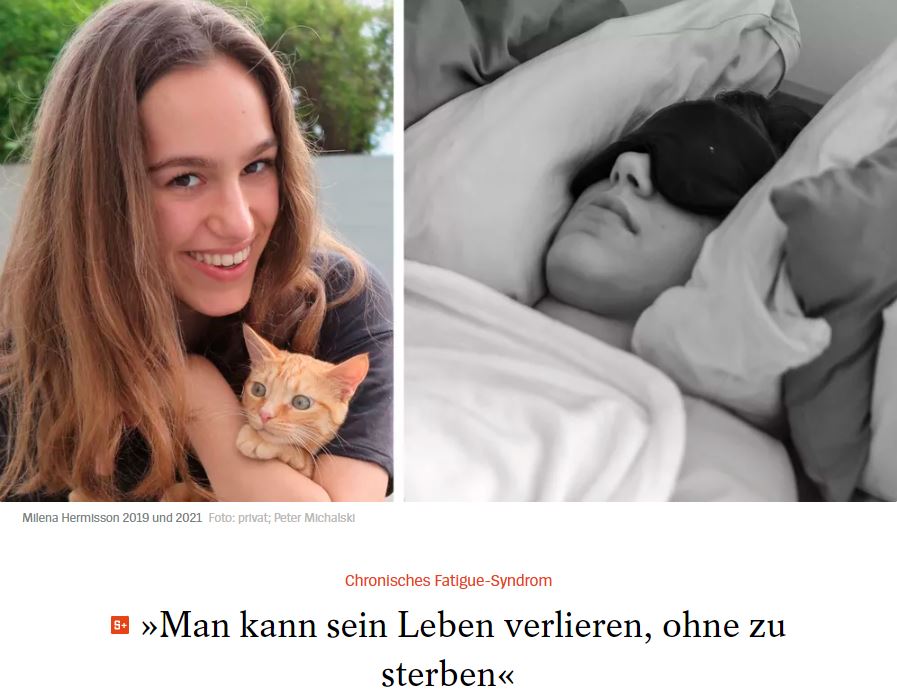
We fight every day to keep her alive and from further deterioration, and we desperately need medical support. But most physicians know nothing about this complex, severely disabling illness, classified as neurological by the WHO in 1969 (ICD-10 G93.3).
4/16
We cannot take Mila to a hospital – she is too ill to tolerate a stay, but also: there is NONE with specialized care for #mecfs in all of Austria. In emergencies (when she is too weak to eat or in severe pain) we are entirely on our own.
5/16
Thus, not much has changed from 50 years ago. Although not rare and massively debilitating, #mecfs is still one of the most poorly understood diseases –
6/16
because it is still one of the most ignored and underfunded diseases. It will take a massive effort to make up for the neglect of the past 50 years.
7/16
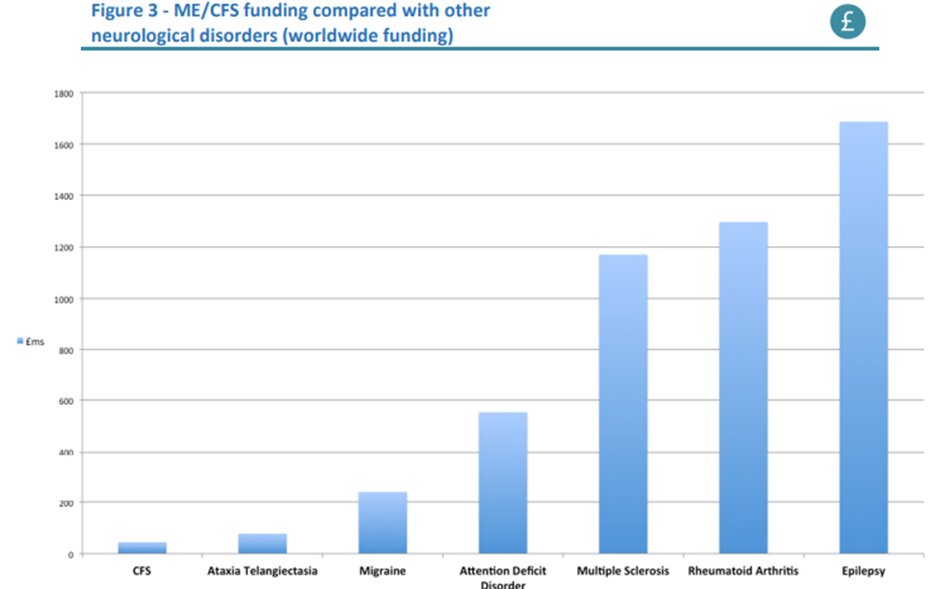
Limited progress is exclusively due to a handful of courageous and dedicated physicians and researchers who all could have chosen easier career paths (personal thanks to @C_Scheibenbogen, Ron Davis & @JanetDafoe, @BhupeshPrusty, @neurostingl).
8/16
With billions spent on the pandemic and #mecfs being the most severe form of #LongCovid, my husband and I had a glimmer of hope that Mila would benefit from a surge in research. What kept her going was the hope that treatment was on the horizon.
9/16
But our hope is dwindling, when we see how denial and inaction continue:
+ None of the German and Austrian petitions’ requests have been implemented.
10/16
+ @Karl_Lauterbach knows #mecfs, but is strangely reluctant to even mention the disease, let alone launch an awareness campaign to finally stop the gaslighting.
11/16
+ @johannes_rauch conveniently choses to ignore #mecfs altogether.
+ @bmsgpk claims against all evidence that Austrian #mecfspatients are perfectly taken care of by family doctors and no specialized care is needed.
12/16
+ @degampraesident thinks that #LongCovid is already talked about too much, instead of pushing for quality care and a state-of-the-art guideline for #mecfs (cf. @NICEComms).
13/16
+ @EU_Commission forever delays making good of their promises after the #mecfs resolution of the EU parliament > 2 years ago.
14/16
I admire our daughter’s determination to live and heal every day. But after > 600 days of darkness, isolation and severe suffering, I don’t see how anyone could keep going in the face of utter ignorance.
15/16
So: When Mila cries out in despair and fear and urgently needs some hope – WHAT CAN I TELL HER?
16/16
Thanks, Chandelier, for this: https://www.faz.net/aktuell/rhein-m...er-angehoerige-bei-me-cfs-accg-200995472.html
Seeing "fatigue" misspelled as "fatique" always makes me cringe. It's surprisingly common in German-speaking Switzerland, too—likely because native German speakers mistake it for an English word. But then I think: Hysteria, Neurasthenia, ME, Chronic EBV, CFS, Systemic Exertion Intolerance Disease, ME/CFS, PAIS, Long COVID, Post-COVID... why not just "Fatique"? At this point, another absurd name for it hardly matters.
Seeing "fatigue" misspelled as "fatique" always makes me cringe. It's surprisingly common in German-speaking Switzerland, too—likely because native German speakers mistake it for an English word. But then I think: Hysteria, Neurasthenia, ME, Chronic EBV, CFS, Systemic Exertion Intolerance Disease, ME/CFS, PAIS, Long COVID, Post-COVID... why not just "Fatique"? At this point, another absurd name for it hardly matters.
What you posted is a local political initiative at the Hamburg city-state level, where the Greens and SPD who have a somatic understanding of ME/CFS currently form a coalition government. Let’s see how far they actually get with it—it’ll be interesting. Who knows, maybe the BPS model advocates are already planning to drag it to Karlsruhe to the Verfassungsgericht to protect their "freedom" of science.True.
I would have liked to have a look at the model to get an idea of what we’re at here.

Last edited:
Chandelier
Senior Member (Voting Rights)
Yeah, it was the source with the best information at the time.What you posted is a local political initiative at the Hamburg city-state level
The newspapers all had the same reduced summary dpa text.
Still, the text mentions a 3-tier care model that I couldn’t find any traces of.
What we can see in Germany—and what seems to me an important factor in the changing perception of ME/CFS as a somatic illness—is a shift in how middle- and upper-class families treat their sick relatives. Where family members were once cast out as psychiatric cases to keep the stigma away, people are simply not ready to do that anymore, but have become advocates for their loved ones in great numbers. And that has certainly become easier with a professor at Charité like Scheibenbogen having their back, who is so talented at networking and messaging. None of this is to dismiss the work of patient advocacy, of course. It’s just so nice to see so many well-researched, sensible, compassionate journalistic pieces in Germany this year!
It reminds me of an approach to medical care for ME/CFS that I first saw outlined in a webinar by an Australian applied research center for GP medicine:Yeah, it was the source with the best information at the time.
The newspapers all had the same reduced summary dpa text.
Still, the text mentions a 3-tier care model that I couldn’t find any traces of.
Chandelier
Senior Member (Voting Rights)
Finally found something:Still, the text mentions a 3-tier care model that I couldn’t find any traces of.
New Outpatient Clinic for Patients with Long COVID and ME/CFS at UKE Moves Closer
Hamburg. The SPD and Green parliamentary groups are putting pressure on their own state government. UKE and panel doctors need to reach an agreement. There are likely tens of thousands of people affected.
New momentum is emerging in the debate surrounding UKE in Hamburg and the treatment of patients with Long COVID and myalgic encephalomyelitis/chronic fatigue syndrome (ME/CFS). The governing parliamentary groups of the SPD and the Greens in the Hamburg Parliament are now calling on their own state government to speed up the process. According to a motion, the University Medical Center Hamburg-Eppendorf (UKE) should be “encouraged” to begin providing outpatient treatment to the patients concerned “in a timely manner.”
For UKE, as a hospital, this requires an “institutional authorization” (Institutsermächtigung) from the Association of Statutory Health Insurance Physicians in Hamburg. This authorization is necessary for UKE to be able to bill for outpatient treatment of patients with Long COVID or Post-COVID. In principle, however, these patients are supposed to be treated by general practitioners and specialists in their private practices. This does not appear to be working as the SPD and Greens had envisioned. It is unusual that the motion calls on the state government to “report on its efforts” as early as the end of 2026.
UKE Hamburg: ME/CFS and Long COVID Require More Funding from Health Insurance Providers
At the Health Committee, UKE presented its plan for a three-tier model: General practitioners would initially be responsible for patients; at the second level, they could consult UKE specialists; and at the third level, patients would come to UKE, where they would be diagnosed and treated by various medical specialists. The third level would be reserved for “very complex cases that are resistant to treatment.”
https://www.abendblatt.de/hamburg/p...n-mit-long-covid-und-mecfs-rueckt-naeher.html | Archive
Chandelier
Senior Member (Voting Rights)

ME/CFS-Kranke zeigen Socken zur Mahnung – Deutsches Ärzteblatt
 www.aerzteblatt.de

ME/CFS patients display socks as a reminder
Monday, August 10, 2026
Many people suffering from the debilitating illness ME/CFS feel abandoned by social welfare authorities and politicians.
“There is almost no knowledge when it comes to the illness,” said Stefan von Rein, a member of the board of the association “Selbsthilfe für ME in Thüringen” (Self-Help for ME in Thuringia).
According to the association, the different colors of the socks are intended to show how diverse the people affected by the illness are.
“For example, 2,000 children’s socks represent the youngest patients, black socks stand for those who are severely affected, for whom even sitting upright can cause their circulation to collapse, and white socks commemorate those who have already died.”
Even applying for support benefits from health or long-term care insurance funds is a major problem for people affected like him, von Rein said.
Not only do they find it extremely difficult to fill out the extensive forms.
Many of the questions asked in them are also not applicable to ME/CFS and play no role in decisions on whether support should be granted.
Chandelier
Senior Member (Voting Rights)
This is potentially huge.
Is it possible to claim damages directly from medical experts for incorrect rulings?
Tweet:
Excerpt:
Is it possible to claim damages directly from medical experts for incorrect rulings?
Tweet:
Google Translation of article:NichtGenesen @NichtGenesen
Who is actually responsible for the quality of medical assessments in cases involving disability pensions?
In the administrative proceedings, the German Pension Insurance appoints medical experts, whereas in proceedings before the Social Court, the court selects the expert.
And Section 839a of the German Civil Code (BGB) expressly provides for personal liability for damages in cases where a court-appointed expert deliberately or grossly negligently provides an incorrect expert opinion.

Excerpt:
Particularly critical are so-called neurological-psychiatric expert assessments in which neurology, as it relates to the physical exhaustion illness, is virtually absent and the illness is incorrectly psychologized.
In such cases, there is often a claim for damages against the expert.
Incidentally, the limitation period for claims against experts is three years from the end of the year in which the injured party becomes aware of the claim for liability against the expert.
The absolute limitation period is ten years.
Last edited:
Chandelier
Senior Member (Voting Rights)
5-min video slideshow of photographs and sculptures by 25-year old Artist and pwME Leon Eichelbaum.
During the whole video the artist‘s voice can be heard talking about his art and living with ME/CFS
Video description:
The artist Leon Eichelbaum is being awarded the 2026 Dr. Rudolf Zorn Foundation Award for Emerging Artists by the jury for his two-part work “Vergessen, vergessen werden” (“Forgetting, Being Forgotten”) (photography) and “Tag und Nacht” (“Day and Night”) (installation/sculpture).
Eichelbaum’s works explore the fragility and precariousness of life.
His analogue photographs employ an aesthetic of transience—they appear like spontaneous snapshots or video stills that capture a “young attitude to life” directly and honestly.
Through his deliberate choice of exposure and composition, he reflects on the ways in which photographs can overlay and reshape one’s own memories.
In addition, in his sculptural work he uses medical package inserts as a medium for poetic texts.
This can be interpreted as the “fine print of a state of life” and addresses the invisible fault lines of existence.
In the video, the voice of the artist Leon Eichelbaum can be heard.
He speaks about the societal and social invisibility of people living with ME/CFS and recounts the creation of his two deeply personal works, “Vergessen, vergessen werden”and “Tag und Nacht”: “I have to forget what it was like to have been healthy.”
As part of the “Art Exhibition held during the Allgäu Festival Week”, four prizes are awarded each year.
The 75th Art Exhibition will take place from 8 August to 9 October 2026 at the Marstall in Kempten.
Machine translated transcript:
So, I’m Leon, I’m 25 years old, and I’ve actually been making art for as long as I can remember, and I then also applied to various degree programs, to various universities of fine arts, and, um, I was actually surprisingly accepted everywhere. That made me incredibly happy, of course, but then I couldn’t start because, at the same time, I became ill with [music] ME/CFS as a result of a tick bite back then, due to Lyme disease.
And [music] ME/CFS is unfortunately such a severe illness that it has now led to me being completely bedridden for over a year and no longer being able to leave my bed at all, and, of course, I’ve also had to change all my plans in life, um, simply because of the severity of the symptoms.
It’s also a disease without a solution. There are basically no medications that actually [music] help. There are no doctors who know what they’re doing. In that context, my art also took on a completely different meaning through confronting the question of how I suddenly become irrelevant to the system, and who I actually am and what I am within all of this.
So, this work is really about this invisibility, and also about invisibility on several levels, because, on the one hand, there is the invisibility of those of us with ME/CFS. To a large extent, [music] most people can no longer leave their homes and can no longer leave their rooms, which ultimately [music] leads to a kind of social and societal invisibility.
Then there is also this political invisibility, this truly being forgotten by politics and research, and these are somehow all topics that simply aren’t seen, and to a large extent cannot be seen either.
There were enzymes in them, um, pancreatic enzymes that my body no longer produces as a result of my ME illness. So these are jars that I’ve collected since I found out that I was lacking these enzymes, which was about maybe one and a half to two years ago. Through the sheer quantity of these jars, where each jar contains 100 of these enzyme tablets, it somehow becomes clear what kind of effort and what kind of weight this physical illness entails.
And then there’s the package insert. A package insert is, of course, something that is very typically associated with medication, but this package insert takes the whole thing to an absurd level, because it basically doesn’t say how you’re supposed to take the medication or how you should take it, but instead points to the invisibility of ME as an illness and, essentially, to this societal forgetting.
The photographic work is much more autobiographical.
Yes, so, basically, the camera is a tool that has accompanied me throughout my life. I somehow always have a camera with me, and specifically in this series of eight images, it’s
[music]
um, about this progression of the illness, from [music] okay, I have ME and it’s already really bad, but it’s not yet so bad that I couldn’t leave my bed [music]. So, I’m still somehow out with friends and, um, yeah, but nevertheless this [music] ME is already accompanying me, and I have already not had a normal life for a long time, and so, basically, because of that, the title also has to somehow be learning to forget, and [music]
um, I’m also often already being forgotten, because I can no longer be there for many things, and then, um, over the period during which I’m taking the photographs, this extreme deterioration of the illness basically takes place, which leads [music] to me no longer being able to leave my bed at all and being completely dependent on care, leading to moving out of the shared apartment I was living in at the time and back into my parents’ old home, and then having to [music]
go back, essentially, and confront this situation. And it somehow also illuminates these circumstances, but also, at the same time, the people who accompanied me along the way. So, it’s a very directly personal work, and yet there is this systemic component, because this move and this deterioration and all of it really wouldn’t have to happen if there were [music] good medical and
broader societal care, and somehow a framework in which ME/CFS could exist, and if there were medications that simply weren’t unavailable due to decades of a lack of research.
[sniff]
Exactly. And that’s why the title, To Be Forgotten, To Forget, is of course very explicit. It says exactly what the title also says, but on another level, it’s much more than that, because I basically have to forget what it was like to be healthy. Yes, it’s a very quiet change from, um, I can still
somehow be part of things, but already with extreme symptoms, to I am being forgotten [music] and I have to forget. Right.

Yann04
Senior Member (Voting Rights)
Finally found something:
https://www.abendblatt.de/hamburg/p...n-mit-long-covid-und-mecfs-rueckt-naeher.html | Archive
Well, erm, since we have no proven treatment. “Resistant to treatment” is basically anyone who doesn’t have a natural recovery.The third level would be reserved for “very complex cases that are resistant to treatment.”
Chandelier
Senior Member (Voting Rights)
Schreiben an die DEGAM zu öffentlichen Aussagen von Dr. Hans-Otto Wagner über COVID-19 und Long COVID - WHN
DEGAM Prof. Dr. med. Eva Hummers, Präsidentin eva.hummers@med.uni-goettingen.de Betreff: Öffentliche Äußerungen eines DEGAM-Mitglieds zu COVID-19 – Bitte um Stellungnahme Sehr geehrte Frau Prof. Dr. Hummers, Das World Health Network Deutschland setzt sich für evidenzbasierte Gesundheitspolitik...
 whn.global
TLDR:
Dr. Hans-Otto Wagner, co-author of the German interdisciplinary S1 guideline for Long/Post-COVID], recently xcreeted:
Corona is over …
As a consequence his X avatar has become a meme on social media.'Risk of Long COVID symptoms primarily due to pre-existing health conditions and sociodemographic factors’ speaks in favor of a psychogenic (co-)etiology.
I was a bit puzzled when people would start posting his avatar picture without much context.
The following letter has been sent to the DEGAM (German Society of General Practice and Family Medicine) as he proudly showcases his association with them in his X profile.
The letter was sent by the World Health Network which seems to consist mostly of young long Covid activists.
Letter to the DEGAM
Regarding Public Statements by Dr. Hans-Otto Wagner on COVID-19 and Long COVID
DEGAM
Prof. Dr. med. Eva Hummers, President
eva.hummers@med.uni-goettingen.de
Subject: Public statements by a DEGAM member regarding COVID-19 – Request for a statement
Dear Professor Hummers,
The World Health Network Germany is committed to evidence-based health policy and reliable public health communication. In this context, we are contacting you regarding a matter that, in our view, concerns both the public perception of DEGAM and public trust in science-based medicine.
A member of your professional society, Dr. Hans-Otto Wagner, identifies DEGAM in his X profile. For followers and the general public, this creates an association between his statements and your institution. Within this context, he publishes comments on COVID-19 that represent his personal opinion while deviating from the established body of evidence:
June 3, 2026: “Corona is over …” This statement is incorrect. The RKI’s wastewater surveillance clearly shows that the most recent COVID-19 wave lasted from August 2025 to February 2026. The notification data likewise indicate a continuing substantial disease burden: From epidemiological week 40 of 2025 through epidemiological week 16 of 2026, 114,429 laboratory-confirmed SARS-CoV-2 infections were reported to the RKI. Hospitalization was reported for 42,181 of these cases – approximately 37 percent (https://influenza.rki.de/Wochenberichte/2025_2026/2026-16.pdf).
June 5, 2026: “‘Risk of Long COVID symptoms primarily due to pre-existing health conditions and sociodemographic factors’ speaks in favor of a psychogenic (co-)etiology.” The quotation is taken from the RKI’s February 2026 review: https://www.rki.de/DE/Aktuelles/Pub...Focus/JHealthMonit_2026_11_02_Long_COVID.html
Screenshots of the posts are attached.
Sociodemographic risk factors describe who is more likely to develop a disease – not the mechanism by which the disease develops. This applies to heart disease and tuberculosis just as it does to Long COVID. No one would therefore conclude that these diseases are psychogenic.
There is now substantial evidence for several biological mechanisms. Among other mechanisms, the RKI identifies viral persistence, dysregulated immune processes, and endothelial dysfunction as possible or evidence-supported mechanisms. Sociodemographic factors may influence the risk of developing the disease and its course through, among other things, differences in exposure, resources, opportunities for recovery, and access to healthcare.
Among other things, this provides a basis for calling for better access to diagnostics and rehabilitation, employment protection, and adjustments to working conditions.
Dr. Wagner’s statements are problematic for two reasons:
First, they create uncertainty among members of the public who expect reliable guidance from medical specialists. Second, they damage the reputation of DEGAM because they are presented with the weight of scientific or professional authority without being supported by the available evidence.
We consider Dr. Hans-Otto Wagner’s public positioning particularly concerning in light of his role as a co-author of the interdisciplinary S1 guideline Long/Post-COVID, listed in the AWMF Register and valid until May 31, 2026, in which DEGAM was involved. Because of this prominent role, he is perceived by many physicians as well as by affected individuals as an expert authority. His public statements therefore have the potential to significantly influence medical care, perceptions of the disease, and the way affected individuals are treated.
When a guideline author infers a psychogenic (co-)etiology of Long COVID from the existence of sociodemographic risk factors, this creates the impression that personal beliefs are being placed above the current state of research. This is particularly problematic for affected individuals, as such statements can contribute to trivializing their illness, reinforce stigma, and make adequate medical care more difficult.
We expect a scientific professional society and its representatives to be guided by the current state of international evidence. Research published over the past several years on immune dysregulation, viral persistence, endothelial and vascular changes, as well as other objectively measurable pathophysiological findings, documents a wide range of biological alterations in Long COVID. Against this background, the assumption of a psychogenic (co-)etiology derived from sociodemographic risk factors does not appear to be sufficiently scientifically substantiated.
Individuals holding prominent positions in the professional and scientific public sphere bear a particular responsibility for the impact of their communication. We therefore ask DEGAM to consider whether an internal discussion or clarification regarding the principles of scientific communication would be appropriate.
In addition to the review by the Robert Koch Institute, international research findings also support these biological findings. As a further source, we refer to the summary of the PolyBio Spring Symposium 2026. PolyBio is an internationally networked research foundation that specifically supports research into Long COVID and coordinates numerous academic research groups worldwide. The PolyBio Symposium, held regularly in spring and autumn, brings together international research groups working on pathomechanisms, biomarkers, and therapeutic approaches in Long COVID. The work presented there provides insight into current research projects, some of which are still ongoing, and describes a wide range of somatic changes and biological mechanisms under investigation (https://2026-spring-symposium-polybio.netlify.app/#buggert-gut, https://polybio.org/2026-spring-symposium/).
We would have liked to send Dr. Wagner a copy of this letter by email, but we were unable to identify an email address for him. We therefore ask you to forward this letter to him.
We ask DEGAM to provide a written statement addressing the points outlined above. In particular, we are interested in how the professional society deals with public statements by its members that conflict with the available scientific evidence, and what mechanisms are in place to ensure the quality of scientific communication, particularly among individuals involved in developing clinical guidelines. We would appreciate receiving your response by October 1, 2026.
Yours sincerely,
WHN Germany
Chandelier
Senior Member (Voting Rights)
A team of German journalists has started an investigation into Münchhausen-by-Proxy accusations that parents of children with complex illnesses face sometimes.
You can help by filling out this form if you or someone close to you had to go through such nightmare accusations:
Machine Translation;
You can help by filling out this form if you or someone close to you had to go through such nightmare accusations:
Machine Translation;
We are a team of journalists from Die Neue Norm, Frankfurter Rundschau, and The Global Disability News Network investigating cases in Germany in which parents of medically complex children (e.g., children with EDS, ME/CFS, Long/Post-COVID, rare pain syndromes, and other conditions) come under suspicion of intentionally making their child ill, often under terms such as “Munchausen by Proxy.”
We are aware of how sensitive and distressing this subject can be. If you are willing to share your experiences with us, we would first document your case. Not all cases will be published.
By submitting your responses, you grant us the right to use and continue to use the information you provide exclusively for journalistic and/or publishing purposes.
The Editorial Team
P.S. If you have any questions, please contact: verdachtsfall@sozialhelden.de
Chandelier
Senior Member (Voting Rights)
Allegedly, the latest Charité newsletter announces a newly opened neuropsychiatric PAIS clinic.
Link | Google Translation
Link | Google Translation
The interdisciplinary neuropsychiatric PAIS consultation is offered jointly by the Department of Psychiatry and Psychotherapy and the Department of Neurology. The aim of this close collaboration is a holistic and interdisciplinary diagnostic approach that considers the physical, mental, and psychological aspects of the symptoms. In addition to diagnostic evaluation, patients also have the opportunity to participate in innovative clinical trials, depending on their personal interest and suitability. These trials serve to scientifically evaluate new treatment approaches for PAIS and include studies on the effectiveness of medication options and digital interventions.
Yann04
Senior Member (Voting Rights)
Uhoh; “holistic”, “psychological aspect of symptoms”, “innovative clinical trials”, “digital interventions”. The red flag is bright and high.Allegedly, the latest Charité newsletter announces a newly opened neuropsychiatric PAIS clinic.
Link | Google Translation
Chandelier
Senior Member (Voting Rights)
Information, Datenschutz und Einwilligung
 redcap.zih.tu-dresden.de
Online Study: Support in Everyday School Life for Children and Adolescents with Post-Acute Infection Syndromes (e.g., Post-COVID Syndrome, ME/CFS)
Technische Universität Dresden
Faculty of Psychology
Chair of Cognitive and Clinical Neuroscience
01062 Dresden
Contact: veronica_zoe.theobald@mailbox.tu-dresden.de
Welcome!
Information about participation in the online survey
Thank you for your interest in our survey on the topic of “Support at School for Post-Acute Infection Syndromes (PAIS), such as Post-COVID Syndrome or ME/CFS.”
Your participation in this survey is voluntary! You can withdraw from the survey at any time without having to give a reason.
If you do not have enough energy to participate in the survey yourself, your parents can also participate on your behalf.
If you need to take a break at any point, you can pause the survey and continue it at a later time.
If you have finished school within the past few months, you can still participate in the survey and report on your experiences during your time at school.
Please read the following sections carefully and then decide whether you would like to participate in the survey.
Important: Please complete the survey together with a parent or another adult who provides particular support to you in dealing with your illness and in communicating with your school. If you are 15 years old or younger, we additionally require the consent of your legal guardians for you to participate in the survey.
What is the aim of the survey?
For many children who have a post-acute infection syndrome, such as Post-COVID Syndrome or ME/CFS, everyday school life is not easy. Many need support in order to be able to attend school at all, participate in lessons, or see their classmates.
We want to find out what support services and inclusion measures your school provides and how effective you find them. We would like to gain an overview of the problems and barriers that arise in providing support and how satisfied you are overall with the support provided by your school.
Duration
Completing the questionnaire takes approximately 15–20 minutes.
Benefits of participating in the survey
The results are intended to help improve support for children and adolescents with PAIS at school. However, it will take us some time to complete the research. Therefore, you will not receive any immediate personal benefit from participating in the survey.
Data protection
You will find our full data protection information attached below as a PDF. Please take your time to read it carefully.
With our sincere thanks and kind regards,
The study leads:
Prof. Dr. med. Katharina von Kriegstein and Veronica Theobald (B.Sc. Psychology)
The survey can be completed on a laptop, tablet, or smartphone. For better readability, we recommend completing the survey on a laptop or computer. If you are using a smartphone, please enable landscape mode so that the questions are displayed correctly.