News from The Netherlands

Researcher Jeroen den Dunnen wanted to do a daratumumab trial and I believe a sonlicromanol trial, but he wasn't able to due to the current constraints of only trying drugs that weren't patented. In Long-Covid ZonMw allowed it though.

Yes, exactly. It's probably a little bit of both though. If we had more leads there might also have been more interest in off-patent drugs.
 
Dutch Health Council urges government action on long Covid

The Dutch Health Council has urged the ministry of health, welfare and sport to increase clarity around long Covid. Although estimates vary of how many people suffer from it, the council puts it at 400,000 people nationwide, many of whom have severe symptoms.

Whether treatment for people suffering from long Covid should be included in the regular healthcare system remains a question of national debate.
...
The new recommendations into understanding chronic post-acute infection syndromes (PAIS), of which long Covid is one, marks a U-turn from the past two years of government policy.

Broadcaster NOS reported that health minister Sophie Hermans believes the regular healthcare system should be responsible for long Covid patients. But the Dutch Health Council says “the estimated large numbers of people with long COVID and other PAIS cannot simply be absorbed into regular care.”

The ministry says it is studying the council’s advice.
 
Journalist Sander Zurhake from the NOS wrote a critical piece about the report.

"Appreciation and Skepticism After the Health Council’s Advice to Take Long Covid Seriously"

 
Unfortunately the ME Steungroep has made the painful decision to cease their activities at the end of this year.


Translation

July 1, 2026: Important message from the ME and Disability Support Group

The board of the ME and Disability Support Group has had to make a painful decision. The Support Group will stop its activities at the end of this year. No more consultation hours and no more information provision via the website and Support Group News; our projects and lobbying activities stop and our memberships and active contribution to partnerships end.

Painful decision

This decision is painful for the ME patients. It was not taken because we are unnecessary and our work is on it. On the contrary. It is still hard-needed to stand up for the interests of ME/CFS patients in every possible way, especially in the areas of work, incapacity for work and benefits. We have done this for more than thirty years. The number of people we have given information and advice about benefits, work and study is in the thousands. We have had numerous consultations, written letters, published reports, organized and signed petitions. We visited the UWV, courts, ministers and MPs, spoke to the media and you name it. And that all remains necessary.

This decision is also painful for those who have put time and commitment into the Support Group all these years and have often built up a lot of knowledge and expertise in the process. There is no guarantee that all this will be preserved or can be transferred.

Pure necessity

But our decision is well thought out. The board is convinced of the need for this step, however drastic it is for people who depend on our advice and support. The reason for stopping and abolishing the Support Group lies in the available workforce in the short and long term. Age, declining health (also of partners) and lack of sufficient new growth require us to reduce the commitment of the Support Group. This applies to many volunteers and to all activities and tasks: advice and information provision, advocacy, lobbying, publishing Steungroepnieuws, administrative and organizational work in the office and the board work.

We see no opportunities to continue the work of the Support Group at the same level with new people. This means that continuity is no longer guaranteed and the risk of our work crumbling is becoming too great. We want to prevent that.

Still get results

In the second half of this year, we will carefully complete our activities and transfer them where possible. We will not miss results that are still achievable. In the course of 2027, the Support Group will be formally dissolved. We are in the process of preparing for this.

We want to transfer our knowledge and experience as much as possible to organizations and/or individuals who compete with and for ME/CFS patients to improve their social position.

Careful finishing

We are going to tackle the dismantling carefully:

• People with whom we have recently had consultation hours contact will receive a message about stopping the office hours and about the careful deletion of the confidential data (sent documents, office hours notes, etc.).

• In the coming months, the consultation hours will take place by appointment, (callback request via e-mail or voicemail). See the information on the website.

• From now on, we will no longer register new donors. All information on our website is freely available to everyone; login is no longer necessary.

• In the autumn we will announce what this means for the UWV Research into ME/CFS Assessments, for the work on the new ME/CFS Directive and for the ME/CFS Research Program.

• Two more issues of Steungroepnieuws will be published. In it, we will pay attention to what we have achieved and what activities the Support Group transfers.

We will provide information about the completion of the activities and the financial settlement via the website and Steungroepnieuws. We want to do this in a transparent way.

Thanks in advance, everyone!

At this place we already thank all the people and organizations we have worked with in all these years. We have done a lot of work together and achieved a lot. Many thanks also to the many volunteers who have worked for the Support Group Work. And finally, thanks to our more than 1200 regular donors: without their support and involvement, we would not have been able to build what we have now achieved.

The board of the Support Group ME and Disability:

Ynske Jansen, Betsy van Oortmarssen, and Katy van der Sluis
 
Last edited:

A lifetime with ME/CFS.
Machine Translation:
Etty’s Story

“In 1962, when I was nine years old, I developed hepatitis. I was immediately prescribed six weeks of strict bed rest and put on a very low-fat diet. After that, I spent another six weeks in a convalescent home to recover and regain my strength. To this day, I remain grateful to my family doctor for prescribing rest right away. I believe that this is what allowed me to function reasonably well for many years afterward.

Even so, my symptoms never truly disappeared. I was left with an enlarged liver, fatty liver disease, elevated liver enzyme levels, and, above all, persistent fatigue. I was never able to participate in sports; everything I tried eventually had to be abandoned.

Around the age of thirty, I saw a general practitioner who diagnosed me with a post-viral syndrome. By then, in addition to the fatigue, I was also suffering from frequent sore throats and muscle pain. Before long, it was suggested that the problem was ‘all in my head.’ I was referred to an internist who, after blood tests, found evidence of Epstein–Barr virus infection but reached the same conclusion: a post-viral syndrome that I would simply have to learn to live with.

The years that followed were marked by ups and downs. There were periods when I was unable to work for an entire year and could do little more than lie down or recline. My arms and legs felt as though they were made of concrete, and the exhaustion was overwhelming. The occupational physician again dismissed my condition as psychological and advised me to exercise. I was enrolled in a supervised fitness program, but instead of improving, my health deteriorated. Eventually, it was suggested that I should see a psychologist instead. I chose not to, because I felt that this was not the root of the problem.

Gradually, my symptoms continued to worsen, and I became increasingly dizzy. After considerable effort, I finally obtained a referral to Professor Visser, a cardiologist. A tilt table test revealed that I had orthostatic intolerance: I fainted almost immediately during the test and was found to have a blood volume that was 30% below normal. Medication brought some improvement, but before long, new symptoms emerged.

The pain in my toes and shins became progressively more severe—a tingling, icy sensation that is extremely difficult to endure. My eyes also began to respond differently. After conducting tests, a neurologist concluded that I did not have small fiber neuropathy or ME/CFS. According to her, I had convinced myself that I did, and the problem was psychological. Through another referral, I eventually ended up at Maastricht UMC, where small fiber neuropathy was indeed confirmed. So far, no pain medication has provided relief, and my symptoms continue to worsen. After receiving the Moderna vaccination, my pain intensified, and the weakness in my legs also increased. At times, I can barely walk.

One thing has always been clear to me: my symptoms worsen after exertion. I consistently pointed this out, but it was often overlooked. Instead, I was repeatedly advised to become more physically active, even though exercise consistently made my condition worse.

Now that I am 72 years old, I find it difficult to accept that serious biomedical research into ME/CFS is only just beginning. It should have happened much earlier. It is also painful to realize that I can no longer participate in research studies because of my age, even though people who have lived with this illness for so many years have valuable insights to contribute. I continue to follow developments with great interest and hope that researchers will finally take a closer look at what is happening in the body—something that received far too little attention for far too long.”
 
Etty's story is a very clear explanation of why we must have action now.

I can't recall hearing of NMCB before, although I probably have
Together patients, scientists and clinicians can make a difference for ME/CFS. We have bundled our knowledge and expertise in the NMCB consortium. Together we will spearhead biomedical research on ME/CFS in the Netherlands. And more! Join our effort!
Three patient charities look to be on board.
 
SUNDAY, 19 JULY 2026 - 07:45

Dutch long Covid expertise centers to stay open another year​


Special expertise centers for patients with long-term Covid-19 effects will remain open for at least another year.
Care Minister Sophie Hermans (VVD) announced the extension in a letter to parliament.
About 8.5 million euros of the original 27 million euros allocated for the centers is still available.
Officials will use those funds to keep the centers running through next year.

Academic hospitals in six cities opened the centers about 18 months ago.
The cities include Amsterdam, Rotterdam, Utrecht, Maastricht, Leiden, and Groningen.
By the end of May, they had examined 1,550 adults and 350 children with persistent complaints after a Covid-19 infection.
The goal is to study the disease in greater depth and research possible treatments.

The cabinet has asked the hospitals and health insurers involved to develop a proposal for maintaining care for post-Covid patients after 2027.
Multiple centers could merge into one larger organization, according to a spokesperson for Minister Hermans.
 
A new research trial is recruiting, run by researchers at the University of Groningen:


The deadline for finishing the ME/CFS guideline has been moved to April 2028.

Kind of pathetic honestly. The original deadline was October 2021 and they officially started the development in 2023.
 
1300-word article by @Grigor.

Filmmaker Rolf Orthel: The price of independence, the burden of ME​

GEPUBLICEERD OP 8 augustus 2026
To mark Severe ME Day 2026, the Dutch ME-info channel ME Centraal asked several national and international bloggers to contribute a piece in honor of the day.

Dutch blogger Anil van der Zee responded and offered them this poignant account of what might have been. We were permitted to publish his English-language version in the ME Global Chronicle, of which a shortened version is being published on fb.

We are very grateful to him for this unique contribution.

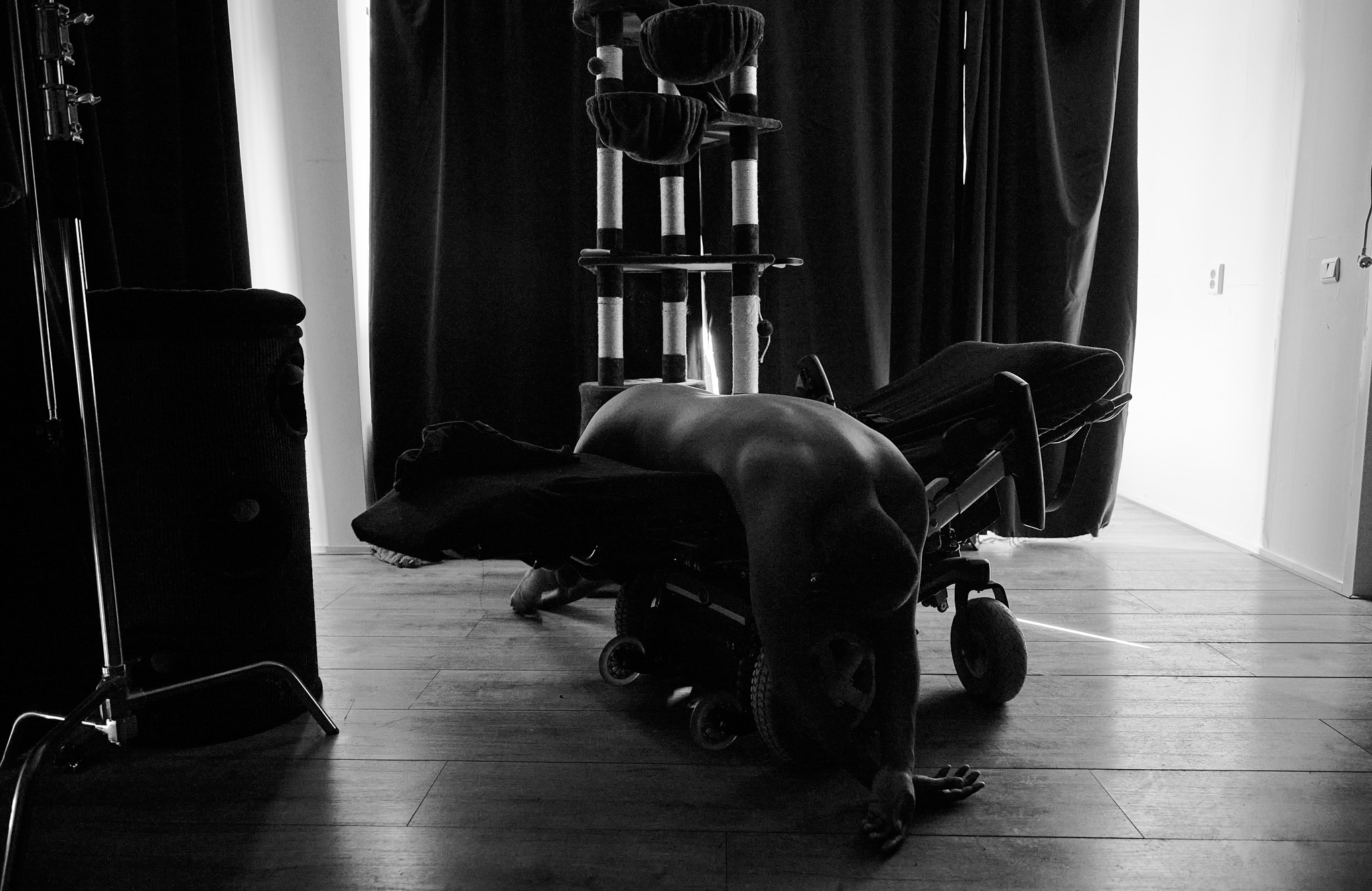
Recently, filmmaker Rolf Orthel (1936) made a film about PAIS (post-acute infectious syndromes) titled The State of Affairs (Dutch: De stand van zaken). The film focused mainly on Long Covid, but he also decided to include a section about my experience with ME.
I long to explore all of those things, but because it isn’t possible for me, I try not to think about them too often. Otherwise, it becomes too frustrating and too confronting.

So it came as a genuine surprise when Rolf told me he would track down and digitize the documentary he had made there especially for me. He had already sent me beautiful photographs from that journey, so I eagerly looked forward to seeing the film. It absolutely did not disappoint.

I had never seen such stunning footage of Sri Lanka. For its time, and with the cameras available then, the image quality was exceptional. The film, The Price of Independence, explored Sri Lanka’s independence and both its positive and negative consequences.
What moved me most was a short sequence featuring young Kandy dancers in training. I had never seen footage of their rehearsals before. Young boys practicing with such dedication. It felt strangely familiar, as if I were looking back at my own years of ballet training. Who knows, perhaps I would have done something similar. One thing I know for certain: I would love to film it myself one day.
 
Back
Top Bottom