
Yann04
Senior Member (Voting Rights)
For those wondering where these decisions are coming from, the NSF is led by someone who is appointed by the US president and confirmed by the senate…

For those wondering where these decisions are coming from, the NSF is led by someone who is appointed by the US president and confirmed by the senate…
In my not very deeply researched opinion it‘s a bad thing it‘s redirecting basic research funding into corporate vanity or profit seeking projects.X-
X-labs is a Google moonshot project, not Elon’s X thank god. Still no idea if this is good or bad
Conclusion of the article :Article de 3500 mots. Trop dense pour moi pour le moment.
America’s compact between science and politics is broken, and we’re all going to pay
How did we get here?www.scientificamerican.com


 www.theguardian.com
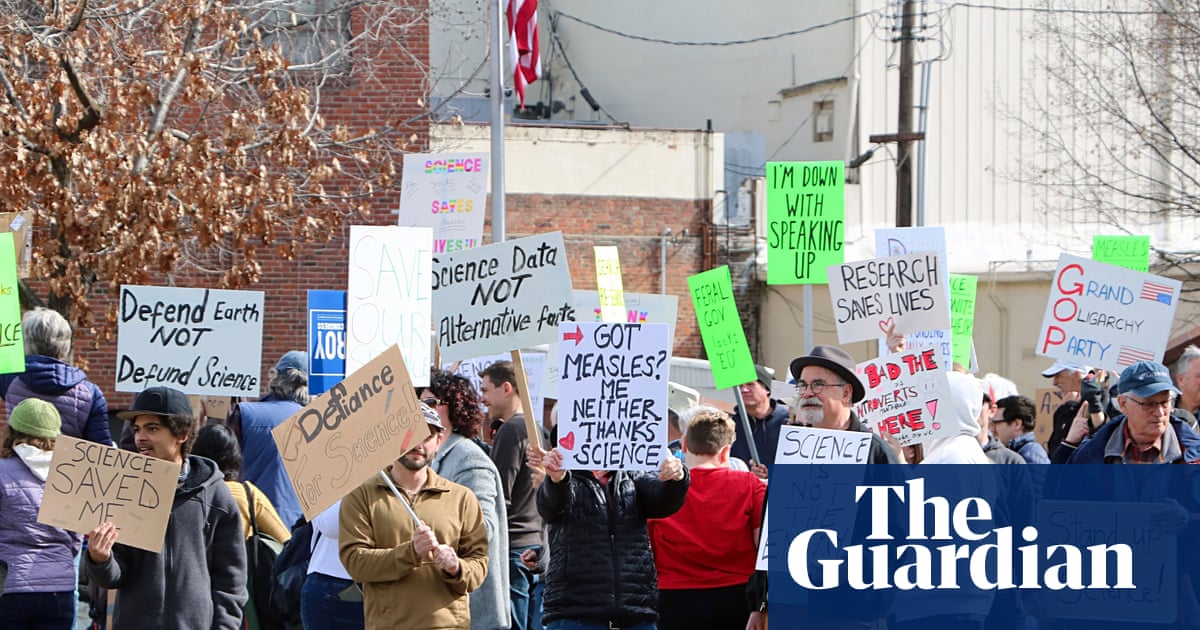
The Guardian said:The rule, proposed by OMB director Russ Vought on 29 May, would place all research and other federal grants under the control of political appointees, rather than scientific or subject-matter experts.
I hope any forum member who lives in the USA (and who is able to do so) will submit a public comment opposing the OMB rule.“The rule also requires that discretionary awards must ‘… demonstrably advance the president’s policy priorities,’” she added.
In other words, said Delawalla, it would create a “$1.5tn slush fund” under Trump’s control. “The purpose of the rule is fascism,” she told the Guardian.

 solvecfs.org

A look at the science that's been lost on long COVID
JUNE 22, 20264:50 PM ET
Every year, the government recruits some of the brightest experts and advocates in their fields to work in a largely volunteer program advising federal agencies on science and research. But the Trump administration has dismissed hundreds of these experts from their committees. NPR's Katia Riddle looked closely at the science that has been lost on one urgent issue.
RIDDLE: Across federal agencies, more than 100 of these advisory committees have been terminated. The administration has not said if or when many of them, including the long COVID committee, will return. Katia Riddle, NPR News.

 www.biospace.com
Former FDA, CDC and NIH leaders convene at the BIO International Convention to discuss the dismantling of the Department of Health and Human Services under the Trump administration—and where we go from here.
When the Department of Government Efficiency—nicknamed DOGE—started slashing jobs at the U.S. health department early last year, it was under the guise of a massive restructuring project.
But Demetre Daskalakis, director of the CDC’s National Center for Immunization and Respiratory Diseases until October 2025, has a different view.
“When you think about a reorganization, you think about re-imagining a structure so it’s better fit to function,” Daskalakis, now chief medical officer at Callen-Lorde, said at a Monday panel during the BIO International Convention in San Diego.
“This feels more like someone is deleting parts of an organization without thought. It’s moth-eaten, for lack of a better term.”
He gave the specific example of a branch within his CDC center that had the word equity in its name.
“They actually had almost nothing to do with health equity,” he explained, but the division was wiped out nonetheless.
“Certain things were deleted based on a search or certain terms, and then they just went away.”
When panel moderator Julie Tierney, former deputy director of the FDA’s Center for Biologics Evaluation and Research (CBER) under well-respected regulator Peter Marks, asked if the situation is recoverable, Daskalakis answered flatly: “No.”
But he and his fellow panelists maintained an optimistic tone.
The U.S. may have transitioned from a golden age to a dark age in public health, but “the end of a dark age is always a renaissance,” Daskalakis remarked.
“No one ever tries to go fix the Acropolis. . . . They try to build the Sistine Chapel.”
Jared Bauer, CEO and cofounder of Seek Labs, lauded the analogy, agreeing that “one of the things that happens when you tear down everything is you do have an opportunity to build something different.”
The staff cuts and leadership turnover at HHS are problematic in obvious ways—such as a lack of experience with outbreak responses—and more subtle ways, said panelist Ian Simon, former lead of HHS’ Office of Long Covid, which was shut down last year.
“I saw firsthand during the COVID response when omicron first emerged in South Africa, the scientists in South Africa contacted NIH leadership almost immediately, days before they contacted their own ministry, because they had a decades-long trusted relationship with NIH leadership,” said Simon, now director of Biosecurity Policy and Partnerships at Flyttr.
“It saved us days to a week . . . and it was built on this informal layer of information sharing that you lose when you ask senior leaders to go find a different line of work.”
I sent an email to ask to change the title.Op-ed in The Capital Times (Madison, WI) written by Christopher J. Ford, MD, FACEP, emergency medicine physician, public health advocate and community leader based in Milwaukee.
Assuming poor title choice was picked by the editor, but mentions NIH ME Research Roadmap, his view as an emergency medicine physician, profound impact to WI residents, underinvestment by federal government, and urgency to address.
Link to Op-ed here.
Excerpt: "I have watched patients leave my emergency room with symptoms I can't fully explain and conditions I cannot treat. I have referred patients into a specialty care system with no standard of care for their disease. ME/CFS and long COVID have cost Wisconsin families enough — in income, in savings, in careers, in years spent waiting for answers.The NIH has a plan. Wisconsin's patients have waited long enough. It is time for our congressional leaders to take urgent action and fund it."


What role can physical therapy, occupational therapy, and speech-language pathology play in ME/CFS?

Hope they are also securing the experimental records and data offshore, because there is a very good chance that there will be widespread deliberate corruption and destruction of it all under that government.Conclusion of the article :
"[Gregg] Gonsalves [epidemiologist and policy teacher at Yale University], who was involved in the fight to care for people with HIV and AIDS in the 1980s, says that scientists now have another job: “bearing witness and putting evidence on the table. It may not be persuasive to Russell Vought or Marco Rubio, but it is for the dossier, for the truth and reconciliation commission, for the Nuremberg trials that come after,” he says. “Keep the receipts. Write down what you see. Tell them what they did. We’re very good at documenting how X leads to Y.” "
Nova Southeastern University (NSU) researchers have been awarded a $3-million National Institutes of Health (NIH) grant to investigate whether exposure to toxic mold byproducts affects the symptom severity and immune system in patients diagnosed with myalgic encephalomyelitis/chronic fatigue syndrome (ME/CFS), a debilitating illness that affects as many as 3.3 million Americans.
The project, funded by the NIH National Institute of Neurological Disorders and Stroke through April 2031, will examine how environmental exposure to mycotoxins, harmful compounds produced by certain molds, may contribute to immune dysfunction in people with ME/CFS. By investigating the potential link, researchers aim to improve understanding of the disease, leading to earlier diagnosis, more personalized treatment approaches, and new insights into factors that may contribute to its development.
According to the U.S. Centers for Disease Control and Prevention, between 836,000 and 3.3 million Americans are living with ME/CFS, and an estimated 90 percent remain undiagnosed. The complex chronic illness affects multiple body systems and can cause extreme fatigue, brain fog, post-exertion malaise, cognitive impairment, sleep disturbances, and other debilitating symptoms. Despite its impact, ME/CFS has no diagnostic test and few effective treatment options.
“ME/CFS is a systemic disease,” said Lubov Nathanson, Ph.D., associate professor at the Dr. Kiran C. Patel College of Osteopathic Medicine, genomics group director for NSU’s Institute for Neuro-Immune Medicine, and the study’s principal investigator. “It affects many parts of the body, including the gut and the brain. For many patients, symptoms begin after exposure to viruses or other environmental factors, but we still don’t fully understand what causes the disease to start.”
Previous surveys have shown that some ME/CFS patients report symptom onset following exposure to mold-contaminated environments. To better understand this potential connection, researchers will collect biological samples from over 200 study participants and measure their exposure to mycotoxins. Using advanced techniques, researchers will evaluate whether specific environmental exposures are associated with biological changes linked to ME/CFS.
“For decades, patients with ME/CFS have faced delayed diagnoses, limited treatment options, and significant uncertainty about the causes of their illness,” said Nancy G. Klimas, M.D., co-investigator on the project and director of NSU’s Institute for Neuro-Immune Medicine. “Understanding how environmental factors influence disease development could help identify biomarkers; improve diagnosis; and, ultimately, lead to more targeted treatments.”
Dr. Nathanson’s co-investigators include Klimas, Irina Rozenfeld, D.N.P., M.S.H.S., A.P.R.N., ANP-BC; Violetta Renesca, D.N.P., A.P.R.N., NP-C, IFMCP; and David Quesada Saliba, M.S., Ph.D.

Sanity prevails.I've typed three different sentences trying to describe my reaction and then deleted them.
I'm truly at a loss for words.
"Nearly 160 sick with flu at US air force base after Hegseth ends mandatory vaccines"
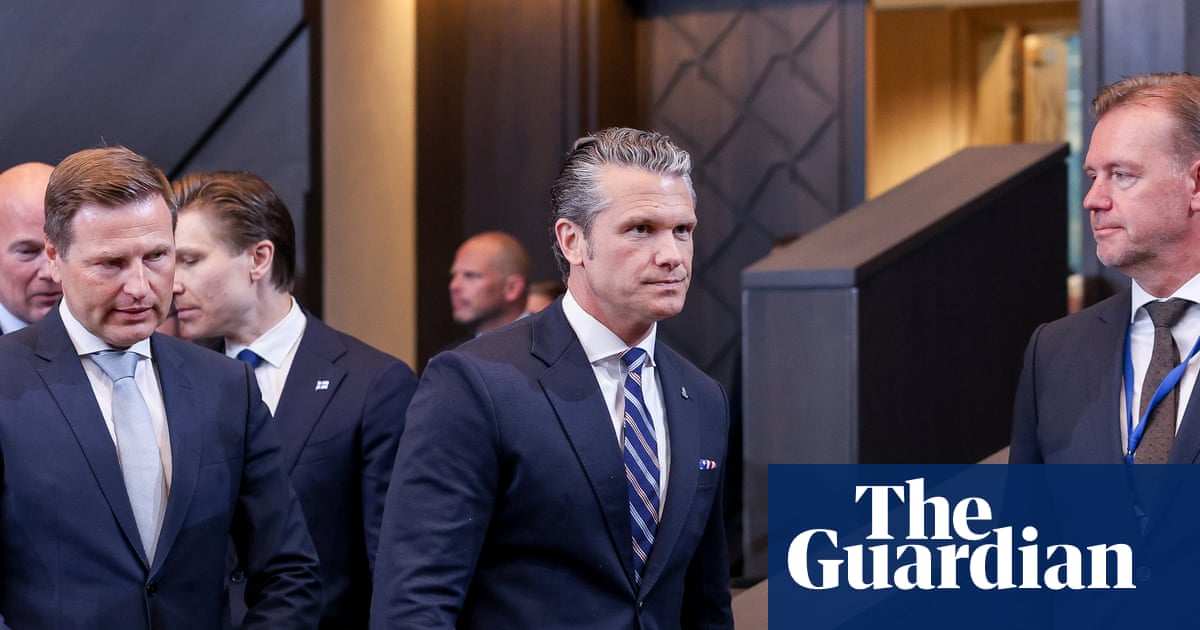
Nearly 160 sick with flu at US air force base after Hegseth ends mandatory vaccines
Reports say Texas recruits ill from outbreak, which comes weeks after defense secretary made flu vaccine optional
 apnews.com

 b-townblog.com
From WA State Department of Health: Long COVID Information and Resources
 doh.wa.gov
This Long COVID Appointment Guide (PDF) can help you get ready for your appointment.
In Washington, Paid Family and Medical Leave may provide paid time off if Long COVID affects your ability to work or requires ongoing care. Learn more about making a claim with Labor & Industries or Paid Family and Medical Leave on our Long COVID Resources for Providers page, and get guidance on ADA accommodations.
Community Resources
- Long COVID Basics (Centers for Disease Control and Prevention)
- Living with Long COVID (CDC)
- Post-COVID Rehabilitation (University of Washington Medicine)
- West Coast Health Alliance Vaccine Recommendations
- COVID-19 Longhauler Advocacy Project
Physician and Public Health Resources
Please see the Long COVID Resources for Providers page for more information.

 news.fsu.edu
Florida State University, through FSU Health, has awarded $250,000 to the five inaugural recipients of its Clinical Catalyst Grant Program, an initiative that brings together FSU researchers and local clinical providers to address healthcare challenges through collaborative projects.
“Clinical Catalyst creates an exciting opportunity for our research teams to join forces with local clinical providers and accelerate progress on some of the most urgent issues affecting patient care in our community,” said Vice President for Research Stacey S. Patterson.
Pick #2:To save you hours of research, I created a blog post explaining what each treatment guide does best, so you can quickly decide where to start instead of sorting through an overwhelming amount of information on your own.
Dr. Ruhoy starts off the book sharing her own personal life experiences, which have shaped her medical practice and approach.
After 10 years as a neurologist, she started suffering unusual health issues and was dismissed by her own doctors.
Only after she insisted on getting an MRI months later was she diagnosed with a large brain tumor that required immediate removal.
So she understands what many complex, chronic illness patients go through.
Rather than centering exclusively on medications, Dr. Ruhoy emphasizes foundational factors such as sleep, nutrition, breathing, movement, neuroinflammation, mitochondrial health, and nervous system regulation, and also discusses regenerative therapies such as peptides, stem cell therapy, plasmapheresis, and red-light therapy.
She also provides neuroinflammatory and mitochondrial repair protocols (a list of pharmaceutical drugs and supplements to address these two foundational areas for chronic illness patients).

